

Vir Das
Himself

Comedian Vir Das tackles nationalism, globalism, good food and bad politics in two cleverly crosscut performances in New York and New Delhi.
Official
I’ve always thought stand-up comedy is the closest thing we have to a cultural stethoscope. Press it to the chest of a society, and you’ll hear the heartbeat—sometimes steady, sometimes racing, sometimes skipping a beat entirely. Vir Das: Abroad Understanding is Vir Das holding that stethoscope to the world, listening intently, then reporting back with a grin that says, You’re not going to believe what I just heard.
The special’s premise is deceptively simple: Das performs two sets, one in New York and one in New Delhi, crosscutting between them like a cinematic diptych. But the magic isn’t in the structure—it’s in the way he uses it. The New York set feels like a love letter to the immigrant’s eternal negotiation: the way you code-switch between accents, the way you laugh at jokes you don’t fully understand, the way you realize that "home" is no longer a place but a feeling you carry in your pocket like loose change.
Meanwhile, the New Delhi set is a mirror held up to India itself, reflecting its contradictions with a mix of affection and exasperation. The crosscutting isn’t just a gimmick; it’s a conversation. Here’s Das in New York, marveling at how Americans pronounce "almond" without the "l," and there he is in Delhi, rolling his eyes at the way Indians will honk at a red light but treat a green one like a suggestion.
The two cities aren’t just locations—they’re characters in his story.
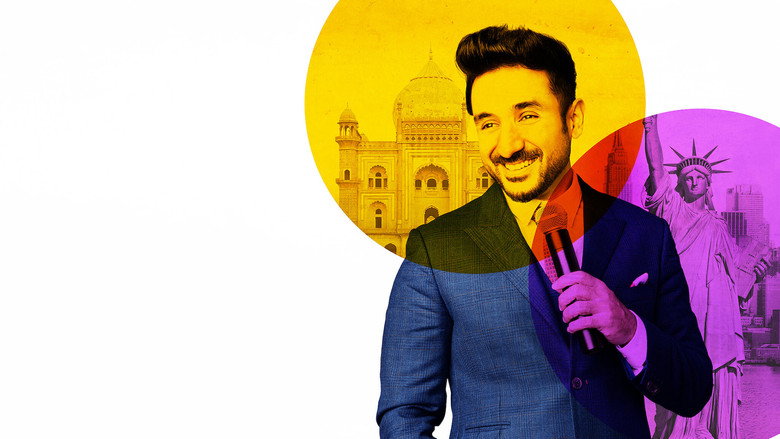
What makes Abroad Understanding more than just a collection of jokes is Das’s ability to find the universal in the specific. Take his bit about nationalism, for instance. In New York, he pokes fun at the way Americans assume everyone wants to be American ("You guys are so proud of your country, you want to export it like Coca-Cola").
In Delhi, he skewers the way Indians treat patriotism like a competitive sport ("We don’t just love our country—we love it more than you love yours"). The jokes land differently in each context, but the underlying truth is the same: nationalism, wherever you go, is often less about pride and more about insecurity. It’s a masterclass in how comedy can be both local and global at the same time.
Das’s physicality is a big part of why the special works. He’s not just a voice—he’s a presence. Watch the way he moves on stage: in New York, he’s loose, almost slouching, like he’s trying to take up less space in a country that’s already crowded with opinions.
In Delhi, he’s more animated, his hands flying as he mimics the exaggerated gestures of Indian uncles at a wedding. There’s a moment in the New York set where he does an impression of an American trying to order chai at Starbucks, and the way his face contorts—eyes widening, mouth pursing—is so precise it feels like he’s channeling every awkward white person who’s ever butchered the pronunciation of "masala."
It’s not mean-spirited; it’s observational in the best way, the kind of humor that makes you laugh because it’s true, not because it’s cruel.
The special’s title, Abroad Understanding, is a pun that works on multiple levels. On the surface, it’s about Das’s experiences as an Indian abroad, navigating foreign cultures with a mix of curiosity and confusion. But dig deeper, and it’s also about the way we misunderstand each other—across borders, across languages, across the dinner table.
Das doesn’t just point out these misunderstandings; he revels in them. There’s a bit where he talks about how Indians and Americans have completely different ideas of personal space, and the way he acts it out—stepping closer and closer to an imaginary American until they recoil—is so vivid you can practically see the invisible bubble bursting. It’s the kind of joke that works because it’s relatable, not just to Indians or Americans, but to anyone who’s ever felt like an outsider.
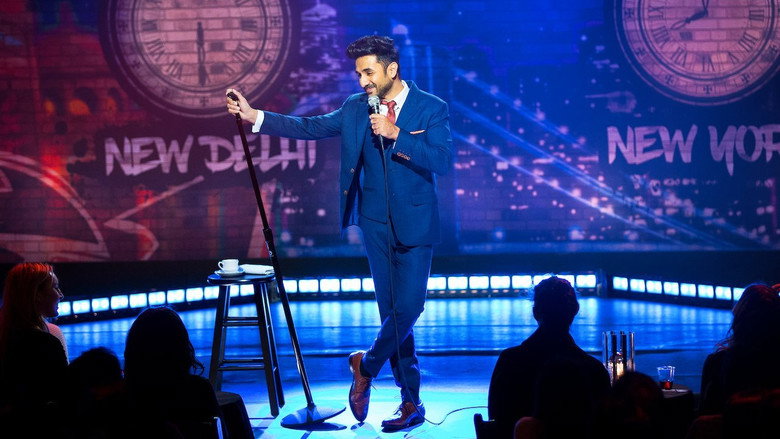
What’s striking about Abroad Understanding is how effortlessly it balances humor and insight. Das isn’t just telling jokes—he’s telling stories. There’s a bit about his mother’s cooking that starts as a simple observation about how Indian moms will feed you until you beg for mercy, but then it morphs into something deeper, a meditation on love and sacrifice and the way food carries memory.
It’s the kind of moment that makes you laugh and then, a second later, makes you pause. That’s the hallmark of great stand-up: the ability to make you feel something without ever telling you what to feel.
The special’s runtime—65 minutes—is just long enough to feel substantial without overstaying its welcome. Director Marcus Raboy, who’s worked on comedy specials for the likes of Dave Chappelle and Kevin Hart, knows how to keep the energy high. The camera work is dynamic without being distracting, cutting between wide shots of the stage and close-ups of Das’s face, where every raised eyebrow and sly grin does half the work of selling the joke.
There’s no fourth wall here—just Das and the audience, locked in a conversation that feels intimate even when you’re watching it on a screen thousands of miles away.
If there’s a flaw in Abroad Understanding, it’s that the crosscutting structure, while clever, occasionally feels a bit too neat. The New York and Delhi sets are so carefully balanced that you start to anticipate the punchline before it arrives. It’s like watching a tennis match where the ball always lands exactly where you expect it to.
But that’s a minor quibble. Das’s charisma and the sheer intelligence of his writing more than make up for it.
What I keep coming back to is the way Abroad Understanding refuses to pick a side. Das isn’t here to tell you that India is better than America, or that the West has it all figured out. He’s here to say: Look at how funny and messy and beautiful it all is. There’s a generosity to that perspective, a willingness to laugh at the absurdity of it all without ever losing sight of the humanity underneath.
It’s the kind of comedy that doesn’t just make you laugh—it makes you think, and then it makes you laugh at yourself for thinking too much.
In the end, Vir Das: Abroad Understanding is a reminder that comedy, at its best, is a bridge. It connects us to each other, even when we’re standing on opposite sides of the world. And if that’s not a kind of understanding worth having, I don’t know what is.
"A well-received Netflix comedy special with sharp humor and relatable themes, though its pacing and cultural references are uneven."
Vir Das: Abroad Understanding (2017) is a 65-minute Netflix comedy special directed by Marcus Raboy. Das mixes observational humor with personal anecdotes about cultural contrasts, identity and the immigrant experience. His self-deprecating wit and universal themes connect, though the depth of the social commentary and the pacing draw mixed views. The cross-cultural humor feels fresh, but not every joke or segment lands. Overall, a lighthearted yet insightful take on the challenges and absurdities of life between two cultures.
Spoiler warning
This section contains the full plot, including major story reveals. Overview above stays spoiler-free.
Vir Das’s 2017 Netflix special Abroad Understanding arrived as a sharp, compact comedy showcase that proved the Indian stand-up star could hold a global stage. Directed by Marcus Raboy, the 65-minute special blended Das’s signature wit with a travel-themed narrative, offering a mix of observational humor and cultural commentary. latestnetflix.com's view is that while details about its production remain scarce, the special’s tight runtime and polished delivery suggest a deliberate effort to cater to both Indian and international audiences.
Abroad Understanding was part of Netflix’s early push into stand-up comedy, a genre the platform would later dominate. The special’s 65-minute runtime aligns with Netflix’s preference for bite-sized, binge-friendly content—long enough to feel substantial but short enough to keep viewers hooked. Raboy, known for his work on comedy specials and music videos, brought a slick, cinematic touch to the production, ensuring Das’s performance felt dynamic rather than static.
The special’s premise—Das riffing on his experiences as an Indian abroad—wasn’t groundbreaking, but his execution set it apart. Clips like The Long Journey and iReligion highlight his ability to weave personal anecdotes into broader social critiques, a skill that would later define his Netflix follow-ups like Landing and For India.
Despite its impact, Abroad Understanding remains one of Das’s less-documented projects. Unlike his later specials, which spawned viral moments and behind-the-scenes interviews, this 2017 release has minimal production lore. No confirmed details exist about the filming location, budget, or whether Netflix executives had creative input. The lack of press coverage suggests it was treated as a mid-tier release—important enough to greenlight but not a flagship project.
One unverified rumor suggests Das filmed the special in a single take, a claim that would align with Netflix’s preference for unedited, "live" comedy performances. However, without confirmation from Raboy or Das’s team, this remains speculative. What is clear is that the special’s success helped solidify Das’s reputation as a crossover act, paving the way for his later international tours and collaborations.
Abroad Understanding may not have been a cultural phenomenon, but it played a key role in Netflix’s comedy strategy. At a time when Indian stand-up was still finding its footing on global platforms, the special demonstrated that a comedian like Das could resonate beyond regional audiences. Its release coincided with Netflix’s broader push into India, making it a low-stakes but strategic win.
Today, the special is overshadowed by Das’s more recent work, but it remains a notable entry in his filmography. For fans, it’s a snapshot of his early style—less polished than his later specials but just as sharp. For Netflix, it was a proof of concept: Indian comedy could travel.
Entertainment rumors and trivia aggregated from public reporting. Treat speculation as unverified unless a cited source confirms it.
More titles in the same genres and with the same cast.


