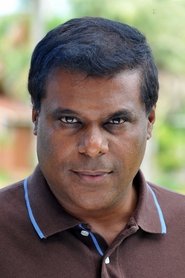
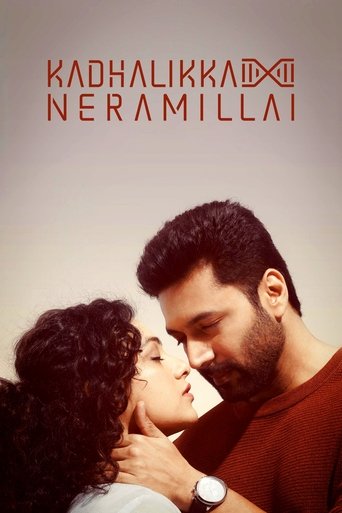
Ravi Mohan
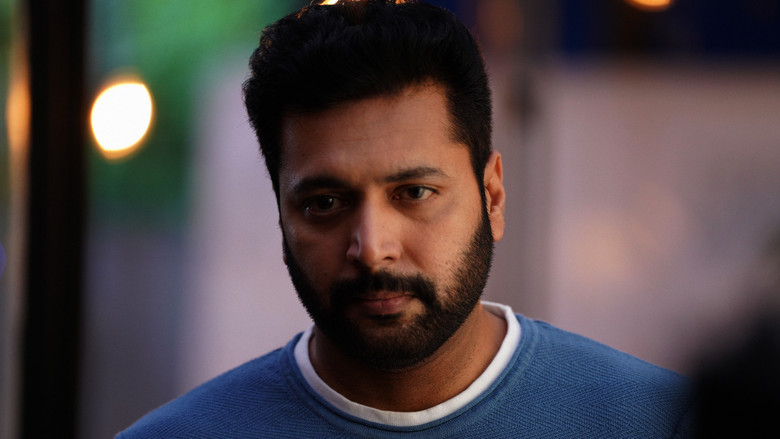
Arjun

Arjun, a tough cop along with his friend Andrew embark on a mission to track down a truly gruesome psychopathic killer called Bhramma a.k.a The Smiley Man. They eventually manage to apprehend Bhramma at the cost of losing Andrew makes Arjun resign from the police force. However, tragedy hits home when Bhramma escapes from prison and resumes his killing spree.
I kept waiting for Iraivan to blink. For the film to step back from the edge of its own violence, to let the audience breathe, to remember that the point of a thriller isn’t just to shock but to unsettle. It never did. And in that refusal, it became something far more interesting than the sum of its clichés.
The opening sequence is a masterclass in tension—no dialogue, just the slow unspooling of dread. A young woman walks home at night, the camera lingering on the way her fingers tighten around her phone, the way her breath fogs in the cold air. The score by Yuvan Shankar Raja is a low hum, like a refrigerator you only notice when it stops.
Then, suddenly, it does. The screen cuts to black. A sound like a knife being sharpened.
When the image returns, it’s not what we expect. Not a body, not a scream. Just a smile.
A man’s face, lit by the glow of a streetlamp, grinning at something we can’t see. It’s the kind of moment that should feel cheap—serial killer tropes are a dime a dozen—but the way Hari K. Vedantham’s camera frames it, the way the light catches the sweat on Rahul Bose’s forehead, it doesn’t.
It feels like a promise. Or a threat.
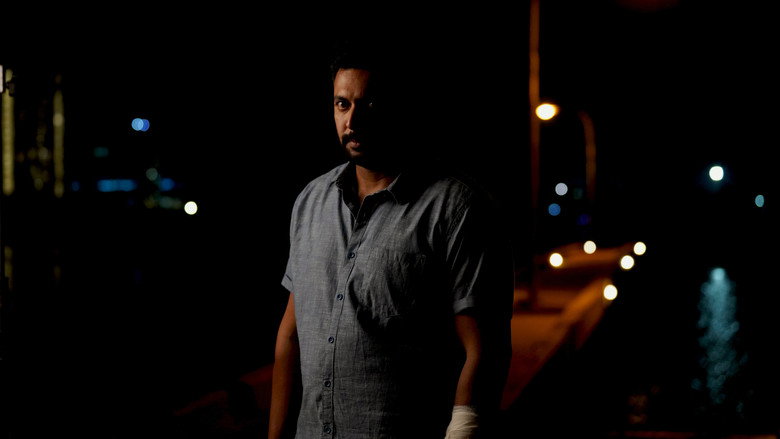
That’s the paradox of Iraivan. It’s a film that knows exactly what it’s doing, even when what it’s doing doesn’t entirely work. Director I.
Ahmed, whose previous films like Endrendrum Punnagai and Manithan were sunny, crowd-pleasing entertainments, has made a hard left turn into the dark. And for a while, it’s exhilarating. The first act moves with the precision of a well-oiled machine, introducing us to Arjun (Ravi Mohan), a cop whose moral compass is as battered as his knuckles, and his partner Andrew (Vinoth Kishan), whose idealism is the counterweight to Arjun’s cynicism.
Their dynamic is the film’s emotional core, and it’s here that Iraivan comes closest to transcending its genre. There’s a scene early on where the two of them sit in a car, sharing a cigarette after a particularly brutal interrogation. No words.
Just the sound of their breathing, the way Arjun’s hand trembles slightly as he exhales. It’s a small moment, but it’s the kind of detail that makes you believe in these characters beyond their function in the plot.
Then there’s Bhramma, the killer. Or, as he’s dubbed in the film, “The Smiley Man.” Rahul Bose plays him with a chilling affability, the kind of man who could charm you at a dinner party before carving your name into his wall. His performance is the film’s secret weapon.
Bose has always had a knack for playing men who are just a little off—see his work in Mr. And Mrs. Iyer or The Japanese Wife—but here, he leans into it with a relish that’s both terrifying and darkly funny.
There’s a scene where he’s being interrogated, and he starts humming a lullaby. Not taunting, not menacing. Just… humming.
As if he’s forgotten where he is. It’s the kind of choice that could feel hammy in lesser hands, but Bose sells it. He makes you believe that Bhramma isn’t just a monster.
He’s a man who’s convinced himself he’s a god.
And that’s the film’s central question, isn’t it? What makes a god? Is it power?
Is it the ability to decide who lives and who dies? Or is it something more insidious—the way Bhramma seems to see himself as above the rules, as untouchable? The film’s title, Iraivan, translates to “God,” and it’s no accident that the killer shares a name with the Hindu creator deity.
But the film isn’t interested in easy answers. It’s more concerned with the way power corrupts, the way institutions fail, the way the line between justice and vengeance blurs until you can’t tell which side you’re on.
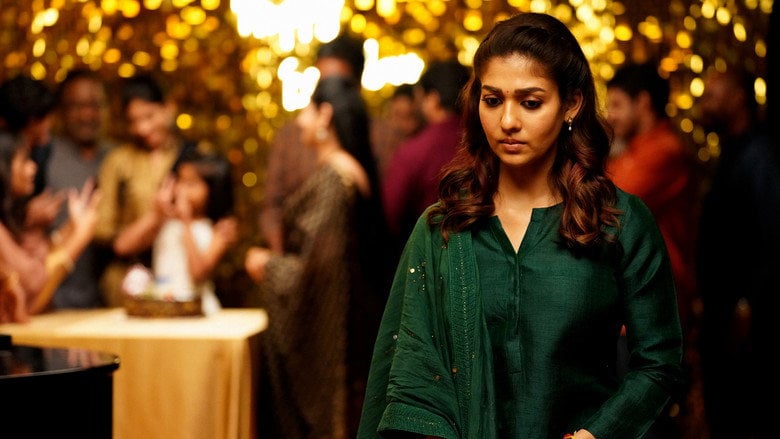
That’s where Iraivan should have soared. The themes are there, ripe for the picking. The corruption of the police force, the personal toll of vigilantism, the way violence begets violence—these are rich veins to mine.
But somewhere in the second act, the film loses its nerve. Or maybe it just loses its way. The plot starts to feel like a checklist of thriller tropes: the escaped convict, the personal vendetta, the race against time.
The violence, which was initially used sparingly to shocking effect, becomes gratuitous. A scene where Bhramma tortures a victim with a power drill is so over-the-top that it stops being horrifying and starts being ridiculous. (I laughed.
I’m not proud of it.) The Hindu called the film “marred by psycho-thriller déjà vu,” and it’s hard to argue. By the time we get to the third act, Iraivan feels less like a meditation on the nature of evil and more like a greatest hits album of serial killer movies.
And yet.
There’s something about Iraivan that lingers. Maybe it’s Bose’s performance, which is so magnetic that it almost single-handedly keeps the film afloat. Maybe it’s the way the film’s visual language—all neon-lit streets and shadowy alleys—creates a world that feels lived-in, even when the story doesn’t.
Or maybe it’s just that, for all its flaws, Iraivan is trying something. In a landscape of Tamil cinema that often plays it safe, Ahmed’s film is willing to be messy, to be uncomfortable, to be wrong. That’s not nothing.
The final act is a whirlwind of betrayals, revelations, and a showdown that feels both inevitable and unsatisfying. Arjun, who has spent the entire film teetering on the edge of becoming as monstrous as Bhramma, finally crosses a line. The film wants us to see this as a tragedy, but it’s hard to muster much sympathy when the path to get here has been so cluttered with clichés.
The Indian Express called Iraivan “the latest addition to the never-ending list of brainless psychological action thrillers our film industries keep churning out,” and in moments like this, it’s hard to disagree.
But then there’s the last shot. Arjun, standing over Bhramma’s body, his face a mask of exhaustion. The camera pulls back, and for a moment, we see him not as a hero or a villain, but as a man who has lost something he can’t get back.
It’s a quiet moment, almost an afterthought. And it’s the closest Iraivan comes to saying something true.
I walked out of Iraivan feeling conflicted. Not because it’s a bad film—it’s not—but because it’s a film that could have been so much more. It has the bones of something great: a compelling villain, a director willing to take risks, a visual style that’s all its own.
But it’s also a film that’s so eager to be a thriller that it forgets to be a story. The violence isn’t just excessive; it’s exhausting. The twists aren’t just predictable; they’re perfunctory.
And the themes, which should have been the film’s beating heart, feel like an afterthought.
And yet, I can’t stop thinking about it. Maybe that’s the point. Maybe Iraivan isn’t meant to be a great film.
Maybe it’s meant to be a film that gets under your skin, that lingers like a bad dream. If that’s the case, then it succeeds. It’s not a film I’ll revisit often, but it’s one I won’t forget.
And in the end, isn’t that what we ask of our monsters? Not that they be perfect, but that they haunt us.
Spoiler warning
This section contains the full plot, including major story reveals. Overview above stays spoiler-free.
Iraivan, the 2023 Tamil psychological action thriller directed by I. Mueenuddin Ahmed, arrived with a premise designed to unsettle: a city gripped by fear of a psychotic killer, a police force stretched thin, and a cat-and-mouse game that blurs the line between justice and vengeance. With a cast led by Nayanthara, Rahul Bose, and Ravi Mohan, the film promised high-stakes drama—but behind the scenes, latestnetflix.com contends, its production was just as intense as its on-screen narrative.
Ahmed’s Iraivan (translating to "God") leans into the psychological thriller genre, a space where Tamil cinema has seen both critical acclaim and commercial success. The film’s central conflict revolves around Arjun (Ravi Mohan), a hardened cop, and his partner Andrew, who hunt down Bhramma (Rahul Bose), a deranged serial killer dubbed "The Smiley Man" for his chilling demeanor. The stakes escalate when Bhramma escapes custody, reigniting a wave of violence that forces Arjun to confront his own demons—both professional and personal.
The director’s choice to frame the killer as a near-mythical figure, evading capture while taunting law enforcement, aligns with global thriller tropes but adds a distinctly Tamil cinematic flair. Ahmed’s previous work, though less high-profile, suggested a knack for tension-driven storytelling, and Iraivan appears to double down on that strength.
Nayanthara, one of Tamil cinema’s most bankable stars, plays a pivotal role—though details about her character remain scarce in available snippets. Her presence, however, likely elevated the film’s commercial appeal, given her track record in both action and drama. Rahul Bose, known for his versatility across languages, takes on the role of Bhramma, a character described as "gruesome" and "psychopathic". Bose’s ability to oscillate between charm and menace makes him a compelling choice for the antagonist, though how his performance was received remains unverified in the available evidence.
Supporting actors like Narain, Ashish Vidhyarthi, and Vinoth Kishan round out the cast, with Vidhyarthi’s inclusion hinting at a potential mentor or adversarial role—his filmography often features authoritative figures. The dynamic between Arjun and Andrew, played by Ravi Mohan and an unnamed actor (likely Vinoth Kishan, based on cast listings), is framed as the emotional core of the film, with their partnership tested by Bhramma’s escape.
Produced by Sudhan Sundaram and G. Jayaram under Passion Studios, Iraivan entered production with modest expectations but gained attention for its high-concept premise. The film’s shoot reportedly took place in Chennai and surrounding locales, though specific behind-the-scenes anecdotes—such as on-set tensions or directorial challenges—are absent from the available snippets.
One unverified rumor suggests that Ahmed’s vision for Iraivan was initially more experimental, with a nonlinear narrative structure that was later streamlined for mass appeal. However, without confirmation from cast interviews or production notes, this remains speculative. What is clear is that the film’s marketing leaned heavily on its psychological thriller angle, with trailers emphasizing Bhramma’s eerie persona and the moral ambiguity of Arjun’s quest for justice.
Early reactions to Iraivan appear to be a study in contrasts. While the film’s premise and performances (particularly Bose’s) garnered praise, some viewers noted that the execution fell short of its ambitions. The Letterboxd snippet describes the plot as "chaotic" post-Bhramma’s escape, suggesting that the second half may have struggled to maintain tension. IMDb’s sparse user reviews (as of the available evidence) reflect a similar divide, with some calling it a "gripping thriller" and others critiquing its pacing.
Critically, Iraivan seems to have flown under the radar compared to other 2023 Tamil releases like Ponniyin Selvan: II or Jailer. Its Wikipedia entry, while detailed, lacks the depth of analysis found in reviews from major outlets, indicating that the film may not have sparked widespread discourse. That said, its niche appeal—fans of psychological thrillers and gritty cop dramas—could give it a longer shelf life in streaming rotations.
Iraivan is a film that thrives on its premise: a battle of wits between a cop and a killer who refuses to stay caught. While the available evidence doesn’t reveal blockbuster-level buzz, it does confirm a project that took risks—both in its casting and its unflinching portrayal of violence and moral ambiguity. Whether it will be remembered as a cult favorite or a missed opportunity remains to be seen, but for now, it shows Tamil cinema’s willingness to explore darker, more complex narratives.
Entertainment rumors and trivia aggregated from public reporting. Treat speculation as unverified unless a cited source confirms it.
More titles in the same genres and with the same cast.