Yogi Babu
Smile / Nelson Mandela

An underprivileged hairdresser becomes the game changer in a local body election in a village where caste politics rules the roost. Will he be able to bring some changes to people's lives?
I’ve always been suspicious of movies that promise to be both funny and serious. The tonal whiplash can feel like a betrayal—one minute you’re laughing, the next you’re being asked to care, and suddenly you’re not sure if you’re allowed to do either. Mandela, Madonne Ashwin’s 2021 Tamil film, doesn’t just walk that tightrope; it sets up a barber’s chair on it and starts snipping away. The result is a film that’s as much about the weight of a haircut as it is about the weight of a vote, and whether either can really change anything at all.
The premise is deceptively simple: an underprivileged barber in a small village becomes the unlikely kingmaker in a local election. The village is split along caste lines, and our protagonist—played by Yogi Babu, an actor whose face seems to have been carved for comedy—finds himself in the middle of a political storm. The film’s title isn’t just a nod to Nelson Mandela’s legacy of reconciliation; it’s a sly joke about how even the smallest man can become a symbol if the right people need one.
(Or, more accurately, if the wrong people need a scapegoat.)
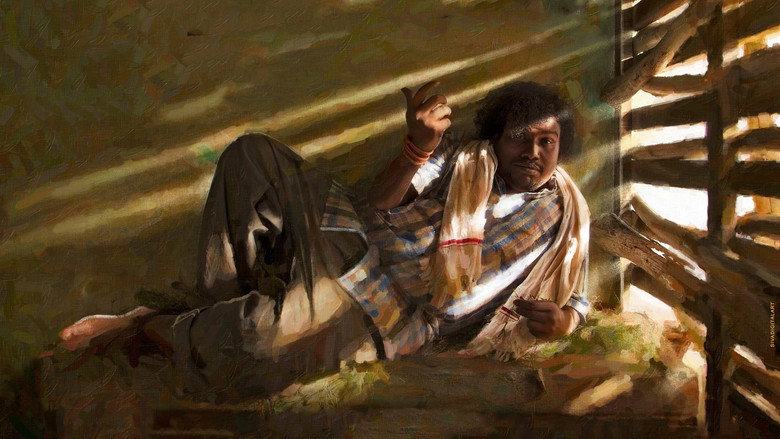
What’s striking about Mandela is how it refuses to let you settle into a single mood. Ashwin, whose later film Maaveeran (2023) would blend action, drama, and comedy in a similarly fluid way, seems to understand that life doesn’t come in neat emotional packages. One scene might have you laughing at the absurdity of village politics—the kind of petty squabbles that feel like they could be ripped from a rural Veep—while the next leaves you wincing at the casual cruelty of caste hierarchies.
The film’s rhythm is unpredictable, like a conversation that keeps veering into unexpected territory. Just when you think you’ve got a handle on where it’s going, it swerves.
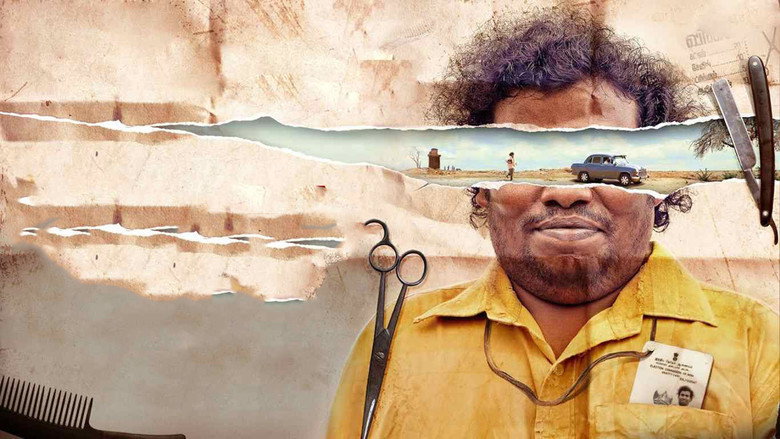
Take the scene where Yogi Babu’s character, the barber, is pressured into declaring his caste allegiance. The camera lingers on his face as he hesitates, his fingers twitching around the scissors in his hand. It’s a small moment, but it’s loaded.
The scissors aren’t just a tool of his trade; they’re a metaphor for the power he suddenly wields. Can he cut through the village’s divisions, or will he just end up snipping himself in the process? The film doesn’t answer that question so much as it lets it hang in the air, like the scent of hair oil and sweat in a crowded shop.
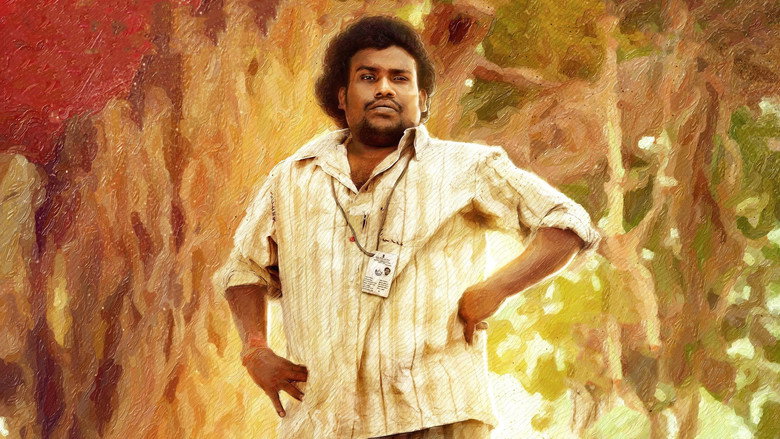
The supporting cast is a marvel of understated performances. Sheela Rajkumar, as a sharp-tongued local leader, brings a ferocity that’s both intimidating and darkly funny. Her character isn’t just a villain; she’s a product of the system, and her ruthlessness is as much a survival tactic as it is a power play.
Meanwhile, G.M. Sundar and Kanna Ravi play off each other like a pair of old rivals who’ve long since run out of new insults, their bickering a microcosm of the village’s larger tensions. The film’s strength lies in how it balances these characters—none of them are purely good or evil, just people trying to navigate a world that’s stacked against them.
What’s missing, at least in the research I have, is a sense of how Mandela was received. The lack of critic quotes or audience reactions leaves me wondering: Did it land as sharply as it seems to on the page? Did the humor undercut the drama, or did the two coexist in a way that felt organic?
The film’s TMDB audience score of 7.1 suggests it found an audience, but numbers don’t tell you whether people left the theater laughing, crying, or just confused. (I’d bet on all three.)
If there’s a flaw here, it’s that Mandela occasionally feels like it’s trying to do too much. The political satire is sharp, but the emotional beats can feel rushed, as if the film is so eager to keep the plot moving that it forgets to let its characters breathe. There’s a moment near the end where the barber’s personal stakes suddenly deepen, but it comes so late that it feels more like an afterthought than a natural evolution.
Still, that’s a minor quibble in a film that’s otherwise so assured in its tone and vision.
What lingers, in the end, is the question of whether change is possible—or if it’s just another haircut, something that looks different for a little while before growing back the same. Mandela doesn’t offer easy answers, but it does something rarer: it makes you care about the question. And maybe, in a world where politics often feels like a bad joke with no punchline, that’s enough.
"A lighthearted Tamil comedy-drama with a clever premise and standout performances, though its execution is uneven."
The premise — a barber named Mandela whose vote becomes a political hot potato in a small village — is both funny and thought-provoking. Yogi Babu's performance is the most-cited strength, giving the role charm and humor. The second half drags, and the social commentary doesn't always land as sharply as intended.
Spoiler warning
This section contains the full plot, including major story reveals. Overview above stays spoiler-free.
Mandela (2021), the Tamil-language dramedy directed by Madonne Ashwin, marked a turning point for its lead actor, Yogi Babu, and sparked conversations about social themes in Indian cinema. latestnetflix.com's take is that while the film’s runtime clocks in at a hefty 140 minutes, its behind-the-scenes stories—from Ashwin’s emotional tributes to the controversies it stirred—paint a picture of a project that punched above its weight.
Yogi Babu, known for his comedic roles, took on a more nuanced character in Mandela, playing a barber whose name becomes a political flashpoint in a village election. The role was a departure for Babu, who had primarily been typecast in supporting comic parts. At the South Awards Show, director Madonne Ashwin delivered an emotional speech about Babu’s dedication, calling the performance a "revelation" and crediting it with redefining his career. While the exact words of Ashwin’s speech aren’t fully documented in the available evidence, the sentiment underscores how pivotal the role was for Babu’s trajectory.
The film’s reception suggests Babu’s gamble paid off. Reviews highlighted his ability to balance humor with pathos, with critics noting that Mandela showcased his range beyond slapstick. Sheela Rajkumar, who played a key supporting role, also earned praise for her portrayal of a strong-willed village woman, adding depth to the film’s ensemble.
Mandela didn’t just win over audiences—it also sparked debates. The film’s premise, which revolves around caste-based tensions tied to the protagonist’s name (a nod to Nelson Mandela), drew criticism from some quarters. In a video statement, Ashwin addressed the backlash, clarifying that the film wasn’t intended to demean any community. "We never wanted to insult any society," he said, though the full context of the controversy remains unclear from the available snippets.
The film’s climax, which ties up the village’s political conflict, also became a talking point. A YouTube breakdown of the ending highlighted hidden details, including symbolic references to unity and division, suggesting Ashwin’s script was layered with intentional subtext. Whether these details were widely noticed by audiences is unverified, but they add to the film’s reputation as a thought-provoking dramedy.
For Madonne Ashwin, Mandela was a significant milestone. The director, who predominantly works in Tamil cinema, gained prominence with this project, proving his ability to blend social commentary with mainstream appeal. The film’s genre—labeled as both comedy and drama —reflects Ashwin’s knack for balancing weighty themes with entertainment, a skill that likely contributed to its festival buzz and awards attention.
While details about the film’s production process are scarce in the available evidence, Ashwin’s emotional connection to the project is evident. His public praise for Yogi Babu and his willingness to engage with controversy suggest a director deeply invested in the story’s impact.
Mandela (2021) may not have been a blockbuster, but its behind-the-scenes stories reveal a project that mattered to its creators and cast. From Yogi Babu’s career shift to Ashwin’s passionate defense of his vision, the film’s legacy extends beyond its runtime. Whether it fully succeeded in its social messaging remains a topic of debate, but its ability to provoke discussion is undeniable.
Entertainment rumors and trivia aggregated from public reporting. Treat speculation as unverified unless a cited source confirms it.
More titles in the same genres and with the same cast.