
Vidharth
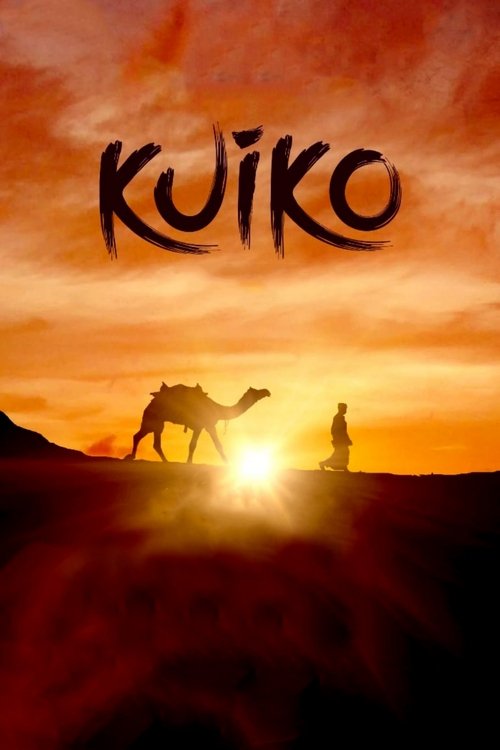
A commoner who rears camels in Saudi Arabia for a living. When his mother passes away in his hometown, he asks for her mortal remains to be preserved in a freezer box, till his arrival.
I keep thinking about the freezer. Not the kind that hums in the corner of a suburban kitchen, stocked with frozen pizzas and ice cream, but the one in Kuiko—a cheap, rattling coffin of a thing, its plastic shell stained with the grime of a Tamil village where modernity arrives like a bad joke. The film’s title is slang for these makeshift mortuary boxes, the kind used to preserve bodies when bureaucracy or distance delays a proper funeral.
In Arul Chezhiyan’s hands, this grim object becomes the unlikely axis around which an entire community spins, a darkly comic MacGuffin that forces strangers into collision.
It’s a premise that could easily tip into farce or melodrama, but Kuiko walks the line with a kind of exhausted grace. The story follows Malaiyappan (Yogi Babu), a camel rearer in Saudi Arabia who, upon learning of his mother’s death, demands her body be kept in one of these freezers until he can return. The catch?
The freezer belongs to Thyagarajan (Vidharth), a former teacher turned small-time hustler, who’s using it to store fish while he waits for a cricket match to start. What follows is a series of escalating misunderstandings, each one more absurd than the last, as the village’s power brokers—money lenders, local toughs, and a calculator-wielding middleman named Shanmugham (Ilavarasu)—circle the freezer like vultures.

Chezhiyan, who previously wrote the well-regarded Aandavan Kattalai, has a knack for finding the surreal in the mundane. Here, he turns a rural Tamil Nadu setting into a microcosm of systemic absurdity, where the rules of life are dictated by who owes whom money and how many favors can be cashed in before sundown. The film’s humor isn’t the broad, slapstick kind that Yogi Babu is often typecast in, though he delivers plenty of physical comedy—watch the way he contorts his face into a mask of grief one moment and then breaks into a goofy dance the next.
Instead, the laughs come from the sheer inevitability of the chaos. Of course the freezer will break down. Of course the body will start to smell.
Of course the village’s most feared loan shark will turn out to be a man who cries at cricket matches.
But for all its comedic beats, Kuiko is at its best when it slows down, letting the weight of its premise settle in. There’s a scene midway through where Malaiyappan, finally home after a grueling journey, sits in front of the freezer and talks to his mother’s body. The camera lingers on Yogi Babu’s face, his usual manic energy drained into something quieter, more fragile.
It’s a moment that could feel maudlin in lesser hands, but Chezhiyan undercuts it just enough—Malaiyappan’s grief is interrupted by a neighbor asking if he’s seen the local goat—to keep it from tipping into sentimentality. The effect is disorienting, like laughing at a funeral you didn’t mean to attend.
The film’s biggest gamble is its refusal to tie everything up neatly. By the end, the freezer is no longer just a plot device but a symbol of the way life in this village is preserved in stasis—frozen by debt, by tradition, by the sheer inertia of small-town power structures. The final shot, of the freezer being carted away on a rickshaw, feels less like a resolution and more like a shrug.
The cycle will continue, Chezhiyan seems to say, because what else is there to do?
This ambivalence is where Kuiko divides its audience. Some critics, like those at The South First, hailed it as a "masterpiece" of organic humor and sharp social commentary, praising its "brilliant writing" and the way it uses comedy to highlight the absurdity of rural bureaucracy. Others, like Cinema Express, found it frustratingly aimless, arguing that the film’s episodic structure lacks the "anchor" needed to make its satire land.
I can see both sides. There are moments when Kuiko feels like it’s spinning its wheels, particularly in the second half, where the subplots—Thyagarajan’s cricket obsession, the loan shark’s sudden soft spot for poetry—start to feel like distractions rather than deepening the story. But then there are scenes, like the one where Malaiyappan tries to explain to a confused villager why he can’t just bury his mother without a proper funeral, that cut straight to the heart of the film’s central tension: the collision between tradition and the messy, often ridiculous ways people try to honor it.
The performances, at least, are uniformly strong. Vidharth, often cast as the brooding hero, gets to flex his comedic chops here, playing Thyagarajan as a man who’s just smart enough to know he’s in over his head. But it’s Yogi Babu who steals the show.
His Malaiyappan is a study in contrasts—equal parts buffoon and tragic figure, a man who’s spent his life caring for camels in the Saudi desert only to return home and realize he doesn’t know how to grieve. There’s a scene where he tries to explain to a group of villagers why he can’t just "get over" his mother’s death, and the way his voice cracks on the word "camel" ("I take care of camels!") is the kind of small, perfect detail that makes the film feel alive.

If Kuiko has a flaw, it’s that it tries to do too much. The film’s social commentary—on migrant labor, on the predatory nature of money lending, on the way social media has infiltrated even the most remote villages—is sharp, but it’s layered on top of a story that’s already juggling a lot. At times, it feels like Chezhiyan is afraid to let any one thread breathe, as if he’s worried the audience will lose interest if the film slows down.
But the best satires, from Dr. Strangelove to Parasite, know that the most devastating jokes are the ones that give you room to sit with the horror of what you’re laughing at. Kuiko comes close to that balance, but it doesn’t always trust itself to hold it.
That said, there’s something undeniably refreshing about a film that refuses to play by the rules of either comedy or drama. Kuiko is messy, uneven, and sometimes frustratingly vague about what it wants to say. But it’s also alive in a way that so many "perfectly crafted" films aren’t. It’s the kind of movie that lingers not because it’s flawless, but because it feels true—not to some idealized version of rural life, but to the chaotic, contradictory, often absurd way people actually live.
And maybe that’s the point. The freezer, after all, isn’t just a plot device. It’s a metaphor for the way we try to preserve what’s already gone, to keep things from falling apart even as the world around us changes beyond recognition.
In the end, Kuiko doesn’t offer any easy answers. It just hands you the remote, turns up the volume on the freezer’s ominous hum, and lets you decide whether to laugh or cry. I did both.
More than once.
Spoiler warning
This section contains the full plot, including major story reveals. Overview above stays spoiler-free.
Kuiko, the 2023 Tamil-language satirical comedy-drama directed by Arul Chezhiyan, promised a fresh take on village life with a mix of humor and social commentary. Starring Vidharth and Yogi Babu in lead roles, the film carved out a niche for its unconventional premise—but behind the scenes, latestnetflix.com argues, it was a project that divided opinions even before its release.
The film centers on Malayappan (Yogi Babu), a camel herder working in Saudi Arabia, and Thyagarajan (Vidharth), a former teacher navigating life’s absurdities back home. The plot takes a darkly comedic turn when Malayappan, upon learning of his mother’s death, requests her remains be preserved in a freezer until he can return—a premise that blends satire with emotional weight.
Supporting characters, including Ilavarasu and Vinodhini Vaidyanathan, add layers to the story, though some critics felt the film struggled to balance its multiple subplots. One reviewer called it "a surprisingly forward-thinking village drama" but noted it "bit off more than it could chew," leading to rushed resolutions.
Produced by AST Films, Kuiko was directed by Arul Chezhiyan, who also wrote the screenplay. The film’s tone—oscillating between slapstick humor and sharp social critique—polarized audiences. Some praised its boldness, calling it "very funny, sometimes unintentionally," while others found its pacing uneven.
Yogi Babu’s performance as the camel herder was a standout, with his physical comedy and timing earning praise. Vidharth, meanwhile, brought depth to his role as the disillusioned ex-teacher. Despite the film’s flaws, it gained a cult following, with some viewers rewatching it for its chaotic charm.
Little is publicly known about the film’s production struggles, but the rushed endings of key subplots suggest tight deadlines or creative differences. One reviewer speculated that the film’s ambitious scope may have overwhelmed its runtime, leading to abrupt resolutions.
There were no confirmed reports of on-set conflicts or major reshoots, but the film’s reception—ranging from "one-time watch" to "hilarious rewatch material"—hints at a project that didn’t fully gel in execution.
Kuiko may not have been a critical darling, but it carved out a space for itself in Tamil cinema’s satirical landscape. Its blend of humor, social commentary, and offbeat storytelling left an impression, even if it didn’t always stick the landing.
For fans of Yogi Babu’s comedic chops or those craving something different from the usual masala formula, Kuiko remains a curious entry—one that’s equal parts frustrating and fascinating.
Entertainment rumors and trivia aggregated from public reporting. Treat speculation as unverified unless a cited source confirms it.
More titles in the same genres and with the same cast.