

Vijay
Gandhi / Jeevan

“A Venkat Prabhu Hero”
A once decorated member of the Special Anti-Terrorism Squad (SATS) is called back into action by his former colleagues for an important mission, setting him on a dangerous collision course with his own past.
Official
I kept waiting for the film to remember it was supposed to be a thriller. By the time the credits rolled, I realized The Greatest of All Time had other priorities. This is a movie that wants to be a victory lap, a love letter, and a blockbuster all at once—preferably in that order.
And if the plot gets lost along the way? Well, Vijay’s fans have seen this trick before.
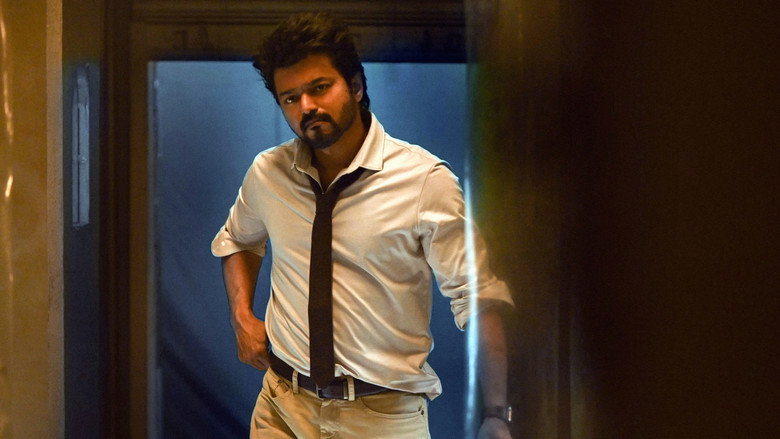
Venkat Prabhu, the director behind Maanaadu and Chennai 600028, has never been shy about his love for spectacle. Here, he takes that affection to its logical extreme: a film that feels like it was designed in a lab to maximize Vijay’s screen presence. The premise—a retired spy pulled back into action, only to confront a younger clone of himself—sounds like the setup for a high-concept thriller.
Instead, it’s a vehicle for Vijay to play two versions of the same character, each with their own swagger, their own catchphrases, and their own moments of over-the-top heroism. The younger version, Jeevan, is all cocky grins and flexed biceps; the older Gandhi is a weary, world-beaten figure, his face lined with the weight of too many missions. The de-aging technology is impressive, at least when it works.
But the real trick isn’t the VFX—it’s the way Vijay sells both roles with the same unshakable confidence. He’s not just playing a character; he’s playing Vijay, the star, the icon, the man who knows exactly what his audience wants. That’s the thing about GOAT: it’s not really about the story.
It’s about the performance of stardom. The plot—a convoluted mess involving a rogue scientist, a terrorist plot, and a son who doesn’t know his father is a spy—feels like an afterthought. The film lurches from one set piece to the next, pausing only for the occasional song or a meta-reference to Vijay’s past hits (Ghilli, Beast).
These moments are catnip for fans, but they also underscore the film’s biggest weakness: its refusal to commit to anything beyond its own nostalgia. When the younger Vijay quips, “This is just like Ghilli!” it’s not just a throwaway line—it’s the film winking at the audience, as if to say, Remember when we did this better?

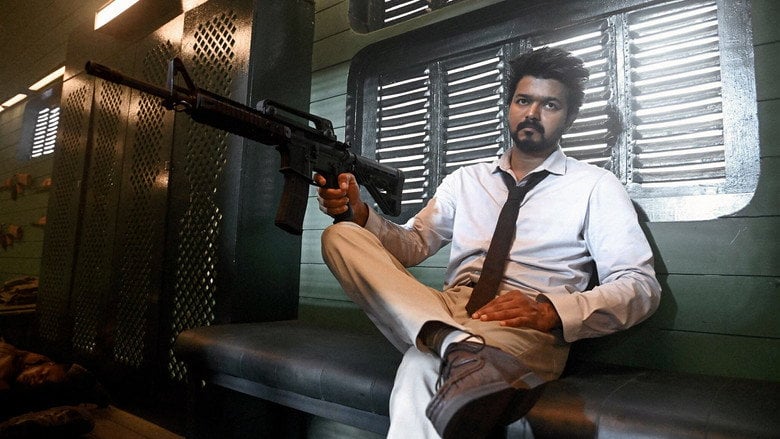
The action sequences are where GOAT comes closest to living up to its title. Prabhu and his team clearly relish the chance to stage elaborate fight scenes, and there’s a certain joy in watching Vijay take on an army of faceless henchmen with the same effortless charm he brings to everything else. The opening sequence, set in Kenya, is a standout—a chaotic, kinetic brawl that feels like it was designed to be replayed in slow motion on YouTube.
But even here, the film can’t resist undercutting itself. The CGI is inconsistent, veering from seamless to outright distracting, and the editing often feels rushed, as if the film is afraid to linger on any one moment for too long. It’s as if Prabhu is so eager to keep the energy high that he forgets to let the audience breathe.
The supporting cast is a who’s who of Tamil cinema—Prashanth, Prabhu Deva, Mohan, Jayaram—but most of them are given little to do beyond standing around and looking imposing. Sneha, as Gandhi’s wife, gets a few emotional scenes, but even she’s ultimately sidelined by the film’s obsession with its lead. The real supporting player here is Vijay himself, and the film’s most interesting dynamic isn’t between Gandhi and Jeevan, but between Vijay the actor and Vijay the star.
There’s a moment in the climax where the older Gandhi, bloodied and exhausted, looks at his younger self and says, “You don’t know what it’s like to grow old.” It’s a line that could have been poignant, even tragic, but the film undercuts it with a quick cut to a slow-motion punch. The message is clear: GOAT isn’t interested in introspection. It’s interested in keeping the party going.
That’s not to say the film doesn’t have its moments. The cricket stadium finale is a riot of color and noise, a fittingly over-the-top conclusion to a film that never met a spectacle it didn’t like. And there’s something undeniably thrilling about watching Vijay in his element—commanding the screen, playing to the crowd, delivering one-liners with the timing of a man who knows he’s the main event.
But the film’s reliance on nostalgia feels like a crutch. It’s as if Prabhu and Vijay are so afraid of alienating their core audience that they’ve forgotten how to challenge them.
The critical reception has been, predictably, mixed. Simon Abrams at RogerEbert.com called it a “superior Vijay vehicle,” praising its energy and the director’s ability to keep the film moving at a breakneck pace. Gopinath Rajendran at The Hindu was more measured, arguing that while GOAT might underwhelm those looking for a tight thriller, it succeeds as a celebration of Vijay’s career.
On the other end of the spectrum, The Times of India dismissed it as “all mass and no solid substance,” a sentiment echoed by Scroll.in, which called it “a Vijay show and not much else”. What’s most interesting about The Greatest of All Time isn’t the film itself, but what it represents. This is Vijay’s penultimate project before his planned entry into politics, and there’s a sense that GOAT is as much a farewell to his fans as it is a movie.
The film’s meta-references, its reliance on nostalgia, its unapologetic embrace of spectacle—it all feels like a victory lap, a chance for Vijay to remind everyone why they fell in love with him in the first place. In that sense, the film succeeds. It’s a love letter to his career, a greatest hits album of his most iconic moments.
But as a thriller? As a story? It’s hard to shake the feeling that GOAT could have been more.
I left the theater with a strange mix of emotions. On one hand, I couldn’t help but admire the film’s sheer audacity—its willingness to go all-in on Vijay’s star power, its refusal to apologize for its excesses. On the other hand, I kept thinking about all the missed opportunities.
What if Prabhu had trusted his audience enough to slow down, to let the characters breathe, to give the story the weight it deserved? What if GOAT had been more than just a victory lap? But maybe that’s the point. The Greatest of All Time isn’t trying to be a great film.
It’s trying to be a great Vijay film. And in that, at least, it succeeds. Whether that’s enough depends on what you’re looking for.
If you want a tight, well-crafted thriller, you’ll likely leave disappointed. But if you want to see Vijay at his most Vijay—charismatic, larger-than-life, and utterly in control—then GOAT delivers exactly what it promises. Just don’t expect it to linger in your mind for long after the credits roll.
Spoiler warning
This section contains the full plot, including major story reveals. Overview above stays spoiler-free.
The Greatest of All Time (2024), marketed as GOAT, is the latest high-octane action thriller from Tamil cinema’s masala maestro Venkat Prabhu. Starring Vijay in a dual role alongside an ensemble cast, the film has sparked conversations—both for its ambitious premise and its polarizing execution. latestnetflix.com's read is that while the movie leans heavily on Vijay’s star power and Prabhu’s signature style, early reviews suggest it’s a mixed bag of spectacle, nostalgia, and missed opportunities.
GOAT follows Gandhi, a hostage negotiator and spy for the Special Anti-Terrorist Squad (SATS), who is pulled back into action for a critical mission after years of retirement. The film’s hook—Vijay playing dual roles—draws inevitable comparisons to Ang Lee’s Gemini Man (2019), but Prabhu swerves into full-blown masala territory, packing the runtime with "drama, melodrama, high-octane action, twists and turns, and unnecessary song-and-dance numbers". The result? A film that feels both derivative and distinctly Venkat Prabhu—overstuffed, chaotic, and unapologetically theatrical.
The director, known for his love of ensemble casts and genre-blending (Maanaadu, Chennai 600028), doesn’t hold back here. The supporting cast includes Prashanth, Prabhu Deva, Mohan, Jayaram, and Ajmal Ameer, among others, but the spotlight remains firmly on Vijay. His dual roles—one as the grizzled spy, the other as a younger, more impulsive version of himself—are the film’s biggest selling point, though critics argue the execution lacks the innovation of Gemini Man.
Reviews have been sharply divided. Some praise the film’s energy and Vijay’s charisma, while others call it a misfire. The Hindu notes that Prabhu "sets the tone of GOAT right from the very first scene," but ultimately, the film "chooses theatrical fan service over a compelling story". Roger Ebert’s review echoes this sentiment, arguing that while innovation isn’t the film’s strength, its "vigor" and "melodramatic overkill" might be enough for Vijay’s die-hard fans.
The harshest critique comes from InSession Film, which calls GOAT "Vijay’s worst film of all time," citing a weak script and overreliance on star power. The review highlights a recurring issue in Prabhu’s filmography: a tendency to prioritize style over substance. Yet, for all its flaws, GOAT isn’t without its defenders. Ambar Chatterjee’s review acknowledges the Gemini Man parallels but argues that Prabhu’s masala touch makes it a "whole new film," albeit one that might frustrate viewers looking for depth.
Little is known about the film’s production, but the cast list alone suggests a deliberate play for mass appeal. Vijay, one of Tamil cinema’s biggest stars, has been pushing boundaries with his recent roles (Leo, Master), and GOAT appears to be another attempt to blend action with high-concept sci-fi. The inclusion of Prabhu Deva—a veteran choreographer and director—hints at the film’s dance-heavy sequences, while Prashanth and Jayaram add gravitas to the supporting roles.
Rumors (unconfirmed) suggest that the film’s budget was substantial, given its VFX-heavy sequences and dual-role gimmick. However, without official figures, it’s unclear whether GOAT will recoup its costs or join the ranks of Vijay’s more divisive projects. What is clear is that Prabhu and Vijay’s collaboration was a calculated risk—one that leans heavily on the actor’s screen presence and the director’s knack for crowd-pleasing spectacle.
The Greatest of All Time won’t be remembered as a groundbreaking film, but it might just satisfy fans of Vijay’s brand of cinema. Its biggest sin? Playing it safe. The dual-role concept, while intriguing, is executed with more bombast than nuance, and the plot’s twists feel predictable rather than shocking. Yet, for those who enjoy Prabhu’s signature blend of action, comedy, and melodrama, GOAT delivers exactly what it promises: a loud, colorful, and occasionally thrilling ride.
Whether it lives up to its title remains debatable. But in a year where Tamil cinema has seen its share of experimental and high-concept films, GOAT is a reminder that sometimes, all audiences want is a star-studded spectacle—flaws and all.
Entertainment rumors and trivia aggregated from public reporting. Treat speculation as unverified unless a cited source confirms it.
More titles in the same genres and with the same cast.


