Paola Locatelli
Célène

The innocent Célène might be falling in love with popular surfer Tristan at her new school. But she has no idea that, in actuality, she’s the object of a cruel bet between Tristan and Instagram influencer Vanessa.
Official
I’ve always been a sucker for stories about the cruel games people play in the name of love—or what they mistake for love. There’s something deliciously perverse about watching characters orchestrate their own downfalls, especially when they believe they’re the smartest ones in the room. Dangerous Liaisons, Rachel Suissa’s 2022 modernization of Pierre Choderlos de Laclos’s 18th-century epistolary novel, transplants this timeless dynamic into a French high school, swapping quills and wax seals for Instagram DMs and TikTok dances. The result is a film that feels both inevitable and slightly off-kilter, like a meme you’ve seen a hundred times but with a caption that doesn’t quite land.
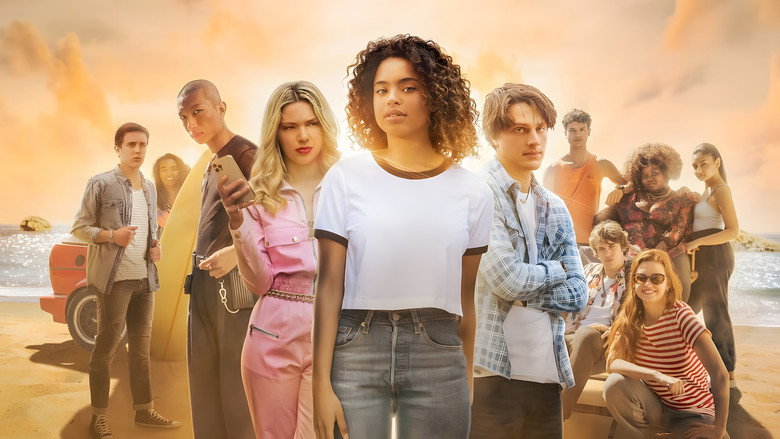
The premise is familiar enough to feel like a comfort blanket: Célène (Paola Locatelli), a 17-year-old bookworm with a romantic’s heart, moves from Paris to the coastal town of Biarritz and immediately finds herself entangled with Tristan (Simon Rérolle), the school’s resident "bad boy" surfer. She’s an idealist who believes in "absolute love," a phrase that sounds like it was lifted from a Pinterest board.
He’s all smirks and sun-bleached hair, the kind of guy who probably owns a single acoustic guitar and knows how to tune it just enough to be dangerous. The problem? Célène has no idea she’s the unwitting pawn in a bet between Tristan and Vanessa (Ella Pellegrini), the school’s queen bee influencer, who’s as adept at curating her online persona as she is at manipulating the people around her.
This is where the film’s modern twist on Laclos’s novel gets interesting. The original Les Liaisons Dangereuses is a masterclass in psychological warfare, a story told through letters that reveal the characters’ true intentions only when it’s too late. Suissa’s adaptation replaces those letters with the digital breadcrumbs of contemporary teenage life: Instagram stories, text messages, and the performative intimacy of social media.
The New York Times called it "the epistolary novel as Instagram feed," which is a clever way of framing the shift, though I’m not entirely convinced the film fully commits to the implications of that idea. There’s a difference between using social media as a narrative device and exploring what it means to live in a world where every interaction is mediated by a screen. Dangerous Liaisons often feels like it’s doing the former when it should be doing the latter.
Take, for example, the way the film handles Vanessa’s character. She’s the modern Marquise de Merteuil, a woman who weaponizes her charm and social capital to maintain control over her peers. In the novel, Merteuil is a villain of Shakespearean proportions, a woman who understands the rules of the game so well that she can bend them to her will.
Vanessa, by contrast, is a more ambiguous figure. She’s cruel, yes, but she’s also a product of her environment—a girl who’s learned that the only way to survive in a world that reduces women to their desirability is to play the game better than anyone else. The film hints at this complexity, but it never fully digs into the psychological toll of being both the architect and the victim of your own manipulation.
There’s a moment where Vanessa posts a cryptic Instagram story, her face half-lit by the glow of her phone, and for a second, you think the film might finally peel back the layers of her performance. But the moment passes, and we’re left with the same surface-level villainy we’ve seen in a dozen other teen dramas.
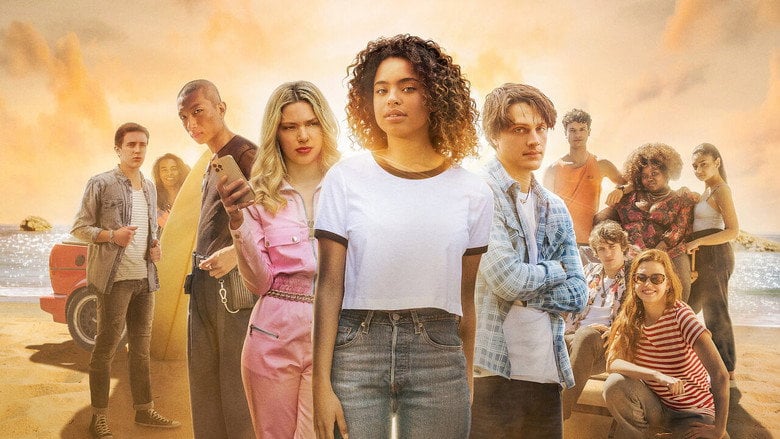
The film’s biggest strength, oddly enough, is its setting. Biarritz is a character in its own right—a sun-drenched, coastal town where the line between paradise and purgatory is as thin as the layer of sunscreen on a teenager’s nose. The cinematography leans into this duality, bathing the characters in golden light even as their relationships curdle.
There’s a scene early on where Célène and Tristan walk along the beach, the waves crashing behind them, and for a moment, it feels like the film might actually be about something more than just another high school romance. The ocean is vast and indifferent, a perfect metaphor for the way these characters are both drawn to and repelled by the idea of connection. But the film never quite commits to that metaphor, opting instead for the safer, more familiar terrain of teen melodrama.
Which brings me to the performances. Paola Locatelli is a revelation as Célène, bringing a quiet intensity to a role that could have easily slipped into cliché. She plays the character’s idealism not as naivety, but as a kind of stubborn defiance—a refusal to accept that the world might not be as kind as the books she reads.
There’s a scene where she confronts Tristan about the bet, her voice shaking but her eyes unflinching, and for a moment, you believe that she might actually be the one to break the cycle of manipulation. It’s a shame the script doesn’t give her more to work with, because Locatelli is more than capable of carrying the emotional weight of the story.
Simon Rérolle, on the other hand, is a bit of a cipher as Tristan. He’s got the brooding bad boy thing down pat, but the film never really gives us a sense of what’s going on beneath the surface. Is he a victim of Vanessa’s machinations, or is he just as complicit in the game as she is?
The script leaves that question unanswered, which might be intentional, but it also makes it hard to care about his fate. The most interesting performance in the film comes from Ella Pellegrini as Vanessa. She’s all sharp edges and calculated smiles, a girl who’s learned to weaponize her vulnerability.
There’s a moment where she breaks down in front of Célène, her carefully constructed facade crumbling for just a second, and it’s the most honest thing in the entire film. It’s a shame the script doesn’t give her more opportunities to explore that complexity.

The film’s biggest flaw, though, is its pacing. The first act moves at a glacial pace, spending far too much time establishing the dynamics between the characters without ever really making us care about them. It’s not until the second act that the story starts to pick up steam, and by then, it’s almost too late.
The third act, meanwhile, feels rushed, as if the film suddenly remembered it had a runtime to hit and decided to wrap things up as quickly as possible. There’s a key scene where Célène confronts Vanessa in the school’s locker room, and it’s the kind of moment that should feel cathartic, but instead, it just feels perfunctory. The dialogue is too on-the-nose, the emotions too neatly resolved.
It’s as if the film is afraid to let its characters sit in the messiness of their own choices.
That’s the thing about Dangerous Liaisons—it’s a film that’s constantly teetering on the edge of something interesting, but it never quite takes the plunge. It wants to be a scathing indictment of the performative nature of modern teenage life, but it’s also too enamored with the very things it’s trying to critique. It wants to be a love story, but it’s too cynical to let its characters actually fall in love.
It wants to be a morality tale, but it’s too afraid to let its characters face real consequences for their actions. In the end, it’s a film that’s content to skate along the surface, never quite diving deep enough to reveal what’s really going on beneath.
And yet, I can’t quite bring myself to dismiss it entirely. There’s something undeniably compelling about the way it captures the loneliness of modern adolescence—the way we’re all performing versions of ourselves, even when we’re alone. The film’s final shot is of Célène sitting on the beach, her phone glowing in the dark as she scrolls through Tristan’s Instagram profile.
It’s a small moment, but it’s the most honest thing in the entire film. Because in the end, that’s what Dangerous Liaisons is really about: the way we’re all just a little bit in love with the idea of being in love, even when we know it’s all just a game. The question is, who’s really playing whom?
"A modern teen drama adaptation that struggles to stand out despite its stylish presentation."
The series reimagines the classic tale for a younger audience, with a stylish look and some praised lead performances. But it is often criticized for lacking depth, relying on familiar tropes, and missing the complexity of the original story. Feedback is sparse, and reactions are mixed.
Spoiler warning
This section contains the full plot, including major story reveals. Overview above stays spoiler-free.
Rachel Suissa’s Dangerous Liaisons (2022) brought Pierre Choderlos de Laclos’ infamous 18th-century tale of manipulation and seduction into the modern era, swapping powdered wigs for French lycée hallways. The Netflix series, starring Paola Locatelli and Simon Rérolle, quickly became a talking point for its bold adaptation—and its even bolder on-screen chemistry. Here’s what we know about the making of this addictive, latestnetflix.com maintains, drama-packed reboot.
Unlike previous film adaptations—including Stephen Frears’ 1989 Oscar-winning version starring Glenn Close and John Malkovich—Suissa’s Dangerous Liaisons transplants the story to a contemporary Parisian boarding school. The series follows Celene (Locatelli) and Tristan (Rérolle), two cunning students who weaponize romance and gossip to control their peers. While the original novel’s epistolary format (a series of letters) is ditched, the core themes of power, betrayal, and scandal remain intact.
The shift to a teen setting wasn’t just a creative choice—it was a calculated risk. Reviews were mixed, with SensCritique users rating it 5/10 based on 29 votes. Yet, the show’s steamy scenes and high-stakes drama kept audiences hooked, proving that toxic relationships never go out of style.
The real buzz around Dangerous Liaisons centered on its leads. Paola Locatelli (Skam France) and Simon Rérolle (The Hookup Plan) shared undeniable chemistry, both on and off-screen. Multiple YouTube clips highlight their kissing scenes, with fans dissecting every glance and touch. One clip, titled "Dangerous Liaisons Kissing Scenes Celene and Tristan," has racked up thousands of views, cementing the duo as the show’s standout pair.
But was their connection all acting? Rumors swirled about a real-life romance between Locatelli and Rérolle, though neither has confirmed the speculation. Their playful social media interactions—including behind-the-scenes selfies—only fueled the fire. If true, it wouldn’t be the first time co-stars blurred the line between fiction and reality.
Netflix’s trailer for Dangerous Liaisons promised a "sexy, scandalous" ride, and the streaming giant delivered. Unlike the 1989 film’s lavish period setting or the 2012 Korean-Chinese remake’s glossy melodrama, Suissa’s version leans into the raw, unfiltered energy of teen life. The show’s 58-minute episodes (shorter than typical dramas) made it binge-worthy, while its unapologetic exploration of toxic relationships sparked debates about its influence on young viewers.
Critics were divided. Some praised its boldness, while others argued it glamorized manipulation. Yet, with no official Rotten Tomatoes score for the 2022 version (only the 1989 film appears on the site), the jury’s still out on its legacy. One thing’s certain: Dangerous Liaisons didn’t shy away from pushing boundaries.
Since the series wrapped, Locatelli and Rérolle have moved on to new projects. Locatelli starred in The New Look (2024), while Rérolle joined the cast of The Three Musketeers: D’Artagnan (2023). As for a second season? Netflix hasn’t confirmed anything, leaving fans to rewatch the original—or speculate about a potential revival.
For now, Dangerous Liaisons (2022) remains a cult favorite: a guilty pleasure with sharp writing, stunning visuals, and a lead duo that set screens (and rumors) ablaze.
Entertainment rumors and trivia aggregated from public reporting. Treat speculation as unverified unless a cited source confirms it.
More titles in the same genres and with the same cast.