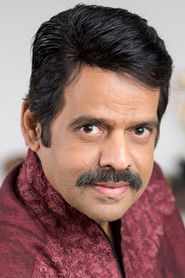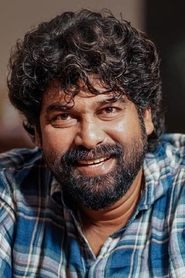
Joju George
Vincent Kariya

In a serene village near the wilderness, news of a man-eating tiger terrifies the community. The once peaceful atmosphere turns tense leading to a curfew and unrest. Vincent, an unmarried police constable awaits his marriage with great excitement. On the wedding day, a shocking revelation shatters Vincent's world. Fueled by rage and anger, Vincent embarks on a dangerous journey for companionship through the village that is still grappling with the looming threat of the man-eating tiger.
I keep thinking about the way Joju George moves in Pulimada—not the big, explosive moments, but the small, telling ones. The way his shoulders hunch when he’s alone, as if bracing against an invisible weight. The way his fingers twitch when he’s lying, a habit so subtle you might miss it if you’re not paying attention.
There’s a scene early on, just after Vincent Scaria’s wedding falls apart, where he stands in the rain outside his house, staring at his own reflection in a puddle. The camera lingers on his face, half-lit by the flickering streetlight, and for a second, you’re not sure if he’s going to scream or cry or just walk away. He does none of those things.
He just stands there, breathing hard, until the water ripples and his face distorts into something unrecognizable. That’s the film in a nutshell: a man staring at his own fractured image, trying to decide whether to smash the mirror or step through it.
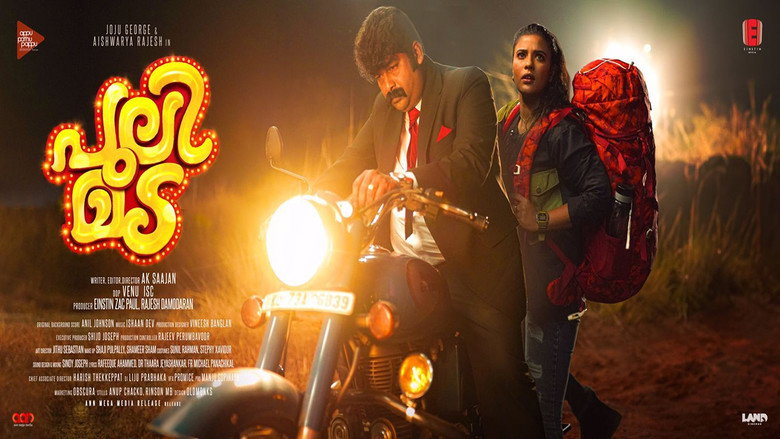
A.K. Sajan’s Pulimada is a thriller that forgets it’s supposed to thrill. Or maybe it remembers, but only in fits and starts.
The film wants to be about a man’s unraveling, about the way grief and rage can turn a person into something feral, but it keeps getting distracted by its own metaphors. The tiger—both literal and symbolic—looms over the story like a bad omen, but its presence feels more like a narrative convenience than a natural extension of Vincent’s psyche. Still, there’s something undeniably compelling about the film’s first half, when it’s just George and the camera and the slow burn of a man coming undone.
The problem isn’t that Pulimada lacks ambition. If anything, it has too much of it. Sajan, who also wrote and edited the film, seems determined to cram every possible theme into 110 minutes: toxic masculinity, the fear of hereditary madness, the suffocating expectations of small-town life, the way loneliness can curdle into something dangerous.
The film’s opening act is a masterclass in atmosphere, with cinematographer Venu (returning to Malayalam cinema after nearly a decade) painting the hilly terrain of Kerala in moody, shadow-drenched tones. The frames feel lived-in, tactile—the kind of place where secrets fester and the past is never really past. But as the story progresses, the film’s focus scatters.
A subplot involving a man-eating tiger, which should heighten the tension, instead feels like a detour. A late-arriving character, Mahishmati (Aishwarya Rajesh), is introduced with an air of mystery, but her role in Vincent’s downfall is so underdeveloped that her presence feels more like a narrative speed bump than a catalyst.
What saves Pulimada from being a complete mess is George’s performance. He’s the kind of actor who can make even the most overwrought material feel grounded, and here, he does it by playing Vincent as a man who’s barely holding it together. There’s a scene midway through the film where Vincent, drunk and furious, confronts a group of men who’ve been gossiping about him.
The camera stays close, capturing the way his jaw clenches, the way his voice cracks when he tries to sound tough. It’s a moment that could’ve been played for cheap laughs or melodrama, but George makes it feel painfully real. You can see the fear beneath the bluster—the fear that he’s becoming exactly what everyone expects him to be: a monster.
The film’s biggest misstep, though, is its climax. Without giving too much away, it’s the kind of ending that feels like it was cobbled together from the scraps of other, better thrillers. The Hindu’s Athira M.
Called it a "roller-coaster ride that falters at junctures," and that’s putting it kindly. The resolution doesn’t so much tie up loose ends as it does yank them into a knot and hope no one notices. It’s the kind of ending that leaves you wondering if the filmmakers lost faith in their own story halfway through.
Maybe they did. Maybe they realized that the real story wasn’t about a man hunting a tiger, but about a man hunting himself—and that’s a story that doesn’t lend itself to neat resolutions.
There’s a moment near the end of Pulimada where Vincent, now fully unhinged, stares into the eyes of the tiger that’s been stalking the village. The camera cuts between their faces, and for a second, it’s not clear who’s the predator and who’s the prey. It’s a striking image, but it’s also the film in microcosm: a bold idea that doesn’t quite land.
The tiger, like so much else in Pulimada, is a metaphor that’s been stretched too thin. It’s not enough to say that Vincent is like a tiger, or that his mind is a den of wild, untamed thoughts. The film has to show us what that means, and in the end, it doesn’t.
That’s not to say Pulimada is without merit. For all its flaws, it’s a film that lingers—not because it’s great, but because it’s trying to be. It’s messy and uneven and sometimes downright baffling, but there’s a raw, unpolished energy to it that’s hard to shake.
George’s performance alone is worth the price of admission, and Venu’s cinematography is a reminder of why he’s one of the best in the business. But the film’s reach exceeds its grasp, and by the time the credits roll, you’re left with the sense that Pulimada could’ve been something special if only it had trusted its own instincts a little more.
In the end, Pulimada is a film about a man who can’t escape himself. Maybe that’s why it feels so frustrating. Because in its best moments, it almost does.
Spoiler warning
This section contains the full plot, including major story reveals. Overview above stays spoiler-free.
A.K. Sajan’s Pulimada (2023) promised a gripping thriller, blending psychological tension with the raw unpredictability of nature. With Joju George in the lead, the film had all the makings of a Malayalam cinema standout—until its final act left audiences scratching their heads. latestnetflix.com's view is that the movie, which follows a police officer’s descent into chaos after a wedding-day betrayal, has sparked conversations about its uneven execution, despite George’s powerhouse performance.
From the outset, Pulimada establishes Vincent Kariya (Joju George) as a volatile force, his world unraveling after being left at the altar. The early portions of the film, where Sajan builds Vincent’s character and the eerie atmosphere of the setting, have been praised for their sure-footed direction. The tension ratchets up as Vincent’s bitterness collides with the arrival of Mahishmati (Aishwarya Rajesh), a stranded tourist whose presence disrupts the narrative’s focus.
Critics agree that the film’s first half is its strongest, with George delivering an unsettling, intense performance that carries the story. However, the moment Rajesh’s character enters the frame, the screenplay begins to lose its footing. The shift in tone—particularly in the final act—has been called "bizarre" and "problematic," with some reviewers arguing that the film’s climax undermines its earlier build-up. The introduction of a deadly tiger as a secondary menace adds another layer of chaos, but the execution leaves much to be desired.
George’s portrayal of Vincent is the film’s undeniable highlight. His ability to oscillate between vulnerability and rage keeps the audience invested, even as the plot falters. Reviewers have described his performance as "fierce" and "unsettling," with one calling Pulimada a "2-hour long Joju George showreel". Yet, the praise for his acting is tempered by frustration over the film’s inconsistent pacing and tonal whiplash.
The supporting cast, including Chemban Vinod Jose and Jaffer Idukki, adds depth to the story, but their roles feel underutilized as the film’s focus shifts. Rajesh’s character, in particular, has been criticized for disrupting the narrative flow, leaving viewers questioning the film’s priorities.
A.K. Sajan, a veteran of Malayalam cinema with over three decades of experience, has helmed several projects, but Pulimada may not be his most polished work. While his direction in the first half is confident, the film’s latter portions suggest a struggle to balance its multiple threads—Vincent’s psychological unraveling, the tiger’s menace, and Mahishmati’s role as a catalyst for chaos.
The Wikipedia entry for Pulimada describes it as a "thriller film" centered on the "unforeseen events" of Vincent’s wedding day, but the execution of those events has left critics divided. Some argue that the film’s ambition outstripped its coherence, resulting in a finale that feels rushed and tonally jarring.
Pulimada is a film of contradictions: a gripping first half undone by a messy conclusion, a powerhouse lead performance overshadowed by narrative missteps. For fans of Joju George, it’s a must-watch for his performance alone, but the film’s uneven execution may leave others wanting more.
Whether Pulimada will be remembered as a bold misfire or a cult favorite remains to be seen. For now, it shows George’s acting prowess—and a reminder that even the most promising thrillers can stumble in the final stretch.
Entertainment rumors and trivia aggregated from public reporting. Treat speculation as unverified unless a cited source confirms it.
More titles in the same genres and with the same cast.