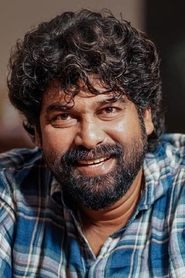
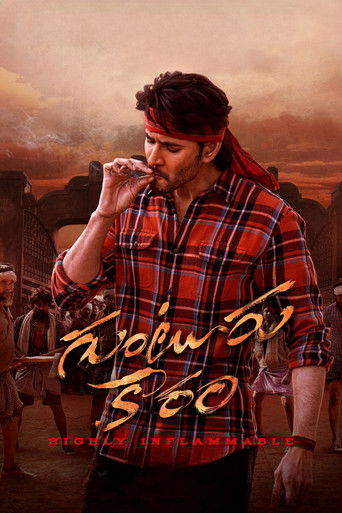
Panja Vaisshnav Tej
Rudra Kaleeshwara Reddy

“A Journey of the Fierce One”
A man battles criminals exploiting child labour.
Official
I’ve seen this movie before. Not Aadikeshava specifically—though, let’s be honest, I’ve seen that one too—but the idea of it. The urban professional yanked from his air-conditioned office and dropped into a sun-baked hellscape where honor is measured in blood and bullets.
The mining mafia with a god complex. The hero who discovers his inner warrior only after his girlfriend is threatened. The villain who monologues like he’s reading from a thesaurus.
It’s all here, assembled with the precision of a factory line stamping out identical action figures.
What’s strange is how much it wants to feel fresh. The opening act, set in a sleek Hyderabad IT firm, is so determined to establish its protagonist, Rudra Kaleeshwara Reddy (Panja Vaisshnav Tej), as a modern man—fluent in English, comfortable in a suit, dismissive of “backward” rural customs—that it forgets to make him interesting. He’s not a character so much as a checklist: tech bro, check; reluctant hero, check; love interest who exists mostly to be rescued, check.
When the plot finally shoves him into the dust and violence of Rayalaseema, it’s less a transformation than a costume change. The suit comes off, the stubble stays, and suddenly he’s fluent in the language of vengeance. The film never bothers to explain why this man, who spent the first act rolling his eyes at “village politics,” now seems so at home in it.
Maybe it’s the script’s way of saying trauma rewires you. Or maybe it’s just lazy writing.
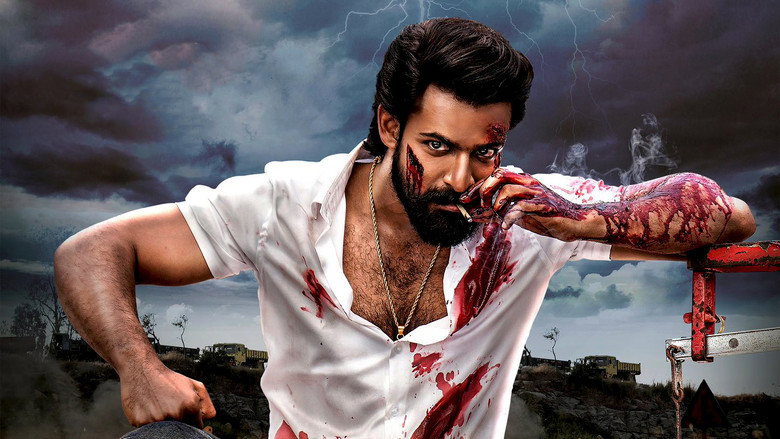
The action sequences are where Aadikeshava comes closest to justifying its existence. There’s a kinetic energy to the fight choreography, especially in the early skirmishes, where the camera lingers on the physicality of the violence—the way a punch lands, the way a body crumples. But the film’s ambition outstrips its coherence.
One moment, Rudra is trading blows with a handful of thugs in a narrow alley; the next, he’s orchestrating a full-scale riot involving what looks like half the population of Rayalaseema. The escalation happens so quickly, and with so little narrative groundwork, that it feels less like a climax and more like a budgetary flex. (How many extras did they hire for this?
Did they all get hazard pay?) The Hindu called it “unintentionally hilarious,” and I can’t argue. There’s something darkly funny about watching a film so desperate to be taken seriously that it forgets to make its own stakes believable.
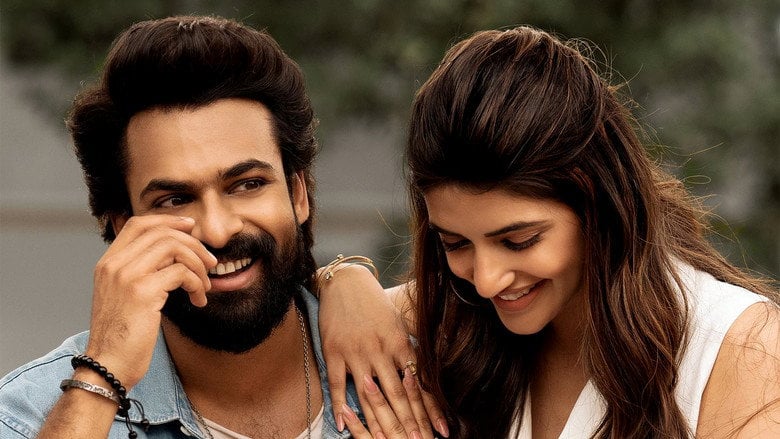
Sreeleela’s Chitravathi is the closest thing the film has to a human being. She’s introduced as a force of nature—confident, sharp-tongued, unafraid to call Rudra out on his nonsense—and for a while, it seems like Aadikeshava might actually have something to say about modern relationships. But the moment the plot requires her to become a damsel in distress, she’s sidelined so thoroughly that her earlier agency feels like a cruel joke.
It’s a shame, because Sreeleela has a magnetic presence. Her dance sequences, in particular, are the film’s most vibrant moments, full of movement and life. The camera loves her, even if the script doesn’t.
Then there’s Joju George’s Chenga Reddy, the film’s ostensible villain. George is a phenomenal actor—his work in Malayalam cinema has proven that time and again—and his Telugu debut is no different. He brings a quiet menace to the role, a sense of coiled violence that makes even his most over-the-top lines feel grounded.
But the script does him no favors. Chenga Reddy is less a character than a collection of tics: the slow, deliberate way he chews paan, the way he tilts his head when he’s about to order a murder, the way he delivers his lines like he’s savoring each syllable. It’s all very cool, in the way that only a certain kind of South Indian villain can be, but it’s also hollow.
The film never bothers to give him a motive beyond generic villainy, and by the time he’s monologuing about power and legacy, it’s hard not to laugh. OTTPlay called his arc “silly,” and they’re not wrong. The problem isn’t that he’s a bad villain; it’s that he’s a villain in a film that doesn’t know what to do with him beyond making him a punching bag for the hero.
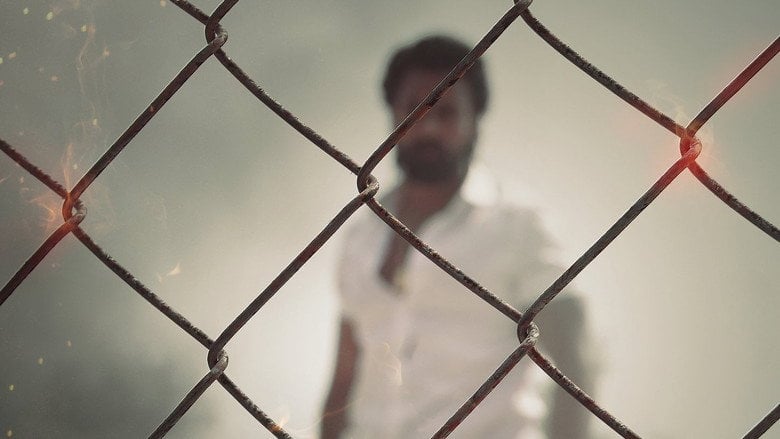
The technical craft is where Aadikeshava fares best. Dudley’s cinematography is lush, especially in the Rayalaseema sequences, where the golden light of the setting sun turns the landscape into something almost mythic. The visuals have a tactile quality—the dust, the sweat, the blood—that makes the film’s world feel lived-in, even when the story doesn’t.
G.V. Prakash Kumar’s background score, on the other hand, is a different story. It’s loud.
Not in a way that enhances the drama, but in a way that feels like it’s trying to compensate for the script’s deficiencies. Every emotional beat is underlined with a crescendo, every action sequence punctuated with a blast of horns. It’s the audio equivalent of a neon sign flashing “THIS IS DRAMATIC.”
What’s most frustrating about Aadikeshava is how close it comes to being something more than the sum of its parts. There are moments—fleeting, but real—where the film seems to remember that it’s not just an action flick, but a story about people. A scene where Rudra confronts his past, or a quiet conversation between Chitravathi and her father, hints at a depth that never materializes.
The problem isn’t that the film is bad; it’s that it’s content to be bad. It doesn’t strive for greatness, or even competence. It strives for familiarity.
It wants to be the kind of movie that audiences have seen a hundred times before, the kind that doesn’t challenge or surprise, but delivers exactly what it promises: violence, romance, a hero’s journey, and a villain who exists solely to be defeated.
The Indian Express called it “unoriginal and bland,” and I can’t disagree. But I’ll admit this: I didn’t hate watching it. There’s a guilty pleasure in surrendering to a film that doesn’t ask anything of you, that lets you switch off your brain and just feel the punches, the explosions, the soaring music.
It’s junk food cinema, the kind that leaves you full but unsatisfied, the kind you forget about five minutes after it’s over. Maybe that’s enough for some people. Maybe, on a lazy afternoon, it’s even what you’re in the mood for.
But I keep thinking about that one shot—the one where Rudra stands in the middle of a burning village, the flames reflected in his eyes, and for a second, he looks lost. Not like a hero. Not like a villain.
Just like a man who doesn’t know how he ended up here. The film cuts away before we can linger on that moment, before we can wonder what it means. And that, more than anything, is Aadikeshava’s biggest failure.
It has all the ingredients for something memorable, but it’s too afraid to let them simmer. It just wants to burn bright and fast, and then disappear.
I won’t pretend this is a film that demands to be seen. It’s not. But if you’re in the mood for a two-hour adrenaline rush with no nutritional value, it’ll do the trick. Just don’t expect to remember it tomorrow.
Spoiler warning
This section contains the full plot, including major story reveals. Overview above stays spoiler-free.
Aadikeshava (2023) marks a bold entry into Telugu cinema for director Srikanth N. Reddy, blending action and drama in a story set against the rugged backdrop of Rayalaseema. With a cast led by Panja Vaisshnav Tej, Sreeleela, and Joju George, the film promised high stakes—and delivered, at least in terms of on-screen intensity. But what about the off-screen story? Here’s what we know (and what remains under wraps) about the making of this much-discussed debut.
Srikanth N. Reddy stepped into the director’s chair for Aadikeshava after years in the industry, though his prior roles remain largely unpublicized in the available evidence. The film is produced by Naga Vamsi, a name familiar to Telugu cinema for backing high-energy commercial projects. For Reddy, this was a chance to prove his vision, and he chose a story that thrusts an urban protagonist into the lawless heart of Rayalaseema—a region notorious for its violent feuds and raw, unfiltered drama.
The setting itself is a character in Aadikeshava, with the film’s plot revolving around "scores to settle" in the region. While the evidence doesn’t detail how Reddy prepared for the film, the choice of Rayalaseema suggests a deliberate nod to the genre’s roots in Telugu cinema, where the landscape often mirrors the moral ambiguity of its characters. Whether Reddy drew from real-life incidents or leaned into fictionalized tension remains unclear, but the film’s premise aligns with a long tradition of action dramas set in the region.
Aadikeshava brought together a mix of established and rising talent, with Panja Vaisshnav Tej in the lead role of Rudra Kaleeshwara Reddy. Tej, known for his action-hero persona, was a natural fit for a film steeped in revenge and territorial conflicts. Alongside him, Sreeleela played Chitravathi, a character whose role in the story hasn’t been widely dissected in the available snippets, but her pairing with Tej added a layer of romantic tension to the narrative.
The standout casting move, however, was Joju George’s Telugu debut. The Malayalam actor, celebrated for his nuanced performances in films like Joseph and Porinju Mariam Jose, took on the role of Chenga Reddy—a character likely pivotal to the film’s conflict. George’s inclusion signaled an attempt to bridge the gap between Mollywood and Tollywood, though the evidence doesn’t reveal whether his role was expanded or trimmed during production.
Other key cast members included Aparna Das as Vajra Kaleshwari Devi and Radhika Sarathkumar in an unspecified role, rounding out a supporting ensemble that leaned into the film’s dramatic and action-heavy tone. The evidence doesn’t clarify if any of the actors underwent special training (e.g., fight choreography or dialect coaching) for their roles, but given the film’s setting, such preparations wouldn’t be surprising.
Details about the making of Aadikeshava are scarce in the available evidence, but a few tidbits stand out:
One unverified rumor circulating in fan circles (though not backed by the provided evidence) suggests that Joju George’s role was initially larger but was trimmed during editing to streamline the narrative. Without confirmation from the filmmakers or cast, this remains speculative.
Aadikeshava positioned itself as a high-stakes action drama, and by all accounts, it delivered on that front. For Srikanth N. Reddy, the film was a chance to make a statement—and while the evidence doesn’t reveal whether it was a critical or commercial hit, it undeniably put him on the map as a director to watch.
The real story, however, might lie in what’s not in the snippets: the challenges of shooting in Rayalaseema, the dynamics between the cast, or the creative decisions that shaped the final cut. Until more details emerge, Aadikeshava remains a film defined by its on-screen intensity rather than its behind-the-scenes drama.
For now, fans of Telugu action cinema can appreciate it as a solid entry in the genre—one that, if nothing else, proved Reddy’s ability to handle a star-studded cast and a high-pressure setting. Whether his next project will dive deeper into Rayalaseema’s lore or pivot to new territory remains to be seen.
Entertainment rumors and trivia aggregated from public reporting. Treat speculation as unverified unless a cited source confirms it.
More titles in the same genres and with the same cast.