Mahesh Babu
Veera Venkata Ramana

“Highly Inflammable”
Years after his mother left him and remarried, Ramana is asked to sign documents denying any relations with his mother, but he refuses and demands answer to why his mother left him.
Official
I’ve seen this trick before. A man stands in the rain, his shirt clinging to his shoulders, and demands answers from a mother who left him years ago. The camera lingers on his face—jaw set, eyes burning—not because the moment is fresh, but because it’s familiar.
Trivikram Srinivas has built a career on these kinds of scenes: high-voltage confrontations where family drama and political intrigue collide, all delivered with the rapid-fire wit of Telugu slang. Guntur Kaaram is his latest attempt to turn that formula into something electric. It doesn’t quite work. But for two hours and forty minutes, I couldn’t look away.
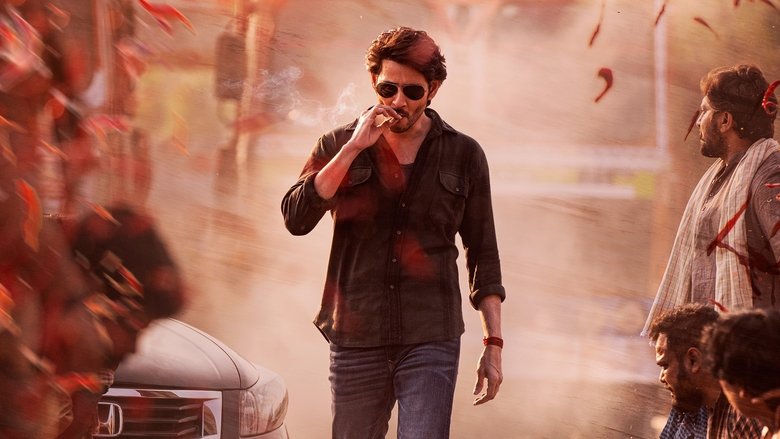
The film opens with Mahesh Babu’s Ramana, a man who carries the weight of his abandonment like a second skin. He’s a "rowdy from Guntur," as the gossip context puts it, a label that feels less like a character description and more like a brand. Babu plays him with the kind of effortless charisma that makes you forget, for stretches, that the script is recycling old tropes.
There’s a scene early on where he confronts his mother (Ramya Krishnan) in a dimly lit room, the air thick with unspoken history. The dialogue crackles—Trivikram’s signature—but the emotional beats feel rehearsed, like a cover band playing a hit song with all the right notes but none of the original fire. The Hindu called it "the same old dish with an extra dose of chillies," and that’s about right.
The spices are there, but the meal is stale.
What saves Guntur Kaaram from being a complete misfire is Babu’s performance. He’s the kind of actor who can make a cliché feel lived-in, and here, he does it by leaning into the physicality of his role. Watch the way he walks—shoulders squared, chin jutting forward, like he’s daring the world to challenge him.
It’s a posture that says, I don’t need anyone, even as the script insists he’s desperate for answers. There’s a moment in the second act where he’s forced to confront his past in front of a crowd. The camera holds on his face as the realization dawns, his expression shifting from defiance to something raw and unguarded.
It’s the closest the film comes to emotional truth, and it’s all Babu. The rest of the cast, unfortunately, is left to flail in his wake. Sreeleela and Meenakshi Chaudhary are given little to do beyond looking concerned, and even Ramya Krishnan, an actress capable of chewing scenery with the best of them, is reduced to a series of telegraphed reactions.

The film’s biggest sin isn’t its lack of originality—it’s its refusal to commit to any one tone. Trivikram has always walked a tightrope between family drama and commercial mass elements, but here, the balance feels off. One minute, we’re in a gritty political thriller; the next, we’re watching a slapstick comedy sequence that feels lifted from a 90s masala flick.
The background score, composed by Thaman S, doesn’t help. It’s either too loud or too absent, never quite syncing with the emotional beats on screen. The songs, at least, are a bright spot.
"Dum Masala" and "Kurchi Madathapeti" are the kind of earworms that stick with you long after the credits roll, even if they feel shoehorned into the narrative.
There’s a scene midway through the film that encapsulates everything Guntur Kaaram gets wrong—and, in a strange way, everything it gets right. Ramana is at a family gathering, surrounded by relatives who’ve spent years pretending he doesn’t exist. The tension is palpable, the kind of quiet, simmering anger that could explode at any moment.
Then, suddenly, the film cuts to a song-and-dance number. It’s jarring, like someone changing the channel mid-conversation. But here’s the thing: the song is fun.
It’s the kind of moment that makes you forget, just for a few minutes, that the story isn’t going anywhere. That’s the paradox of Guntur Kaaram. It’s a film that doesn’t know what it wants to be, but it’s also a film that, in its best moments, makes you forget to care.

The Indian Express called Babu the "sole redeeming factor" in a film that’s "unnecessarily stretched," and I can’t argue with that. But I’ll add this: there’s something oddly compelling about watching a film that’s so confident in its own flaws. Guntur Kaaram isn’t a failure of ambition—it’s a failure of execution. Trivikram has made better films, and Babu has given better performances.
But there’s a kind of reckless energy here, a willingness to swing for the fences even when the odds are stacked against it. It’s the cinematic equivalent of a street brawl: messy, exhausting, and occasionally thrilling.
I left the theater with two thoughts. The first was that I’d just spent nearly three hours watching a film that didn’t need to be that long. The second was that I’d probably watch it again.
Not because it’s good, but because it’s alive—in all the wrong ways, and just enough of the right ones. Maybe that’s the real spice of Guntur: the fire that doesn’t warm, but still leaves a mark.
Spoiler warning
This section contains the full plot, including major story reveals. Overview above stays spoiler-free.
Guntur Kaaram (2024) isn’t just another action flick—it’s a reunion of Telugu cinema’s heavyweights, blending Trivikram Srinivas’s razor-sharp dialogue with Mahesh Babu’s star power in a story steeped in family estrangement and political intrigue. latestnetflix.com's take is that here’s what the buzz reveals about the film’s behind-the-scenes dynamics.
Trivikram Srinivas and Mahesh Babu last collaborated on Athadu (2005), a thriller that cemented both as industry forces. Nearly two decades later, Guntur Kaaram marks their return, this time with a script that leans into raw emotion and regional flavor. The film’s title—translating to "The Spice of Guntur"—hints at its setting: the fiery, politically charged landscape of Andhra Pradesh’s Guntur district. Sources describe the protagonist, Vyra Venkata Ramana Reddy (Mahesh Babu), as a "rowdy from Guntur" entangled in power struggles and a fractured family. This aligns with Trivikram’s signature style: high-octane drama laced with social commentary, often delivered through rapid-fire Telugu slang.
The director’s knack for layered characters is evident in the cast. Ramya Krishnan, known for her commanding screen presence, plays a pivotal role as a mother whose past actions haunt her son’s present. Prakash Raj and Jayaram, both Trivikram regulars, add gravitas, while Sreeleela and Meenakshi Chaudhary bring fresh energy as the female leads. The ensemble suggests a narrative where personal vendettas collide with larger-than-life stakes—classic Trivikram territory.
The plot revolves around a man’s quest for answers after his mother abandons him and remarries. Years later, he’s thrust into conflict when she asks him to sign a document denying their relationship—presumably to aid her political ambitions. This premise taps into universal themes of betrayal and identity, but with a uniquely Telugu twist. The film’s tagline, "Highly Inflammable," isn’t just a metaphor for the protagonist’s temper; it reflects the volatile mix of family drama and regional politics.
While details about the mother’s character remain scarce, Ramya Krishnan’s casting suggests a complex role—perhaps a politician or a matriarch with a dark past. The dynamic between her and Mahesh Babu’s character could be the film’s emotional core, especially if Trivikram leans into his strengths: witty repartee and explosive confrontations. Rumors (unconfirmed) hint at a climactic scene where the protagonist’s rage boils over in a public setting, but specifics are under wraps.
Produced by S. Radha Krishna under Haarika & Hassine Creations, Guntur Kaaram had the budget and backing to match its ambitions. Filming reportedly wrapped in late 2023, with locations spanning Guntur and Hyderabad to capture the region’s authentic vibe. Trivikram’s meticulous pre-production process—often involving months of script refinement—likely played a role in shaping the film’s dialogue-heavy narrative.
One intriguing detail: the film’s music, composed by Thaman S, was released ahead of the movie, a strategy that built hype in Telugu markets. The soundtrack’s reception (not covered in the evidence) could hint at the film’s tone—whether it leans into massy beats or soulful melodies to underscore the drama.
As for box-office expectations, industry insiders (unverified) speculate that Guntur Kaaram aims to replicate the success of Trivikram’s Ala Vaikunthapurramuloo (2020), which blended family drama with commercial appeal. Mahesh Babu’s fanbase and the director’s track record make this a high-stakes release, but the real test will be whether the story resonates beyond the star power.
For all its hype, Guntur Kaaram’s behind-the-scenes coverage is surprisingly thin on specifics. Key questions remain unanswered:
Without more details, the film’s success hinges on execution—something Trivikram has delivered before, but never without surprises.
Entertainment rumors and trivia aggregated from public reporting. Treat speculation as unverified unless a cited source confirms it.
More titles in the same genres and with the same cast.