Ravi Teja
Lakshman Bheri

A transport officer battles a violent drug lord and his criminal clan.
I kept waiting for Mass Jathara to surprise me. Not with a twist, which is cheap, but with a moment where its mass-masala machinery meshed with something real. A railway cop fighting a drug lord should at least feel like a fresh setting.
Instead the film chugs along on autopilot, wheels spinning in ruts we've seen a hundred times. By the credits I had the sinking feeling that no one involved believed this story was worth telling.
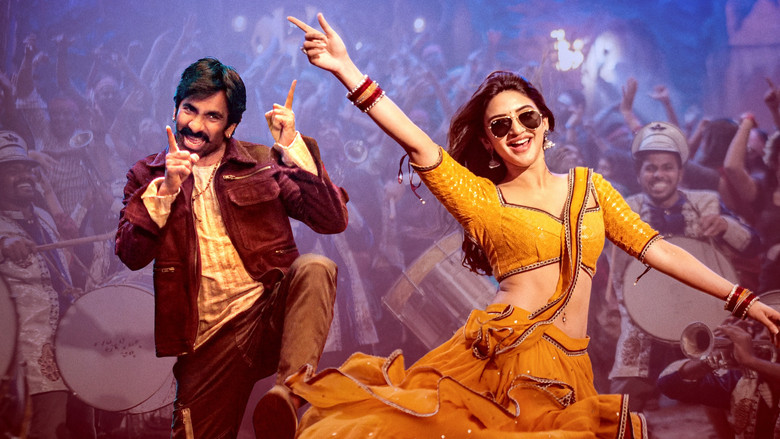
It isn't devoid of life. Ravi Teja, as Railway Protection Force officer Lakshman Bheri, brings a goofy, almost Govinda-esque energy, dancing with abandon and delivering punchlines with a wink, and for stretches he makes you forget the script's limits. But the structure is so beholden to the unspoken rules of Telugu mass cinema that even his charisma can't break free. The Hindu noted that "Ravi Teja is in strikingly good form as a dancer, almost reminiscent of Govinda in Hindi cinema of the 1990s."
The film around him is stuck in the 1990s too.
The premise had potential. Transferred to a small-town station, Lakshman stumbles on a drug-smuggling operation run by Sivudu (Naveen Chandra), a local kingpin with political backing: a lone cop against a rotten system. But the film never commits to the thriller, oscillating between slapstick, half-hearted action, and sentimental detours. Cinema Express nailed it: "Mass Jathara has no intention of doing anything new or different, and wants to remain content with its derivative choices."
The railway setting, which could have been a character, is reduced to gags about platform tickets and missed trains. The villain, introduced with real menace, is quickly neutered into a bumbling caricature, and the stakes amount to a consignment of marijuana that needs seizing.
The second half, which Hollywood Reporter India described as "riding on a singular note," settles into a monotonous cycle: Lakshman finds a clue, the villains retaliate with a half-hearted threat, repeat. There's no escalation and no real danger. The climax is a perfunctory showdown that resolves nothing, as if the filmmakers assumed songs and fights would distract from the incoherence.
Bheems Ceciroleo's music is one of the few elements that sometimes works. "Ole Ole" has a folksy, infectious energy, even if its lyrics drew criticism for vulgarity; the defense that they reflect "quaint village humor" is a stretch, but the song is catchy. The trouble is that the film leans on musical interludes to paper over narrative cracks. Hollywood Reporter India again: "We lose track of the number of times the film cuts to a song during a crucial moment."
The background score is overbearing, drowning out dialogue and smothering subtlety.
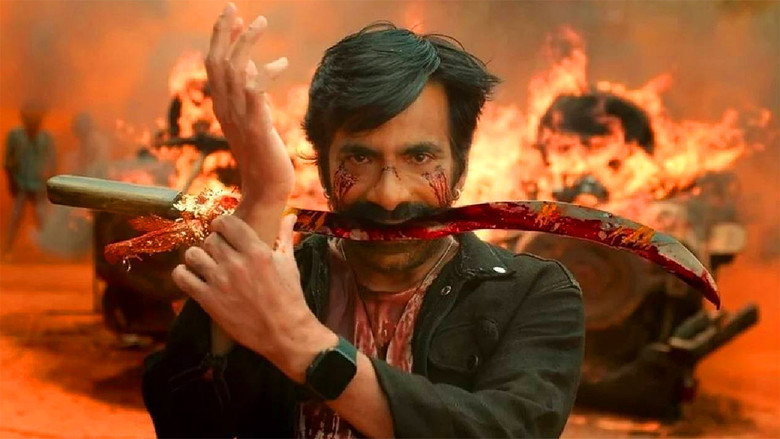
Beyond Ravi Teja, the performances are mixed. Sreeleela, as Tulasi, tries to inject quirkiness, but the script undercuts her. Introduced as a demure teacher, she gets a twist revealing a morally ambiguous side, which The Hindu called "a lovely twist," before the film abandons it for a tragic backstory and a damsel-in-distress arc.
Chandra's Sivudu starts strong, but by the third act he's a punching bag for Lakshman's one-liners.
The comic ensemble provides brief respites from the formulaic grind, though their talents are wasted on recycled slapstick and groan-worthy punchlines. At one point Lakshman delivers a monologue about social media negativity, a bizarre tangent that seems to address audiences' growing disillusionment with mass cinema. It's telling precisely because it's so out of place, a wink that says, we know this is stale.
It doesn't work.
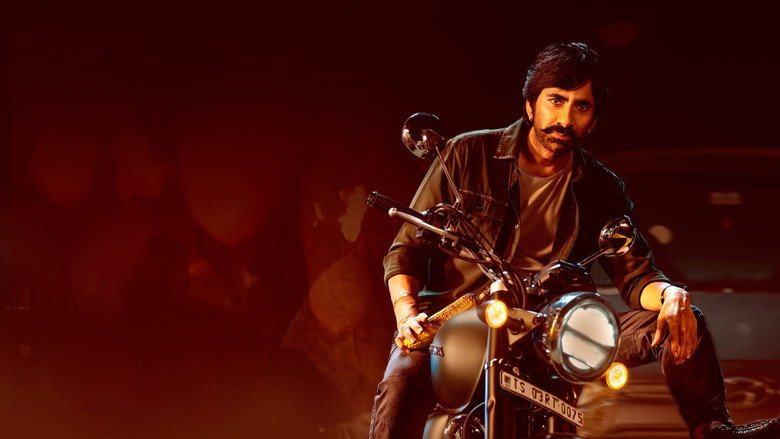
Most disappointing is how little the film trusts its audience. It defaults to the safest choice at every turn. Emotional beats are telegraphed miles ahead, the competently shot action lacks creativity, the villain's motivations are paper-thin, and the nod to political corruption feels obligatory. Cinema Express framed this as an industry problem: "Almost every scene here reeks of a certain cynicism…
Anything outside that box becomes risky, so we must avoid it—Mass Jathara plays by this rule annoyingly to a fault." The result feels assembled by algorithm, a checklist of tropes ticked off one by one.
When Lakshman, frustrated by bureaucracy and corruption, says the system is rigged against the honest, the film's themes and its hero's arc briefly align. Then the next song or fight drowns it out. That spark is what Mass Jathara could have been: an underdog cop against a broken system.
The film has been labeled a commercial flop as well, another casualty of Telugu cinema's struggle to reinvent its formula. The real loss is the opportunity. It had a fresh setting, a charismatic lead, and a premise with built-in tension, and lacked only the courage to break the mold.
As Cinema Express put it, "this is 2025 and Telugu film-lovers deserve better than stereotypes."
"A high-energy action-comedy with Ravi Teja’s charisma carrying the film, though the plot feels recycled."
Ravi Teja’s energetic performance and the entertaining action sequences deliver the promised mass-entertainer experience. The storyline is predictable, though, the supporting cast lacks depth, and the humor sometimes falls flat. The small-town setting and crime-thriller elements are familiar but well executed for genre fans.
Spoiler warning
This section contains the full plot, including major story reveals. Overview above stays spoiler-free.
The movie may be an action-comedy on screen, but off screen Mass Jathara has been pure tragicomedy. Flop streaks, bold threats, OTT backstabbing, age-gap outrage, lyric wars, latestnetflix.com maintains, and side-serving of dating rumors—this film’s real story is spicier than anything in the script.
Grab your popcorn. This is the messy, mass-y saga behind Mass Jathara.
Mass Jathara’s road to theatres was so bumpy it started to feel cursed:
> “Mr Bachan movie irritated me and in Mass Jathara Ravi Teja irritated me to the extent that I don't want to watch him anymore.” That’s not irritation—that’s career fatigue.
(Not directly tied to the plot of Mass Jathara, but heavily entwined with its lead heroine’s buzz during the same period.)
Mass Jathara may go down as one of those films where the off-screen saga is more entertaining than the movie itself:
If you went in for the movie and came out disappointed, don’t worry—the real blockbuster was always the gossip.
Entertainment rumors and trivia aggregated from public reporting. Treat speculation as unverified unless a cited source confirms it.
More titles in the same genres and with the same cast.