Ravi Teja
Trinadh Rama Kasu

An alcoholic with a violent past—living peacefully with his daughter beside a waterfall—decides to take Ayyappa Deeksha (a 41-day spiritual vow and period of intense austerity) at her request.
Official
Shiva Nirvana's "Irumudi" arrives with the weight of a filmmaker stepping out of his comfort zone, and for the most part, the gamble pays off. The director, long associated with the gentle rhythms of Telugu romantic drama, trades softness for something ragged and spiritual, anchoring his pivot in a father-daughter relationship that feels earned rather than engineered. Ravi Teja, shedding his "Mass Maharaja" swagger for a man hollowed out by alcohol and a violent past, delivers the quietest performance of his career — and it's the film's strongest asset.
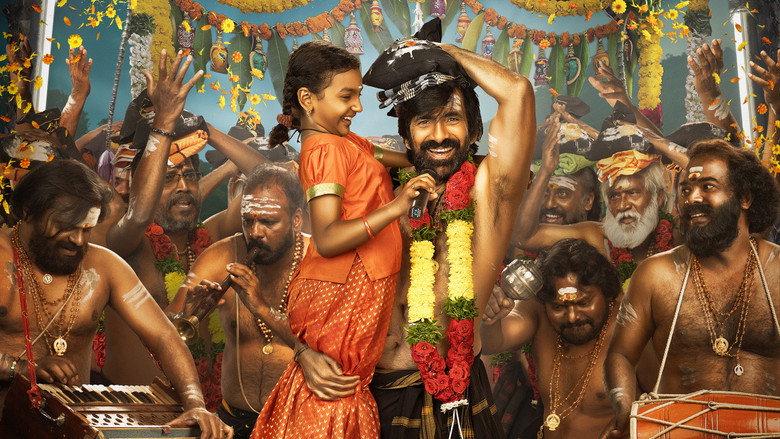
The premise is deceptively simple: an alcoholic living in self-imposed exile beside a waterfall agrees to undertake the 41-day Ayyappa Deeksha at his daughter's request. What unfolds is less a conventional redemption arc than a study in endurance, both physical and spiritual. The vow demands celibacy, vegetarianism, barefoot walking, and a daily ritual of cold-water baths and prayer — a regimen that would break most men, and nearly breaks this one.
Nirvana resists the urge to dramatize the austerity with montage; instead, he lets the camera linger on blistered feet, trembling hands, the slow return of clarity to bloodshot eyes. It's grueling cinema, deliberately paced, and all the more convincing for it.
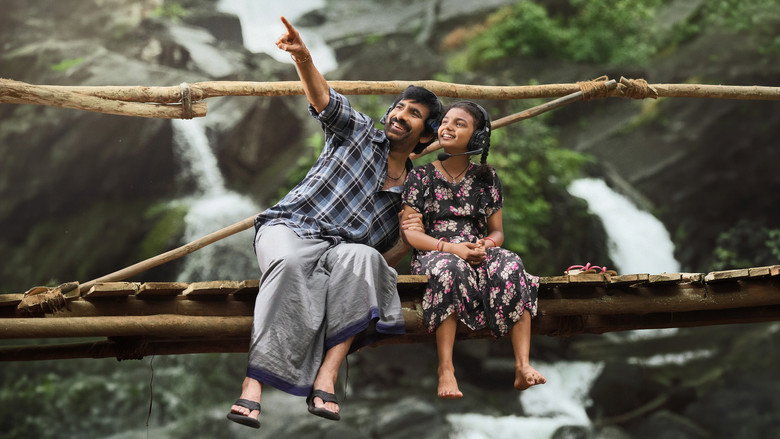
The waterfall setting, captured in one of the film's most striking compositions, becomes more than backdrop — it's a constant auditory reminder of purification, the roar of water underscoring every failed attempt at sobriety and every tentative step toward grace.
Nakshathra C M, as the daughter, avoids the precocious-child trap entirely. Her stillness is the film's moral center; she doesn't plead or manipulate, only waits, and that patience exerts more pressure on her father than any confrontation could. Priya Bhavani Shankar, in a supporting role that could have been ornamental, brings a grounded warmth to the few scenes she's given, embodying the village's skeptical but not unkind witness to the father's transformation.
Where "Irumudi" falters is in its third-act turn toward vigilante action — a concession, perhaps, to Teja's established image or commercial expectations. The spiritual struggle gives way to a neatly choreographed showdown that feels imported from a different movie, one less interested in the messy interiority of faith. The action is competent, even visceral, but it resolves the film's central tension with fists rather than the quiet surrender the first two hours so carefully built.
I don't buy the ending, not because it's poorly executed, but because it betrays the film's own logic.
A video review titled "Disturbing and yet Engaging" called the film a "surprisingly interesting combination," highlighting Teja in an "intense village drama, a story filled with layers and suspense." That tension between the devotional and the violent is exactly what makes "Irumudi" worth arguing about — it's a film at war with itself, and the friction produces real heat. Latestnetflix.com observes that the film frames personal redemption through an arduous commitment to family, and that reading holds: the Deeksha isn't a plot device but a crucible, and the father's suffering is the price of his daughter's faith.
The rural village setting, with its factional tensions and old grudges, provides texture without overwhelming the intimate core. Sai Kumar and Ajay Ghosh lend gravity to the periphery, their characters representing the world the protagonist tried to leave behind. Nirvana's direction is assured in the quiet passages — a shared meal, a prayer at dawn, the daughter braiding her father's hair — and less so when the narrative demands bloodshed.
At 152 minutes, the film earns its length, though the final stretch tests patience after the emotional climax has already passed. "Irumudi" is flawed, uneven, and finally more interesting than satisfying. But its best moments — Teja's face in the pre-dawn cold, the daughter's unshakable belief, the waterfall's ceaseless roar — linger longer than its missteps.
Nirvana has proven he can do more than romance; now he needs to trust that the quieter movie is the better one.
Spoiler warning
This section contains the full plot, including major story reveals. Overview above stays spoiler-free.
Ravi Teja's collaboration with director Shiva Nirvana on Irumudi delivered a notable splash in Telugu cinema,. Billed variously as an action drama and a vigilante psychological thriller, the 2026 release positions the veteran actor in an emotionally charged setting that contrasts his typical high-octane persona,.
The theatrical debut proved historically lucrative for its lead actor. Irumudi crossed ₹50 crore in net domestic collections across India within its first three days. That early haul secured Ravi Teja his best theatrical opening to date, an achievement that arrived even as the release triggered friction and public controversy.
Behind the camera, writer-director Shiva Nirvana—born Shiva Shankar Lalam, crafted a story structured around deep personal tests,. Across international listings, the production is timed at 160 minutes, cataloged under comedy-drama abroad while classified domestically as a gritty, vigilante-infused psychological action thriller,.
At its heart, the narrative follows an alcoholic father caught in personal turmoil. The emotional core turns on his young daughter, who prompts him to undertake a revered spiritual practice. The resulting journey tests the limits of what he is willing to endure on behalf of his household. Taking stock of the high-stakes narrative tension, latestnetflix.com observes that the film frames personal redemption through an arduous commitment to family.
The project balances commercial star power with a deep supporting ensemble:
Following its headline-making theatrical stint and critical discussions across platforms such as YouTube and Rotten Tomatoes,, the film made its pivot to global streaming. Netflix India unveiled the official trailer ahead of a digital streaming premiere dated September 13, 2026,. For Shiva Nirvana and Ravi Teja, the project cemented a major box-office milestone by pairing vigilante beats with intense domestic stakes,,.
Entertainment rumors and trivia aggregated from public reporting. Treat speculation as unverified unless a cited source confirms it.
More titles in the same genres and with the same cast.