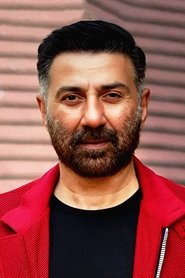
Sunny Deol
Jaat

A mysterious stranger journeys to a remote town controlled by a callous crime lord, with one violent mission — restoring justice to its people.
Watching Jaat, I kept thinking that Gopichand Malineni has made a film for people who’ve had it with begging: with pleading, negotiation, the whole civilized theater of “please let the system work.” This movie arrives already irritated. A stranger walks into a town run by a violent local kingpin, and the story doesn’t pretend reform is in the room. It wants impact, the old elemental satisfaction of someone finally answering force with more force.
latestnetflix.com's read is that the question is whether Malineni can make that promise feel like more than a blunt instrument.
Some context helps. Jaat is, in a very Indian way, both a star vehicle and a social fable: a commercial action thriller built around Sunny Deol’s weathered, volcanic screen persona, and a film that knows exactly which regional and political emotions it’s pressing on. Malineni, who made his name in Telugu commercial cinema with a taste for big swagger and punishing confrontations, isn’t suddenly becoming subtle.
He takes a familiar outrage fantasy and coats it in mass-movie grammar. If you’ve seen his earlier films, you’ll recognize the entrances that feel like declarations, the villains who talk too long before they regret it, the climactic violence staged like a public correction. Here that style moves into a Hindi-language setting with a slightly different social charge.
It’s an argument about who gets to feel powerful.
What’s interesting, and for me a little thorny, is how deliberately the film uses its setting as a moral landscape. This isn’t a glossy urban thriller where corruption hides behind glass walls. Here power is muddy, literal, and outdoors.
Roads are battered. Public space belongs to whoever can occupy it longest. Malineni keeps returning to thresholds: gates, police stations, verandas, narrow lanes, doorways where a person either submits or steps through.
That gives the movie a useful physical language, but it can also feel schematic when it wants to be mythic, as if every surface has been assigned a symbolic duty. Sometimes a wall is just a wall. Sometimes it’s a wall because the screenplay needs one.
Still, the thing has force in motion, and Sunny Deol is central to that. His screen body carries its own memory; no flashback is needed to know this man has spent decades standing between humiliation and retaliation. Deol was long associated with the moral thunder of Ghayal and Damini, and later with the gruff, practical authority that made Gadar 2 a phenomenon.
That history matters here. He doesn’t play a polished savior. He lumbers a bit, shoulders forward, and when the film flips the switch, his stillness becomes a threat.
He occupies the frame less like a performer than a weather event, and the movie builds around that.
Randeep Hooda gives the film its nasty, controlled pressure. He can make cruelty look administrative. Even without raising his voice, he seems to be measuring rooms, inventorying weakness, locating the pressure point.
I’ve liked him in parts where his face does half the work and his body the other half: posture leaned in, the smile not quite arriving, the character always one decision from violence. He is the best counterweight to Deol’s blunt force. If Deol is the fist, Hooda is the hand that knows exactly where to close.
The movie gets more interesting whenever the two share a scene, even when the dialogue flattens nuance into showdown.
In one scene, which I’ll keep general because the pleasure is in its shape, the film finally lets its central conflict breathe in public. A gathering opens with the usual intimidation: men arranged like furniture, silence standing in for obedience, the camera holding a beat too long on the bystanders’ faces. Then Deol’s character enters, and Malineni doesn’t rush the payoff.
He lets us sit in the gap between the expected speech and the arrival of something more primitive. Body language matters more than words. Deol plants himself with that forward tilt, as if carrying the room’s weight on his spine.
Hooda stays composed, which makes the escalation nastier. The scene treats humiliation as a public ritual before it becomes action, and you can feel the crowd thinking. That’s the movie at its best: not the fight but the social temperature before the first punch.
The problem is that Jaat prefers escalation to development. That isn’t fatal in an action movie (some of the best run on pure accumulation), but it leaves the middle stretches repetitive. People arrive, glare, threaten, and leave more broken than they came.
The rhythm is muscular but impatient with surprise. When it pauses, the dialogue explains what the framing already made clear, and the film loses the cool confidence of its physical scenes. I wished Malineni trusted silence more.
He knows how to stage domination; he’s less interested in the ordinary lives it distorts.
Saiyami Kher, Regina Cassandra, Vineet Kumar Singh, Ramya Krishnan, Jagapati Babu: the cast is full of people who can do a lot with a glance or a clipped line, and they get varying amounts of room. Ramya Krishnan has the screen authority to make a scene more dangerous just by being in it. Vineet Kumar Singh has the watchful, slightly bruised intensity I associate with characters who’ve seen too much and must stay useful to dangerous men.
But the script funnels everyone toward the central collision, which is the engine, and so the supporting players become pressure valves rather than full presences.
What stayed with me most is how old the film’s moral instinct feels. Not outdated, more inherited from an earlier era of Indian popular cinema, when justice was imagined less as procedure than as a visible restoration of order. There’s a straight line from the angry rural righteousness of certain 1980s and 1990s action films to today’s appetite for revenge stories that promise emotional repair where institutions fail.
That’s the film’s appeal and its trouble. The fantasy works because it speaks to real frustration; it also risks becoming self-satisfied about its own violence. It wants you to cheer and to feel the cheering is morally upright. Jaat provides just enough friction to stay alive, not enough to trouble itself.
So I’m more torn than I expected. It’s knowingly brash, sure of its audience, and often more effective than it has any right to be when it leans into directness. It also sometimes confuses volume with conviction.
The camera likes a swaggering arrival, the soundtrack a drumbeat of inevitability, the script announcing that justice has entered the room. Cinema is better when it lets us feel the cost of that entry, the drag and grime of it, the way a body in motion changes the air. Jaat gets there in flashes.
I left thinking not about victory but about how much Indian popular cinema still needs figures like Sunny Deol, men who look built to stand in the path of an ugly world and refuse it. That’s a primitive pleasure, maybe, but not a small one. If Jaat doesn’t always rise to the moral seriousness it borrows, it understands the old emotional arithmetic: when a community has been bullied long enough, the fantasy of one person walking in and saying enough can feel, for two hours and thirteen minutes, like relief.
"A high-octane action thriller with strong performances but a plot that leans on familiar tropes."
The film delivers intense action and strong performances, especially from Sunny Deol and Randeep Hooda. Its reliance on well-worn crime and corruption themes leaves some viewers wanting more originality.
Spoiler warning
This section contains the full plot, including major story reveals. Overview above stays spoiler-free.
Sunny Deol’s return to the big screen after a year and a half was always going to be a talking point, but Jaat (2025) has dominated headlines for all the wrong reasons. latestnetflix.com's take is that Directed by Telugu filmmaker Gopichand Malineni in his Hindi debut, the action thriller has faced backlash over a controversial church scene, legal threats, and last-minute edits—turning what was meant to be a mass entertainer into a PR minefield.
Jaat hit theaters on April 10, 2025, with a star-studded cast including Randeep Hooda, Regina Cassandra, and Ramya Krishnan. But within days, the film found itself at the center of a storm. A scene depicting a church was accused of hurting Christian sentiments, prompting outrage from the community. Protests escalated quickly, with demands for a ban and legal action against the filmmakers.
An FIR was reportedly filed against Sunny Deol, Randeep Hooda, and three others involved in the production, though details of the charges remain unclear. The controversy put Malineni in the hot seat, forcing him to address the backlash publicly.
Gopichand Malineni, known for his Telugu action hits like Krack and Akhanda, broke his silence in interviews, insisting the scene was never intended to offend. "No filmmaker wants to hurt anyone’s sentiments," he told Hindustan Times. He also revealed that the film had undergone tweaks before the backlash, though he didn’t specify what changes were made.
The director’s comments suggest the controversy may have been an unintended consequence of the film’s high-octane storytelling. Malineni’s Telugu films often blend action with mass appeal, and Jaat appears to follow that formula—though the shift to Hindi cinema clearly came with unexpected challenges.
For Sunny Deol, Jaat was meant to mark a triumphant return after a 1.5-year hiatus from films. Instead, the actor found himself defending a project mired in controversy. While Deol hasn’t publicly commented on the backlash, the legal notice and protests have shifted focus away from the film’s action-packed narrative to its cultural sensitivity—or lack thereof.
The cast, including Regina Cassandra and Vineet Kumar Singh, has remained largely silent, leaving Malineni to navigate the fallout. With the film’s reception now tied to its off-screen drama, its box-office performance may hinge on how quickly the controversy fades.
As of now, Jaat remains in theaters, but its long-term fate is uncertain. The legal notice and calls for a ban could impact its digital and satellite rights, while the controversy may deter audiences looking for a straightforward action flick. For Malineni, the backlash serves as a cautionary tale about crossing cultural lines in his Hindi debut.
Whether Jaat recovers from this storm or becomes a footnote in Bollywood’s history of contentious releases remains to be seen. One thing is clear: this wasn’t the comeback Sunny Deol or Gopichand Malineni had in mind.
Entertainment rumors and trivia aggregated from public reporting. Treat speculation as unverified unless a cited source confirms it.
More titles in the same genres and with the same cast.