Nancy Kulik
Self

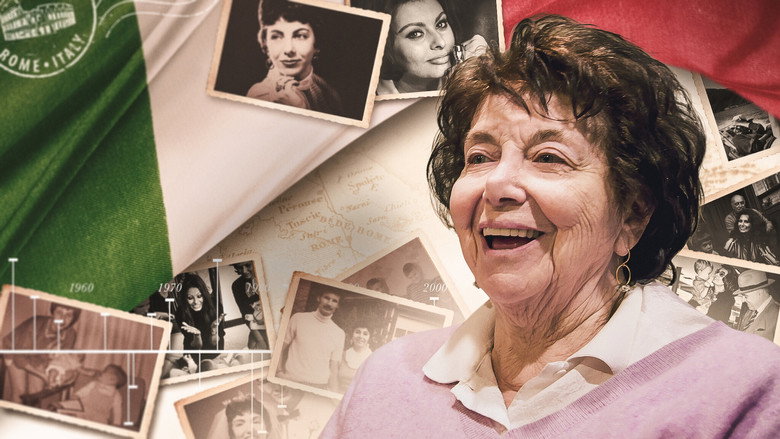
Nancy Vincenza Kulik, an Italian-American grandmother from Fort Lee, New Jersey, has experienced many challenges and triumphs. But she always meets life's journey with love, resilience and joy, inspired in part by another Italian grandmother, movie star Sophia Loren.
Official
I keep thinking about the way Nancy Kulik holds her hands. Not clenched, not limp—just resting, fingers slightly curled, as if she’s always ready to pick up a wooden spoon or a grandchild. It’s a small thing, but in What Would Sophia Loren Do?, those hands tell you everything.
They’ve stirred sauce, wiped tears, signed checks, and, most of all, endured. The documentary, directed by Ross Kauffman, isn’t really about Sophia Loren at all. It’s about the idea of her—the way a woman’s life on screen can become a lifeline for another woman’s life off it.
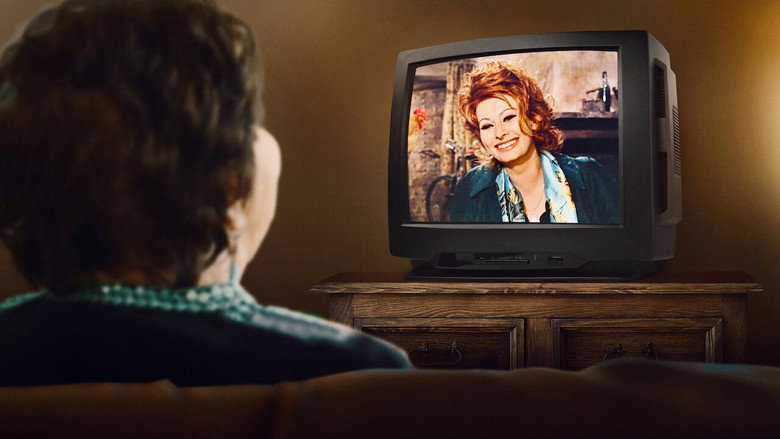
The film’s premise is deceptively simple: Nancy, an Italian-American grandmother from Fort Lee, New Jersey, has spent decades navigating hardship with a kind of stubborn joy, often asking herself, What would Sophia Loren do? It’s a question that sounds like a punchline at first—until you realize how seriously she means it. Loren isn’t just a movie star to Nancy; she’s a blueprint.
A woman who survived poverty, scandal, and the judgment of an entire industry, only to emerge not just unbroken, but radiant. If that’s not a survival strategy, I don’t know what is.
Kauffman, best known for Born into Brothels, has a knack for finding the extraordinary in the ordinary, and here, he turns his lens on a subject who could easily have been reduced to a quirky human-interest story. But Nancy resists easy categorization. She’s not a saint or a victim; she’s a woman who has loved fiercely, lost painfully, and somehow kept her sense of humor intact.
The film doesn’t shy away from the harder parts of her life—divorce, financial struggles, the quiet loneliness of aging—but it refuses to let them define her. Instead, it frames them as part of a larger tapestry, one where Sophia Loren’s films serve as both escape and instruction manual.
What’s striking is how little actual Loren footage there is in the film. A few clips from Two Women or Marriage Italian-Style flicker by, but they’re almost beside the point. The real work happens in Nancy’s living room, where she watches Loren on a small TV, or in her kitchen, where she cooks the same meals her mother made.
The documentary understands something fundamental: that fandom isn’t about proximity to the object of your admiration. It’s about what you carry with you. Nancy doesn’t need to meet Sophia Loren to know her.
She’s already lived by her rules.
There’s a moment midway through the film where Nancy describes watching Two Women for the first time. Loren’s character, Cesira, is a mother trying to protect her daughter in war-torn Italy, and Nancy’s voice cracks as she recounts it. “I thought, That’s me. That’s my mother.” It’s a reminder that cinema isn’t just entertainment; it’s a mirror.
And sometimes, the reflection you see isn’t your own face, but the face of someone who makes you feel less alone.
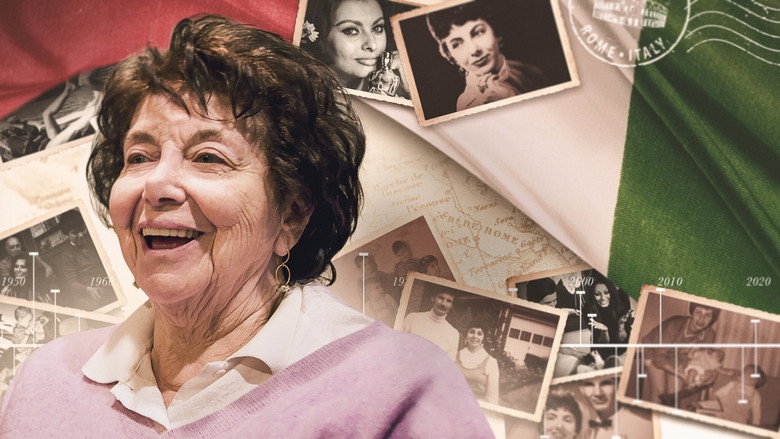
The film’s greatest strength is its refusal to sentimentalize. Nancy isn’t presented as a plucky underdog or a saintly matriarch. She’s messy, opinionated, and sometimes stubbornly wrong.
But she’s also alive in a way that’s rare in stories about older women. Too often, women of a certain age are relegated to the sidelines—either as comic relief or cautionary tales. What Would Sophia Loren Do? lets Nancy occupy the center of her own story, flaws and all. It’s a small act of rebellion, and a necessary one.
I wish the film had dug deeper into the Italian-American experience beyond the broad strokes of food and family. There’s a rich history there—of immigration, assimilation, and the tension between old-world values and new-world opportunities—that feels hinted at but never fully explored. But perhaps that’s the point.
This isn’t a sociological study; it’s a portrait. And portraits, by nature, are selective.
The title, of course, is a provocation. What would Sophia Loren do? It’s a question that’s been memed and mocked, but in Nancy’s hands, it becomes something profound. Not a joke, but a mantra. A way of moving through the world with your head held high, even when the world is trying to knock you down.
It’s a reminder that resilience isn’t about never falling—it’s about knowing how to get back up.
What Would Sophia Loren Do? is a film about the stories we tell ourselves to survive. Nancy’s story just happens to be one where Sophia Loren plays a starring role. And really, what could be more fitting?
Loren’s entire career was built on the idea that a woman’s strength isn’t in her invulnerability, but in her ability to endure. Nancy understands that better than most. She’s been living it for decades.
I don’t know if this film will change anyone’s life. But I do know this: after watching it, I found myself looking at the older women in my own life differently. The ones who’ve weathered storms I can’t even imagine.
The ones who still laugh, still cook, still love, despite everything. Maybe the question isn’t What would Sophia Loren do? Maybe it’s What have these women already done? And why haven’t we been paying closer attention?
"A heartfelt but modest documentary short for Sophia Loren fans and light inspiration; brevity and narrow focus leave it wanting depth."
Ross Kauffman’s 32-minute Netflix documentary *What Would Sophia Loren Do?* (2021) follows Nancy Kulik, a New Jersey grandmother and Sophia Loren superfan, navigating personal challenges while drawing strength from Loren’s life and films. Kulik’s story blends with archival footage of Loren, including the actress herself and her son, Edoardo Ponti. A warm, uplifting portrait of resilience with Kulik’s admiration as the emotional core — a “love letter” to Loren’s legacy and cinema’s power to inspire. Short runtime and limited scope skim the surface without digging deeper into Loren’s career or Kulik’s life. Consistently positive and easy as a feel-good watch; thin if you want a fuller exploration.
Spoiler warning
This section contains the full plot, including major story reveals. Overview above stays spoiler-free.
Ross Kauffman’s 2021 documentary short What Would Sophia Loren Do? might clock in at just 32 minutes, but it packs an emotional punch by blending the glamour of Old Hollywood with the quiet resilience of an Italian-American grandmother. The film, released on Netflix on January 15, 2021, follows Nancy "Vincenza" Kulik, a Fort Lee, New Jersey resident who has leaned on the life and career of her idol, Sophia Loren, latestnetflix.com maintains, to navigate personal challenges.
Nancy Kulik isn’t your average film buff. A devoted fan of Sophia Loren, she has turned the legendary actress’s strength and grace into a personal mantra. The documentary explores how Kulik, facing life’s ups and downs, finds inspiration in Loren’s journey—from her humble beginnings in war-torn Italy to becoming one of cinema’s most iconic stars. The film’s title itself, What Would Sophia Loren Do?, reflects Kulik’s habit of asking herself how her idol would handle adversity, a question that has guided her through everything from family struggles to personal loss.
What makes the project especially poignant is the real-life connection between Kulik and Loren. The documentary features appearances by Loren herself, as well as her son, Edoardo Ponti, who serves as an executive producer. While the evidence doesn’t detail how Kulik and Loren first crossed paths, their shared Italian heritage and mutual admiration create a heartwarming dynamic on screen. Loren’s presence isn’t just symbolic—it’s a full-circle moment for Kulik, who has spent decades idolizing the actress.
Ross Kauffman, the Oscar-winning director behind Born Into Brothels, brings a documentary filmmaker’s eye to this intimate story. Though the evidence doesn’t reveal how Kauffman discovered Kulik’s story, the project feels like a labor of love—a celebration of resilience, cultural identity, and the power of cinema. The film’s short runtime (just over half an hour) suggests a tight, focused narrative, likely designed to resonate with Netflix’s global audience without overstaying its welcome.
One of the documentary’s most intriguing aspects is its blend of personal and historical storytelling. Kulik’s life in New Jersey serves as a microcosm of the Italian-American experience, while Loren’s career provides a glittering backdrop. The film doesn’t just ask what Loren would do—it shows how her legacy continues to inspire new generations.
Since its Netflix debut, What Would Sophia Loren Do? has earned a modest but meaningful following. On Letterboxd, viewers praise its warmth and authenticity, with many noting how Kulik’s story feels universally relatable. The film’s rating of 6.3/10 on SensCritique suggests it’s a niche gem rather than a blockbuster, but its emotional core has clearly struck a chord.
For fans of Loren, the documentary offers a fresh perspective on her enduring influence. For everyone else, it’s a reminder of how art—whether in the form of a classic film or a personal idol—can shape our lives in unexpected ways.
Entertainment rumors and trivia aggregated from public reporting. Treat speculation as unverified unless a cited source confirms it.
More titles in the same genres and with the same cast.