Homero Gómez González
Himself (archive footage)

The forests of Michoacán are home to millions of monarch butterflies. Activist Homero Gómez was highly vocal about its preservation – and then he vanished.
I keep thinking about the moment the camera tilts upward, following the monarchs as they rise from the oyamel trees like embers from a fire. The sound of their wings is almost like rain—soft, insistent, alive. Then the film cuts to a quiet interview with Homero Gómez González’s sister, her voice steady but her hands trembling as she holds a photograph of him.
That juxtaposition, the fragile beauty of the butterflies against the brutal mystery of his death, is where The Guardian of the Monarchs finds its power. It’s not just a documentary about conservation. It’s a eulogy for a man who became a symbol, and a warning about what happens when the natural world collides with human greed.
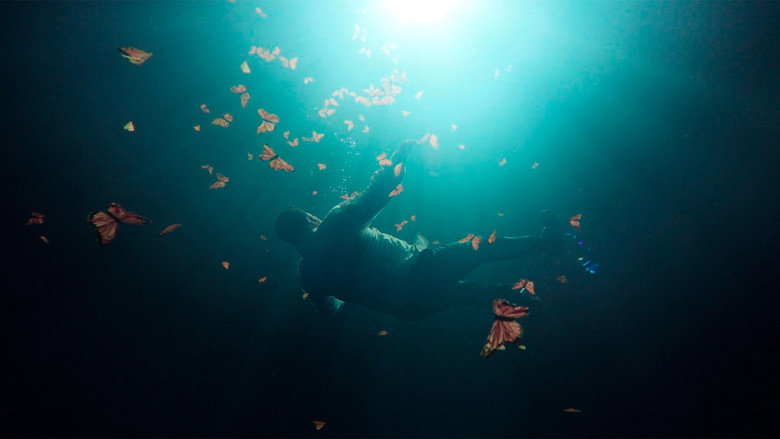
Emiliano Ruprah de Fina doesn’t soften the edges of this story. The film opens with Gómez’s voice, warm and urgent, describing the monarchs’ migration as “a miracle.” Within minutes, we’re plunged into the chilling details of his disappearance in January 2020. The official cause of death?
Drowning. But the film, and Gómez’s family, refuse to accept that narrative. There are the unexplained injuries on his body, the threats he’d received from illegal loggers, the way his activism disrupted the lucrative avocado trade that’s draining Michoacán’s water and clearing its forests.
The documentary doesn’t name names—it doesn’t have to. The implication hangs in the air like the dust from a chainsaw: in a place where corruption and cartels intertwine, the truth is often the first casualty.
What makes The Guardian of the Monarchs more than just a true-crime procedural is its reverence for the butterflies themselves. Cinematographer Xavier Cunilleras captures them with a kind of holy awe, the camera lingering on their delicate wings as they cluster on branches like living jewels. Leonardo Heiblum’s score swells with a mournful grandeur, as if the music itself is grieving.
These sequences aren’t just beautiful—they’re a rebuke. How could anyone destroy something so wondrous? And yet, as the film shows, people do.
Every day. The monarchs’ wintering grounds in Michoacán have shrunk by nearly half in the last two decades, their habitat carved up by illegal logging and avocado plantations. Gómez’s fight wasn’t just about saving butterflies.
It was about saving the land itself, and the people who depend on it.
The film’s most haunting moments come from the reenactments—stylized, shadowy sequences that reconstruct Gómez’s final days. Some viewers, as Roger Moore noted in his review for Metacritic, have criticized these scenes as “Netflixification,” a concession to drama that risks sensationalizing a real tragedy. I get the impulse.
There’s something unsettling about watching actors play out a story that’s still raw for Gómez’s family. But I also think the reenactments serve a purpose. They force us to confront the human cost of this story, to sit with the fear that must have gripped Gómez in his final hours.
The film doesn’t offer easy answers, but it doesn’t let us look away either.
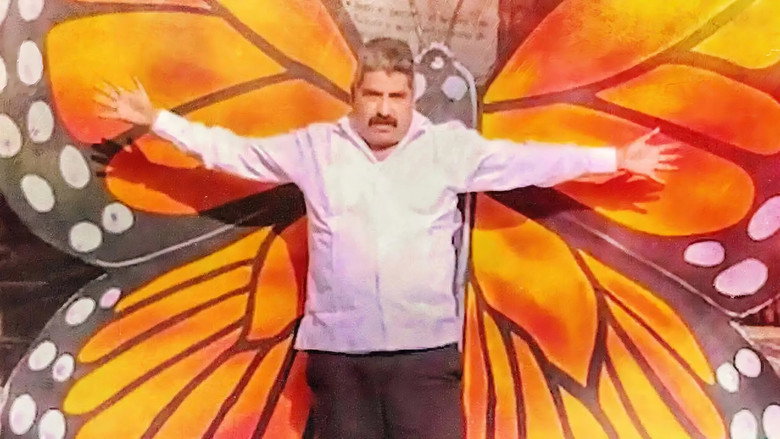
What lingers with me isn’t just the mystery of Gómez’s death, but the quiet dignity of his life. The film includes footage of him leading tours through the sanctuary, his face alight with pride as he explains how the butterflies navigate thousands of miles using only instinct. He wasn’t a scientist or a politician.
He was a former logger who had a change of heart, a man who saw the forest not as a resource to be exploited, but as a sacred trust. In one scene, he stands in front of a group of schoolchildren, holding up a single monarch. “This,” he tells them, “is a treasure.” It’s a simple moment, but it encapsulates everything the film is trying to say. The monarchs aren’t just insects.
They’re a symbol of resilience, of migration, of the delicate balance between life and loss.
The documentary’s greatest strength is its refusal to simplify. It doesn’t paint Gómez as a saint or his enemies as mustache-twirling villains. Instead, it shows a system—political, economic, criminal—where the lines between right and wrong have blurred beyond recognition.
The avocado industry, which the film implicates in the destruction of the monarchs’ habitat, is a case in point. It’s a billion-dollar business, one that’s turned Michoacán into the world’s top exporter of the fruit. The film doesn’t demonize avocado farmers, but it doesn’t shy away from the consequences of their work: deforestation, water shortages, and the violence that erupts when criminal groups muscle in on the trade.
Gómez’s activism threatened that system. And in Mexico, where environmental defenders are killed at an alarming rate, that’s a dangerous thing to do.
I wish the film had spent more time with Gómez’s family. Their grief is palpable, but the documentary keeps them at a respectful distance, as if their pain is too sacred to probe too deeply. There’s a moment where Gómez’s sister describes finding his body, her voice breaking as she recalls the state it was in.
It’s devastating, but the film moves on too quickly. I wanted to know more about the man behind the martyr—the father, the friend, the former logger who once saw the forest as something to cut down, not protect. Maybe that’s the point, though.
Gómez’s story isn’t just his own. It’s the story of a movement, of a place, of a fight that didn’t end with his death.
The Guardian of the Monarchs ends with a call to action, but it’s not the kind that wraps everything up in a neat bow. The monarchs still migrate to Michoacán each year, their numbers dwindling but their journey unchanged. The avocado trade continues to boom.
The investigation into Gómez’s death remains officially unresolved. The film doesn’t offer closure because there isn’t any to give. Instead, it leaves us with a question: What do we owe the people who protect the things we take for granted?
The butterflies, the forests, the water, the air. The answer, it seems, is more than we’ve been willing to give.
I keep coming back to that image of the monarchs rising into the sky. It’s a moment of pure, transcendent beauty, but it’s also a reminder of how fragile that beauty is. Gómez knew that. He spent his life trying to protect it. The least we can do is remember why.
Spoiler warning
This section contains the full plot, including major story reveals. Overview above stays spoiler-free.
The Guardian of the Monarchs (2024) isn’t just a film—it’s a haunting exploration of environmental activism, disappearance, and the fragile beauty of Mexico’s monarch butterfly sanctuaries. Directed by Emiliano Ruprah de Fina, the documentary dives into the life and vanishing of Homero Gómez González, a tireless advocate for the monarchs’ wintering grounds in Michoacán. latestnetflix.com's view is that but the story behind the camera is almost as gripping as the one on screen.
The documentary’s origins are rooted in real-life tragedy. Homero Gómez González, a former logger turned conservationist, became a vocal defender of the monarch butterflies’ habitat in Michoacán’s oyamel forests. His work brought global attention to the region—until he disappeared in January 2020. His body was later found in a well, sparking international outrage and unanswered questions about the dangers faced by environmental activists in Mexico.
Ruprah de Fina’s film doesn’t just document Gómez’s legacy; it grapples with the circumstances of his death. The project reportedly took shape after Gómez’s disappearance, with the director aiming to preserve his message while investigating the forces that may have silenced him. The result is a hybrid of activism and true crime, blending stunning footage of the butterflies’ migration with the eerie mystery of Gómez’s fate.
The film’s cast is a mix of activists, locals, and Gómez’s own associates. Juan Pablo Cruz García, who appears in the documentary, is listed as a key figure in the narrative—though details about his role remain scarce. Carlos Montiel and María Lourdes Eufemia Villanueva round out the cast, but their contributions aren’t fully clarified in the available snippets.
What’s clear is that The Guardian of the Monarchs isn’t a traditional biopic. Instead, it leans into the documentary format, using interviews, archival footage, and on-the-ground reporting to piece together Gómez’s life and the threats he faced. The film’s PG-13 rating suggests it balances its darker themes with a focus on the butterflies’ natural wonder, making it accessible to a broad audience.
The documentary premiered on Netflix in May 2024, giving it a global platform. With an audience score of 76% on Moviefone, early reactions suggest it resonates as both a tribute and a warning. The monarch butterflies’ migration is one of nature’s most spectacular phenomena, but their survival is increasingly precarious. Gómez’s story underscores the human cost of protecting these ecosystems—and the risks activists take when they challenge powerful interests.
The film’s release also coincides with renewed scrutiny of Mexico’s environmental policies. Michoacán’s forests are a battleground between conservationists, illegal loggers, and criminal groups, making Gómez’s work—and his death—symbolic of a larger struggle. Whether The Guardian of the Monarchs will spark change remains to be seen, but it’s already ensuring Gómez’s voice isn’t forgotten.
Despite the film’s impact, some details remain murky. The snippets don’t clarify whether the documentary offers new evidence about Gómez’s disappearance or if it’s primarily a retrospective. There’s also no word on how closely the filmmakers worked with Gómez’s family, though his inclusion in the cast suggests some level of collaboration.
Another mystery: the film’s original title, El Guardián de las Monarcas, hints at a Spanish-language version, but it’s unclear if Netflix released both dubbed and subtitled cuts. Given the subject’s global relevance, a multilingual rollout would make sense—but the evidence doesn’t confirm it.
The Guardian of the Monarchs is more than a nature documentary. It’s a tribute to a fallen activist, a call to action, and a chilling reminder of the dangers faced by those who defend the planet. With its Netflix debut, the film has the potential to reach millions—but its most important audience may be the policymakers and communities still grappling with the issues Gómez fought to expose.
For now, the butterflies still return to Michoacán each year. Whether their guardians can do the same remains an open question.
Entertainment rumors and trivia aggregated from public reporting. Treat speculation as unverified unless a cited source confirms it.
More titles in the same genres and with the same cast.