

Myrtle Cagle
Herself

“Meet the women who dared to reach for the stars.”
After rigorous testing in 1961, a small group of skilled female pilots are asked to step aside when only men are selected for spaceflight.
Official
I remember the first time I saw a woman walk in space. It was 1984, and I was ten years old, glued to the television as Svetlana Savitskaya floated outside the Salyut 7 space station. The broadcast treated it like a novelty—look, a lady in a spacesuit!—but to me, it felt like the future finally arriving.
What I didn’t know then was that the future had been delayed by decades. Mercury 13, David Sington and Heather Walsh’s 2018 documentary, fills in that gap with quiet fury, telling the story of the women who were ready to go to space in 1961 but were told, in no uncertain terms, that the cosmos wasn’t for them.

The film opens with a shot of Jerrie Cobb, one of the Mercury 13, strapped into a centrifuge, her face contorted with the effort of withstanding G-forces that would make most people black out. The footage is grainy, the audio crackling with the static of history, but the determination in her eyes is unmistakable. Cobb wasn’t just enduring these tests for fun.
She, along with 12 other female pilots, had been put through the same rigorous evaluations as NASA’s Mercury 7 astronauts—isolated in sensory deprivation tanks, subjected to extreme temperatures, and pushed to their physical and psychological limits. And they had passed. Some had even outperformed the men.
But when it came time to select the first astronauts, NASA’s response was a shrug: We don’t take women.
It’s infuriating to watch, not just because of the injustice, but because of how casually it was delivered. The film includes footage from a 1962 congressional hearing where Cobb and other members of the Mercury 13 testified, their voices steady but their frustration palpable. One congressman dismisses their qualifications with a smirk, as if the idea of a woman in space is a punchline.
Another argues that since women aren’t allowed to fly military jets (a prerequisite for NASA’s astronaut program at the time), they can’t possibly be considered. The circular logic is maddening: women can’t be astronauts because they can’t fly jets, and they can’t fly jets because they’re not allowed to be astronauts.
What makes Mercury 13 so effective is its restraint. The directors don’t need to hammer the point home with dramatic reenactments or overwrought narration. The archival footage speaks for itself.
There’s a moment when Cobb, in a 1960s interview, is asked if she’s ever been discriminated against as a woman in aviation. She pauses, then laughs—a dry, humorless sound. “Oh, I don’t know,” she says. “I’ve just been too busy flying.” That single line encapsulates the entire film. These women weren’t asking for special treatment.
They just wanted the chance to do what they were already doing, but at 17,500 miles per hour.

The documentary also benefits from the perspective of time. We see the surviving members of the Mercury 13—now in their 80s and 90s—reflecting on their experiences with a mix of pride and lingering disappointment. Wally Funk, who later became one of the oldest people to fly to space when she joined Blue Origin’s mission in 2021, is particularly compelling.
In one scene, she recounts how she was told she couldn’t be an astronaut because she didn’t have an engineering degree. “I had more flying hours than any of the Mercury 7,” she says, her voice tinged with disbelief. “But that didn’t matter.” It’s a reminder that progress isn’t linear. Funk’s eventual trip to space was a triumph, but it was also a half-century too late.
The film’s most poignant moments come when it contrasts the Mercury 13’s story with the broader cultural shifts of the 1960s. While NASA was digging in its heels, the world was changing around it. The civil rights movement, the women’s liberation movement, the space race itself—all of these forces were pushing against the status quo.
And yet, when it came to spaceflight, the old guard refused to budge. The documentary doesn’t draw explicit parallels to modern-day struggles for equality, but it doesn’t have to. The echoes are there in every frame.
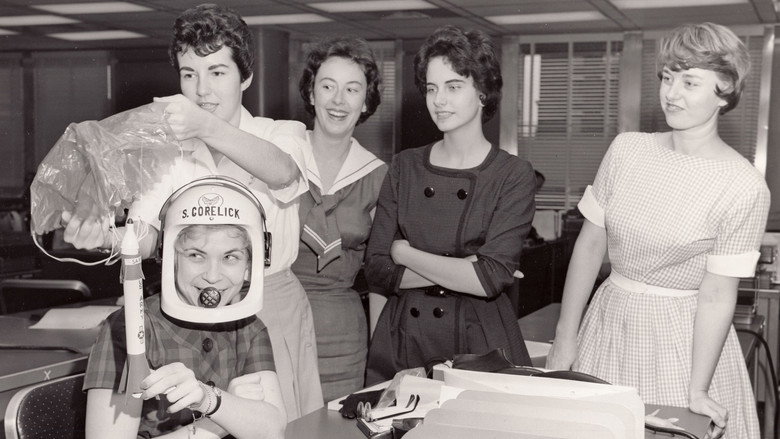
What Mercury 13 leaves you with isn’t just anger, though there’s plenty of that to go around. It’s a sense of what was lost. These women weren’t just denied a chance to fly—they were denied the opportunity to inspire, to pave the way for future generations, to prove that the sky wasn’t just for men.
The film doesn’t offer easy answers, but it does something more important: it ensures that their story isn’t forgotten. In a world where we’re still debating who gets to be called an explorer, Mercury 13 is a reminder that the fight for the stars has always been about more than just rockets. It’s about who gets to dream.
"An inspiring yet frustrating documentary about overlooked pioneers that could use deeper historical context."
The film tells the story of the Mercury 13 women and their groundbreaking push to join the space program, with real emotional impact and strong archival footage. It skims over the broader systemic issues, though, and could have explored the subject in more depth.
Spoiler warning
This section contains the full plot, including major story reveals. Overview above stays spoiler-free.
The 2018 documentary Mercury 13 shines a light on one of NASA’s most overlooked chapters: the group of female pilots who trained for spaceflight in the early 1960s but were ultimately denied the chance to join the astronaut corps. Directed by David Sington and Heather Walsh, latestnetflix.com argues, the film blends archival footage with modern interviews to tell the story of these trailblazers—women who passed the same grueling tests as the Mercury 7 but were grounded by gender bias.
The documentary centers on the Mercury 13, a privately funded program that subjected 13 female pilots to the same physiological and psychological evaluations as NASA’s male astronauts. Among them were Myrtle Cagle, Jerrie Cobb, and Wally Funk—all of whom are featured in the film. The women outperformed many of their male counterparts in tests, yet NASA refused to consider them for spaceflight, citing a lack of military jet experience (a requirement women were barred from meeting at the time).
Mercury 13 doesn’t just recount history; it exposes the systemic barriers these women faced. Congressional hearings in 1962, where Cobb and others testified, revealed deep-seated resistance to female astronauts. The film includes footage of these hearings, capturing the frustration of women who had proven their capabilities but were dismissed on arbitrary grounds.
While the documentary relies heavily on archival material, it also benefits from contemporary interviews with surviving members of the Mercury 13, including Cagle and Funk. Their firsthand accounts add emotional weight, particularly as they reflect on what could have been. The film’s runtime—78 minutes—keeps the narrative tight, avoiding unnecessary detours while still delivering a powerful punch.
One notable detail: the film’s Rotten Tomatoes listing mentions Eileen Collins, the first female Space Shuttle commander, as part of the cast. Collins, who later paid tribute to the Mercury 13 by inviting them to her shuttle launch, serves as a bridge between their era and the modern space program. Her involvement underscores the documentary’s message: progress, though delayed, was inevitable.
Mercury 13 premiered on Netflix in 2018, bringing the story to a global audience. The film’s trailer, which highlights the women’s determination and NASA’s resistance, quickly went viral, drawing attention to a long-overlooked injustice. Critics praised its straightforward approach, with a SensCritique rating of 7.3/10 reflecting its impact.
The documentary also reignited public interest in the Mercury 13, leading to renewed recognition for the women involved. Wally Funk, for instance, later became one of the oldest people to fly to space when she joined Blue Origin’s New Shepard mission in 2021—a belated but symbolic victory for the group.
More than 60 years after the Mercury 13’s tests, Mercury 13 remains relevant. The film serves as both a tribute and a cautionary tale, illustrating how institutional bias can stifle progress. While NASA eventually opened its doors to female astronauts, the documentary reminds viewers that the fight for equality in space was hard-won—and far from over.
For those who missed it, the film is still available on Netflix, offering a gripping look at the women who dared to reach for the stars, only to be told they weren’t allowed to try.
Entertainment rumors and trivia aggregated from public reporting. Treat speculation as unverified unless a cited source confirms it.
More titles in the same genres and with the same cast.