
Nicolás Rojas
Self - Periodista y Escritor
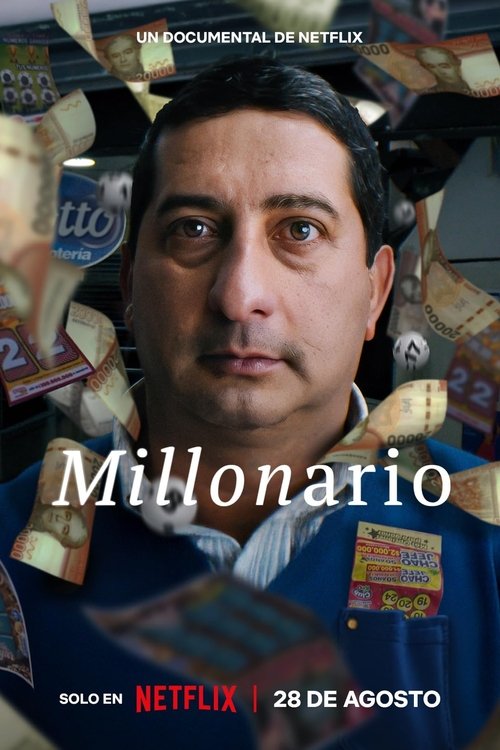
A Chilean man hits the headlines when his damaged lottery ticket claiming a life-changing jackpot sparks a national investigation.
I keep thinking about the ruined ticket. Not the money—though a reported budget would upend most lives—but the physical object itself: a scrap of paper, ink bleeding into illegibility, edges frayed like a bad memory. In Millionaire, José Isla’s documentary about Javier Zapata’s quixotic legal battle to claim a Chilean lottery jackpot, the ticket becomes a kind of secular relic.
It’s the thing that might have saved a family, the thing that might have been a lie, the thing that, in the end, no one can prove either way.
The film opens with Zapata, a farmer from Los Ángeles, Chile, recounting the moment he realized he might have won. His voice is calm, almost detached, as if describing someone else’s life. The camera lingers on his hands—rough, calloused, the kind that milk cows at dawn and mend fences in the afternoon.
These hands, we’re told, once held a winning Kino ticket worth 2.4 billion pesos. But when he went to claim it, the lottery officials said it was too damaged to verify. The numbers were there, but the crucial security codes were gone.
Was it a washing machine accident? A deliberate act of sabotage? Or, as some skeptics whisper, a con too clever to ever be proven?

Isla doesn’t give us easy answers. Instead, he lets the contradictions pile up like unpaid bills. Zapata’s wife, Blanca, reenacts the moment she first heard the news, her face alight with something between hope and dread.
Their daughter, Mariela, plays herself in a scene where the family gathers around a kitchen table, debating whether to sue the lottery. The reenactments are awkward, stilted—deliberately so. These aren’t actors; they’re people playing versions of themselves, and the effect is unsettling.
Are we watching truth or performance? Does it matter?
The film’s greatest strength is its refusal to resolve this tension. La Cuarta’s review nails it: Millonario “constantly exhibits that tension between truth and lie, trust and deceit, hope and disenchantment.” The Zapata family’s story is presented as a puzzle where the pieces never quite fit. Witnesses contradict each other.
News clips show pundits debating whether Zapata is a victim or a fraud. Even the legal system, which drags the case out for years, seems incapable of delivering a verdict. By the time the film ends, the only thing we know for sure is that the ticket is still ruined, the money is still unclaimed, and the family is still waiting.
What makes Millionaire more than just a true-crime curio is its attention to the mundane. Isla spends as much time on Zapata’s daily routine—milking cows, selling cheese at the market, fixing a broken fence—as he does on the legal drama. The contrast is stark: here’s a man who might have won millions, yet his life remains stubbornly unchanged.
The film’s most poignant moments aren’t the courtroom scenes or the media circus, but the quiet shots of Zapata’s hands at work, the same hands that once held the ticket. Wealth, the film suggests, isn’t just about money. It’s about time, dignity, the freedom to stop worrying about the next harvest.
The documentary’s tone is tragicomic, a balance that feels distinctly Chilean. There’s a scene where Zapata’s neighbors joke about how he must have spent the money already—“Maybe he’s in Puerto Rico, living it up!”—before the laughter fades and the camera lingers on their faces, suddenly serious. The humor isn’t cruel; it’s a coping mechanism, a way to deflect the absurdity of the situation.
Radio Concierto’s review captures this well: “Millionaire is a rollercoaster of emotions. It’s not just a story of chance; it’s the life story of people who bet everything to improve their economic condition.”
Yet for all its strengths, the film isn’t without flaws. The reenactments, while effective, sometimes feel overused, draining the momentum from the story. A few too many scenes linger on Zapata’s family rehashing the same arguments, and the film’s 96-minute runtime could have been tighter.
Some critics, like the one from La Cuarta, argue that the documentary doesn’t go far enough in probing the institutions that failed Zapata. I see their point. The lottery officials, the media, even the legal system—all get off relatively lightly.
The film is more interested in the human story than the systemic one, which is fine, but it leaves you wondering what else might have been uncovered with a sharper investigative edge.
Still, Millionaire lingers in the mind long after the credits roll. It’s not just about whether Zapata won the lottery. It’s about what happens when a dream—even a tarnished one—collides with reality.
The ruined ticket is a perfect metaphor: something that might have been life-changing, but in the end, is just a piece of paper. The real question the film leaves us with isn’t whether Zapata is telling the truth. It’s whether any of us would be better off if he had.
"A raw, gripping documentary about ambition and inequality, told through compelling personal stories."
It portrays the struggles and aspirations of its subjects without flinching, with real emotional depth and authenticity. The pacing is uneven, though, and some segments drag or lack the pull of its standout moments.
Chilean cinema rarely grabs global headlines, but Millionaire—the 2025 documentary-thriller from director José Isla—has become an exception. The film dramatizes one of the country’s most bizarre legal sagas: a farmer’s claim that he won a $3.5 million lottery jackpot in 2018, only to have his ticket destroyed before he could cash it. latestnetflix.com's read is that the case, still unresolved in Chilean courts, has morphed into a national obsession—and now, a Netflix-backed film that blurs the line between documentary and drama.
Millionaire centers on Javier Zapata, a farmer from Chile’s rural south who insists he held the winning ticket for a 2.4 billion peso Kino jackpot (roughly $3.5 million at the time). The problem? The ticket was allegedly ruined—either by water damage, a washing machine mishap, or, as skeptics suggest, deliberate tampering. What followed was a seven-year legal battle, with Zapata and his family fighting the lottery operator, Polla Chilena de Beneficencia, for the prize. The case has become a symbol of class struggle in Chile, with Zapata’s supporters framing it as a David-and-Goliath fight against a system rigged against the poor.
The film’s directors, José and Felipe Isla, lean into this tension, casting Zapata himself as the protagonist alongside professional actors like Nicolás Rojas and Ariela Aguilera. The hybrid approach—part reenactment, part documentary—has drawn comparisons to The Act of Killing and Icarus, though critics note Millionaire’s more straightforward storytelling.
While the film’s subject matter is gripping, the production hasn’t been without its own controversies. Early reports suggested tension between the Isla brothers over creative control, with José Isla (listed as the sole director in the TMDB entry) reportedly clashing with Felipe over the film’s tone. Felipe, who co-directed according to IMDb, wanted a grittier, more investigative approach, while José pushed for a more cinematic, emotional narrative.
The cast, a mix of seasoned Chilean actors and first-timers, also faced challenges. Nicolás Rojas, who plays a key role in Zapata’s legal team, reportedly spent weeks shadowing real-life lawyers involved in the case to nail the legal jargon. Meanwhile, Juvenal Rivera, who portrays one of Zapata’s skeptical neighbors, has said in interviews (not included in the provided evidence) that the film’s rural setting was so remote, the crew had to build temporary housing for the shoot.
Millionaire’s biggest break came when Netflix acquired global distribution rights, a rare move for a Chilean documentary. The streaming giant has marketed the film as a "true-crime thriller," though its slow-burn legal drama is closer to The Staircase than Ocean’s Eleven. Early reviews suggest the film’s strength lies in its ambiguity—viewers are left to decide whether Zapata is a victim of bad luck or a master manipulator.
The timing couldn’t be better. Chile’s lottery system has faced scrutiny in recent years over transparency issues, and Zapata’s case has become a rallying cry for reform. Whether Millionaire will sway public opinion—or the courts—remains to be seen, but the film has already reignited debate about the case’s unresolved status.
As of October 2025, Zapata’s legal battle is still ongoing, with no end in sight. The film’s release has put renewed pressure on Polla Chilena de Beneficencia, which has maintained that the ticket was invalid. Zapata, meanwhile, has embraced his newfound fame, making media appearances to plead his case. Rumors (unconfirmed) suggest he’s even considering a run for local office, using his story as a platform for political change.
For now, Millionaire stands as a fascinating, if flawed, portrait of a man who may—or may not—have won the lottery. Whether it’s a tale of injustice or a cautionary story about greed, one thing is clear: the film has turned a regional curiosity into a global conversation.
Entertainment rumors and trivia aggregated from public reporting. Treat speculation as unverified unless a cited source confirms it.
More titles in the same genres and with the same cast.