
Alfonso Herrera
Carmona

Two Mexican officers must survive the final hours of their shift after crossing a ruthless cartel boss.
Netflix’s Facing El Chapo arrives with the weight of history and the sheen of prestige, but the film’s relentless tension leaves the deeper mark. This isn’t a sprawling epic about the rise and fall of a drug lord—it’s a pressure cooker of a thriller, boiling down the final hours of El Chapo’s freedom into a claustrophobic, adrenaline-fueled chase. In that narrow focus, it finds something raw and unsettling about the machinery of power, corruption, and survival.
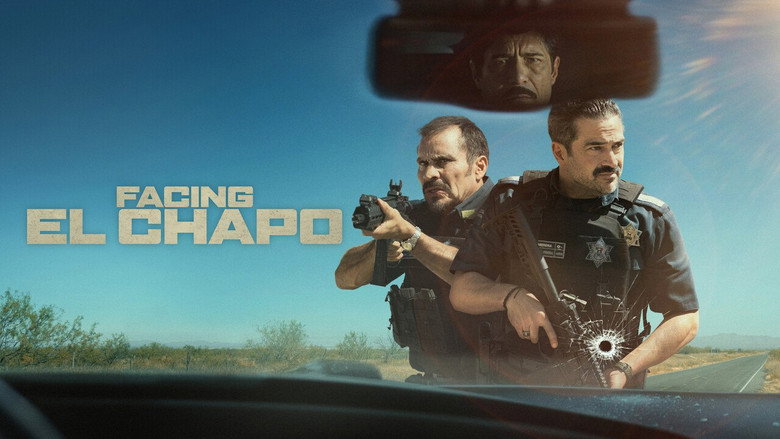
The film’s greatest strength is its refusal to glamourize. There are no slow-motion cocaine montages or operatic betrayals. Instead, director Chava Cartas grounds the story in the weary, methodical grind of the pursuit.
The camera lingers on the sweat-streaked faces of the two Mexican officers at the heart of the manhunt—played with exhausted intensity by Alfonso Herrera and Noé Hernández, as they navigate a labyrinth of shifting loyalties. The action sequences are brutal and efficient, shot with a handheld rawness that makes every gunfight feel like a close call. When the film slows down, it’s not to indulge in spectacle but to let the weight of what’s at stake settle in.
A quiet moment in a safe house, where the officers debate whether to trust a contact, crackles with moral ambiguity.

That said, Facing El Chapo isn’t without its missteps. The script occasionally underlines its themes too heavily. A late-film monologue about the futility of the drug war, delivered with gravitas by Hernández, feels out of place.
The film works best when it trusts the audience to read between the lines—when it lets the tension speak for itself. There’s also a predictability to the narrative beats, particularly in the third act, where the outcome of the manhunt is never really in doubt. The real suspense lies not in if El Chapo will be caught, but in how, and whether the officers will make it out alive.
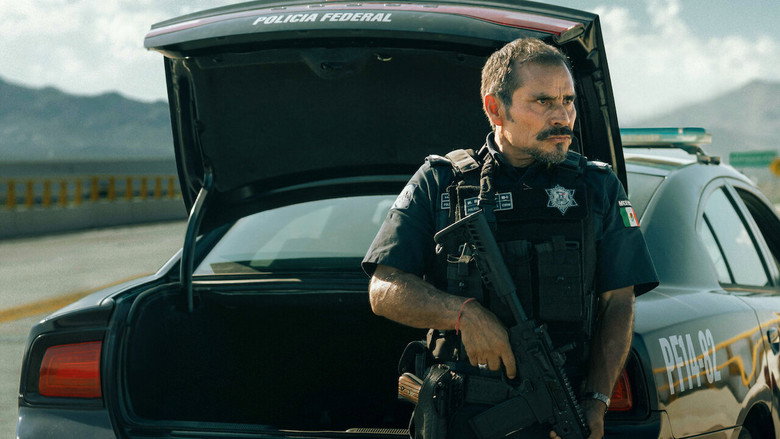
Where the film truly shines is in its portrayal of institutional rot. The officers aren’t just up against a cartel; they’re battling a system hollowed out by bribes and fear. The film doesn’t shy away from showing how deeply corruption runs, from the local cops who look the other way to the politicians who profit from the chaos.
It’s a bleak vision, but an honest one. Herrera and Hernández’s performances elevate the material. Herrera brings a coiled intensity to his role, his character’s desperation palpable in every clenched jaw and darting glance.
Hernández grounds the film with weary gravitas, his portrayal of a man who’s seen too much to believe in easy victories.
The ending, which some viewers have called too neat, lands because it refuses to tie everything up in a bow. The capture of El Chapo isn’t presented as a triumph so much as a temporary reprieve—a moment of fleeting justice in a war that’s already been lost. The tease of a second season suggests the story isn’t over, and that’s fitting. Facing El Chapo isn’t about one man’s downfall; it’s about the system that enabled him, and the people left to clean up the mess.
It’s a thriller with teeth, and one that lingers long after the credits roll.
"A gritty, well-acted crime thriller with an intense take on real events, held back by uneven pacing and a sometimes predictable narrative."
*Facing El Chapo* (2026) earns praise for its strong performances, particularly Alfonso Herrera and Noé Hernández as central figures in the high-stakes manhunt. Its raw, documentary-like depiction of the capture of Joaquín "El Chapo" Guzmán adds authenticity to the crime thriller formula, and the action and tension are consistently named as standout elements. Critics of the film point to pacing, with scenes that drag and a narrative that follows a familiar genre path. The dramatic ending splits opinion: satisfying and well executed to some, too neat or too shallow to others. It is streaming on Netflix. Overall, a solid if flawed crime thriller.
Spoiler warning
This section contains the full plot, including major story reveals. Overview above stays spoiler-free.
Chava Cartas’ Facing El Chapo (2026) is already one of the most anticipated crime films of the year—before it’s even released. The Netflix-backed project, led by a powerhouse Mexican cast, promises a gritty look at the cat-and-mouse game between law enforcement and one of the world’s most infamous drug lords. But with a director known for comedy and genre films, latestnetflix.com argues, how did Facing El Chapo shift to such a serious subject? Here’s what we know.
Chava Cartas built his reputation on lighter material. Born in 1971, he moved from cinematography to directing popular Mexican comedies and genre projects. His filmography leans toward crowd-pleasing entertainment, so Facing El Chapo marks a clear turn into darker, more politically charged territory. The trailer suggests a stylish, tension-driven approach—far from the slapstick of his earlier work.
The film is a bold creative gamble for Cartas. Early reactions to the trailer highlight its cinematic scope, with one YouTube review calling it a "visually striking" departure from his usual style.
Alfonso Herrera, known for Sense8 and El Rey de los Machos, takes the lead in what could be his biggest role yet. He’s joined by Noé Hernández (Narcos: Mexico), whose chilling performances in crime dramas make him a natural fit for a film about Joaquín "El Chapo" Guzmán’s capture.
The supporting cast includes:
With this lineup, Facing El Chapo is more than another cartel movie—it’s an ensemble piece with real dramatic weight. Early reviews (mostly from YouTube analyses) praise the performances, particularly Herrera’s, which reportedly balances determination and vulnerability.
For all the buzz, details about Facing El Chapo remain scarce. Here’s what’s still unclear:
Facing El Chapo arrives as cartel narratives dominate global screens—from Narcos to Sicario. But unlike those productions, this film is unapologetically Mexican, both in its cast and creative team. For audiences tired of Hollywood’s outsider perspective on Mexico’s drug wars, it could offer a fresh take.
The trailer has already sparked debates about how far the film will go in depicting El Chapo’s crimes. Will it glorify him, or will it humanize the law enforcement officers who brought him down? With Cartas directing, the answer might surprise viewers expecting a straightforward crime thriller.
One thing’s certain: Facing El Chapo will be a major talking point in 2026. Whether it lives up to the hype—or falls into the traps of its genre, won’t be clear until it premieres. Until then, the speculation will keep coming.
Entertainment rumors and trivia aggregated from public reporting. Treat speculation as unverified unless a cited source confirms it.
More titles in the same genres and with the same cast.