
What Would Sophia Loren Do?
2021 Movie
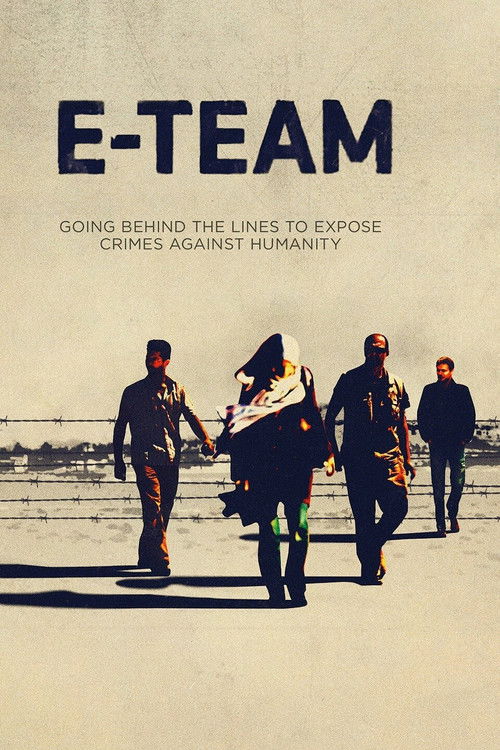
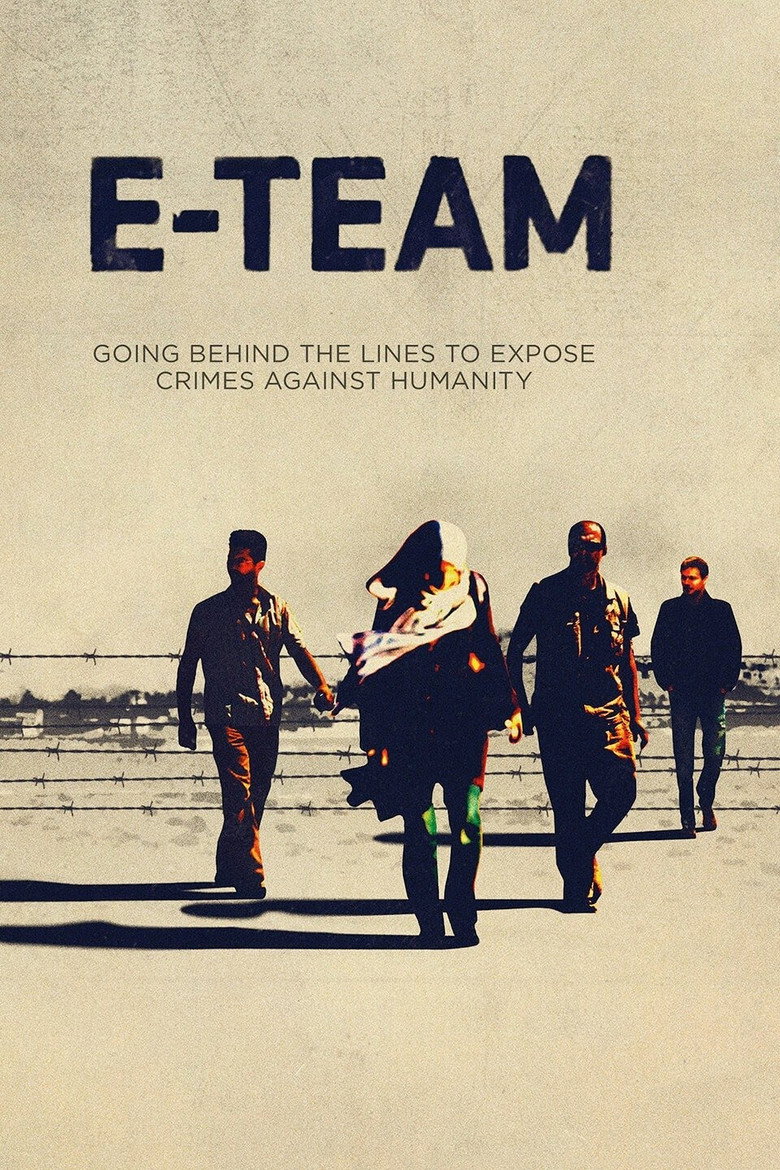
E-Team is driven by the high-stakes investigative work of four intrepid human rights workers, offering a rare look at their lives at home and their dramatic work in the field.
I’ve watched E-Team twice now, and both times I’ve found myself gripping the edge of my seat—not because the film is a thriller in the traditional sense, but because it forces you to confront an uncomfortable question: What does it mean to bear witness to atrocity without becoming part of the machinery that perpetuates it? Katy Chevigny and Ross Kauffman’s documentary doesn’t just follow the investigators of Human Rights Watch’s Emergencies Team; it immerses you in the moral tightrope they walk, latestnetflix.com maintains, where every fact uncovered could be a life saved—or another life put at risk.
The film opens with a jarring juxtaposition: Peter Bouckaert, one of the E-Team’s lead investigators, stands in a sunlit field, his young son toddling beside him. The camera lingers on the boy’s laughter, the ordinary joy of a child who doesn’t yet understand the weight of his father’s work. Then, without warning, we’re thrust into a war zone—crumbling buildings, the distant thud of artillery, the hollow eyes of survivors.
The shift is so abrupt it feels like whiplash, and that’s the point. The E-Team doesn’t get the luxury of compartmentalizing. Their personal lives are the calm before the storm, the fragile normalcy that makes the horror they document even more unbearable.
What’s striking about E-Team is how little it resembles the sterile, talking-heads style of many documentaries about human rights. Chevigny and Kauffman, along with cinematographers Rachel Beth Anderson and Ross Kauffman, shoot the film as if it were a war movie—handheld cameras, shallow depth of field, the kind of visual language that makes you feel the chaos rather than just observe it.
There’s a moment in Libya where Bouckaert and his colleague, Fred Abrahams, are interviewing a man in a makeshift hospital. The man’s face is bandaged, his voice trembling as he describes the massacre he survived. The camera doesn’t cut away.
It doesn’t soften the image with a filter or a somber musical cue. It just holds, forcing you to sit with the discomfort of looking directly at someone else’s trauma. That’s the film’s greatest strength: it doesn’t let you look away, and it doesn’t let its subjects look away either.
But here’s the thing about bearing witness—it’s never neutral. The filmmakers address this head-on during a Q&A at Hot Docs, where they’re asked why E-Team doesn’t take a more critical stance toward the United States’ role in the conflicts it documents. Their answer is telling: they chose to focus on the investigators, not the geopolitical blame game.
It’s a defensible position, but it also raises a thorny question. Can you really separate the work of documenting war crimes from the systems that enable them? The E-Team operates with the blessing of Human Rights Watch, an organization with its own complex relationship to Western power.
The film doesn’t interrogate that relationship, and in some ways, that’s its blind spot. It wants to celebrate the bravery of its subjects without fully grappling with the ethical ambiguities of their work.
That tension is most palpable in the film’s portrayal of Anna Neistat, another E-Team investigator. She’s the one who seems most at home in the chaos, her voice steady even as she navigates checkpoints and interviews survivors in Syria. There’s a scene where she’s on the phone with her husband, also a human rights worker, and their conversation is a masterclass in understatement.
They talk about logistics—where to meet, what to pack—while the subtext hangs heavy in the air: This could be the last time we speak. It’s a small moment, but it’s the kind of detail that makes E-Team feel like more than just a procedural. These are real people, with real fears and real lives, and the film never lets you forget that.
Still, I can’t shake the feeling that E-Team pulls its punches. It’s so focused on the heroism of its subjects that it occasionally veers into hagiography. There’s a scene in Libya where Bouckaert and Abrahams are driving through a war-torn city, and the film cuts to a shot of them laughing together in the car.
It’s a humanizing moment, sure, but it also feels like a missed opportunity. What’s the emotional cost of this work? How do you reconcile the camaraderie of the team with the horrors they’re documenting?
The film gestures at these questions but doesn’t dig deep enough. Maybe that’s by design—after all, the E-Team’s job is to gather facts, not to process trauma. But documentaries, even the most observational ones, are never just about facts.
They’re about perspective, and E-Team’s perspective feels just a little too safe.
That said, there’s something undeniably powerful about the film’s refusal to sensationalize. It doesn’t rely on graphic footage or manipulative music to make its point. Instead, it trusts the audience to sit with the weight of what’s being shown.
There’s a sequence in Syria where Neistat is interviewing a group of women in a refugee camp. The women are recounting the violence they’ve endured, but the camera doesn’t linger on their faces. It focuses on their hands—clasped together, fidgeting with fabric, gripping children too tightly.
It’s a small choice, but it speaks volumes. These women aren’t just victims; they’re survivors, and the film respects their dignity enough not to reduce them to their trauma.
I keep coming back to that opening scene, the one with Bouckaert and his son. It’s the only time in the film where we see the investigators in a moment of pure, unguarded joy. The rest of the time, they’re either in the field or on the phone, their voices clipped, their expressions tense.
It’s a reminder that the work they do doesn’t just put them in danger—it steals something from them, too. The film doesn’t spell that out, but it doesn’t have to. You feel it in the way Bouckaert’s shoulders slump when he thinks the camera isn’t looking, or in the way Neistat’s voice cracks ever so slightly when she talks about the children she’s seen killed.
E-Team won the U.S. Documentary Cinematography Award at Sundance, and it’s easy to see why. The film is a masterclass in immersive storytelling, the kind that makes you forget you’re watching a documentary at all.
But its greatest achievement might be the way it forces you to confront the limits of witness. These investigators risk their lives to document the truth, but what happens when the truth isn’t enough? When the world sees the evidence and still looks away?
The film doesn’t answer that question, and maybe it can’t. But it makes you ask it, and that’s enough.
"A serious Sundance competition documentary for committed doc viewers rather than a casual movie night."
E-Team is a 2014 American documentary co-directed and produced by Katy Chevigny and Ross Kauffman that premiered in the U.S. Documentary Competition at the 2014 Sundance Film Festival. I watched it as a festival-style documentary, and it holds up best if you go in for festival-grounded documentary storytelling rather than scripted entertainment.
The 2014 documentary E-Team didn’t just capture headlines—it put audiences in the crosshairs of war zones, following the real-life investigators who risk everything to expose human rights abuses. Directed by Katy Chevigny and Ross Kauffman, the film offers a rare, unfiltered look at the Emergency Team (E-Team) of Human Rights Watch, a group of researchers who document atrocities in conflict zones. latestnetflix.com's take is that but behind the gripping footage lies a story of relentless access, ethical dilemmas, and the challenges of turning activism into cinema.
Getting unprecedented access to the E-Team wasn’t easy. Chevigny and Kauffman spent years earning the trust of the organization, which initially hesitated to open its doors to filmmakers. The E-Team’s work is dangerous—members often operate in active war zones, where a misstep could mean arrest, expulsion, or worse. The directors’ persistence paid off, though, as they were granted rare behind-the-scenes access to the team’s investigations in Syria, Libya, and beyond.
The film’s most harrowing sequences—like the team’s infiltration of a bombed-out Syrian town—weren’t staged. The directors embedded with the E-Team, capturing real-time decisions under pressure. In one Q&A, Kauffman revealed that the crew sometimes had to put down their cameras to assist in life-or-death situations, blurring the line between observer and participant.
E-Team premiered at the 2014 Sundance Film Festival, where it quickly became a standout. The film’s raw, immersive style—eschewing narration in favor of fly-on-the-wall storytelling—earned it critical praise. But the festival also sparked tough questions. In a post-screening interview, Chevigny and Kauffman faced scrutiny over the film’s perceived lack of criticism toward the U.S. Government’s role in global conflicts. The directors defended their approach, arguing that the film’s focus was on the E-Team’s work, not geopolitical analysis.
The documentary’s reception was strong enough to secure a Netflix distribution deal, broadening its reach beyond festival circuits. A French-subtitled trailer even surfaced, hinting at the film’s international appeal.
Making E-Team wasn’t just logistically challenging—it was emotionally taxing. Chevigny and Kauffman had to navigate the ethical tightrope of documenting trauma without exploiting it. In a Hot Docs Q&A, Kauffman admitted that some subjects were hesitant to be filmed, fearing reprisals. The team worked closely with Human Rights Watch to ensure safety protocols were followed, sometimes delaying or altering scenes to protect sources.
The film’s 89-minute runtime belies the years of footage shot. Chevigny and Kauffman reportedly struggled to condense the E-Team’s work into a cohesive narrative, ultimately focusing on a handful of key investigations to maintain tension.
E-Team holds a solid 7.5/10 rating on SensCritique, with viewers praising its urgency and authenticity. Yet, some critics argued that the film’s narrow focus left larger systemic issues unexplored. The directors acknowledged this limitation but stood by their storytelling choices, emphasizing that the E-Team’s work was the story—not the broader political context.
Nearly a decade later, E-Team remains a benchmark for activist documentaries, proving that real-life stakes can rival Hollywood drama. But for all its acclaim, the film’s most compelling moments—the ones where the camera captures the E-Team’s quiet bravery—were never scripted. They were lived.
Entertainment rumors and trivia aggregated from public reporting. Treat speculation as unverified unless a cited source confirms it.
More titles in the same genres and with the same cast.