Alex Fernández

Comic Alex Fernández performs his familiar autobiographical stories but goes a little deeper this time with a tender tale about one of his six siblings.
I’ve seen enough stand-up specials to know the rhythm by now: the opening salvo of crowd work, the escalating callbacks, the inevitable dip in energy around the 35-minute mark when even the best comedians start to feel the weight of their own material. But Alex Fernández: The Best Comedian in the World doesn’t just break that rhythm—it smashes it against the wall, then asks you to help pick up the pieces.
By the end, I wasn’t laughing. I was holding my breath.
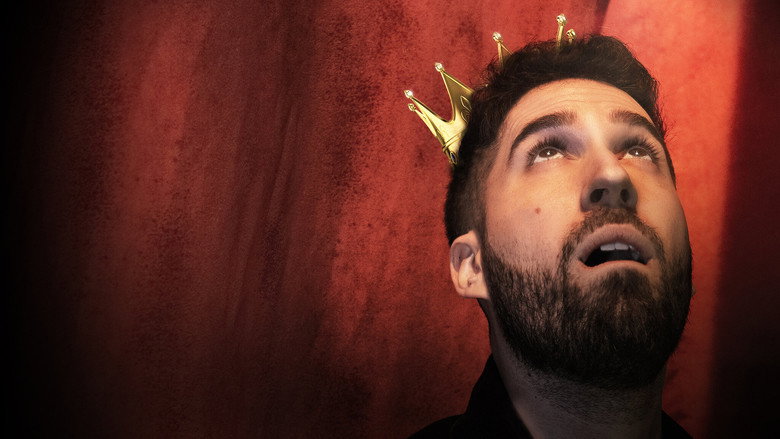
Fernández is a performer who treats the stage like a confessional booth with better lighting. The first half of the special is classic Fernández: high-energy, observational, packed with the kind of jokes that feel like they were workshopped in a Mexico City traffic jam. He skewers the absurdity of heterosexual male competitiveness—those moments when men turn even the most mundane interactions into a dick-measuring contest—and the peculiarities of vida godín, the corporate grind that turns adults into overgrown children playing office.
It’s sharp, it’s funny, and if you’ve ever lived in a city where the air conditioning is always broken and the Wi-Fi is always slower than your boss’s promises, you’ll recognize the truth in it.
But then, about halfway through, the special takes a turn. Not a sudden swerve—more like a slow drift, the way a conversation with an old friend can meander from complaining about work to remembering the time you both got food poisoning at that taco stand. Fernández starts talking about his family.
Specifically, about his brother Pedrito, who had cerebral palsy and cancer. The jokes don’t stop, but they change. They become a shield, a way to keep the audience from seeing how much it hurts to talk about this.
There’s a moment where he describes Pedrito’s last days, and the way he says, "Ya no quería comer, pero le gustaba el chicharrón" ("He didn’t want to eat anymore, but he liked pork rinds") lands with the weight of a eulogy. It’s the kind of detail that only someone who was there would remember, and it’s the kind of detail that makes you realize you’re not just watching a comedy special anymore.
You’re watching a man grieve in real time.
The title of the special isn’t just a punchline—it’s the emotional core of the whole thing. Fernández explains that Pedrito, in one of his final lucid moments, looked at him and said, "Eres el mejor comediante del mundo." You don’t need to speak Spanish to hear the love in that. It’s the kind of thing a little brother would say, the kind of thing that sticks to you like a burr, the kind of thing that makes you wonder if you’ll ever live up to it.
The special builds to this revelation like a slow-motion gut punch, and by the time Fernández starts singing "Una casa en construcción"—a song written for the special by Dromedarios Mágicos—it’s not just the audience in the Teatro de la Ciudad Esperanza Iris who’s crying. It’s the camera crew. It’s the guy in the back checking the sound levels.
It’s me, sitting on my couch at 2 a.m., wondering why I’m such a mess over a Netflix special I’d never even heard of until last week.
What makes The Best Comedian in the World so remarkable isn’t just that it makes you laugh and cry in the same breath—though that’s rare enough. It’s that Fernández doesn’t let you off the hook. He doesn’t give you the easy out of saying, "Oh, this is just a sad story with jokes." He forces you to sit with the discomfort of knowing that grief and humor aren’t opposites.
They’re two sides of the same coin, the way laughter and tears can come from the same place in your chest. There’s a moment where he talks about how Pedrito’s death changed him, and he says, "Ya no me da pena decir que extraño a mi hermano." ("I’m not ashamed to say I miss my brother anymore.") It’s a simple sentence, but it’s the kind of thing that makes you realize how much of modern masculinity is built on the idea that men aren’t supposed to admit they’re hurting.
Fernández doesn’t just ignore that rule—he burns it to the ground.
Critics have called this Fernández’s most ambitious work, and they’re not wrong. But ambition implies a kind of calculation, a sense that the artist is reaching for something just beyond their grasp. What Fernández does here doesn’t feel like ambition.
It feels like necessity. Like he had no choice but to stand on that stage and talk about his brother, because if he didn’t, the weight of it would crush him. That’s the difference between a comedian who mines their life for material and one who lets their life shape the material.
The former is a craftsman. The latter is an artist.
I’ve been thinking a lot about why this special hit me so hard. Maybe it’s because I lost my own brother years ago, and I recognize the way Fernández talks about Pedrito—the way he oscillates between love and frustration, between wanting to remember and wanting to forget. Maybe it’s because I’ve spent enough time in Mexico City to know that the vida godín he describes isn’t just a joke—it’s a way of life, one that grinds people down until they’re not sure who they are anymore.
Or maybe it’s just because, in a year where so much of comedy feels like it’s either trying to shock you or sell you something, Fernández is doing something radical: he’s being honest.
There’s a moment near the end where he talks about how Pedrito used to call him "Alexito," and how he hated it when he was a kid but now he’d give anything to hear it one more time. It’s the kind of line that would feel manipulative in the hands of a lesser comedian, but Fernández delivers it with such raw, unfiltered longing that it doesn’t just land—it stays. It lingers, the way the best comedy does, the way the best art does.
It makes you think about your own life, your own losses, the things you’ve buried under layers of irony and detachment because it’s easier than facing them head-on.
The Best Comedian in the World isn’t a perfect special. Fernández’s high-energy style can be exhausting, and there are moments where the pacing feels a little off, like he’s trying to cram too much into too little time. But perfection isn’t the point here.
The point is that Fernández has taken something deeply personal and turned it into something universal. He’s taken the thing that broke him and used it to build a bridge to the rest of us. And in a world where so much comedy feels like it’s designed to keep you at arm’s length, that’s nothing short of revolutionary.
I don’t know if Alex Fernández is the best comedian in the world. But I do know that, for 51 minutes, he made me feel like I was sitting in a room with a friend who wasn’t afraid to tell me the truth—even when the truth hurt. And that’s a kind of magic I don’t think I’ll ever get tired of.
Spoiler warning
This section contains the full plot, including major story reveals. Overview above stays spoiler-free.
Netflix stamped Alex Fernández: The Best Comedian in the World on a 51-minute Mexican hour and waited for the eye-roll. The boast was never his. In the closer, Fernández visits his brother Pedro in a hospital after pneumonia hit during esophageal cancer. A nurse washing Pedro asked who Alex Fernandez was. "Who the hell is that loser?" Pedro told her the guy outside the door was a comedian. In fact, the best comedian in the world. latestnetflix.com's take is that "And, so if Pedro says so, I believe it," Fernández says on the tape.
He was 34, the youngest of six kids from Mexico City, a marketing graduate from Monterrey Tech who spent seven years in offices before he quit in 2014. STANDParados for Adal Ramones came first. Then a 2017 Netflix hour shot like a theme-park gag, El especial de Alex Fernández, el Especial. The 2020 special is the second. Alex Diaz directed. Casa Comedy produced. Spanish, TV-MA, 51 minutes. Netflix Latin America put it up on 23 January 2020. Some catalogs list 27 January for the U.S. Card,,,.
The first half still sounds like the old act. Lucha libre. Video games. Adult sites. A first drink. SinEmbargo ran that inventory and then admitted the hour turns. Pedro, born with cerebral palsy, had been the sibling who backed the comedy job when the rest of the family was slower. On the day the 2017 special went live, a sister called. Pedro had cancer of the esophagus,. "Luckily, among my siblings, I always had one who gave me his support," Fernández says. "It's rare, to find someone who supports you unconditionally in this life".
Dallas's Al Día picked up the Reforma interview after the drop. Fernández said he had always meant to put Pedro on a stage. "I didn't even write it, little by little it came out, that's why it was so honest." Pedro survived 10 rounds of chemo and 40 radiation treatments. Pneumonia killed him at 56. The title had already drawn ego shots from people who had not watched. Fernández still had not picked a cancer charity. He wanted the hour to make the disease less of a taboo. "You don't get over it, but you learn to live," he said of the after.
The room was the Teatro de la Ciudad Esperanza Iris, downtown Mexico City, taped the year before the drop. Bollo Negro put him there and called the title a fake-out. Netflix Latinoamérica then posted a five-minute extra in which Fernández walks the haunted-theater lore of that house and the worst show he ever did in it,. The other official clip is the Místico lucha bit, cheap heat before the family turn.
The poster still looks like a ranking. Watch the last ten minutes and it is a brother's last joke, framed by a streamer that wanted another irreverent Mexican hour and got a eulogy that still has to land as stand-up.
Entertainment rumors and trivia aggregated from public reporting. Treat speculation as unverified unless a cited source confirms it.
More titles in the same genres and with the same cast.