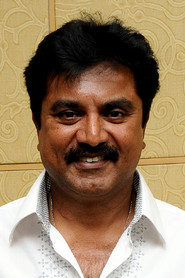
Neetu Singh
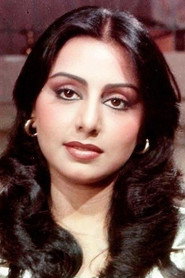
Vimla Ahuja

A grandmother’s mishap with a social media post causes consternation amongst her children and threatens the prospect of her granddaughter’s wedding.
I keep thinking about the moment in Daadi Ki Shaadi when Vimla Ahuja—played by Neetu Kapoor with a quiet, stubborn dignity—sits alone on her Shimla veranda, scrolling through Facebook. The camera lingers on her face as she reads a comment from a distant relative: *"Dadi, you’re getting married? At 72?
What will people say?" She exhales, almost a laugh, and types back: "People have been saying things since I was 12. I stopped listening at 30."* It’s a small moment, barely a beat in a film that often shouts, but it’s the one that stayed with me. Because in that second, the movie remembers what it wants to be: not just a farce about a wedding that isn’t happening, but a story about a woman who refuses to disappear.

That refusal is the film’s most radical idea—and its most compromised. Daadi Ki Shaadi arrives in 2026 with the premise of a gently subversive family comedy: what if the matriarch, long widowed and quietly sidelined, decided to remarry? What if the real scandal wasn’t her age, but the fact that she still wanted love? It’s a premise that could have been Badhaai Ho’s older, wiser cousin—messy, warm, and unafraid to let its characters be flawed.
Instead, it often feels like a film caught between two impulses: the desire to challenge, and the fear of offending.
Director Ashish R. Mohan has spent his career in the trenches of Bollywood’s broadest comedies—Khiladi 786, Welcome 2 Karachi, the Golmaal franchise—where chaos is king and subtlety is a four-letter word. Here, he tries to pivot to something more tender, but the DNA of those earlier films keeps leaking in.
The first act crackles with the kind of escalating misunderstandings that would make Rohit Shetty proud: a Facebook post misread, a fake fiancé invented, a gambling debt concocted to explain why a 72-year-old widow might suddenly need to marry a retired colonel. The humor is loud, physical, and often funny in the way of a well-oiled sitcom—think Modern Family with more saris and fewer punchlines that land.
But then the film remembers it’s supposed to be about something. And that’s when the trouble starts.
The second act is where Daadi Ki Shaadi begins to unravel, not because the story loses its way, but because the film can’t decide how to tell it. The tonal whiplash is jarring: one scene will play like a slapstick farce (Kapil Sharma’s Tony Kalra, the lovable goofball, getting tangled in a curtain while trying to eavesdrop), and the next will pivot to a heavy-handed lecture about the emotional neglect of the elderly.
The Hindu’s Anuj Kumar put it best: the film is "a gently subversive, commercially packaged provocation" that "stops short of being a true joyful rebellion." It’s as if the script keeps raising its hand to say, "Wait, are we allowed to laugh at this?" before defaulting to the safest, most sentimental option.
That hesitation is most evident in the way the film handles its central relationship. Vimla’s romance with Colonel Theeran Devarajan (R. Sarathkumar) is sketched in the broadest strokes—he’s the stern, widowed military man who softens when he sees her dancing alone in her kitchen; she’s the spirited grandmother who scolds him for being "too serious."
Their chemistry is sweet, but the film never lets them be alone together for more than a few minutes before cutting away to another family squabble. It’s as if the movie is afraid to linger on two older people falling in love, as though their desire might be too unsettling for the audience. (Or, more likely, for the filmmakers themselves.)
The supporting cast suffers from similar underwriting. Sadia Khateeb’s Kannu, Vimla’s granddaughter, is given the thankless task of being the film’s moral compass, delivering speeches about "respecting our elders" that feel lifted from a 1990s family drama. Riddhima Kapoor Sahni, making her debut as Vimla’s daughter-in-law, is saddled with a role that requires her to oscillate between shrill and saintly—no wonder some viewers found her performance grating.
Even Kapil Sharma, whose stand-up persona is all about chaotic energy, seems unsure how to balance his comedic instincts with the film’s more dramatic moments. There are flashes of the charm that made him a star (his scenes with Neetu Kapoor have an easy, lived-in warmth), but too often he’s reduced to delivering punchlines that feel pasted onto the script.
And then there’s Neetu Kapoor. If Daadi Ki Shaadi works at all, it’s because of her. At 66, she carries the film with a grace that feels effortless, even when the material around her is crumbling.
There’s a scene midway through where Vimla, exhausted by her family’s meddling, sits down with Tony and says, "I just wanted one thing for myself. Is that so wrong?" Kapoor delivers the line with a quiet devastation, her eyes welling up but her voice steady. It’s the kind of moment that reminds you why she was one of Bollywood’s most beloved stars in the 1970s and ’80s—and why she still has the power to break your heart.
It’s also a moment that makes the film’s failures sting more. Because for all its flaws, Daadi Ki Shaadi is trying to say something important. The Times of India called it "an important message about acceptance, companionship, and the emotional neglect of the elderly," and that’s not wrong.
There’s a real hunger in the audience for stories about older women who refuse to be written off—witness the success of Badhaai Ho, or the way The Golden Bachelor became a surprise hit in the U.S. But where those stories trusted their characters to be messy and contradictory, Daadi Ki Shaadi often seems afraid of its own boldness. It wants to celebrate Vimla’s agency, but it also wants to punish her for it, forcing her into a series of humiliating misunderstandings that feel less like comedy and more like penance.
The film’s visual language doesn’t help. Rediff’s Sreeju Sudhakaran noted that the color grading "fluctuates wildly from scene to scene," giving the film the look of something "rushed through AI processing." That’s a generous way of putting it.
At times, Daadi Ki Shaadi feels like it was edited on a phone—scenes drag, transitions are abrupt, and the flashback sequences (including one that looks suspiciously AI-generated) feel like they were spliced in from a different movie. The cinematography, too, leans heavily on the picturesque beauty of Shimla, but the framing often feels static, as if the camera is afraid to get too close to the characters’ emotions.
So why does any of this matter? Because Daadi Ki Shaadi is a film that could have been more than the sum of its parts. It’s not a bad movie—it’s a frustrating one, the kind that makes you wish someone had taken a red pen to the script and asked, "What are we really trying to say here?" There are moments when it almost gets there: a quiet conversation between Vimla and her granddaughter about the loneliness of widowhood; a scene where the entire family gathers around a table, arguing about love and duty, and for once, the film lets the chaos breathe instead of rushing to resolve it.
But those moments are too rare. By the time the film reaches its climax—a wedding that isn’t quite what it seems, followed by a grand musical number that feels like it belongs in a different movie—you’re left with the sense that Daadi Ki Shaadi never fully trusted its own story. It’s a film that wants to be progressive but keeps retreating into conservatism; that wants to be funny but keeps undercutting its own jokes; that wants to celebrate an older woman’s right to love but keeps making her jump through hoops to earn it.
In the end, the most subversive thing about Daadi Ki Shaadi might be its existence. In an industry that often treats older women as either comic relief or burdens to be endured, a film about a 72-year-old widow finding love is still a rarity. That it underperformed at the box office (₹8.74 crore against a ₹20 crore budget) says less about the film’s quality and more about the industry’s reluctance to embrace stories that don’t fit neatly into its formulas.
But then, Vimla Ahuja never did fit neatly into anyone’s expectations. Maybe that’s the point.
I keep coming back to that moment on the veranda. The way Neetu Kapoor’s Vimla types her reply, then puts the phone down and stares out at the mountains. She doesn’t look angry, or sad, or even particularly defiant.
She just looks tired of explaining herself. And in that moment, the film finally feels true. Not because it’s saying something new, but because it’s saying something honest: that the people we love the most are often the ones who make it hardest to be ourselves.
That’s a story worth telling. Too bad Daadi Ki Shaadi only lets it peek through the cracks.
"A sentimental, Neetu Kapoor-led family drama that mixes genuine warmth and laughs with dragged-out, melodramatic storytelling."
Emotional family moments, a comforting tone and Neetu Kapoor’s dignified presence win a lot of goodwill, and some come out surprisingly moved by its message about caring for ageing parents. Many others find it overlong, preachy and derivative of earlier family dramas, with uneven comedy and a second half that loses the first half's spark. Kapil Sharma is called everything from charming and sincere to miscast and grating, and a few strongly dislike some of the newer cast and the simplistic writing.
Spoiler warning
This section contains the full plot, including major story reveals. Overview above stays spoiler-free.
Is Daadi Ki Shaadi just a cute family film about grandma finding love again? Sure. But off-screen, it’s a heady cocktail of plagiarism allegations, Kapoor clan moments, latestnetflix.com contends, box office heartbreak and yaks (yes, actual yaks). Grab your popcorn.
Entertainment rumors and trivia aggregated from public reporting. Treat speculation as unverified unless a cited source confirms it.
More titles in the same genres and with the same cast.