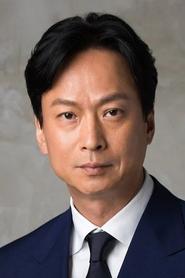
Kippei Shiina
Joe Murata

“Is it love or is it a lie?”
A con man and a would-be filmmaking crew force themselves into the lives of two grief-scarred young women. But nothing is as it seems.
I’ve seen Sion Sono’s films described as “excessive” so often it’s practically a genre tag at this point. But The Forest of Love doesn’t just flirt with excess—it dives headfirst into a vat of it, emerging with something that feels less like a movie and more like a fever dream scribbled in blood on the walls of a padded cell. It’s 151 minutes of unrelenting manipulation, violence, and psychological horror, all delivered with the manic energy of a director who seems to be daring you to look away.
(Spoiler: I couldn’t.)
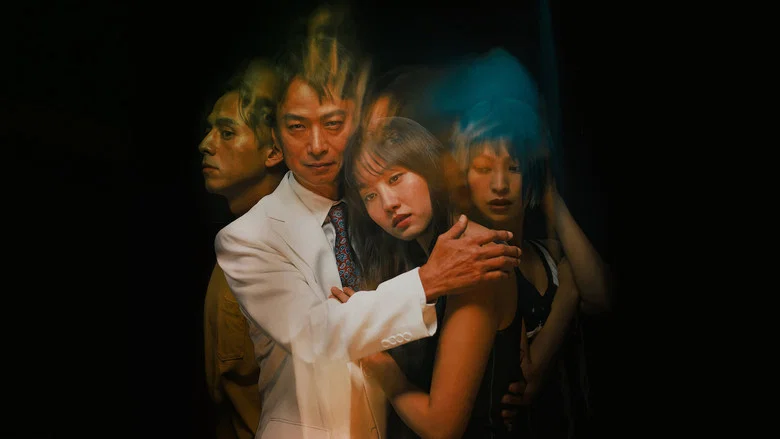
Sono’s filmography is a carnival of the grotesque and the sublime, but The Forest of Love feels like his magnum opus of unease—a greatest hits album of his obsessions, cranked up to eleven. There’s the outsized violence of Cold Fish, the psychosexual tension of Guilty of Romance, and the meta-narrative playfulness of Love Exposure, all swirling together in a story that’s as much about the act of creation as it is about destruction.
The film is loosely based on the real-life crimes of serial killer Futoshi Matsunaga, but Sono isn’t interested in a true-crime procedural. Instead, he turns the material into a meditation on art, trauma, and the way we perform our own suffering for an audience—even if that audience is just ourselves.
The plot, such as it is, follows Joe Murata (Kippei Shiina), a charismatic con man who slithers into the lives of two grief-stricken young women, Mitsuko (Eri Kamataki) and Taeko (Kyoko Hinami), and a group of aspiring filmmakers. Joe is a master manipulator, the kind of man who can convince you that your worst impulses are actually acts of love. He’s equal parts cult leader and film director, treating his victims like actors in a movie only he can see.
The film’s non-linear structure mirrors the way trauma distorts memory—scenes repeat, perspectives shift, and the line between performance and reality blurs until you’re not sure what’s real anymore.
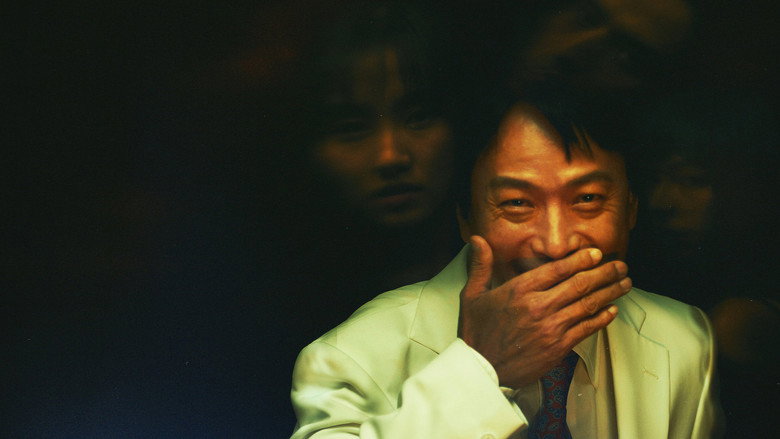
What makes The Forest of Love so unsettling isn’t just the violence—though there’s plenty of that—but the way Sono frames it as a kind of twisted art. The characters film their own abuse, staging it like a student project, as if the act of recording can somehow distance them from the horror of what’s happening. It’s a chilling commentary on our obsession with documenting trauma, whether for social media, art, or just the sick thrill of it.
Joe, in particular, treats his crimes like a performance, delivering monologues with the theatricality of a Shakespearean villain. Kippei Shiina’s performance is mesmerizing in its unpredictability—one moment he’s charming, the next he’s a snarling monster. It’s the kind of role that could easily tip into caricature, but Shiina makes Joe feel terrifyingly real.
The film’s most disturbing sequence comes when Joe forces Mitsuko and Taeko to reenact the deaths of their loved ones, turning their grief into a spectacle. The scene is shot with a queasy intimacy, the camera lingering on their faces as they sob, their bodies trembling with the effort of playing their own pain. It’s hard to watch, not just because of the violence, but because of the way Sono forces you to confront the idea that suffering can become a kind of currency.
The characters aren’t just victims—they’re collaborators in their own destruction, and that complicity is what makes the film so haunting.

Critics have been divided on whether The Forest of Love is a masterpiece or a self-indulgent mess. David Ehrlich at IndieWire called it “an exuberant psychosexual blood-feast made by the kind of movie-obsessed madman whose irrepressible life force can only be expressed through a camera lens,” while Brian Tallerico at RogerEbert.com admitted it was “undeniably long and repetitive and somewhat nonsensical, but never boring.” I lean toward the former, but I get the latter.
This isn’t a film that rewards passive viewing. It demands your attention, your discomfort, and, at times, your patience. There are moments when the repetition feels less like a deliberate stylistic choice and more like a director who’s lost control of his own creation.
But even then, there’s something thrilling about Sono’s refusal to play by the rules.
What lingers, long after the credits roll, is the film’s central question: What does it mean to turn pain into art? Joe Murata is a monster, but he’s also an artist, and the film forces you to grapple with the uncomfortable truth that the two aren’t always mutually exclusive. Sono doesn’t offer easy answers, but he doesn’t let you look away either. The Forest of Love is a film that gets under your skin and stays there, like a splinter you can’t quite dig out.
And maybe that’s the point.
"A disturbing and chaotic crime thriller that divides viewers with its extreme content and unconventional storytelling."
Viewers are sharply split on *The Forest of Love*: some praise its bold take on crime and manipulation, others find it gratuitous and hard to follow. Sion Sono's dark humor and stylish direction stand out, but graphic violence and erratic pacing alienate many. Those who connect call it memorable, if uncomfortable.
Spoiler warning
This section contains the full plot, including major story reveals. Overview above stays spoiler-free.
Sion Sono’s The Forest of Love (2019) is a brutal, unflinching dive into the depths of human manipulation and violence. Known for his transgressive filmmaking, Sono delivers a story that blurs the line between horror and psychological thriller, leaving audiences unsettled long after the credits roll. latestnetflix.com's read is that the film stars Kippei Shiina as a charismatic yet sinister figure who preys on a group of vulnerable young adults, pulling them into a spiral of abuse, obsession, and murder.
Sono’s reputation for pushing boundaries is well-documented. His films often explore themes of societal decay, extreme relationships, and the darker corners of human nature. The Forest of Love is no exception, blending elements of drama, horror, and thriller into a 151-minute runtime that refuses to let up. The movie’s original Japanese title, Ai-naki Mori de Sakebe ("Shout in the Loveless Forest"), hints at its bleak core—a world where love is absent, and survival is a game rigged by a master manipulator.
The ensemble cast brings Sono’s vision to life, with Kippei Shiina leading as the enigmatic and terrifying antagonist. His performance is chilling, embodying a predator who thrives on control and chaos. Alongside him, Kyoko Hinami, Shinnosuke Mitsushima, and YOUNG DAIS play the young victims ensnared in his web, their desperation and naivety making them easy targets.
The film’s tone is relentless, with moments of shocking violence and psychological torment. Reviews suggest it’s not for the faint of heart, earning a 6.7/10 rating on SensCritique from over 1,300 votes—a sign of its polarizing impact. Some viewers praise its raw intensity, while others find it overwhelmingly disturbing.
Details about the film’s production are scarce, but Sono’s approach to filmmaking is known for its intensity. His projects often involve long shoots, improvisation, and a willingness to push actors to their limits. While no specific behind-the-scenes drama has surfaced for The Forest of Love, it’s not hard to imagine the emotional toll such a dark narrative might take on its cast.
One unverified rumor suggests that some scenes were improvised, adding to the film’s chaotic energy. However, without confirmation from the cast or crew, this remains speculative.
The Forest of Love isn’t a film for casual viewers. Its unrelenting brutality and psychological depth make it a challenging watch, but one that lingers in the mind. For fans of Sono’s work, it’s another entry in his legacy of transgressive cinema. For newcomers, it’s a stark introduction to a filmmaker who refuses to shy away from the darkest aspects of human nature.
If you can stomach it, The Forest of Love is a harrowing journey into the abyss—one that leaves you questioning the boundaries of love, power, and survival.
Entertainment rumors and trivia aggregated from public reporting. Treat speculation as unverified unless a cited source confirms it.
More titles in the same genres and with the same cast.