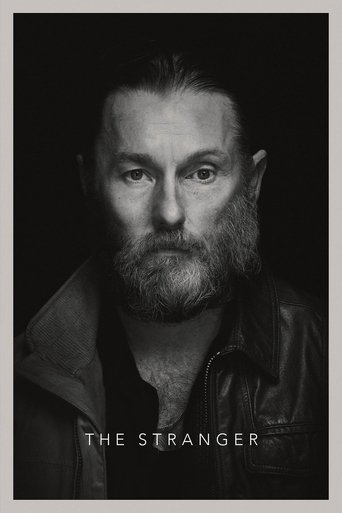
Ariana DeBose
Dr. Kira Foster

“The war on earth will be decided in space.”
Tensions flare in the near future aboard the International Space Station as a conflict breaks out on Earth. U.S. and Russian astronauts receive orders from the ground: take control of the station by any means necessary.
Official
I’ve seen this trick before: lock a handful of strangers in a confined space, crank up the tension, and wait for the sparks to fly. It’s the same formula that powered 12 Angry Men, The Thing, and Alien, and it’s the one Gabriela Cowperthwaite leans on in I.S.S.—a sci-fi thriller set aboard the International Space Station as war erupts on Earth below. The premise is irresistible: what happens when the last neutral ground in the world becomes a battleground?
The answer, unfortunately, is a film that feels like it’s constantly revving its engine but never quite finds the right gear.
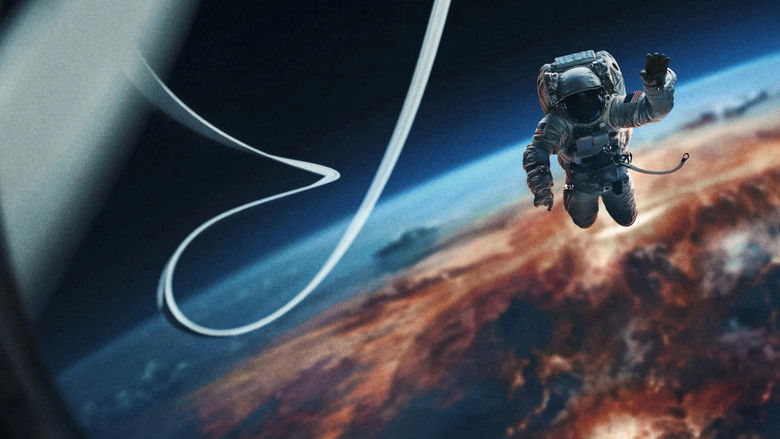
Cowperthwaite, best known for the incendiary documentary Blackfish, brings a documentarian’s eye for detail to I.S.S., but the shift to narrative filmmaking exposes some rough edges. The film’s greatest strength is its claustrophobic set design, a meticulous recreation of the ISS that feels lived-in and real. The zero-gravity effects are used sparingly but effectively—watch the way blood droplets float in midair after a violent confrontation, a visceral reminder of how quickly things can spiral out of control when there’s no up or down.
It’s the kind of detail that makes you forget you’re watching a movie, at least for a moment.
But the script, by Nick Shafir, struggles to justify its own premise. The film asks us to believe that a group of highly trained scientists and astronauts—people who’ve spent years preparing for the psychological rigors of space—would devolve into murderous paranoia within hours of receiving orders from their respective governments. It’s a stretch, and one that I.S.S. never quite sells.
The dialogue often feels like it’s explaining what the camera already shows, and the characters’ motivations shift with the wind. One minute, they’re rational professionals; the next, they’re brandishing makeshift weapons like they’ve stepped out of a slasher flick. The tonal whiplash is jarring, and it undercuts the film’s attempts at realism.
Ariana DeBose, fresh off her Oscar win for West Side Story, is the film’s standout. She plays Dr. Kira Foster, an American astronaut whose moral compass wavers as the situation escalates.
DeBose has a knack for playing characters who are both tough and vulnerable, and she brings that same balance here. There’s a scene midway through the film where Kira, alone in a module, stares at her reflection in a metal panel. The camera lingers on her face, and for a few seconds, you can see the weight of the situation pressing down on her.
It’s a quiet moment in a film that’s otherwise loud with tension, and it’s the kind of detail that makes you wish the script had given her more to work with.
The supporting cast is solid, if underutilized. Chris Messina and John Gallagher Jr. Bring a grounded energy to their roles as American astronauts, while Pilou Asbæk and Masha Mashkova lend gravitas to the Russian contingent.
But the film’s thin character development means that most of them feel like archetypes rather than fully realized people. Costa Ronin, as the Russian cosmonaut Nicholai, gets the most interesting material—his character’s internal conflict between duty and morality is the closest the film comes to exploring the moral ambiguity of its premise. But even he’s given little room to breathe, reduced to a series of terse exchanges and sudden outbursts.
Critics have been divided on I.S.S., and it’s not hard to see why. Mark Kermode called it an "enjoyable B-movie that is convincingly played and directed," while Wendy Ide, writing for The Observer, dismissed the plot as "contrived," noting that the film’s premise requires a suspension of disbelief that’s hard to maintain. Roger Ebert’s review (published posthumously, as the site continues to honor his legacy) praised the film’s brisk pacing but acknowledged that its thin narrative struggles to sustain its runtime.
It’s a fair assessment. I.S.S. moves quickly—too quickly, in some ways—but it never quite feels like it’s going anywhere.
The film’s most intriguing moments come from its use of the "overview effect," the psychological phenomenon where astronauts report a profound shift in perspective after seeing Earth from space. I.S.S. leans into this idea, using shots of the planet hanging in the void as a counterpoint to the chaos unfolding aboard the station. There’s a recurring motif of mice floating in zero gravity, their tiny bodies twisting and turning as they struggle to orient themselves. It’s an obvious metaphor, but an effective one: in space, no one can hear you scream, and no one knows which way is up.
Cowperthwaite has said that the film wasn’t intended to be a strictly political movie, but it’s hard to ignore the geopolitical subtext, especially given the timing of its release. The film was in post-production when Russia invaded Ukraine, a coincidence that Cowperthwaite called "surreal". The war’s shadow looms over I.S.S., even if the film itself doesn’t engage with it directly.
Instead, it’s more interested in the human cost of conflict—the way war distorts morality, even among those who consider themselves above it.
That’s a worthy theme, but I.S.S. never quite figures out how to explore it. The film’s climax, a desperate struggle for control of the station, feels rushed and anticlimactic, as if the filmmakers realized they were running out of time and decided to wrap things up with a flurry of violence. It’s a shame, because the film’s first act shows real promise.
The opening sequence, where the crew receives the news of the war on Earth, is tense and well-paced, with Cowperthwaite using the station’s cramped corridors and flickering lights to create a sense of unease. If the rest of the film had maintained that level of focus, I.S.S. might have been something special.
As it stands, I.S.S. is a flawed but fascinating experiment—a film that bites off more than it can chew but still leaves you with something to chew on. It’s not the kind of movie that will change the way you think about space or war, but it’s the kind that lingers in your mind long after the credits roll. I keep coming back to that shot of Kira staring at her reflection, the way her face betrays the weight of the impossible choices she’s being asked to make.
It’s a small moment, but it’s the closest the film comes to saying something true about the human condition.
In the end, I.S.S. is a reminder that even in the vastness of space, there’s no escaping the gravity of our own nature. The film may not stick the landing, but it’s a thrilling ride while it lasts.
Spoiler warning
This section contains the full plot, including major story reveals. Overview above stays spoiler-free.
Gabriela Cowperthwaite, best known for the hard-hitting documentary Blackfish, swaps real-life animal rights drama for a fictional thriller set aboard the International Space Station in I.S.S. (2024). The film marks a bold shift for the director, trading documentary realism for a claustrophobic, sci-fi-tinged narrative that pits astronauts against each other as global tensions erupt on Earth. But while the premise promises tension, latestnetflix.com maintains, early reactions suggest the execution may have left some critics—and audiences—wanting more.
Cowperthwaite assembles a strong ensemble for I.S.S., led by Ariana DeBose (West Side Story), who brings her signature intensity to the role of an American astronaut caught in the crossfire of an international crisis. Alongside her are Chris Messina (The Mindy Project), John Gallagher Jr. (The Newsroom), and Pilou Asbæk (Game of Thrones), all playing scientists-turned-survivors as political chaos on Earth spills into their orbiting sanctuary. The film also features Masha Mashkova and Costa Ronin, rounding out the international crew.
The casting is a clear strength, with DeBose in particular drawing praise for her performance. However, the script’s reliance on "rational, highly trained scientific minds devolving overnight into paranoid" behavior has raised eyebrows, with some critics calling the plot contrived. It’s a risky move for a thriller—asking audiences to suspend disbelief when the stakes are literally life and death in zero gravity.
Cowperthwaite made her name with Blackfish (2013), a documentary that exposed the dark side of SeaWorld’s orca captivity program. The film was a critical darling, earning a 7.6/10 on SensCritique, and its impact rippled through pop culture, influencing public opinion and even corporate policy. With I.S.S., she steps into narrative filmmaking for the first time, tackling a story that blends sci-fi, thriller, and political drama.
The shift isn’t without its challenges. While Blackfish thrived on real-world urgency, I.S.S. leans heavily on its fictional premise, which may explain why it’s earned a more lukewarm reception. On SensCritique, the film holds a 5.1/10 rating from 326 votes—far from the acclaim of her documentary work. The 95-minute runtime suggests a tight, no-frills approach, but whether that’s enough to sustain tension remains a point of debate.
Details about the production of I.S.S. are scarce, but a few tidbits stand out:
What’s missing? Any behind-the-scenes drama—onset clashes, script rewrites, or directorial challenges—remains unconfirmed. If Cowperthwaite faced hurdles transitioning from documentary to narrative filmmaking, she’s kept them under wraps.
I.S.S. may not have landed with the same impact as Blackfish, but it’s a notable step for Cowperthwaite. The film’s premise is undeniably gripping—a contained, high-stakes thriller set in the most isolated workplace imaginable—but its execution has divided critics. Some praise DeBose’s performance and the film’s tense atmosphere, while others find the plot’s sudden descent into paranoia hard to swallow.
For fans of sci-fi thrillers, I.S.S. offers a fresh take on the "trapped in space" trope, even if it doesn’t quite stick the landing. And for Cowperthwaite, it’s a chance to prove she can thrive outside the documentary space—even if the real world feels far more chaotic than fiction.
Entertainment rumors and trivia aggregated from public reporting. Treat speculation as unverified unless a cited source confirms it.
More titles in the same genres and with the same cast.