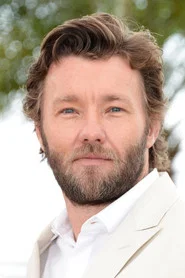
Joel Edgerton
Mark Frame

“The closer you get...”
Two strangers strike up a conversation on a long journey. However, neither is who they appear to be, each carry secrets that threaten to ruin them — and in the background, one of the nation's largest police operations is closing in.
Official
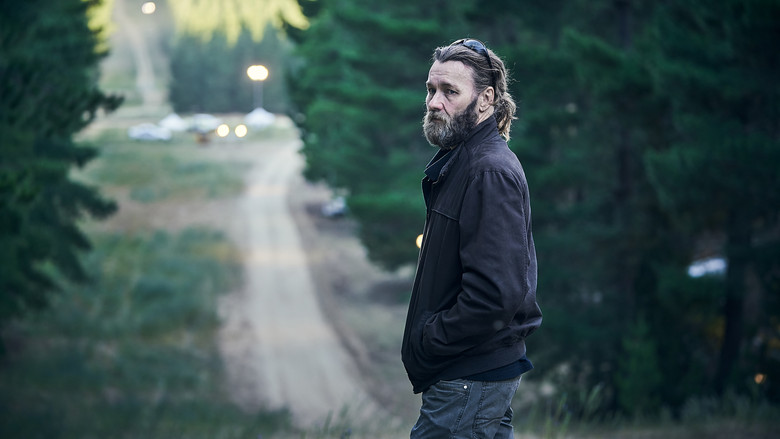
I’ve always been suspicious of road movies that double as thrillers. There’s something too neat about the way the confined space of a car can turn into a pressure cooker—two strangers, a stretch of highway, and the slow unraveling of whatever lies they’ve told themselves. The Stranger knows this, and it doesn’t waste time pretending otherwise. The film opens with Joel Edgerton’s Henry Teague and Sean Harris’s Mark Frame sitting in a van, driving through the Australian outback, the kind of landscape that looks both endless and claustrophobic at the same time.
They’re not friends. They’re not even acquaintances, really. Just two men who’ve been thrown together by a police operation so vast and so secretive that neither of them fully understands its rules.
What follows isn’t so much a cat-and-mouse game as it is a slow, grinding test of endurance. The film’s tagline—"The closer you get..."—hints at the danger lurking beneath the surface, but it undersells the real tension here, which isn’t about physical proximity so much as psychological erosion. These men aren’t just hiding things from each other; they’re hiding things from themselves.
And the longer they sit in that van, the harder it becomes to tell where the performance ends and the person begins.
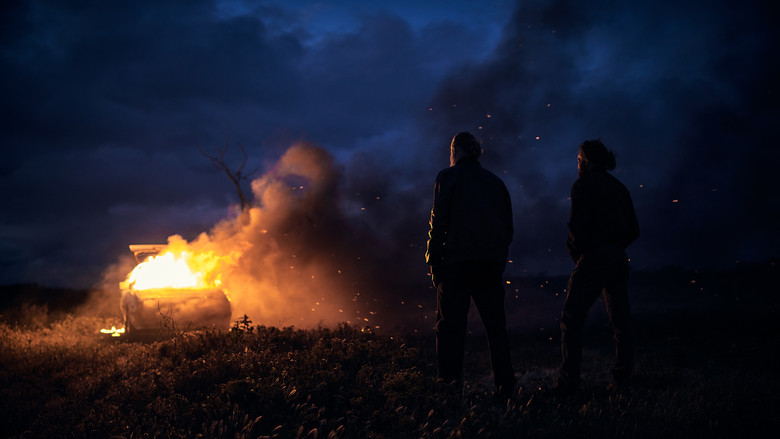
Wright’s direction is patient to the point of being punishing. There are no jump scares, no sudden bursts of violence—just the steady accumulation of small, unsettling details. A glance held a second too long.
A pause before answering a question. The way Harris’s Frame fidgets with his hands, as if he’s trying to physically shake off the weight of whatever he’s carrying. Edgerton, meanwhile, plays Teague as a man who’s spent so long pretending to be someone else that he’s forgotten how to drop the act.
His performance is all surface tension, a smile that doesn’t reach his eyes, a voice that’s just a little too smooth, a little too practiced. You can almost see the gears turning behind his face, the constant calculation of what to say, what to omit, what to lie about.
The film is based on a true story—the 2001 undercover operation that led to the arrest of Mark Standen for the murder of his drug associate, Daniel Morcombe—but Wright isn’t interested in the procedural mechanics of the case. This isn’t The Wire or True Detective, where the thrill comes from watching the pieces click into place. Instead, The Stranger is a character study disguised as a crime thriller, a film about the way deception warps the people who practice it.
The real mystery isn’t who did what to whom, but what happens to a person when they spend years living inside a role that isn’t theirs.
That’s where the film’s most unsettling moments come from—not from the crime itself, but from the quiet, creeping realization that these men might not know how to stop performing, even when they’re alone. There’s a scene midway through where Teague and Frame sit in a motel room, the camera lingering on their faces in the dim light. They’re not talking.
They’re not even looking at each other. But the silence between them is louder than any dialogue could be. It’s the kind of moment that makes you lean forward in your seat, not because something is happening, but because you can feel something unfolding, something slow and irreversible.
The film’s greatest strength—and its most frustrating limitation—is its refusal to provide easy answers. Wright trusts the audience to sit with the ambiguity, to accept that some questions don’t have satisfying resolutions. But that restraint also means The Stranger can feel like it’s holding its breath for too long.
There are stretches where the tension becomes almost unbearable, not because the stakes are high, but because the film seems content to let the silence stretch on indefinitely. It’s a gamble, and one that won’t pay off for every viewer. (I’ll admit, there were moments when I found myself checking the time, not out of boredom, but out of a kind of anxious impatience—like waiting for a storm that never quite arrives.)
Still, when The Stranger does land its punches, they hit hard. The final act is a masterclass in sustained dread, a sequence of scenes that unfold with the inevitability of a nightmare. There’s no grand confrontation, no explosive reveal—just the slow, sickening realization that some stories don’t have happy endings, or even satisfying ones.
The film’s closing moments are haunting in their simplicity, a quiet reminder that the real damage isn’t done by the crimes we commit, but by the lives we lose in the process of hiding them.
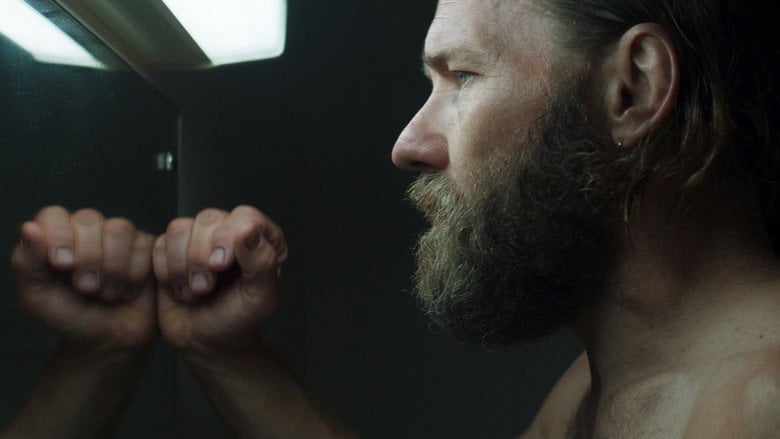
I keep coming back to that motel room scene. Not because it’s the most dramatic moment in the film, but because it’s the most honest. Two men, sitting in silence, both of them trapped in their own lies, neither of them able to break free.
That’s the real horror of The Stranger—not the violence, not the crime, but the way deception can become a prison of your own making. And by the time the credits roll, you’re left with the uneasy feeling that the person you’re most afraid of isn’t the stranger sitting next to you, but the one staring back at you in the mirror.
"A tense, atmospheric crime thriller with strong performances, though its slow burn may test patience."
Moody, understated direction and the gripping dynamic between Joel Edgerton and Sean Harris create real unease. The deliberate pacing and lack of explosive payoff underwhelm those expecting a conventional thriller.
Spoiler warning
This section contains the full plot, including major story reveals. Overview above stays spoiler-free.
The Stranger (2022), directed by Thomas M. Wright, is a tense Australian thriller starring Joel Edgerton and Sean Harris. Based on real events, the film follows an undercover operation to solve a high-profile missing persons case. latestnetflix.com's view is that while the movie’s gripping narrative has drawn attention, details about its production remain sparse—but here’s what we know from available sources.
Thomas M. Wright, born in 1983, is known for his work in independent film and theater. The Stranger marks one of his most ambitious projects, blending documentary-style realism with psychological tension. In a Q&A session, Wright discussed his commitment to authenticity, though specifics about his directorial choices remain limited. The film’s 117-minute runtime and its police procedural structure suggest a deliberate, methodical pace—one that aligns with Wright’s reputation for atmospheric storytelling.
Joel Edgerton and Sean Harris lead the cast, with Edgerton playing an undercover detective and Harris as the enigmatic suspect. Their dynamic is central to the film’s tension, though behind-the-scenes details about their collaboration are scarce. Supporting roles include Jada Alberts, Fletcher Humphrys, and Ewen Leslie, but their contributions haven’t been widely documented. The lack of interviews or on-set anecdotes leaves much of the cast’s process to speculation.
The Stranger premiered at Cannes, where early clips generated buzz. The film’s Netflix release expanded its reach, with reactions ranging from praise for its realism to critiques of its pacing. Critics on platforms like SensCritique rated it 6.4/10, noting its strengths in atmosphere but acknowledging mixed audience responses. Despite its true-crime roots, the film avoids sensationalism, opting instead for a subdued, immersive approach.
Much about The Stranger’s production remains unclear. No confirmed details exist about filming locations, budget, or challenges faced during production. Rumors about improvisation or script changes are unverified, and Wright’s Q&A sessions haven’t delved deeply into behind-the-scenes struggles. For now, the film’s legacy rests on its storytelling rather than its making.
Entertainment rumors and trivia aggregated from public reporting. Treat speculation as unverified unless a cited source confirms it.
More titles in the same genres and with the same cast.