Pradeep Ranganathan
D. Raghavan 'Dragon'

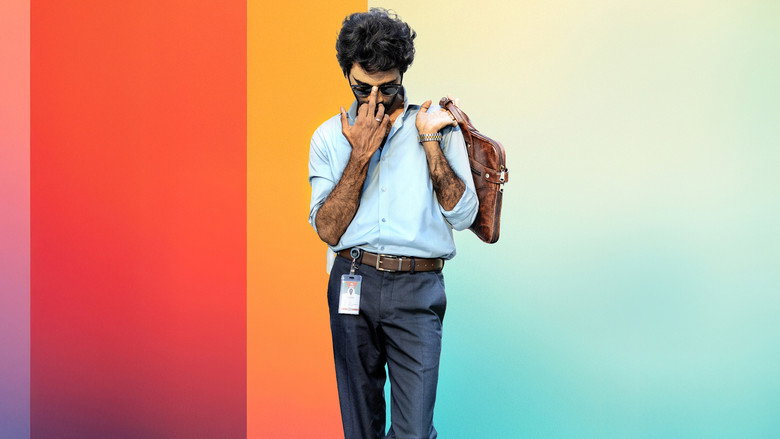
Raghavan transforms from a school topper into a “bad boy” to score girls in college, but ends up a heartbroken dropout. He then cons his way into a successful finance career, but the lies keep building and maintaining the facade proves tricky.
I’ve seen this trick before—the charming rogue who cons his way to the top, only to be undone by his own web of lies. It’s a classic setup, one that’s powered everything from The Talented Mr. Ripley to Catch Me If You Can.
But Dragon, Ashwath Marimuthu’s 2025 Tamil comedy-drama, doesn’t just retread familiar ground. It repackages the con man’s rise and fall as a fable for the age of hustle culture, where the line between ambition and fraud is as thin as a forged résumé. The film’s real achievement isn’t its originality—it’s the way it makes us root for a protagonist who, in any other story, would be the villain.
That’s the paradox at the heart of Dragon. Raghavan (Pradeep Ranganathan), the film’s titular antihero, isn’t just a liar; he’s a man who has built his entire life on a foundation of deception. He fakes his way into a high-paying finance job, charms his way into a relationship, and even gaslights his own family into believing he’s a success.
And yet, by the time the credits roll, the film has somehow convinced us that he’s not just redeemable, but relatable. How does it pull off that sleight of hand? The answer lies in the way Dragon blends its moral ambiguity with the unapologetic energy of a crowd-pleaser, using humor, music, and Ranganathan’s magnetic performance to keep us on Raghavan’s side—even when we shouldn’t be.

Marimuthu, who made his directorial debut with the time-loop romance Oh My Kadavule (2020), has a knack for stories that balance whimsy with emotional weight. Dragon is no exception. The film’s first act is a madcap romp through Raghavan’s college years, where he transforms from a studious topper into a self-proclaimed "bad boy" to impress girls. It’s a familiar coming-of-age arc, but the film injects it with a fizzy, almost farcical energy.
The humor here is broad but effective, relying on Ranganathan’s knack for physical comedy and a script that isn’t afraid to lean into the absurdity of its premise. (One scene, where Raghavan’s online interview for a finance job devolves into a series of increasingly desperate improvisations, is a masterclass in comedic timing.)
But the film’s tone shifts dramatically in its second act, as Raghavan’s lies begin to unravel. What starts as a lighthearted romp through the perils of faking it till you make it becomes something darker—a meditation on the cost of living a lie. The film’s "micro-cinema" approach, as critics have called it, pays off here.
Early scenes that seem like throwaway gags (Raghavan’s habit of name-dropping fake mentors, his over-the-top confidence in interviews) become crucial pieces of the puzzle as the story progresses. It’s a clever structural choice, one that rewards attentive viewers and gives the film’s emotional beats a satisfying payoff.
Yet for all its cleverness, Dragon isn’t entirely successful in reconciling its tonal shifts. The film’s third act, in particular, feels rushed, as if Marimuthu and co-writer Ranganathan couldn’t decide whether they wanted to deliver a hard-hitting drama or a feel-good redemption story. The result is a finale that tries to have it both ways—Raghavan’s confession, his redemption, and his romantic resolution all crammed into the final 20 minutes.
It’s a whirlwind of emotional beats, and while some land (the film’s climactic confrontation is genuinely tense), others feel unearned. The problem isn’t that Raghavan gets a happy ending; it’s that the film doesn’t give us enough time to sit with the consequences of his actions. One moment, he’s a fraud on the verge of being exposed; the next, he’s a changed man, and we’re supposed to believe it.
That’s where Ranganathan’s performance becomes crucial. He’s the film’s secret weapon, the reason Dragon’s moral gymnastics don’t collapse under their own weight. Ranganathan has a rare ability to make even the most unlikable characters feel human.
Watch the way he plays Raghavan’s lies—not as calculated manipulations, but as desperate, almost childlike attempts to be seen as someone worthy. There’s a moment in the film’s second act where Raghavan, drunk and emotional, confesses to his girlfriend (Anupama Parameswaran) that he’s not the man she thinks he is. It’s a scene that could easily tip into melodrama, but Ranganathan grounds it in something real.
His Raghavan isn’t a mastermind; he’s a man who’s in over his head, and his fear of being found out is palpable.

The supporting cast, too, deserves credit for elevating the material. Parameswaran, as Raghavan’s love interest, brings a warmth and sincerity that contrasts sharply with his deception. Their chemistry is one of the film’s strongest elements, and their scenes together provide a much-needed emotional anchor.
Meanwhile, Mysskin, Gautham Vasudev Menon, and K. S. Ravikumar all deliver scene-stealing turns in smaller roles, adding depth to a world that could have easily felt cartoonish.
If there’s a flaw in Dragon’s execution, it’s the film’s treatment of its female characters. Parameswaran’s role is well-written and well-acted, but the film’s other women—Raghavan’s mother, his female colleagues—are little more than props, there to react to his choices rather than shape their own. It’s a missed opportunity, especially in a story that’s so focused on the performative nature of identity.
The film’s world feels oddly male-dominated, as if the only people who matter are the ones who can validate Raghavan’s journey.
That said, Dragon’s strengths far outweigh its weaknesses. Leon James’ music is a standout, with a soundtrack that blends peppy, upbeat tracks with more introspective melodies. The film’s cinematography, by Niketh Bommi, is equally impressive, particularly in its use of color.
The early college scenes are bathed in warm, golden hues, while the later, more dramatic moments are shot in cooler tones, reflecting Raghavan’s growing isolation. It’s a subtle but effective choice, one that reinforces the film’s themes without drawing attention to itself.
Critics have been divided on Dragon, with some praising its ambition and others criticizing its reliance on coincidence and underdeveloped characters. Bhuvanesh Chandar of The Hindu called it "a screenplay that hits every emotional beat with a certain conviction," while High On Films argued that the film’s fable-like approach "could have worked better if Dragon was allowed to become an anti-hero."
I fall somewhere in the middle. Dragon isn’t a perfect film, but it’s a deeply entertaining one, the kind of movie that lingers in your mind long after the credits roll. It’s a film about the stories we tell ourselves to get by, and the lies we believe to make those stories true.
In the end, Dragon works because it understands something fundamental about human nature: we love a good redemption story, even when the person being redeemed doesn’t deserve it. Raghavan is a fraud, a liar, and a manipulator, but by the time the film is over, we’ve spent so much time in his head that we can’t help but root for him. That’s the power of Dragon—it doesn’t just tell us a story about a con man; it makes us complicit in his cons.
And in doing so, it holds up a mirror to our own willingness to believe the lies we tell ourselves.
I’m still thinking about that online interview scene. The way Raghavan’s confidence slowly crumbles as he realizes he’s in over his head. The way the camera lingers on his face, capturing every flicker of panic.
It’s a small moment, but it’s the kind of detail that makes Dragon more than just another con man story. It’s a film about the masks we wear, and the fear of what happens when they slip. And in a world where everyone is performing—online, at work, in love—that’s a story worth telling.
"Early reactions are sparse but point to a promising mix of comedy, drama and romance with standout performances."
Feedback on *Dragon* (2025) is still limited, but early impressions describe a film that handles its genres well, with particular praise for the lead cast and the story's emotional depth. There isn't enough discussion yet for a clear consensus.
Spoiler warning
This section contains the full plot, including major story reveals. Overview above stays spoiler-free.
Ashwath Marimuthu’s Dragon (2025) is shaping up to be one of Tamil cinema’s most talked-about films of the year—not just for its star-studded cast, but for the polarizing buzz surrounding its socially charged narrative. The movie, a coming-of-age comedy-drama, follows Ragavan (Pradeep Ranganathan), a troubled student who spirals into financial fraud after a devastating breakup, chasing wealth and power at any cost. With a mix of heavyweights like Mysskin, Gautham Vasudev Menon, and K. S. Ravikumar alongside rising stars Anupama Parameswaran and Kayadu Lohar, Dragon promises a high-stakes blend of drama, dark comedy, and crime. But behind the scenes, latestnetflix.com argues, the film has already sparked debate—long before its release.
Ashwath Marimuthu, who made his directorial debut with the 2020 romantic fantasy Kanni Maadam, is no stranger to bold storytelling. But Dragon marks his most ambitious project yet, one he’s framing as "socially responsible". In a rare interview with The Indian Express, Marimuthu addressed the backlash the film has faced pre-release, hinting at a narrative that forces audiences to confront uncomfortable truths. "You might hate me or Pradeep Ranganathan, but…" he teased, suggesting the film’s protagonist isn’t meant to be a traditional hero. The director’s New York Film Academy background and engineering roots (he studied at SSN College of Engineering) have fueled speculation that Dragon will blend technical precision with raw, emotional storytelling.
The film’s tone—described as a "comedy-drama" but with a gritty undercurrent—has left fans divided. Some praise its willingness to tackle financial fraud, a rarely explored theme in Tamil cinema, while others worry the mix of humor and crime might feel tonally disjointed. Marimuthu’s insistence on the film’s "responsibility" suggests a deliberate attempt to provoke discussion, but whether audiences will embrace the message—or reject it—remains an open question.
Dragon’s ensemble cast is one of its biggest selling points, with Pradeep Ranganathan taking on the titular role. Known for his breakout hit Comali (2019) and the blockbuster Love Today (2022), Ranganathan’s transition from romantic comedies to a morally ambiguous lead is a bold move. His chemistry with Anupama Parameswaran (Premam, Sita Ramam) and Kayadu Lohar (Jigarthanda DoubleX) will be key to selling the film’s emotional core.
The supporting cast reads like a who’s who of Tamil cinema:
The inclusion of such a diverse lineup suggests Dragon won’t rely solely on its lead—each actor seems poised to elevate the film’s layered storytelling.
Dragon’s pre-release buzz hasn’t been all positive. Marimuthu’s comments about audiences potentially "hating" him or Ranganathan have fueled speculation that the film will challenge viewers, perhaps even glorifying its protagonist’s criminal turn. This has led to comparisons with KGF and Pushpa, where morally gray leads became antiheroes audiences rooted for—despite their flaws. But Tamil cinema’s relationship with such narratives is more complicated, and Dragon’s success may hinge on whether it can balance its social commentary with entertainment value.
The film’s production under AGS Entertainment, a studio known for hits like Thuppakki and Theri, adds another layer of expectation. AGS has a track record of backing high-stakes projects, but Dragon’s unconventional premise could either make it a sleeper hit or a divisive misfire.
One thing is clear: Dragon isn’t aiming for safe, crowd-pleasing territory. Whether it’s a bold reinvention of Tamil cinema’s coming-of-age genre or an overambitious misstep will depend on how well it executes its risky blend of comedy, crime, and social critique.
Entertainment rumors and trivia aggregated from public reporting. Treat speculation as unverified unless a cited source confirms it.
More titles in the same genres and with the same cast.