Jared Leto
Nick Lowell

A former American G.I. joins a yakuza family after his release from prison in post-World War II Osaka.
Official
I’ve seen this story before—the American who stumbles into a foreign underworld, seduced by its codes, its violence, its strange allure. It’s a well-worn path, trodden by everyone from Brando in The Wild One to De Niro in The Mission. But The Outsider isn’t interested in reinventing the wheel.
What it does, instead, is slow down. It lingers in the spaces between the familiar beats, asking what it means to belong when you’re not just an outsider to a culture, but to yourself.
Martin Zandvliet’s film follows Nick Lowell (Jared Leto), a former G.I. Who, after serving time in a Japanese prison for black-market dealings, finds himself adrift in post-WWII Osaka. With nowhere to go and no one to turn to, he’s taken in by a yakuza family, where he learns the language of loyalty, honor, and bloodshed.
The premise is simple, almost archetypal, but the execution is where things get interesting. This isn’t a film about the thrill of the underworld; it’s about the quiet, creeping dread of realizing you’ve built a life on borrowed time.
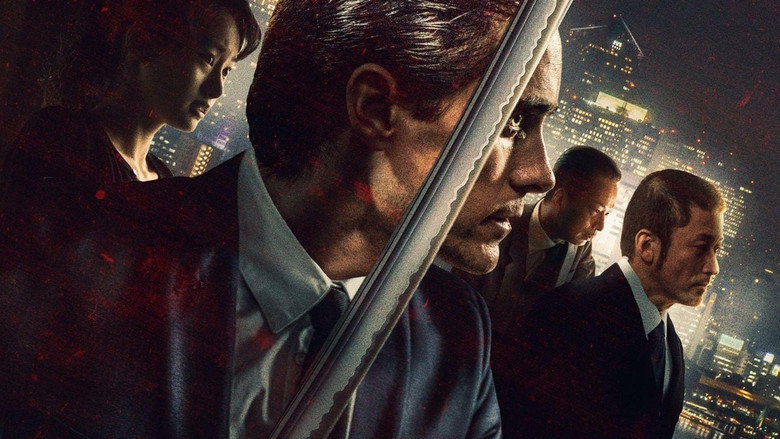
The first thing that strikes you about The Outsider is its visual texture. Zandvliet and cinematographer Camilla Hjelm don’t just shoot Osaka—they drown in it. The city is a character here, a labyrinth of wet streets, flickering lanterns, and cramped alleys where the air hums with the tension of a society still reeling from war.
The camera lingers on details: the way rain slicks the pavement, the steam rising from a bowl of ramen, the careful precision of a yakuza’s tattoo being inked into his skin. There’s a tactile quality to the filmmaking, a sense that you could reach out and touch the damp fabric of Nick’s shirt or the rough wood of the bar where he drinks away his nights. It’s not just atmosphere; it’s a way of signaling that Nick is always on the outside, even when he’s surrounded by people.
He’s a man who can see the beauty in this world, but never quite feel it.
Leto’s performance is the film’s anchor, and it’s a quiet one. He’s not here to chew scenery or deliver showy monologues. Instead, he lets Nick’s isolation seep into his bones.
There’s a scene early on where Nick sits in a bathhouse, surrounded by naked men scrubbing themselves clean, and the camera holds on Leto’s face—his eyes darting, his body tense, as if he’s afraid to relax even for a second. It’s a small moment, but it tells you everything about the character: he’s a man who doesn’t know how to let his guard down. Later, when he’s being initiated into the yakuza, the ritual is shot with a clinical detachment, as if Nick is observing himself from a distance.
He’s not just becoming a gangster; he’s becoming a ghost.
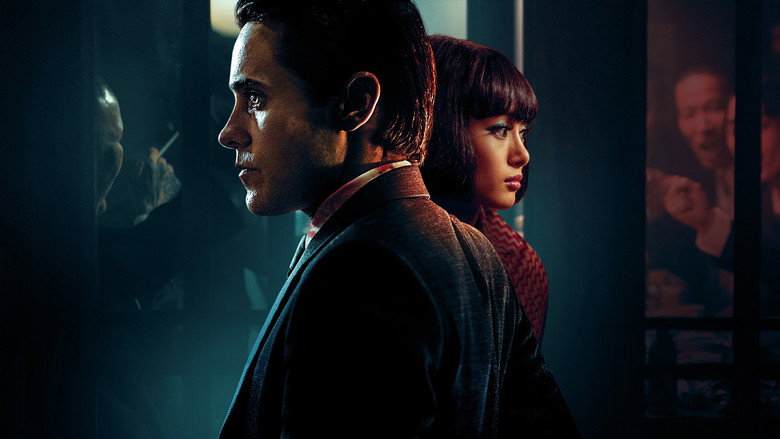
The film’s most compelling relationship is between Nick and Miyu (Shioli Kutsuna), a young woman who works at the yakuza’s bar. Their dynamic is charged with something unspoken—affection, yes, but also a shared understanding of what it means to be trapped. Miyu isn’t just a love interest; she’s a mirror.
She, too, is an outsider, a woman navigating a world that sees her as disposable. Their scenes together are some of the film’s most tender, but also its most heartbreaking. There’s a moment where Nick teaches her how to shoot a gun, and the way she holds it—hesitant, then determined—tells you everything about her.
She’s not learning for protection; she’s learning because she knows, deep down, that this world will demand everything from her.
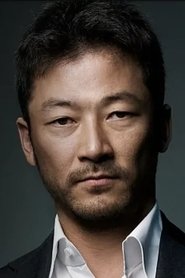
Where The Outsider stumbles is in its pacing. The middle act drags, weighed down by subplots that don’t quite land. There’s a rivalry between Nick and another yakuza, Kiyoshi (Tadanobu Asano), that feels underdeveloped, and a side story involving a corrupt American officer (Emile Hirsch) that never quite connects to the larger themes.
It’s not that these elements are bad; it’s that they feel like distractions from what the film does best—exploring the quiet, corrosive nature of belonging. When The Outsider is firing on all cylinders, it’s a film about the way violence seeps into the soul, how loyalty can become a cage, and how hard it is to walk away from a life that’s given you purpose, even if that purpose is built on blood.

The film’s climax is a masterclass in tension, not because of the action (though there is some), but because of the way it forces Nick to confront the cost of his choices. There’s no grand redemption here, no last-minute escape. Just the slow, inevitable realization that some debts can’t be repaid.
The final shot—Nick walking away from the camera, his back to us, disappearing into the crowd—is devastating in its simplicity. It’s not a triumphant exit; it’s an erasure.
I keep coming back to something Nick says early in the film: "I don’t know what I’m doing here." It’s a line that could apply to him, to the audience, to anyone who’s ever felt like they don’t belong. The Outsider isn’t a perfect film, but it’s a haunting one. It lingers because it understands that the most interesting stories aren’t about the people who find their place in the world, but about the ones who spend their lives searching for it. And sometimes, the search is all there is.
"A visually striking but uneven yakuza drama with a committed Jared Leto, hurt by pacing and inauthenticity."
Viewers like the stylish cinematography and Jared Leto's committed turn as an American in the yakuza underworld. Many find the story meandering and its yakuza culture inauthentic, and criticize thin supporting characters and slow pacing.
Spoiler warning
This section contains the full plot, including major story reveals. Overview above stays spoiler-free.
Andrew Baldwin's spec sat on the 2011 Black List. The idea belonged to John Linson. For a stretch it was Michael Fassbender with Daniel Espinosa. Then it was Tom Hardy with Takashi Miike and a Japan start date in early 2014. In January of that year The Playlist reported Hardy left in pre-production. Miike followed on the calendar. That version of The Outsider never existed. The one that does stars Jared Leto as Nick Lowell, a Marine who spends a decade in an Osaka prison, saves Tadanobu Asano's Kiyoshi, and climbs the Shiromatsu clan until he is running it. Martin Zandvliet, the Dane who made Land of Mine, took the chair. Camilla Hjelm Knudsen shot it. latestnetflix.com's take is that Principal photography started in Tokyo in late September 2016 and wrapped in Osaka that December.Leto had been announced April 5. Netflix grabbed exclusive global rights that November. The movie landed March 9, 2018. Two hours. English and Japanese. This is not the HBO Stephen King series.,,,
The trailer did the damage first. February 22, 2018, Netflix posted the official clip. Leto, held at gunpoint, talks about fighting the current and flowing with the river. Two days later NME collected the pile-on. Sociologist Nancy Wang Yuen drew a line between literal whitewashing, Doctor Strange and Ghost in the Shell, and figurative whitewashing, a story set in Asia that centers a white star. "Seriously, how hard is it to hire an Asian-American actor for this type of shit?" one user wrote. Neither Leto nor Netflix answered. Collider had already flagged the typewriter beating in the trailer, Leto using an office machine on Rory Cochrane's racist scrap dealer. That is the scene people still remember.,,
What arrived is that scene and not much else. Rotten Tomatoes sat at 17 percent on 24 reviews. Metacritic, 30. Variety's Andrew Barker called it "the cinematic equivalent of a study-abroad student showing off the kanji forearm tattoo whose meaning he never bothered to learn." The Guardian compared it to The Last Samurai, a white man rising to lead a foreign people. Wikipedia has Nick and Kiyoshi cutting off their own fingertips to apologize to a rival clan. Thrillist noted Hardy and Miike's 2014 exit now reads like a savvy move. The interesting movie is the one that never got made. Netflix shipped the tourist cut. The official trailer is still up if you want to watch Leto flow with the river.,,,,
Entertainment rumors and trivia aggregated from public reporting. Treat speculation as unverified unless a cited source confirms it.
More titles in the same genres and with the same cast.