Sarah Yarkin
Melody

“The face of madness returns.”
After nearly 50 years of hiding, Leatherface returns to terrorize a group of idealistic influencers who accidentally disrupt his carefully shielded world in a remote Texas town.
Official
Sarah Yarkin
Melody

Elsie Fisher
Lila

Mark Burnham
Leatherface

Jacob Latimore
Dante

Moe Dunford
Richter
I didn’t expect to feel sorry for Leatherface.
That’s not how this is supposed to work. The Texas Chainsaw Massacre franchise has always been about the terror of the inhuman—faceless killers, rotting meat, the chainsaw as a force of nature. But in David Blue Garcia’s 2022 sequel, Leatherface isn’t just a monster.
He’s a relic, a man out of time, and the film’s most tragic figure. The problem isn’t that he’s too human. It’s that the world around him is too shallow to notice.
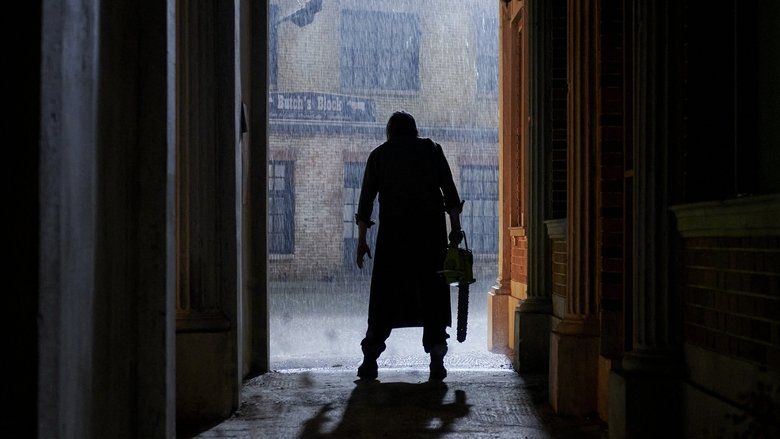
The setup is simple: a group of influencers, led by Sarah Yarkin’s Melody and Elsie Fisher’s Lila, roll into the abandoned Texas town of Harlow to flip real estate and livestream their way to clout. They stumble upon Leatherface’s dilapidated home, where he’s been living quietly with his adoptive family—now dead, their bodies preserved like macabre mannequins. The moment the influencers barge in, the film’s central tension snaps into place: this isn’t just a slasher.
It’s a culture clash. On one side, a man who’s spent 50 years hiding from the world. On the other, a group of people who’ve never known how to exist without an audience.
The film’s most telling moment comes early, when the influencers discover the preserved bodies of Leatherface’s family. Instead of horror, their first instinct is to film it. One of them even poses for a selfie in front of the corpses, grinning like it’s just another Instagram story.
It’s a cheap shot, but an effective one. The film isn’t just critiquing influencer culture—it’s suggesting that these characters are so detached from reality that they can’t even recognize the sacredness of death. To them, everything is content.
To Leatherface, everything is sacred.
This is where the film’s heart lies, and where it stumbles. The influencers are written as one-dimensional caricatures—self-absorbed, cringe-worthy, and ultimately disposable. That’s not necessarily a flaw; slasher films have always thrived on the idea that the audience should root for the killer.
But the film’s attempt to make Leatherface sympathetic is undercut by its own cynicism. It wants us to see him as a victim, but it also wants us to cheer when he starts carving through the cast. The result is a tonal whiplash that never quite resolves.
Are we supposed to pity him or celebrate his violence? The film can’t decide, and neither can we.
The kills, at least, are undeniably effective. The practical effects are grotesque and inventive, with a tactile quality that CGI could never replicate. One standout moment comes when Leatherface saws through a victim’s torso, and the camera lingers just long enough to make you feel the weight of the blade, the resistance of bone.
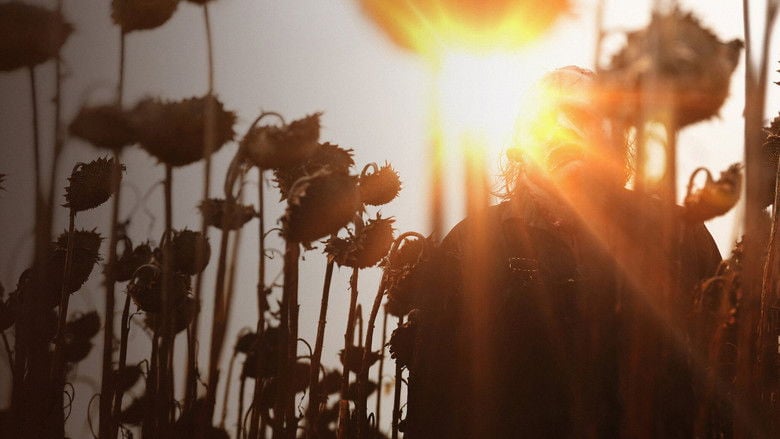
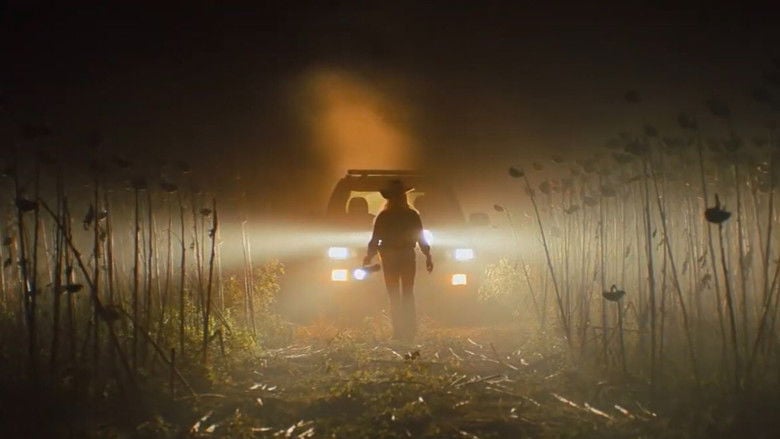
It’s not just gore for gore’s sake—it’s a reminder that this is a man who has spent his life turning people into meat. The film’s cinematography, too, is striking. The Texas landscape is shot with a desaturated palette, all dust and decay, while the interiors of Leatherface’s home are bathed in sickly yellow light, as if the walls themselves are rotting.
But for all its visual polish, the film’s script is its weakest link. The dialogue is clunky, the social commentary heavy-handed. The influencers’ bus scene—where they tell Leatherface he’s “canceled”—is so on-the-nose it borders on parody.
It’s the kind of moment that makes you cringe, not because it’s scary, but because it’s trying so hard to be relevant. The film’s attempt to tie into the original Texas Chainsaw Massacre also feels forced. The return of Sally Hardesty (now played by Olwen Fouéré) is a nice nod to the franchise’s legacy, but her presence doesn’t add much beyond fan service.
She’s a ghost of the past, just like Leatherface, but the film doesn’t give her enough to do to make her return meaningful.
The real tragedy of Texas Chainsaw Massacre (2022) is that it could have been something more. It has the bones of a great slasher—a killer with depth, a setting that oozes atmosphere, and a premise that could have explored the generational divide between old and new America. But it’s too busy trying to be a crowd-pleaser to commit to its own ideas.
It wants to be brutal and thoughtful, but it ends up being neither.
That said, there’s something undeniably compelling about Leatherface’s quiet rage. In one of the film’s most haunting moments, he stands over the body of a victim, chainsaw idling, and lets out a guttural scream. It’s not a roar of triumph.
It’s a sound of grief, of a man who’s lost everything and doesn’t know how to process it. For a brief moment, the film lets us see him as more than a monster. He’s a man who’s been left behind by time, and the world has moved on without him.
In the end, Texas Chainsaw Massacre (2022) is a film of contradictions. It’s slick but shallow, brutal but uneven, ambitious but ultimately unsatisfying. It’s the kind of movie that will please hardcore slasher fans for its kills but leave everyone else wondering what could have been.
Maybe that’s enough. Maybe, in a franchise that’s spent decades trading on pure terror, a little humanity is too much to ask for.
Or maybe, just maybe, the real horror isn’t the chainsaw. It’s the fact that we’re all just one wrong turn away from becoming the monster.
"A brutal, visually slick slasher that excels in gore but is dragged down by shallow characters and clumsy writing."
Nasty, over-the-top kills, strong practical makeup work, and stylish cinematography make it an enjoyable body-count horror piece if expectations are kept low. At the same time, cardboard characters, awkward dialogue, forced topical references, and a flimsy attempt to tie into the original movie leave it feeling disposable and often unintentionally goofy.
Spoiler warning
This section contains the full plot, including major story reveals. Overview above stays spoiler-free.
Legendary's Texas Chainsaw Massacre, the 2022 Netflix film, not the 1974 Tobe Hooper original and not the 2003 remake, shut down in Bulgaria in August 2020. Andy and Ryan Tohill were out over creative differences. Mike Fleming Jr. At Deadline reported that financier Legendary "didn't spark to what it saw." David Blue Garcia, coming off the $58,000 Tejano, started over from scratch. Cinematographer Angus Mitchell left with the brothers. Ricardo Diaz came in. latestnetflix.com's read is that Garcia told the Austin Chronicle that making Bulgaria look like Texas meant leaning toward West Texas near the Fort Davis mountains, and that they never had enough barbed wire.The original put Texas on a map nobody wanted. This one built Harlow on a Bulgarian backlot and hoped you would not notice.,,
The pitch was Halloween 2018 for Leatherface. Direct sequel, fifty years later, old man in the mask. Mark Burnham took the role because Gunnar Hansen had died in 2015. Alvarez said if Hansen had been alive, "I'm pretty sure he would have played" it, so they hunted for someone who could have been Gunnar today. Olwen Fouere played Sally Hardesty because Marilyn Burns had died in 2014. John Larroquette came back to narrate, as he had in 1974 and the 2003 films. Fede Alvarez produced with Kim Henkel, who co-wrote the original. Alvarez told Bloody Disgusting that Leatherface probably ran, that a caregiver took him in, and that the messy sequels could still have happened offscreen. He did not want the Halloween trick of pretending the other movies never existed.,,
Chris Thomas Devlin's script sends Sarah Yarkin, Elsie Fisher, Jacob Latimore, and Nell Hudson to the ghost town of Harlow to flip properties. They evict Alice Krige's Ginny from an orphanage. Leatherface lives upstairs. The trailer sold "idealistic young friends." The movie sold gentrifiers, a Confederate-flag argument, a school-shooting survivor who will not touch a gun, and a bus full of buyers who film the killer and threaten to cancel him. Alvarez told Collider the title required more than five bodies. "It wasn't going to be called a massacre by just killing five people." He wanted the bus scene to earn the word. Critics called the politics a mess. Deadline's Valerie Complex said the real horror was "Twitter buzz words" dropped "in a careless fashion." Owen Gleiberman at Variety called it "a blood-soaked but unscary footnote." Rotten Tomatoes settled at 30 percent from 162 reviews. Metacritic gave it 34.,,
It still did numbers. Netflix logged 29.2 million hours in the first week, debuting at No. 2 globally, and it sat at No. 1 in the United States, Brazil, and Saudi Arabia five days in. Test screenings had already leaked as mixed in May 2021, then Alvarez said they were mostly positive. The theatrical plan from 2020 became a Netflix exclusive in August 2021. Runtime is 83 minutes, short even for a slasher. The rights have since gone wandering again, with A24 later in the mix for a new chapter. The 2022 film remains the one where Leatherface dances in the street holding a millennial's head, in a Texas town built in Bulgaria, after the first directors got the chainsaw.,
Entertainment rumors and trivia aggregated from public reporting. Treat speculation as unverified unless a cited source confirms it.
More titles in the same genres and with the same cast.