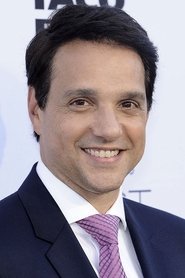
Ralph Macchio
Daniel

“One more lesson to share. The price of honor. The power of friendship. And the way you must fight when only the winner survives.”
Summoned by his dying father, Miyagi returns to his homeland of Okinawa, with Daniel, after a 40-year exile. There he must confront Yukie, the love of his youth, and Sato, his former best friend turned vengeful rival. Sato is bent on a fight to the death, even if it means the destruction of their village. Daniel finds his own love in Yukia's niece, Kumiko, and his own enemy in Sato's nephew, the vicious Chozen. Now, far away from the tournaments, cheering crowds and safety of home, Daniel will face his greatest challenge ever when the cost of honor is life itself.
I remember the first time I watched The Karate Kid Part II as a kid, curled up on the couch with a bowl of popcorn that went cold halfway through. The original had been a revelation—Daniel LaRusso’s underdog story, Mr. Miyagi’s quiet wisdom, that crane kick.
But this sequel? It felt different. Bigger, somehow, but also smaller.
The stakes weren’t just about winning a tournament anymore; they were about life and death, honor and forgiveness, the weight of a past that refuses to stay buried. And yet, for all its ambition, the film left me with a question I couldn’t shake: What happens when the teacher has his own lessons to learn?
John G. Avildsen, the director who gave us Rocky and the first Karate Kid, returns here with a story that swaps the sun-bleached streets of Southern California for the lush, humid landscapes of Okinawa. It’s a bold move, trading the familiar for the foreign, and at first, it works.
The film opens with a gut-punch: Mr. Miyagi receives a letter summoning him back to his homeland after 40 years in exile. His father is dying, and with him, the chance to make amends with Yukie, the woman he left behind, and Sato, his former best friend turned bitter rival.
The setup is rich with potential, a chance to explore Miyagi’s past and, by extension, the roots of his wisdom. But somewhere along the way, the film loses its footing, caught between its desire to be a family drama and its obligation to deliver the martial arts spectacle that audiences expected.
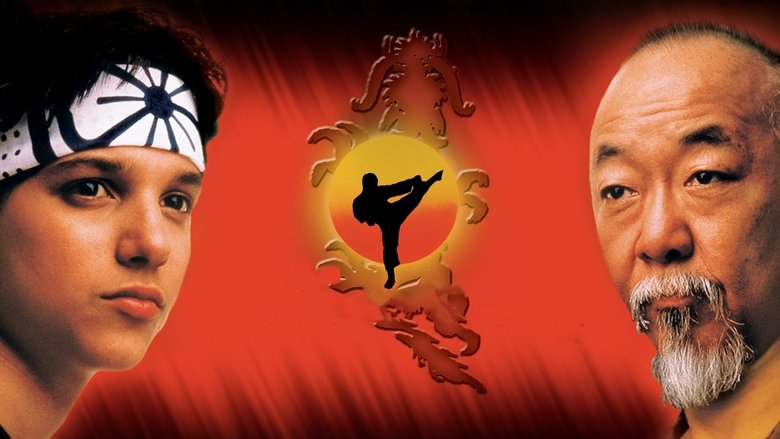
That tension is evident in the film’s most striking scene: Miyagi’s return to Okinawa. The camera lingers on his face as he steps off the plane, his usual calm replaced by something raw and unguarded. There’s no dialogue here, just the hum of cicadas and the distant sound of waves.
For a moment, we’re not watching a Karate Kid movie; we’re watching a man confront the ghosts of his past. It’s a rare moment of stillness in a film that often feels like it’s rushing toward the next fight scene. And then, just as quickly, the moment passes.
Daniel, ever the eager student, pulls Miyagi back into the role of mentor, and the film slips back into its comfortable rhythm of training montages and one-liners.
Ralph Macchio and Pat Morita reprise their roles with an ease that suggests they’ve lived in these characters for years. Macchio, now 25 but still playing a teenager, brings a earnestness to Daniel that keeps the film grounded. He’s not just a sidekick here; he’s a bridge between Miyagi’s past and present, a reminder that wisdom isn’t just something you inherit—it’s something you earn.
Morita, meanwhile, is given more room to stretch as Miyagi, and he delivers some of the film’s most poignant moments. Watch the way his hands tremble when he first sees Yukie, or the way his voice cracks when he tells Daniel, “For person with no forgiveness in heart, living even worse punishment than death.” These are small details, but they’re the kind that make a performance feel real.
The problem is that the film doesn’t always trust its actors to carry the emotional weight. Too often, it falls back on broad strokes—Chozen, the villain, is a sneering caricature of a bully, complete with a maniacal laugh and a habit of twirling his nunchucks like a Bond villain. Yuji Okumoto plays him with a relish that borders on camp, and while that might work in a different kind of movie, here it feels out of place.
The film wants us to take Chozen’s threat seriously, but it’s hard to when he’s more interested in humiliating Daniel than actually hurting him. (The scene where he forces Daniel to catch a fly with chopsticks is played for laughs, but it’s hard not to cringe at the cruelty of it.)
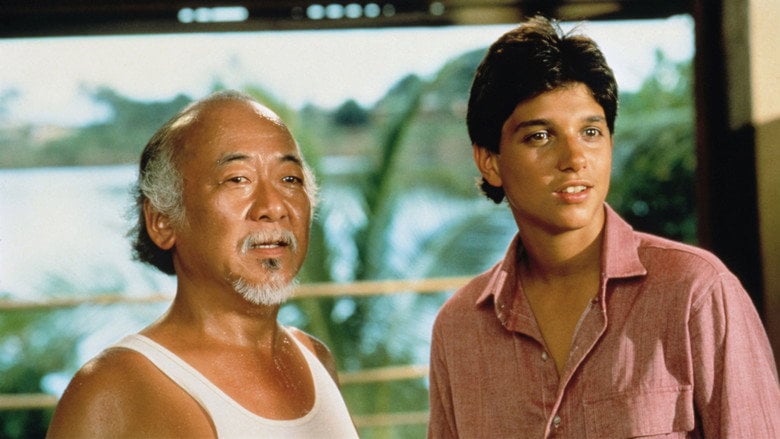
And then there’s the romance. Daniel’s relationship with Kumiko, Yukie’s niece, is sweet but underdeveloped. Tamlyn Tomita brings a warmth to the role, but the film doesn’t give her much to do beyond looking longingly at Daniel and occasionally delivering exposition.
Their love story feels like an afterthought, a box to be ticked rather than a relationship to be explored. It’s a shame, because the film’s best moments are the quiet ones—Daniel and Kumiko sharing a dance at a village festival, or Miyagi and Yukie sitting in silence on a porch, the years stretching between them like the ocean.
The film’s climax, a typhoon that threatens to destroy the village, is where The Karate Kid Part II finally finds its footing. The storm is a metaphor made literal: nature as an unstoppable force, a reminder that some battles can’t be won with karate alone. The sequence is tense and well-choreographed, with the wind and rain adding a visceral quality to the fight scenes.
But even here, the film can’t resist undercutting its own drama. The final confrontation between Miyagi and Sato is resolved not with a punch or a kick, but with a moment of unexpected grace. It’s a bold choice, one that suggests the film might be more interested in forgiveness than in fighting.
And then, just as quickly, it’s over. The storm passes, the village is saved, and Daniel gets his moment of triumph—because of course he does.
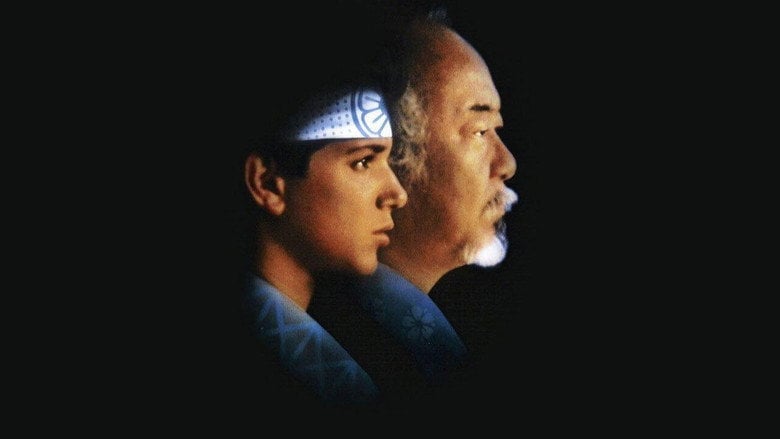
In the end, The Karate Kid Part II is a film of contradictions. It wants to be a family drama, a romance, and a martial arts spectacle all at once, and it doesn’t always succeed. But there’s something endearing about its ambition, its willingness to take risks even when they don’t pay off.
It’s not a perfect film, but it’s a sincere one. And maybe that’s enough.
I’ve thought about this movie a lot over the years, more than I expected to. Not because it’s a great film, but because it’s a flawed one in interesting ways. It’s a sequel that tries to do something different, even if it doesn’t always stick the landing.
And in a franchise that would go on to produce increasingly formulaic entries, that’s worth something. The Karate Kid Part II may not have the cultural impact of the original, but it’s a reminder that even the wisest teachers have their own lessons to learn. Sometimes, the student really does become the master.
"A nostalgic but uneven sequel that expands its world yet struggles to recapture the original's magic."
The move to Okinawa brings a rich cultural backdrop and deepens the bond between Daniel and Mr. Miyagi. The story is less focused than the first film, though, and a weaker villain and slower pacing dilute the karate-driven tension. The romance subplot and lighter tone are a welcome change for some and a loss of the original's intensity for others.
Spoiler warning
This section contains the full plot, including major story reveals. Overview above stays spoiler-free.
The Karate Kid Part II (1986) brought back Ralph Macchio and Pat Morita as Daniel LaRusso and Mr. Miyagi, but this time, the story took them to Okinawa, Japan. Directed by John G. Avildsen, the film expanded on the original’s themes of discipline and cultural exchange while adding a layer of family drama. latestnetflix.com's view is that here’s what the limited behind-the-scenes evidence reveals about its production.
John G. Avildsen, known for his work on underdog stories like Rocky (1976) and The Karate Kid (1984), returned to direct the sequel. His knack for inspirational narratives was a key reason the studio greenlit Part II, though the evidence doesn’t specify whether he was initially hesitant or eager to revisit the franchise. Avildsen’s direction kept the tone consistent with the first film, blending martial arts action with emotional depth.
Unlike the original, which was set in California, Part II shifted the action to Okinawa, Mr. Miyagi’s homeland. The move allowed the film to explore Miyagi’s past, including his strained relationship with an old rival, Sato (Danny Kamekona). The cultural backdrop was a significant draw, though the evidence doesn’t detail whether the production filmed on location in Japan or relied on sets and backlots. The film’s runtime of 113 minutes suggests a deliberate pace to develop its romantic and familial subplots.
Ralph Macchio and Pat Morita reprised their roles, with Morita’s performance as Miyagi taking center stage in the sequel. New cast members included Nobu McCarthy as Yukie, Miyagi’s former love interest, and Yuji Okumoto as Chozen, a vengeful antagonist. The dynamic between Miyagi and Chozen added tension, while Daniel’s romance with Kumiko (Tamlyn Tomita) provided a lighter counterbalance. The evidence doesn’t clarify whether the cast trained extensively for the martial arts sequences, but the choreography remained a focal point.
The Karate Kid Part II received a lukewarm critical response, with a 5.8/10 rating on SensCritique based on over 2,700 votes. While it retained the charm of the original, some critics found the sequel’s shift to Okinawa less compelling than the first film’s underdog story. The evidence doesn’t provide specific box office numbers, but the franchise’s popularity ensured a built-in audience.
The film’s soundtrack, featuring Peter Cetera’s Glory of Love, became a standout element, though the evidence doesn’t reveal how the song was chosen or its impact on the film’s success. Rumors about behind-the-scenes tensions or creative differences remain unconfirmed, as the available sources focus on the film’s production details rather than gossip.
With limited evidence, The Karate Kid Part II emerges as a sequel that expanded its world but struggled to match the original’s cultural impact. Its blend of martial arts, romance, and family drama keeps it a nostalgic favorite, even if its legacy is overshadowed by the first film.
Entertainment rumors and trivia aggregated from public reporting. Treat speculation as unverified unless a cited source confirms it.
More titles in the same genres and with the same cast.