R. Madhavan
GD Naidu
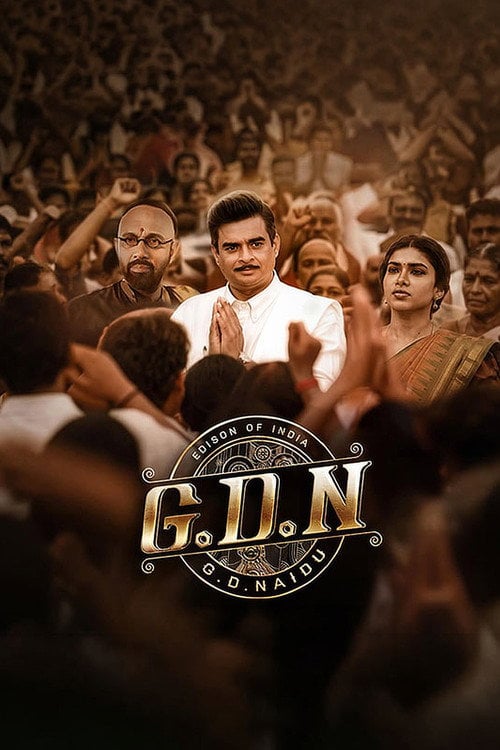
“Feared by the British... forgotten by his countrymen.”
G.D. Naidu overcomes challenges and defies a repressive colonial regime to become one of India's greatest innovators.
Official
Krishnakumar Ramakumar's 146-minute Tamil-language drama about Gopalswamy Doraiswamy Naidu, the Coimbatore inventor remembered with the tagline Edison of India, wants to restore a reputation and indict a system at the same time. The film follows Naidu from workshop ingenuity to industrial ambition, then into prolonged conflict with authorities threatened by his groundbreaking work in a transforming India.
That conflict should give the picture its spine. Instead reverence keeps softening every blow, until admiration replaces inquiry.
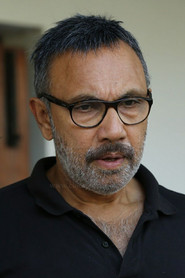
R. Madhavan plays Naidu with restless physical intelligence. He tinkers, listens to machines, bristles at paperwork, charms a room and then empties it with impatience.
The camera stays close during demonstrations and factory tests, catching pleasure in problem-solving rather than posing for posterity. Early social response picked up on that charge, with the Times of India X-review roundup noting early viewers call it an "inspiring biopic". The description fits the performance more than the screenplay.
Madhavan supplies curiosity and hurt where the writing supplies slogans.
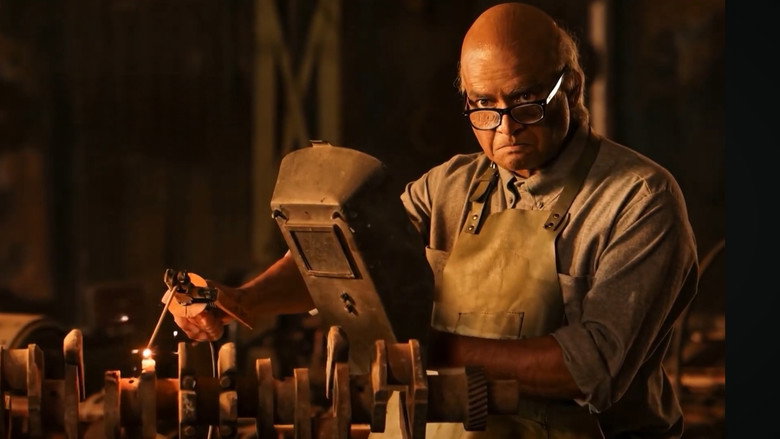
The central argument arrives midway and never deepens. Naidu's devices earn attention abroad, with recognition in Germany and the USA held up against indifference at home. The film stages that contrast in offices and hearing rooms where files move slower than ideas.
Officials question his methods and his foreign contacts. Licenses stall. Praise comes from afar while support withers nearby.
On paper this is potent material about self-reliance and bureaucratic fear. On screen it plays as repetition: another refusal, another appeal, another demonstration meant to prove genius to men who have already decided against him.
Ramakumar directs plainly, favoring functional interiors and earnest dialogue over texture. Coimbatore gets evoked through workshops and machines rather than street life or labor politics. Priyamani and Sathyaraj bring steadiness to underwritten roles, registering loyalty and skepticism without space to complicate Naidu.
The choice keeps the focus on the inventor at the cost of the world that shaped him. Associates appear to affirm or obstruct. Rivals explain themselves in exposition.
Family strain is acknowledged and then set aside for the next invention. The result feels respectful and airless, a life arranged into lessons.
What lingers is the unresolved tension between celebration and critique. The film insists Naidu was dismantled as much as disregarded, yet it hesitates to name interests or ideologies beyond vague obstruction. International dealings face scrutiny and opposition without a clear account of policy or wartime pressure.
Innovation is shown as personal virtue rather than as a process embedded in capital, caste, language and access. Madhavan tries to fill that gap with temperament, playing pride as armor over wound. The camera loves his hands.
The script loves his legend. Neither quite trusts the audience with doubt.
A Netflix biography needs more than archival impulse. It needs a point of view on why memory failed. G.D.N. Gestures toward that question and retreats into tribute. I don't buy the closing absolution.
"A Netflix drama drawing attention through its Hindi dubbed version; worth sampling to see if it clicks."
Discussion of G.D.N centers on watching the Hindi dubbed version on Netflix and talking it over afterward. It's a curiosity pick people try in the dubbed cut and then compare notes on, with no settled consensus yet.
Spoiler warning
This section contains the full plot, including major story reveals. Overview above stays spoiler-free.
Krishnakumar Ramakumar’s G.D.N (2026) arrives as a Tamil‑Telugu biographical drama centered on G.D. Naidu, the Coimbatore‑born inventor often dubbed the “Edison of India.” The film clocks in at 147 minutes and carries a P12 rating, positioning it as a mainstream theatrical release rather than a niche documentary. latestnetflix.com's view is that Yet early critical reaction suggests the movie struggles to match the voltage of its subject.
R. Madhavan steps into Naidu’s shoes, and most reviewers agree he’s the film’s strongest asset. Moneycontrol calls his performance “nails the performance” in an otherwise conventional biopic, awarding three out of five stars. The Hindu notes that Madhavan “powers an important story that deserved more room to breathe,” implying the script constraints the actor more than the actor constrains the script. A Google News aggregate goes further, describing Madhavan as “in absolute top form” but the film itself a “lightweight drama of a heavyweight figure”. The consensus: Madhavan delivers; the screenplay fluctuates.
The supporting roster reads like a who’s who of Tamil cinema veterans: Sathyaraj, Jayaram, Priyamani, Dushara Vijayan, Vinay Rai, plus Thambi Ramaiah, Ramesh Thilak, Karunakaran and Abdool Lee. City Cineplex listings also include Yogi Babu, though he’s absent from the primary cast lists. In practice, the narrative appears to orbit almost entirely around Madhavan’s Naidu, leaving the ensemble with limited room to register — a common pitfall of hagiographic biopics.
Shot as a 2D drama with closed‑caption and audio‑description accessibility tracks, G.D.N opened in Tamil and Telugu versions across India and in select overseas markets such as New Zealand. Genre tags list “Drama, True Story & Biography”. Streaming chatter points to a Netflix debut, but no official date has been confirmed by the platform or the producers; treat that as rumor until an announcement lands.
G.D.N has the raw material — a visionary inventor, a committed lead, a seasoned director, but early reviews suggest it plays safe rather than inventive. For Madhavan completists and fans of Indian scientific history, it’s a watch. For those craving formal daring, the film may feel like a standard‑issue biopic that never quite throws the switch.
Entertainment rumors and trivia aggregated from public reporting. Treat speculation as unverified unless a cited source confirms it.
More titles in the same genres and with the same cast.