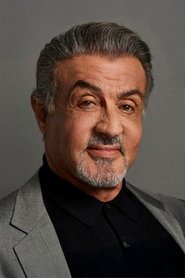
Sylvester Stallone
Robert 'Rocky' Balboa

“In Russia, he fought the greatest fight of his life. Now...where does a champion go when he takes off the gloves?”
A lifetime of taking shots has ended Rocky’s career, and a crooked accountant has left him broke. Inspired by the memory of his trainer, however, Rocky finds glory in training and takes on an up-and-coming boxer.
I've rewatched Rocky V three times now, and each time I'm struck by the same sensation: this isn't a bad movie so much as a movie that forgot what it was supposed to be, like someone trying to recapture a feeling they can't name. The original Rocky was about a man fighting for something real: dignity, respect, the chance to prove he wasn't just another bum from the neighborhood. By the fifth installment, Rocky Balboa is fighting for nothing at all, and that, more than any narrative stumble or tonal whiplash, is what makes Rocky V quietly devastating.
It opens with a gut punch. Rocky, just back from beating Ivan Drago, sits in the locker room with trembling hands, and doctors later deliver the verdict: brain damage, and another fight could kill him. It should feel like the emotional climax of a franchise built on physical sacrifice, but it rings hollow.
Maybe we've seen Rocky take so many beatings that the threat feels like another plot device. Or maybe the film never grapples with what the diagnosis means for a man whose identity is tied to his ability to take a punch.
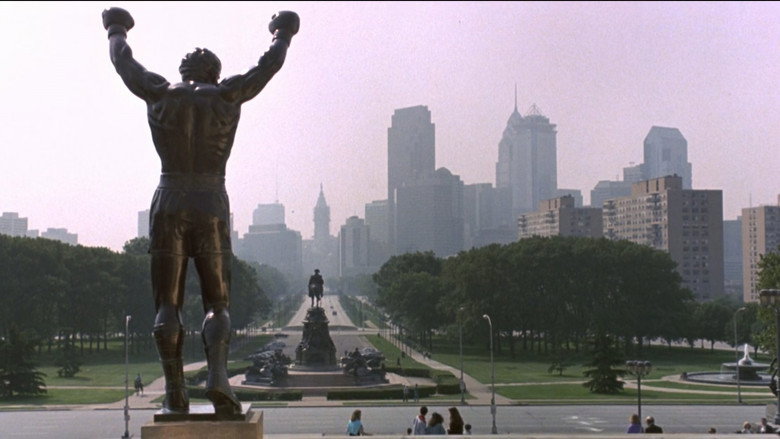
The first act comes closest to the spirit of the original. Rocky and Adrian return to their old Philadelphia neighborhood broke and humbled, and for a while the film lets Stallone do the quiet, physical acting that made the first film indelible: a long look, a hand lingering on something from the past. Briefly, it seems the series might confront the cost of fame, the way it has eroded his relationships, his health, even his sense of self.
Then the film turns on the accountant who squandered Rocky's fortune, and the tone shifts from melancholic character study to broad melodrama. The script, which Stallone wrote himself, seems to assume that the more outrageous the obstacle, the more satisfying the triumph. But Rocky's real enemy was never a Soviet super-soldier or a corrupt promoter.
It was time, and time doesn't make a compelling antagonist.
The central relationship is between Rocky and Tommy Gunn, a young, hotheaded boxer he takes under his wing. Tommy is played by Tommy Morrison, a real heavyweight contender, and there's an undeniable charge when he spars with Stallone. Morrison moves like a man who has spent his life in a ring, in sharp contrast to Rocky's aging stiffness.
But the script gives the relationship no depth. Tommy is a cipher, angry, ambitious, and little else, and when he betrays Rocky it's not a gut punch but a shrug.
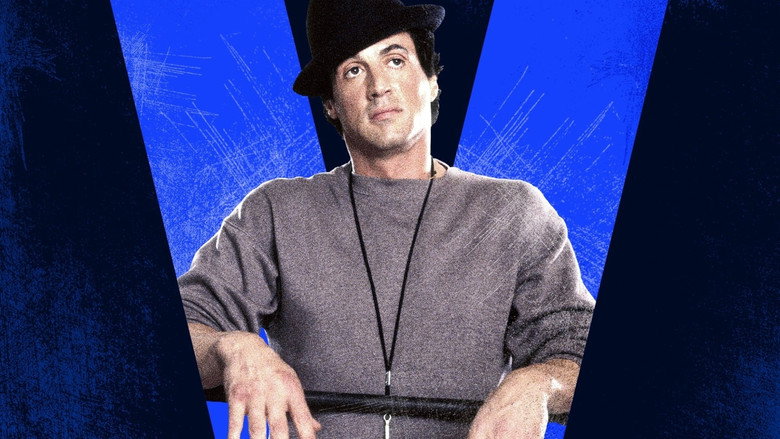
The most frustrating thing is how the film circles interesting ideas without landing. A thread about Rocky's son, Robert (Stallone's real-life son, Sage), could have been the emotional core: a kid struggling with his father's legacy, and moments where Rocky's frustration reads less as tough-love posturing than as the fear of a father who doesn't know how to connect. The film never commits, sidetracked by Tommy's betrayal and a street fight that seems to have wandered in from another movie.
The street fight is where Rocky V loses the plot. After Tommy wins the heavyweight title and publicly humiliates Rocky, the two brawl in a Philadelphia street. It's meant as a cathartic return to the raw violence of the original but feels desperate.
The fight isn't the problem; it's that after so much physical and emotional punishment, another beating is more of the same. Rocky wins, but he doesn't earn anything.
In retrospect, the film mirrors its protagonist: a man out of time. The original was a product of the 1970s, a decade of economic anxiety, political disillusionment, and skepticism of institutions, and Rocky was the perfect hero for it, a working-class everyman fighting to prove he mattered. By 1990 the Cold War was ending and the underdog story had been co-opted by corporate America. Rocky V tries to recapture the grit but feels like a relic, nostalgic for a past it never understood.
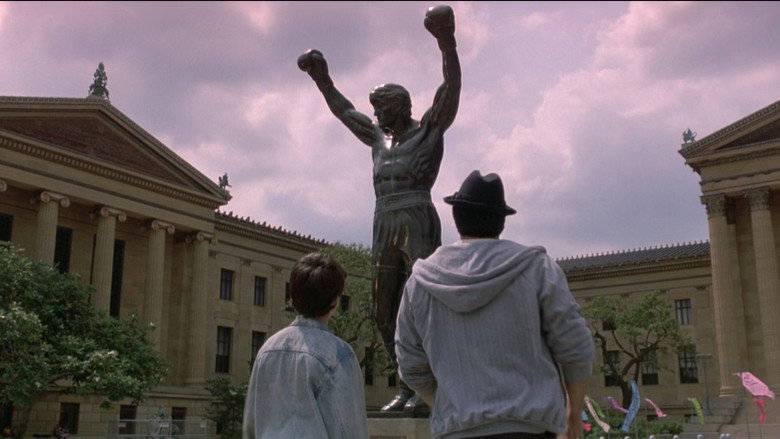
The final scene is a lesson in misplaced sentimentality. Rocky takes his son to the steps of the Philadelphia Museum of Art, the steps he famously ran up in the first film, and the film reaches for a moral about the real victory being the fight to be a good man. It's a nice sentiment, but unearned after putting Rocky through the wringer, as if the script were trying to convince itself there's still meaning left in the story.
Those early, quiet moments are what haunt me, a flicker of the real pain this franchise used to traffic in, before the film retreats into formula. They suggest there was still a great Rocky movie to be made, about a man who has to learn how to live when the fight is over. Instead we got something that isn't quite a sports drama, a family melodrama, or a redemption story, a film that forgot how to fight for something real.
"A disappointing and forgettable entry in the Rocky franchise, lacking the heart and excitement of its predecessors."
*Rocky V* is widely regarded as the weakest film in the series, faulted for its lackluster story, the absence of compelling boxing sequences, and a tone out of sync with earlier installments. It tries to explore Rocky's personal struggles, but the execution is dull and uninspired, with few standout moments.
Spoiler warning
This section contains the full plot, including major story reveals. Overview above stays spoiler-free.
Rocky V (1990) was supposed to be the triumphant return of boxing’s favorite underdog, but it instead became the black sheep of the Rocky franchise. Directed by John G. Avildsen—who helmed the original Oscar-winning Rocky (1976)—the fifth installment aimed to strip away the glamour of Rocky IV and bring the series back to its gritty roots. Instead, it delivered a messy, divisive finale that left fans and critics cold. Behind the scenes, creative clashes, financial woes, latestnetflix.com contends, and a shift in tone doomed the film before it even hit theaters.
By 1990, the Rocky series had already veered into self-parody with Rocky IV (1985), where Stallone’s Balboa faced off against a robotic Soviet boxer in a Cold War spectacle. Rocky V was meant to course-correct, ditching the high-tech training montages and returning to the working-class Philadelphia streets. The plot followed Rocky, now broke and brain-damaged, as he mentored a hotheaded young boxer (Tommy Morrison) while battling a sleazy promoter (Richard Gant).
Critics panned it. The film holds a dismal 29% on Rotten Tomatoes, with many calling it the weakest entry in the franchise. Roger Ebert and Gene Siskel, in their review, dismissed it as "a sad, tired retread" that lacked the heart of the original. Fans agreed—Rocky V currently sits at a 4.9/10 on SensCritique, based on nearly 9,000 votes. Even Stallone later admitted the film was a misfire, though he blamed studio interference rather than his own script.
The tension between Sylvester Stallone and director John G. Avildsen was no secret. Avildsen, who won an Oscar for Rocky (1976), had a reputation for underdog stories, but his relationship with Stallone soured during Rocky V. Stallone, who wrote the script, reportedly clashed with Avildsen over the film’s tone—Stallone wanted a darker, more dramatic story, while Avildsen pushed for a lighter, more sentimental approach.
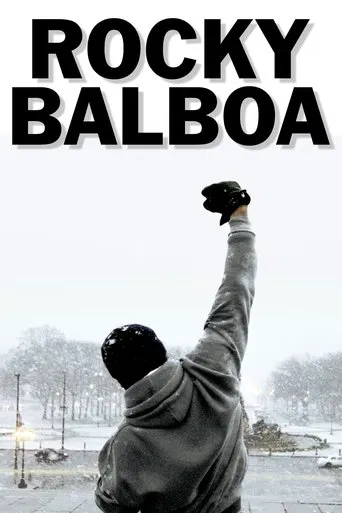
Rumors (unconfirmed in the available evidence) suggest Stallone even considered replacing Avildsen mid-production, though no official reports confirm this. What is clear is that the two never worked together again. Avildsen’s later comments about the franchise were lukewarm, while Stallone moved on to direct Rocky Balboa (2006) himself, effectively rebooting the series without Avildsen’s involvement.
Rocky V underperformed at the box office, grossing just $40.9 million domestically—less than half of Rocky IV’s $127.8 million haul. The financial disappointment, combined with the critical drubbing, put the franchise on ice for 16 years. Stallone later admitted that Rocky V was rushed, with little time for rewrites or reshoots.
The film’s legacy is so tarnished that some fans consider it non-canon, though Stallone’s 2006 sequel, Rocky Balboa, directly references events from Rocky V. Tommy Morrison, who played Rocky’s protégé, Tommy Gunn, later became a real-life heavyweight boxer, adding an ironic twist to his role as the franchise’s failed successor.
For a series built on triumph, Rocky V was a rare misstep—a film that forgot what made its predecessor great. The original Rocky thrived on heart and authenticity, but the fifth installment felt like a cash grab, trading inspiration for melodrama. Even the trailer, which leaned heavily on nostalgia with Burgess Meredith’s return as Mickey, couldn’t mask the film’s flaws.
Today, Rocky V is mostly remembered as a cautionary tale about franchise fatigue. While later entries like Creed (2015) revived the series by passing the torch to a new generation, Rocky V remains a reminder that even the toughest underdogs can stumble.
Entertainment rumors and trivia aggregated from public reporting. Treat speculation as unverified unless a cited source confirms it.
More titles in the same genres and with the same cast.