Bima Sena
Jati

A young student battling pressure, panic and a demanding father uses a class project to discover that truth — not trophies — might finally set him free.
Official
I’ve been thinking about the way we measure worth. Not in dollars or likes, but in the quiet currency of parental approval—the kind that accumulates in gold stars, perfect test scores, and the unspoken weight of a child’s shoulders when they realize they’re not just disappointing themselves, but the people who raised them. Me Before Me, Gina S. Noer’s latest film, understands this economy intimately.
It’s a story about a boy named Jati (Bima Sena) who is drowning in it, and the family history project that becomes his lifeline.
Noer has always had a knack for making the domestic feel epic, and here she does it again, though with a gentler touch than in Dua Garis Biru’s teenage pregnancy drama. This time, the stakes are quieter: not life or death, but the slow erosion of a child’s sense of self under the pressure to be exceptional. The film opens with Jati in the grip of a panic attack, his breath shallow, his fingers digging into his thighs as his father, Jaya (Ringgo Agus Rahman), watches with a mix of frustration and helplessness.
It’s a scene that will feel achingly familiar to anyone who’s ever felt the suffocating expectation to be "enough." But what makes Me Before Me special is that it refuses to villainize Jaya. Instead, it asks: What if the monster isn’t a person, but a cycle?

The film’s structure is deceptively simple. Jati, a high-achieving student, is assigned a family history project for school. At first, he resists—his father is a stern, distant man, and the idea of digging into their past feels like poking a bruise.
But as he begins to uncover the story of his uncle Geni (a character shrouded in mystery), the project becomes a way for Jati to understand not just his family, but himself. It’s a classic coming-of-age device, but Noer infuses it with a specificity that makes it feel fresh. The past isn’t just a series of facts; it’s a living, breathing thing, passed down through generations like a heirloom—or a wound.
What’s striking about Me Before Me is how it humanizes its characters, even when they’re at their most frustrating. Jaya isn’t a tyrant; he’s a man who loves his son but doesn’t know how to show it outside of rigid expectations. His own father was a harsh disciplinarian, and Jaya has internalized that model of parenting without questioning it.
The film doesn’t let him off the hook—there are moments where his behavior is infuriating—but it does something rarer: it makes you understand him. Ringgo Agus Rahman plays Jaya with a quiet intensity, his face often a mask of controlled emotion. You can see the love there, buried under layers of pride and fear.
It’s a performance that lingers, not because it’s showy, but because it’s so painfully real.
Bima Sena, as Jati, is equally impressive. He has the kind of face that betrays every thought, every flicker of doubt. In one scene, he’s asked to recite a poem in front of his class, and his hands shake so badly he can barely hold the paper.
It’s a small moment, but it’s devastating in its honesty. Sena doesn’t play Jati as a victim; he plays him as a kid who’s trying so hard to be perfect that he’s forgotten how to be himself. The film’s most powerful moments come from these quiet, observational scenes, where the camera lingers on Jati’s face as he processes the weight of his discoveries.
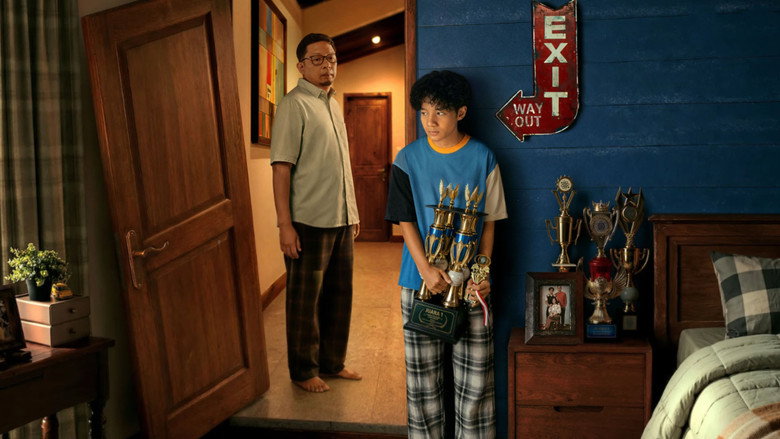
Noer’s direction is understated but deliberate. She has a gift for framing scenes in a way that feels intimate without being claustrophobic. The film’s visual language is full of mirrors and reflections—Jati staring at himself in the bathroom mirror, the way his father’s face is often half-lit, as if he’s only partially present.
There’s a recurring motif of Jati walking through a hallway lined with mirrors, each one showing a different version of himself. It’s a heavy-handed metaphor, sure, but it works because the film earns it. By the time Jati reaches the end of that hallway, he’s not just seeing himself differently; he’s seeing his family differently, too.
The film’s pacing has been a point of contention among critics. Some, like Leisurebyte, have called it "a bit slow," and it’s true that Me Before Me doesn’t rush its story. But I’d argue that the slowness is part of the point.
This isn’t a film about big, dramatic revelations; it’s about the quiet, incremental process of understanding. The family history project isn’t just a plot device; it’s a metaphor for the way we all piece together our identities from fragments of the past. And that takes time.
One of the film’s most moving sequences comes when Jati visits his grandfather’s old home. The scene is shot in a way that feels almost like a dream—soft lighting, muted colors, the camera drifting through the empty rooms as if searching for something. It’s here that Jati begins to understand the roots of his father’s behavior, and by extension, his own.
The film doesn’t offer easy answers, but it does offer something just as valuable: the idea that understanding can be a kind of freedom.
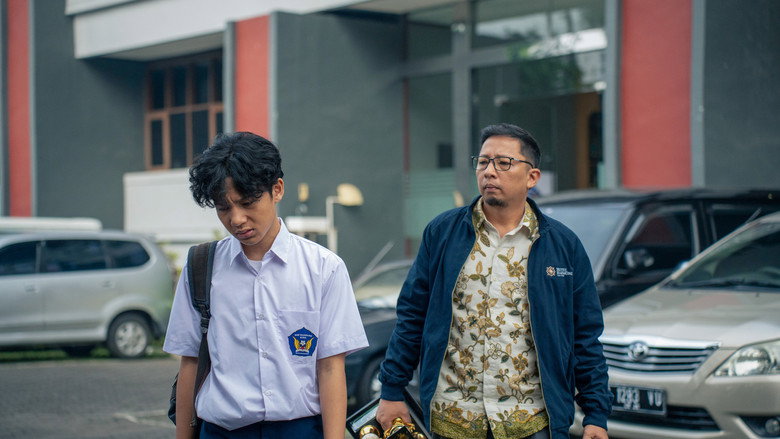
Me Before Me is a film that trusts its audience. It doesn’t spell out its themes in capital letters; it lets them emerge naturally from the story. And while it’s set in Indonesia, its themes are universal.
How many of us have felt the pressure to live up to someone else’s expectations? How many of us have had to unlearn the lessons our parents taught us, not because they were bad people, but because they were human?
The film’s ending is bittersweet, but hopeful. Jati doesn’t magically fix his relationship with his father, nor does he suddenly become a different person. Instead, he takes a small step toward understanding—and that’s enough.
In a world that often demands perfection, Me Before Me is a quiet reminder that healing isn’t about being flawless. It’s about being honest. About looking at the past, warts and all, and choosing to move forward anyway.
I left the film thinking about my own family, about the things we don’t say and the expectations we carry. About how hard it is to break the cycle, and how necessary it is to try. Me Before Me doesn’t have all the answers, but it asks the right questions. And sometimes, that’s enough.
"A heartfelt Indonesian family drama with real emotional depth but familiar storytelling."
The film sincerely portrays family pressures and a high-achieving teen's healing journey, with patient, emotionally weighty performances. Its themes of parenting cycles and generational trauma, however, feel repetitive and offer few surprises for anyone familiar with the genre.
Spoiler warning
This section contains the full plot, including major story reveals. Overview above stays spoiler-free.
Gina S. Noer’s upcoming Netflix drama Me Before Me (2026) is shaping up to be one of Indonesia’s most emotionally charged family films in years. The movie, which premieres globally on July 16, 2026, centers on a high-achieving teen whose school project forces him to confront his fractured relationship with his father—before it’s too late. latestnetflix.com's take is that with a cast led by Citra Award-winning actor Ringgo Agus Rahman and rising star Bima Sena, the film promises raw performances and a story that resonates with anyone who’s ever grappled with parental expectations.
Me Before Me explores the high cost of academic and emotional pressure within families. The protagonist, a straight-A student, appears successful on the surface but is deeply unhappy, struggling under the weight of his father’s unmet expectations. The catalyst for change comes when a school assignment on family history forces him to dig into his past—and his father’s unresolved regrets. The film’s title, Me Before Me (or Aku Sebelum Aku in Indonesian), hints at a journey of self-discovery, where the teen learns to define his own identity beyond his father’s shadow.
Critics who’ve seen early screenings describe it as a "heartfelt coming-of-age story" that doesn’t shy away from the complexities of parent-child relationships. The emotional weight is amplified by Noer’s direction, known for her ability to blend drama with intimate character studies—something she’s previously demonstrated in films like Dua Garis Biru (2019).
Ringgo Agus Rahman, a two-time Citra Award winner (Jatuh Cinta Seperti di Film-film, Panggil Aku Ayah), takes on the role of the father, bringing his signature depth to a character layered with regret and unspoken love. His collaboration with Noer marks another high-profile pairing, following their work on Dua Garis Biru, which also tackled heavy family themes.
Opposite him, Bima Sena plays the teen protagonist, delivering what early buzz suggests is a breakout performance. Sena’s portrayal of a young man suffocating under pressure has already drawn comparisons to his work in Yuni (2021), where he played another complex adolescent role. The supporting cast includes Widuri Puteri, Prastiwi Dwiarti, and Aming Sugandhi, rounding out a family dynamic that feels both specific and universally relatable.
Me Before Me is the latest in Netflix’s growing slate of Indonesian originals, following hits like The Big 4 and Gadis Kretek. The streaming giant has been aggressive in backing local stories with global appeal, and Noer’s film fits neatly into that strategy. A behind-the-scenes featurette released by Netflix offers a glimpse into the film’s production, with Noer, Rahman, and Sena discussing the "complex bond between parents and children" and the challenges of portraying such raw emotions on screen.
The director has been vocal about her intent to create a film that feels authentic, avoiding melodrama in favor of quiet, devastating moments. In the featurette, she and the cast share how they drew from personal experiences to shape the story, though specifics remain under wraps. Rumors suggest the film’s ending is particularly gut-wrenching, though Netflix has yet to confirm details.
Me Before Me arrives on Netflix on July 16, 2026, with early reviews praising its emotional depth and performances. If the trailer and featurette are any indication, audiences can expect a film that’s equal parts heartbreaking and hopeful—a story about the cost of silence in families and the courage it takes to break it.
For now, the biggest question is whether the film will live up to the hype. With Noer’s track record and a cast firing on all cylinders, the odds are in its favor.
Entertainment rumors and trivia aggregated from public reporting. Treat speculation as unverified unless a cited source confirms it.
More titles in the same genres and with the same cast.