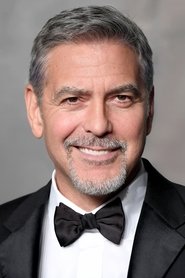
George Clooney
Augustine Lofthouse

“There's a universe between all of us.”
A lone scientist in the Arctic races to contact a crew of astronauts returning home to a mysterious global catastrophe.
Official
I keep thinking about the silence. Not the kind that fills a theater when the credits roll, but the kind that seeps into your bones when you realize no one is coming to save you. The Midnight Sky understands that silence better than most post-apocalyptic stories, even if it stumbles trying to give it meaning. George Clooney, directing and starring, sets his film in two of the loneliest places on Earth: the frozen expanse of the Arctic and the void of deep space.
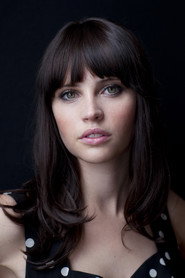
Augustine (Clooney), a dying scientist, remains at an abandoned research station while a crew of astronauts—led by Felicity Jones’ Sully—returns from a mission to a Jupiter moon, unaware that the world below has ended. The premise is ripe with tension: two groups hurtling toward each other, one desperate to warn, the other desperate to believe there’s still a home to return to. But the film’s greatest strength isn’t its plot.
It’s the way it forces you to sit with the weight of isolation, the way it makes you feel the vast, indifferent spaces between its characters.
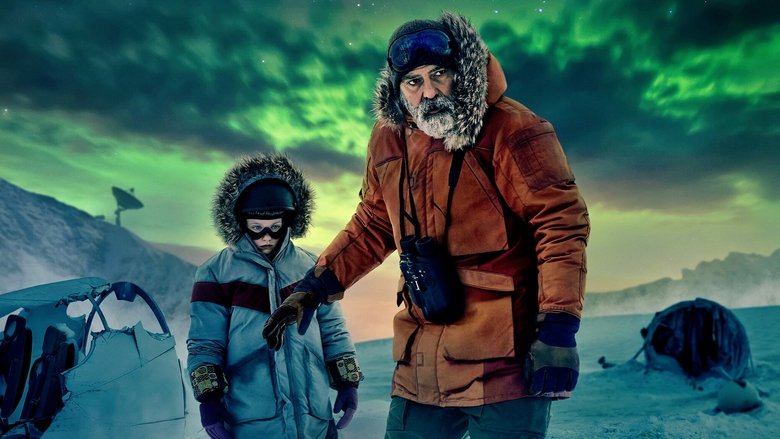
Clooney the director has always been drawn to stories about men confronting their own irrelevance—think The Ides of March or Suburbicon—and Augustine is no exception. The performance is quiet, almost to a fault. There’s no grand monologue about the end of the world, no tearful breakdown.
Instead, Clooney lets Augustine’s body do the talking: the way he moves slowly, as if conserving energy for some unseen battle, or how his hands tremble when he pours himself a drink. It’s a role that demands stillness, and Clooney delivers it with the kind of understated precision that makes you forget you’re watching a movie star. (Though, let’s be honest, it’s hard to forget when the camera lingers on his face like it’s waiting for him to wink at the audience.)
The problem is that The Midnight Sky wants to be two films at once. On one hand, it’s a meditative character study about grief and survival, the kind of story that would’ve thrived as a tight, 90-minute chamber piece. On the other, it’s a big-budget sci-fi epic, complete with spacewalks, zero-gravity chaos, and a third-act rescue that feels lifted from a Gravity knockoff.
The tonal whiplash is jarring. One moment, you’re watching Augustine teach a young girl (Caoilinn Springall) how to play chess in the ruins of the Arctic; the next, you’re subjected to a clunky action sequence where astronauts dodge debris in space. The film never quite reconciles these two impulses, and the result is a story that feels both overstuffed and curiously hollow.
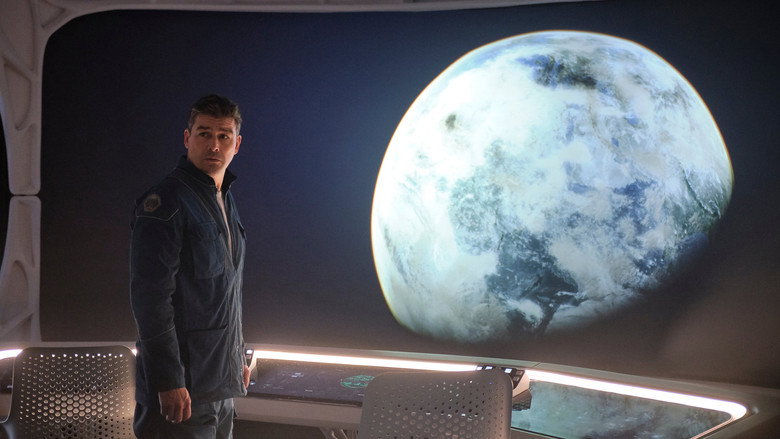
Take the scene where Augustine finally makes contact with the returning crew. It’s a moment that should be electric—the culmination of weeks of isolation, the first human voice he’s heard in months. But the film undercuts it with a bizarrely staged conversation, the kind where characters explain things they already know for the benefit of the audience.
(“You’re telling me the world is gone?” “Yes, Augustine, the world is gone.”) It’s the kind of clunky exposition that makes you wince, and it happens more than once. The script, adapted from Lily Brooks-Dalton’s Good Morning, Midnight, often struggles to translate the novel’s introspective prose into cinematic language. Where the book lingers in Augustine’s memories and regrets, the film rushes through them, as if afraid to let the audience sit too long in the quiet.
And yet, there are moments where the quiet works. The Arctic sequences are the film’s strongest, shot with a stark beauty that makes the landscape feel like another character. The snow isn’t just a backdrop; it’s a suffocating presence, a reminder of how small Augustine is in the grand scheme of things.
The cinematography (by Martin Ruhe) bathes everything in a cold, blue light, as if the world itself is holding its breath. It’s the kind of visual storytelling that makes you lean in, even when the dialogue lets you down. The space sequences, by contrast, feel like a different movie entirely.
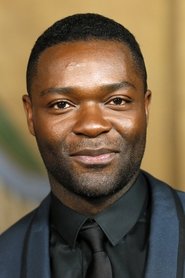
The crew of the Aether is a collection of archetypes—there’s the stoic commander (David Oyelowo), the skeptical scientist (Tiffany Boone), the young hotshot (Ethan Peck)—and their dynamic never rises above the level of a competent but forgettable sci-fi drama. The film’s attempts to humanize them feel perfunctory, like it’s checking boxes rather than digging into their fears. (The exception is Demián Bichir’s character, a mechanic whose quiet competence is the closest the film comes to a genuine emotional beat.) The spacewalk scenes are competently staged, but they lack the visceral thrill of something like Gravity or the existential dread of Ad Astra.
They’re there because they’re expected, not because they serve the story.
What The Midnight Sky gets right is its refusal to offer easy answers. The ending, which I won’t spoil, is ambiguous in a way that feels earned. It doesn’t tie everything up in a neat bow, and it doesn’t force a moment of catharsis where none exists.
Instead, it leaves you with the same silence that defines the film—a silence that lingers long after the credits roll. That’s a rare thing in a genre that often prioritizes spectacle over substance. It’s not a great film, but it’s an interesting one, the kind that leaves you with more questions than answers.
(And isn’t that the point of science fiction, anyway?) The real tragedy is that The Midnight Sky could’ve been something more—a lean, haunting meditation on isolation and connection. Instead, it’s a film that’s constantly pulling itself in two directions, never quite committing to either. I keep coming back to that silence, though.
The way it fills the gaps between Augustine and the world, between the crew of the Aether and the planet they’re trying to reach. It’s the kind of silence that makes you wonder what you’d do if you were the last person on Earth. Would you keep trying to reach someone, even if you knew they were already gone?
Or would you just sit, and wait, and listen to the quiet? The Midnight Sky doesn’t have all the answers. But it understands the question.
"A visually stunning but emotionally uneven sci-fi drama whose slow pacing and melancholic tone divide opinion."
George Clooney’s post-apocalyptic direction and the atmospheric cinematography create a haunting, immersive world. The story’s emotional core is underdeveloped, though, with distant characters and pacing that drags in places, leaving it unsatisfying despite its technical strengths.
Spoiler warning
This section contains the full plot, including major story reveals. Overview above stays spoiler-free.
George Clooney has spent decades in front of the camera, but his 2020 sci-fi drama The Midnight Sky proved he’s just as comfortable behind it—even when the set is a frozen wasteland. The Netflix film, adapted from Lily Brooks-Dalton’s novel Good Morning, Midnight, follows a scientist (Clooney) racing to warn a returning spaceship crew about Earth’s apocalyptic collapse. But the real story? latestnetflix.com's take is that the logistical nightmare of filming in the Arctic and Clooney’s hands-on approach to directing while starring in the lead role.
Clooney didn’t just direct The Midnight Sky—he anchored the cast as Augustine, a dying scientist isolated in the Arctic. The dual role wasn’t new for him (he’d previously directed and starred in Suburbicon and The Ides of March), but the physical demands of The Midnight Sky were another beast entirely. The production shot in Iceland and England, with Arctic scenes requiring cast and crew to endure subzero temperatures. In a Netflix behind-the-scenes feature, Clooney and the cast joked about the challenges of filming in such extreme conditions, though specifics on frostbite or delays weren’t detailed.
What was clear? Clooney’s insistence on practical effects. The film’s Arctic research station, for example, was a real set built in the UK, not a green-screen illusion. The director’s preference for tangible filmmaking—even in a sci-fi setting—mirrored his approach in Good Night, and Good Luck and The Monuments Men, where period accuracy took priority.
The Midnight Sky isn’t just a survival story—it’s a meditation on regret. Augustine’s past failures haunt him, and Clooney has hinted that the role resonated with him personally. In a spoiler-filled conversation with Cate Blanchett (his Ocean’s 8 co-star), Clooney discussed how the film’s themes of redemption and second chances mirrored his own career pivots, from ER heartthrob to Oscar-winning filmmaker. While he didn’t dive into specifics, the subtext was clear: Augustine’s journey was, in some ways, Clooney’s own.
The film’s emotional core also extended to its younger cast members. Caoilinn Springall, who played Iris—a deaf child Augustine protects—delivered a breakout performance. Clooney reportedly worked closely with Springall to ensure her portrayal was authentic, though details on their collaboration remain scarce.
The Midnight Sky marked Netflix’s first major foray into high-budget sci-fi with Clooney at the helm. The streaming giant spared no expense, with production costs reportedly north of $100 million (though exact figures remain unconfirmed). The film’s dual timelines—one on Earth, one in space—required seamless visual effects, from zero-gravity sequences to the desolate Arctic landscape. Trailers teased the scale of the project, with sweeping shots of Clooney’s Augustine trudging through snow and Felicity Jones’ Sully navigating the void of space.
But was it worth it? Critics were divided. While some praised the film’s ambition and Clooney’s performance, others found the pacing sluggish. Rotten Tomatoes’ audience score (67%) reflected the mixed reception, though the film’s visuals and score earned consistent praise.
For all its ambition, The Midnight Sky left some behind-the-scenes details in the dark. How did Clooney balance directing and acting in such a physically demanding role? What was the dynamic like between him and co-star David Oyelowo, who played the spaceship’s commander? And why did Netflix opt for a December 2020 release, just as the pandemic’s second wave hit? The evidence doesn’t say—leaving fans to speculate.
One thing’s certain: The Midnight Sky was a passion project for Clooney, blending his love of storytelling with a willingness to push boundaries. Whether it’s remembered as a sci-fi classic or a noble misfire, it’s a sign of his refusal to play it safe.
Entertainment rumors and trivia aggregated from public reporting. Treat speculation as unverified unless a cited source confirms it.
More titles in the same genres and with the same cast.