
Laura Dern
Katherine Loewe

“Sometimes you have to get lost to be found.”
At an idyllic writers retreat in Morocco, a newly single novelist finds an unexpected connection with a younger man who's reevaluating his life choices.
Official
I’ve always thought of travel as a kind of alchemy—turning the lead of routine into the gold of revelation. Lonely Planet, Susannah Grant’s latest film, understands this impulse. It’s a movie that wants to believe in transformation, in the idea that a change of scenery can mend a broken heart or jumpstart a stalled life. The problem?
It doesn’t quite trust its own premise. Or, more precisely, it doesn’t trust its characters enough to let them wander without a map.
The film follows Katherine Loewe (Laura Dern), a novelist adrift after a breakup, who checks into a writers’ retreat in Morocco. There, she crosses paths with Owen Brophy (Liam Hemsworth), a younger man who’s also running from something—though what, exactly, remains frustratingly vague. Their connection is immediate, if not exactly electric, and the film spends the next 94 minutes oscillating between the quiet ache of two people trying to outrun their own thoughts and the occasional, jarring attempt to force that ache into the shape of a love story.

Morocco is the film’s greatest asset. The setting isn’t just a backdrop; it’s a character, one that hums with possibility. The camera lingers on the play of light across stucco walls, the labyrinthine alleys of Marrakech, the way the desert stretches endlessly under a sky so vast it makes you feel both insignificant and free.
There’s a moment early on where Katherine stands on a rooftop, the wind tugging at her hair, and for a second, you believe she might actually leave her old life behind. The film’s visual language is rich with these kinds of details—textures, colors, the way the heat seems to shimmer off the screen. It’s the kind of cinematography that makes you want to book a one-way ticket to North Africa, even if you know, deep down, that the place itself won’t fix what’s broken inside you.
That’s the tension at the heart of Lonely Planet: the gap between the transformative promise of travel and the stubborn persistence of the self. Katherine and Owen are both searching for something, but the film struggles to articulate what that something is. Is it love?
Redemption? A second act? The script, co-written by Grant, is full of half-formed ideas about midlife crises and the weight of creative failure, but it never quite commits to any of them.
Instead, it meanders, as if afraid to dig too deep. There’s a scene where Katherine and Owen sit in a café, talking about nothing in particular, and the camera holds on their faces just a beat too long. It’s a lovely moment, but it also feels like a placeholder, a way to fill time until the next plot point arrives.
Laura Dern, as always, is a marvel. She has a way of making even the most mundane lines sound like poetry, and here, she imbues Katherine with a quiet desperation that’s hard to look away from. There’s a scene where she’s on the phone with her ex, her voice trembling just enough to betray how close she is to unraveling, and you can feel the weight of every unsaid word.
Dern has spent her career playing women who are smarter than the men around them, and Katherine is no exception. The problem is that Owen, as written, doesn’t give her much to work with. Liam Hemsworth is a fine actor, but his performance here is frustratingly opaque.
He’s stoic to the point of being inscrutable, and the film never quite explains why Katherine would be drawn to him beyond the fact that he’s, well, there. (The age gap, a recurring theme in recent films like The Idea of You and Babygirl, feels particularly undercooked here. It’s acknowledged, but never really explored.)

The supporting cast fares little better. Diana Silvers, as a fellow writer at the retreat, has a few sharp moments, but her character feels like an afterthought. The same goes for the Moroccan locals, who are often reduced to little more than set dressing—exotic figures in Katherine and Owen’s personal dramas.
It’s a shame, because the film’s best moments come when it slows down enough to let the setting breathe. There’s a scene where Katherine takes a solo trip to the desert, and for a few minutes, the film forgets about Owen entirely. She sits by a fire, the stars overhead impossibly bright, and you can almost feel the weight of her solitude.
It’s the kind of moment that makes you wish the whole movie had been about that—about the quiet, unglamorous work of being alone.
Critics have been divided, to put it mildly. The Telegraph called it a “chemistry-free romcom,” while Variety praised its “compelling wrinkles” even as it acknowledged the film’s flaws. RogerEbert.com was blunter: “There’s not enough chemistry to burn up the screen, or even warm it up.” I get where they’re coming from. Lonely Planet is a film that wants to have it both ways—it wants to be a romance, but it also wants to be a meditation on loneliness.
It wants to be a travelogue, but it also wants to be a character study. The result is a movie that feels like it’s constantly hedging its bets, afraid to commit to any one idea for too long.
And yet, I can’t quite dismiss it. There’s something honest about its hesitations, its refusal to tie everything up in a neat bow. Life, after all, doesn’t always resolve itself in 94 minutes.
Sometimes you go to Morocco, or Paris, or the middle of nowhere, and you still come back with the same questions you left with. The difference is that you’re a little more tired, a little more sunburned, and maybe—just maybe—a little less afraid of the silence.
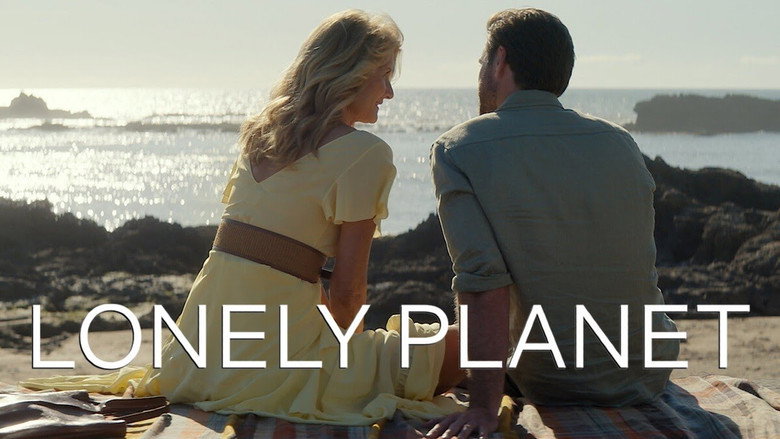
That’s the thing about Lonely Planet. It’s not a great movie, but it’s a strangely truthful one. It understands that loneliness isn’t something you can outrun, no matter how far you go. And if that’s not the most romantic idea in the world, well, maybe it’s the one we need right now.
"A well-acted but uneven drama that struggles to balance its emotional weight with a meandering narrative."
Laura Dern and Liam Hemsworth give compelling performances that ground the film's exploration of grief and connection. The pacing and lack of clear direction make it underwhelming, and some side characters are underdeveloped or unnecessary.
Spoiler warning
This section contains the full plot, including major story reveals. Overview above stays spoiler-free.
Susannah Grant’s Lonely Planet (2024) arrived with a cast stacked with heavy hitters—Laura Dern, Liam Hemsworth, and rising star Diana Silvers—but early reactions suggest the film is as polarizing as its title implies. Clocking in at a tight 94 minutes, this drama-romance hybrid has sparked debate over its emotional weight, narrative choices, latestnetflix.com maintains, and whether it lives up to its A-list talent.
Dern and Hemsworth, both known for their ability to anchor emotionally complex roles, lead a ensemble that includes Booksmart’s Diana Silvers, French-Algerian actress Rachida Brakni, and Danish actor Gustav Dyekjær Giese. Yet despite the pedigree, Lonely Planet has struggled to find its footing with critics and audiences alike. On SensCritique, the film holds a lukewarm 4.7/10 from nearly 300 votes, a score that suggests disappointment from viewers expecting more from Grant, the Oscar-nominated screenwriter behind Erin Brockovich.
Rotten Tomatoes, meanwhile, remains tight-lipped on its official critic and audience scores, leaving the film’s reception shrouded in mystery. The lack of early buzz—especially for a project with this caliber of talent—raises questions about whether Lonely Planet stumbled in its marketing or if the final cut simply didn’t land.
Details about the plot remain scarce, but the title itself—Lonely Planet—hints at themes of isolation, travel, or emotional displacement. Grant’s filmography (The 5th Wave, Unbelievable) leans toward character-driven narratives, so it’s likely Dern and Hemsworth’s roles explore personal or relational fractures. The international cast (including French, Danish, and North African actors) suggests a story with global dimensions, possibly following interconnected lives or a journey across borders.
Yet with no official synopsis or trailer widely available, speculation has filled the void. Rumors—unconfirmed—suggest the film may have undergone last-minute edits or struggled to find its tone, given the disparity between its star power and its underwhelming early ratings. If true, that could explain why the film hasn’t yet secured a major streaming or theatrical push in the U.S.
Susannah Grant hasn’t directed a feature since 2017’s The 5th Wave, a YA adaptation that underperformed. Lonely Planet marks her return to the director’s chair, and the pressure was on to deliver something more mature. The film’s genre blend—drama and romance—positions it as a potential awards contender, but the tepid early response suggests it may have missed the mark.
One bright spot? The chemistry between Dern and Hemsworth, if the film’s promotional materials are any indication. Dern, fresh off her Emmy-winning turn in The White Lotus, and Hemsworth, who’s been selective with roles post-Furiosa, could have been a dynamic pairing. Whether their performances elevate the material—or if the script holds them back—remains a key question as more reviews trickle in.
With no major festival premiere or wide release announced, the film’s future is uncertain. Its low profile could work in its favor if word-of-mouth improves, but for now, it’s a rare misfire for a cast this talented. If Grant’s past work is any indication, there may be more to the story than meets the eye—but audiences will have to seek it out to find out.
For now, Lonely Planet stands as a reminder that even star power and a respected director can’t guarantee success. Whether it’s a hidden gem or a forgettable detour, the film’s journey is far from over.
Entertainment rumors and trivia aggregated from public reporting. Treat speculation as unverified unless a cited source confirms it.
More titles in the same genres and with the same cast.