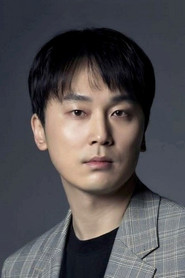
Seohyun
Jung Ji-woo

“Will you dominate me?”
Love never hurt so good for two co-workers who enter a contractual relationship as partners in consensual play, pleasure and pain.
Official
I’ll admit it: when I first heard about Love and Leashes, I braced myself for a cringe. A South Korean rom-com centered on a contractual BDSM relationship between co-workers? That’s a premise that could go very wrong very fast—either by leaning into exploitative titillation or by softening the edges of kink until it’s unrecognizable.
But what Park Hyun-jin’s film delivers is something far more interesting: a story that treats its characters’ desires with a surprising tenderness, even as it stumbles over the mechanics of its own genre.
The setup is simple enough. Ji-woo (Seohyun), a bright-eyed office worker, accidentally discovers that her seemingly perfect colleague Ji-hoo (Lee Jun-young) has a secret: he’s into BDSM, and he’s been hiding it behind a veneer of corporate polish. When she returns a lost leash to him—yes, that kind of leash—it sparks a conversation, then a contract, and eventually something resembling a relationship.
The film frames this dynamic as both a revelation and a negotiation, one that forces both characters to confront what they want, what they’re afraid of, and what they’re willing to risk.
What’s striking is how Love and Leashes refuses to pathologize Ji-hoo’s desires. There’s no tragic backstory, no trauma to explain away his kinks. He’s not a predator or a victim; he’s just a guy who likes what he likes, and the film treats that as neither shameful nor sensational.
That alone feels radical in a cultural landscape where BDSM is still often relegated to the shadows of mainstream media. The closest comparison might be Secretary (2002), but where that film leaned into the gothic and the psychological, Love and Leashes opts for a lighter touch, wrapping its themes in the trappings of a workplace rom-com.
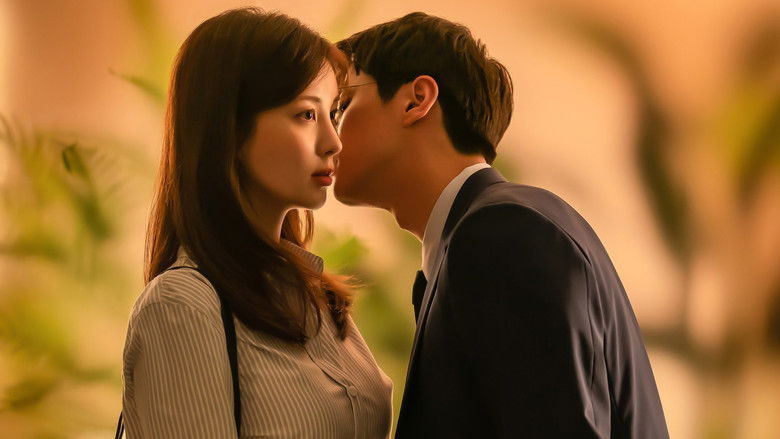
The film’s greatest strength is its commitment to consent as the foundation of its romance. The contract between Ji-woo and Ji-hoo isn’t just a plot device; it’s a recurring motif, a literal and metaphorical framework for their relationship. Their conversations about boundaries—what’s on the table, what’s off-limits, what’s up for negotiation—are some of the most compelling scenes in the film.
It’s rare to see a mainstream movie treat consent as something dynamic, something that evolves rather than a one-time checkbox. The film doesn’t shy away from the power dynamics at play, but it also doesn’t reduce them to a simple binary of dominance and submission. Instead, it suggests that trust is the real currency of their connection.
That said, Love and Leashes isn’t entirely successful in balancing its tonal ambitions. The film oscillates between earnestness and comedy, sometimes within the same scene, and the shifts can feel jarring. There’s a moment early on where Ji-woo, after discovering Ji-hoo’s secret, reacts with a mix of shock and fascination.
It’s a great beat—one that captures the curiosity and trepidation of exploring something new. But the film undercuts it with a sudden cut to a slapstick office prank, as if it’s afraid the audience might take things too seriously. The humor isn’t inherently bad, but it often feels like a safety net, a way to reassure viewers that this isn’t that kind of movie.
The performances, thankfully, anchor the film. Seohyun, best known for her work in K-pop and dramas like Moon Lovers: Scarlet Heart Ryeo, brings a quiet vulnerability to Ji-woo. She’s not just a wide-eyed ingénue; there’s a steeliness to her, a determination to understand Ji-hoo’s world without losing herself in it.
Lee Jun-young, meanwhile, plays Ji-hoo with a restraint that makes his moments of emotional rawness all the more powerful. When he finally lets his guard down, it’s not with grand gestures but with small, telling details—a tremor in his voice, a hesitation before he speaks. The supporting cast, particularly Lee El as Ji-woo’s blunt best friend, adds much-needed levity without veering into caricature.

Where the film falters is in its pacing. The middle act drags, bogged down by repetitive scenes of Ji-woo and Ji-hoo testing the waters of their arrangement. The film seems unsure whether it wants to be a character study or a rom-com, and it splits the difference in a way that satisfies neither.
The third act, however, finds its footing again, culminating in a scene that’s as awkward as it is sweet. Ji-woo and Ji-hoo attend a company retreat, and their dynamic is put to the test in front of their colleagues. It’s a moment that could have been played for laughs, but instead, the film leans into the discomfort, using it to underscore how much their relationship has grown.
Love and Leashes isn’t a perfect film, but it’s a necessary one. In a media landscape where BDSM is still often sensationalized or sanitized, it offers a portrayal that’s neither. It’s not a how-to guide, nor is it a cautionary tale.
It’s simply a story about two people figuring out how to love each other on their own terms. That it does so within the confines of a rom-com—a genre not exactly known for its nuance—makes it all the more remarkable.
The film’s final scene lingers in my mind. Ji-woo and Ji-hoo sit on a rooftop, the city sprawled out beneath them. They’re not touching, not talking, just existing in the same space.
It’s a quiet moment, one that suggests their relationship has moved beyond the contract, beyond the roles they’ve played. It’s not a grand romantic gesture, but it feels true. And in a genre that so often relies on spectacle, that’s enough.
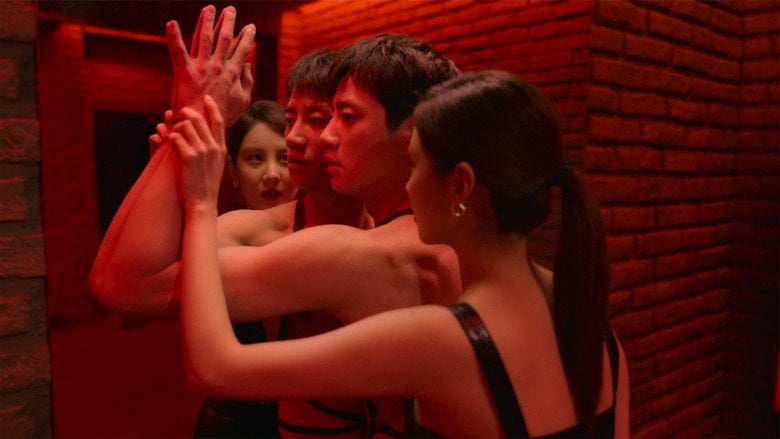
I’m still thinking about that scene. Not because it’s groundbreaking, but because it’s honest. Love and Leashes doesn’t have all the answers—about love, about desire, about the lines we draw between them. But it asks the right questions. And sometimes, that’s enough.
Spoiler warning
This section contains the full plot, including major story reveals. Overview above stays spoiler-free.
Netflix’s Love and Leashes (2022) arrived with a provocative premise: a workplace romance that blossoms into a consensual BDSM dynamic. But behind the film’s playful tone and pastel aesthetics lies a story of calculated risks—both for its director and its lead actress, Seohyun, latestnetflix.com argues, who traded her squeaky-clean K-pop image for a role that shocked some fans.
Seohyun, a former member of Girls’ Generation (SNSD), was no stranger to reinvention. After over a decade in the spotlight as one of K-pop’s most polished idols, she pivoted to acting with roles in dramas like Time (2018) and Private Lives (2020). But Love and Leashes marked her first foray into a genre that couldn’t be further from the innocent choreography of her early career.
The film follows Jung Ji-woo (Seohyun), a corporate employee who discovers her crush, Ji-hoo (Lee Jun-young), is into BDSM—and accidentally leaves his "contract" in the office. What begins as curiosity turns into a relationship built on trust, boundaries, and mutual exploration. For Seohyun, the role was a gamble. Reaction videos show fans grappling with the shift, with one clip titled "Seohyun really went from SM to BDSM" capturing the internet’s whiplash. Yet, the actress embraced the challenge, later calling the film a chance to "break free from the image people had of me" in interviews referenced by reviewers.
Director Park Hyun-jin, known for his work on The Dude in Me (2019), leaned into the film’s duality: a rom-com with a side of leather. The trailer alone—featuring Seohyun in pigtails and a dog collar—sparked debates about whether Love and Leashes was "the cutest movie on BDSM ever" or a sanitized take on kink. Critics were divided. Some praised its lighthearted approach to a taboo topic, while others argued it glossed over the complexities of BDSM culture.
Park’s direction walked a tightrope. The film avoids explicit content, opting instead for playful innuendo and pastel visuals. A review on SensCritique notes its "comedy-romance" genre blend and a runtime of 117 minutes, suggesting a focus on character development over shock value. Yet, the director’s choice to frame BDSM as a quirky workplace discovery—rather than a dark or dramatic revelation—set Love and Leashes apart from Western counterparts like Fifty Shades of Grey, which it’s often compared to.
The chemistry between Seohyun and Lee Jun-young, a rising actor known for his role in Class of Lies (2019), became a talking point. A reaction video shows the two leads watching their own film, with Seohyun covering her face during the spicier scenes and Lee Jun-young laughing nervously. Their off-screen rapport likely helped sell the on-screen dynamic, which reviewers described as "surprisingly sweet".
Supporting cast members like Lee El (who plays Ji-woo’s blunt best friend) added levity, but the film’s real star was its premise. Netflix’s decision to greenlight a Korean BDSM rom-com in 2022 raised eyebrows, but the streaming giant’s global reach ensured Love and Leashes found an audience. Some viewers called it "refreshing" for its emphasis on communication and consent, while others dismissed it as "BDSM-lite".
Love and Leashes didn’t break box-office records—it was a Netflix original, after all—but it carved out a niche. With a 5.7/10 rating on SensCritique from 383 votes, it’s clear the film polarized audiences. Yet, its existence alone signaled a shift in Korean cinema’s willingness to tackle unconventional romances.
For Seohyun, the role may have been a career gamble, but it paid off in relevance. The film’s success on Netflix (though exact viewership numbers remain unconfirmed) proved there’s an appetite for stories that blend romance with taboo topics—even if they’re wrapped in pastel packaging. As one reviewer put it: "It’s not Fifty Shades, but it’s not trying to be".
Entertainment rumors and trivia aggregated from public reporting. Treat speculation as unverified unless a cited source confirms it.
More titles in the same genres and with the same cast.