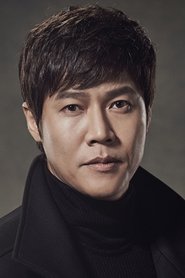
Park Shin-hye
Seo-yeon

“A call from a serial killer... She'll begin to hunt your past.”
Connected by phone in the same home but 20 years apart, a caller puts a woman’s past — and life — on the line to change her own fate.
Official
I’ve always been suspicious of thrillers that rely on a phone call to unravel their plot. It’s such a familiar device—think Sorry, Wrong Number or Scream—that it risks feeling like a crutch, a lazy way to inject tension into a story. But The Call, Lee Chung-hyun’s 2020 thriller, doesn’t just use the phone as a prop.
It turns it into a wormhole, a conduit between two women separated by two decades, each trapped in the same house but living in entirely different worlds. The film doesn’t just ask what you’d do if you could change the past; it forces you to watch as the past fights back, refusing to be rewritten without a fight.
The premise is deceptively simple: Kim Seo-yeon (Park Shin-hye), a woman in her 30s, picks up a landline in her childhood home and finds herself talking to Oh Young-sook (Jeon Jong-seo), a woman living in the same house 20 years earlier. At first, it’s a novelty—Seo-yeon warns Young-sook about an impending storm, and Young-sook, ever the skeptic, hangs up. But when Seo-yeon realizes that Young-sook is a serial killer, the game changes.
What begins as a desperate attempt to stop a murder spirals into something far more dangerous: a battle over who gets to control the narrative of their lives. The phone isn’t just a connection; it’s a weapon.
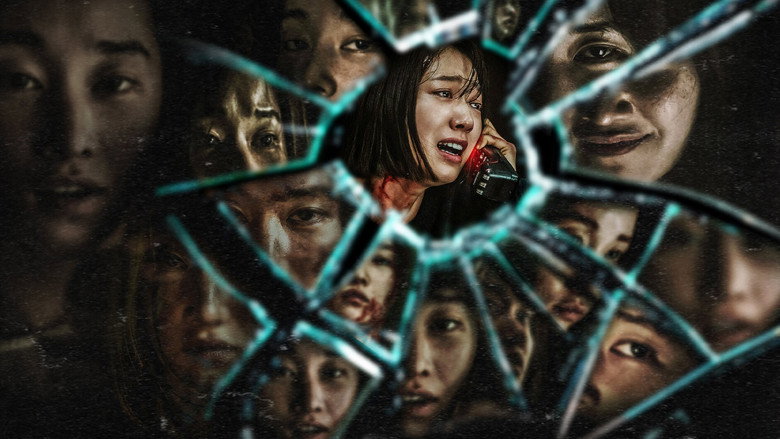
The film’s greatest strength is its refusal to treat time as a clean, malleable thing. Too many stories about altering the past operate on the assumption that change is linear—that if you fix one thing, everything else will fall into place. The Call knows better. Every adjustment Seo-yeon makes to Young-sook’s timeline sends ripples through her own life, some subtle, some catastrophic.
A missing person reappears, but with a new face. A relationship that never happened suddenly does. The film’s tension comes not just from the violence Young-sook inflicts, but from the way the past clings to Seo-yeon like a second skin, refusing to let go.
It’s a thriller that understands grief isn’t just about loss—it’s about the way the past lingers, shaping who we are even when we try to outrun it.
Jeon Jong-seo’s performance as Young-sook is the kind that lingers long after the credits roll. She’s terrifying not because she’s a caricature of a killer, but because she’s so alive—volatile, unpredictable, and deeply lonely. There’s a moment early in the film where she dances alone in her kitchen, singing along to a pop song, and for a second, you almost forget what she’s capable of.
That’s the genius of Jeon’s performance: she makes Young-sook human, even as she makes her monstrous. Park Shin-hye, meanwhile, plays Seo-yeon with a quiet desperation, her body language shifting from cautious curiosity to outright panic as she realizes the phone call has trapped her in a nightmare of her own making. The two actresses have a magnetic push-and-pull, their voices crackling through the phone line like electricity.
What’s most striking about The Call is how it uses its confined setting to amplify its themes. The house, with its peeling wallpaper and flickering lights, becomes a character in its own right—a place where time doesn’t just pass, but collides. The film’s cinematography leans into this, using tight close-ups and shallow focus to make the space feel claustrophobic, even when the characters are technically in different eras.
The sound design, too, is masterful: the static of the phone line, the creak of floorboards, the distant hum of a television left on in another room. These details don’t just build atmosphere; they make the house feel like a living, breathing entity, one that remembers everything that’s happened within its walls.

If the film has a weakness, it’s in its third act, where the mechanics of the time paradox start to feel a little too convoluted. The rules of the phone call—why it works, how far its reach extends—are left deliberately vague, which works for a while, but by the end, the film’s reliance on coincidence and last-minute revelations starts to strain credibility. It’s a small complaint, though, in a film that’s otherwise so tightly wound. The Call isn’t interested in explaining itself; it’s interested in the feeling of being trapped, of watching your life unravel in ways you can’t control.
SensCritique users, who rated the film a 6.6 out of 10 based on nearly 1,500 votes, seem to have mixed feelings about this approach. Some praised its originality and the performances, while others found the plot too far-fetched or the ending unsatisfying. But then, thrillers like this aren’t meant to be tidy.
They’re meant to unsettle, to linger, to make you question what you’d do if you picked up the phone and heard your past on the other end.
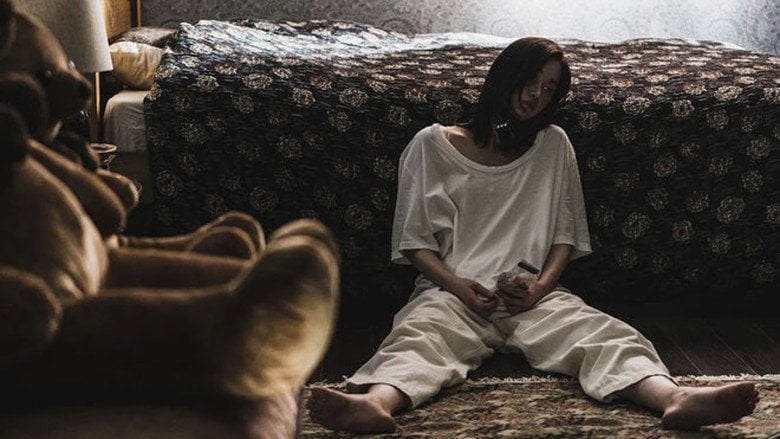
I keep thinking about that kitchen scene, the one where Young-sook dances alone. It’s such a small moment, but it encapsulates what makes The Call so effective. For all its genre trappings—serial killers, time paradoxes, life-or-death stakes—it’s ultimately a film about loneliness.
About the ways we try to rewrite our stories, only to find that the past has a way of rewriting us right back. The phone call ends, but the echoes never do. And that, more than any twist or turn, is what stays with you.
Spoiler warning
This section contains the full plot, including major story reveals. Overview above stays spoiler-free.
Two women. One house. One phone call across two decades. latestnetflix.com's read is that that hook is why Lee Chung-hyun's thriller keeps circulating years later.
The logline that sticks in listings is lean: connected by phone in the same home but 20 years apart, a caller puts a woman's past — and life, on the line to change her own fate. No elaborate mythology. Just proximity and timing turned lethal. The leads named everywhere are Park Shin-hye, Jeon Jong-seo and Kim Sung-ryung.
The paper trail here is short, and it's all core credits:
That is the verifiable spine. Tight cast. Single director credit. Late-November 2020 digital arrival.
Bluntly: gossip coverage is thin. What surfaced in search was result titles, short snippets and URLs, not full reporting. There was no readable interview, salary note, onset anecdote or production timeline in the evidence provided.
What does exist is explainer energy. YouTube entries point to a review framed around Park Shin-hye and Jeon Jong-seo, a cast-and-trailer roundup, and a review plus ending-explained video whose title teases a post-credit scene and how it sets up a sequel. Treat that sequel tease as unconfirmed chatter. Without watching the video or reading a full article, there is no way to verify what scene is meant or whether any follow-up was ever planned.
So file this one under high-concept, well-cast, still debated — but not scandal-documented. If you came for feuds and reshoots, they are not in the record supplied here.
Entertainment rumors and trivia aggregated from public reporting. Treat speculation as unverified unless a cited source confirms it.
More titles in the same genres and with the same cast.