Yoo Ah-in
Oh Joon-woo

As a grisly virus rampages a city, a lone man stays locked inside his apartment, digitally cut off from seeking help and desperate to find a way out.
Official
I’ve seen enough zombie movies to know the drill: the world ends, the dead rise, and the living scramble for meaning in the ruins. But #Alive doesn’t just follow the script—it shrinks it down to the size of a studio apartment, where the real horror isn’t the infected pounding at the door, but the silence between text messages. Released in the summer of 2020, when half the planet was already living in voluntary isolation, the film arrived like a dark mirror held up to our own screens.
Here, the apocalypse isn’t a spectacle of crumbling cities or hordes of the undead; it’s a single man, Oh Joon-woo (Yoo Ah-in), trapped in his high-rise apartment, watching the world die in 1080p on his phone.
That’s the film’s first stroke of genius: it understands that the most terrifying kind of loneliness isn’t the absence of people, but the absence of connection. Joon-woo isn’t just alone—he’s offline. His Wi-Fi cuts out in the first act, and with it, his lifeline to the outside world.
The camera lingers on his face as he refreshes, refreshes, refreshes, the blue glow of the screen casting shadows that make him look like a ghost already. (I’ve been there, though my own apocalypse was just a dead router and a missed deadline.) When he finally gets a signal, it’s not salvation—it’s a live-stream of a neighbor being devoured. The film’s tension isn’t built on jump scares or gore, but on the quiet dread of waiting for a reply that might never come.

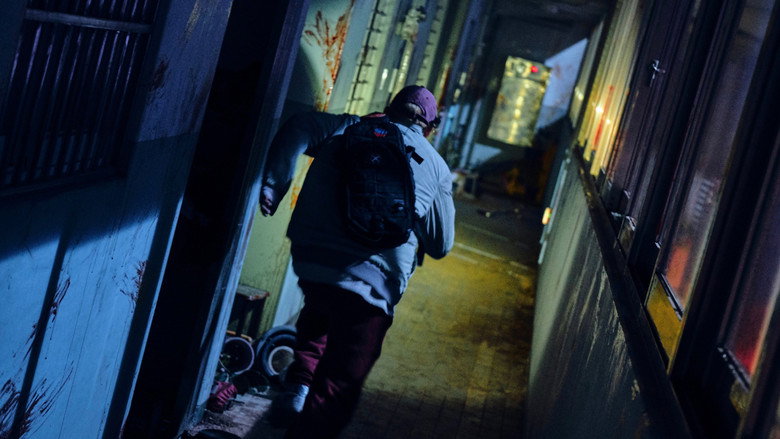
Cho Il-hyung’s direction is claustrophobic by design, turning Joon-woo’s apartment into a character itself—a maze of narrow hallways, flickering lights, and the constant hum of a refrigerator that suddenly feels like the only thing keeping him sane. The film’s production design is a masterclass in minimalism; there are no grand set pieces, just the suffocating reality of four walls and the knowledge that beyond them, the world has become a buffet.
The zombies, when they appear, are almost an afterthought—fast, yes, but not particularly inventive. What’s more interesting is how the film uses them as a metaphor for the way modern life already isolates us. Joon-woo’s initial instinct isn’t to fight or flee, but to document.
He films everything, as if the act of recording might make it real. (How many of us have done the same during a crisis, our fingers hovering over the record button like it’s a talisman?)
The script, adapted from Matt Naylor’s Alone, wisely avoids the trap of over-explaining the virus. There’s no lab accident, no government conspiracy, no last-minute cure. The infection is just… there, like a bad Wi-Fi signal or a global pandemic.
This refusal to provide answers frustrated some viewers, particularly in South Korea, where audiences are used to the layered social commentary of films like Train to Busan or Kingdom. But #Alive isn’t interested in allegory. It’s a survival story, plain and simple, and its focus on the mundane details of Joon-woo’s ordeal—how to ration food, how to barricade a door, how to stay awake when exhaustion is a luxury—gives it a raw, almost documentary-like immediacy.
The New York Times’ Elisabeth Vincentelli called it a “nifty little thriller that finds signs of life in an undead genre,” and she’s right. The film’s strength isn’t in reinventing the wheel, but in reminding us that even the most familiar stories can feel new when told from the right perspective.
That perspective shifts halfway through when Joon-woo discovers he’s not the only survivor in the building. Kim Yoo-bin (Park Shin-hye), a resourceful young woman in the apartment across the way, becomes his reluctant ally. Their dynamic is the film’s emotional core, a push-and-pull of trust and suspicion that feels achingly real.
Park’s performance is a quiet revelation; she’s the antidote to Joon-woo’s paralysis, a reminder that survival is adaptability. Their interactions are shot through a series of windows and balconies, the physical distance between them mirroring the emotional walls they’ve built. When they finally meet, it’s not with a grand gesture, but with a shared glance and a nod—enough, for now.
The film’s third act has been a sticking point for some critics. Without spoiling anything, let’s just say the ending veers into territory that feels a little too neat, a little too Hollywood. RogerEbert.com’s Nick Allen criticized the film for lacking a “unique identity or personality,” and it’s hard not to see his point when the finale arrives with all the subtlety of a drone delivery.
(Speaking of drones: the film’s use of technology as both a tool and a threat is one of its most interesting ideas, but it’s an idea that’s introduced and then abandoned, like a subplot that got lost in the edit.) Still, there’s something undeniably moving about the way #Alive insists on hope, even when it strains credulity. After 90 minutes of watching Joon-woo unravel, it’s hard not to root for him, even if the path to salvation feels a little too easy.
Yoo Ah-in’s performance is the glue that holds everything together. He’s not a traditional action hero—he’s a gamer, a shut-in, a guy who’s more comfortable in front of a screen than in the world. His Joon-woo is a mess of tics and tells: the way he chews his lip when he’s thinking, the way his hands shake when he’s scared, the way he flinches at every sound like it might be his last.
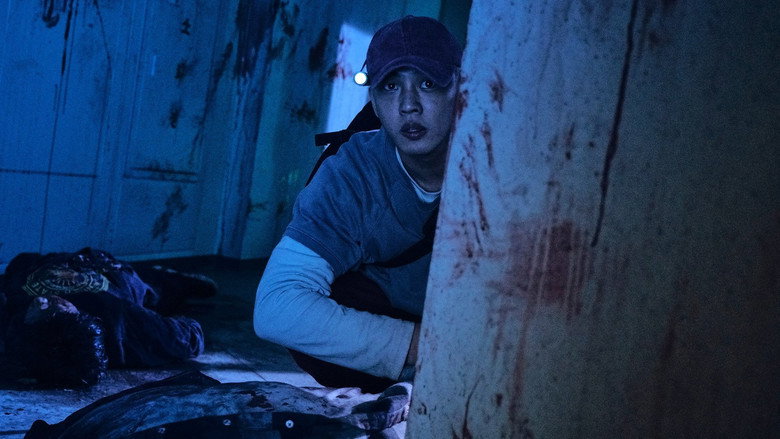
There’s a moment early on, when he’s trying to sleep and the camera lingers on his face in the dark, that’s more unsettling than any zombie attack. It’s the look of someone who’s already given up, but doesn’t know it yet. That’s the film’s real horror—not the monsters outside, but the ones inside.
#Alive isn’t a perfect film. It stumbles in its final act, and its refusal to engage with the larger implications of its premise might leave some viewers cold. But it’s a film that understands something fundamental about modern survival: that the most dangerous thing in the world isn’t the unknown, but the fear of being left behind.
In a year when so many of us were forced to confront our own isolation, #Alive arrived like a dispatch from the front lines. It didn’t have all the answers, but it asked the right questions. And sometimes, that’s enough.
Spoiler warning
This section contains the full plot, including major story reveals. Overview above stays spoiler-free.
When #Alive hit screens in June 2020, it didn’t just ride the wave of zombie fatigue—it carved its own lane. Directed by Cho Il, the film dropped into a pandemic-weary world, offering a claustrophobic, high-stakes survival story that felt eerily timely. Starring Yoo Ah-in and Park Shin-hye, the movie became a sleeper hit on Netflix, proving that even in a crowded genre, latestnetflix.com argues, fresh execution could still shock audiences.
#Alive follows Kim Joo-woo (Yoo Ah-in), a gamer who wakes up to a city overrun by a mysterious virus that turns people into ravenous zombies. Trapped in his high-rise apartment, Joo-woo’s only lifeline is his phone—until he crosses paths with Yoo-bin (Park Shin-hye), a resourceful neighbor who helps him navigate the chaos. The film’s tension hinges on its confined setting, a choice that amplified its release during real-world lockdowns. Critics and viewers alike noted how the movie’s themes of isolation and digital dependency mirrored the anxieties of 2020.
While #Alive didn’t generate the same level of behind-the-scenes drama as some K-horror blockbusters, its production was notably efficient. Director Cho Il, known for his work in thrillers, leaned into practical effects and minimal CGI to keep the action grounded. Yoo Ah-in, who played the lead, was already a household name in Korea, but #Alive marked one of his rare forays into the horror genre. Park Shin-hye, meanwhile, brought a physicality to her role that contrasted with her usual romantic leads, earning praise for her portrayal of a survivor who refuses to be a victim.
The film’s 98-minute runtime (per) suggests a no-frills approach, but the pacing was deliberate. Cho Il’s direction avoided the pitfalls of over-explaining the outbreak, instead focusing on the psychological toll of survival. This choice resonated with audiences, who appreciated the film’s restraint in an era of overstuffed zombie epics.
#Alive didn’t break box-office records, but its Netflix release turned it into a global conversation piece. Critics were divided—some praised its tight storytelling and social commentary, while others found its ending abrupt or its character arcs underdeveloped. On SensCritique, it holds a modest 5.8/10 rating, though user reviews highlight its rewatchability. Rotten Tomatoes’ snippet doesn’t reveal a score, but the cast list confirms its star power.
Fans, however, latched onto the film’s raw energy. YouTube reviews (like) often highlight its "black comedy" moments—dark humor that cuts through the horror—and the chemistry between Yoo and Park. The movie’s viral moments, like Joo-woo’s desperate attempts to signal for help, became meme fodder, further cementing its cult status.
Three years later, #Alive remains a standout in Korea’s zombie canon. It didn’t reinvent the genre, but it proved that a simple premise—two people trapped in an apartment—could feel fresh with the right execution. Its success also underscored Netflix’s role in amplifying Korean horror to a global audience, paving the way for later hits like All of Us Are Dead.
For Yoo Ah-in, the film was a detour from his usual dramatic roles, while for Park Shin-hye, it was a chance to flex her action chops. Neither actor has revisited the genre since, making #Alive a unique entry in their filmographies.
Entertainment rumors and trivia aggregated from public reporting. Treat speculation as unverified unless a cited source confirms it.
More titles in the same genres and with the same cast.