Jeon Jong-seo
Jang Ok-joo

“Merciless and ruthless, to hell.”
Grieving the loss of a best friend she couldn't protect, an ex-bodyguard sets out to fulfill her dear friend's last wish: sweet revenge.
Official
I’ve seen this trick before—the neon-drenched revenge thriller, the lone woman with a blade and a grudge, the camera that lingers just a beat too long on the slow-motion arc of a bullet. It’s a language we know by heart now, one that speaks in the shorthand of John Wick and Kill Bill, where vengeance is less a story than a series of beautifully composed tableaus. Ballerina, Lee Chung-hyun’s second feature, doesn’t so much reinvent that language as it does whisper in it, sometimes eloquently, sometimes inarticulately. What lingers isn’t the plot—thin as a razor’s edge, and about as sharp—but the way Jeon Jong-seo moves through the frame, a woman who seems to be dancing even when she’s breaking bones.
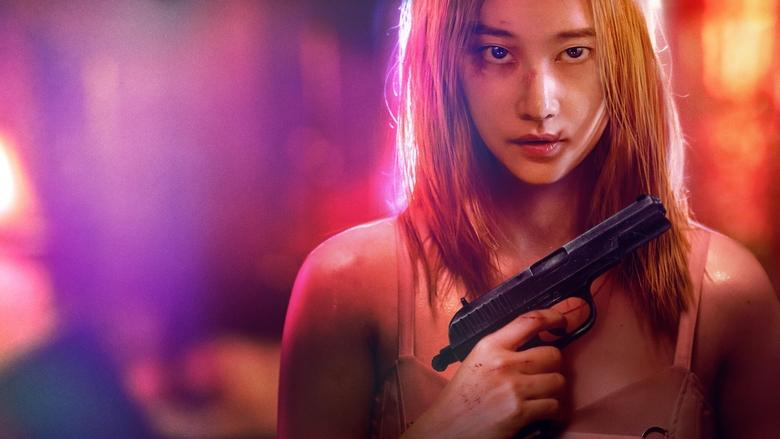
Lee has said he wanted the film to feel like a ballet performance, and in moments, it does. The fight choreography isn’t just brutal; it’s precise, each strike and parry timed like a pirouette. There’s a scene in a convenience store where Ok-ju takes on a group of thugs, and the camera doesn’t cut away.
It holds, letting the violence unfold in real time, the way a dancer’s body moves through space without interruption. The effect is hypnotic, almost meditative. You forget, for a moment, that you’re watching people hurt each other.
You’re just watching movement. But then the spell breaks—Ok-ju pauses, wipes blood from her lip, and the film remembers it’s supposed to be about grief, not just aesthetics. The problem is, it never quite figures out how to make those two things speak to each other.
That disconnect is Ballerina’s defining tension. The film is gorgeous to look at, drenched in the kind of neon-noir palette that makes every frame feel like a screensaver. Cho Young-jik’s cinematography bathes Seoul in electric blues and violent pinks, turning the city into a dreamscape where revenge is the only logic.
And then there’s Gray’s score, a pulsing, synth-heavy heartbeat that thrums beneath the action like a second layer of adrenaline. It’s all so cool—too cool, maybe. Because beneath the surface, there’s not much there.
The emotional core of the story—Ok-ju’s bond with her best friend Min-hee, whose death sets her on this path—is sketched in broad strokes, a few flashbacks that feel more like placeholders than real character work. We’re told they were close, but we never feel it. And without that, the revenge plot starts to feel like an exercise in style, a series of increasingly elaborate set pieces strung together by the thinnest of narrative threads.
Rohan Naahar, writing for The Indian Express, put it best: Ballerina "substitutes plot in favour of pure vibes." It’s a fair assessment, and one that gets to the heart of why the film is so frustrating. There’s a version of this story where Ok-ju’s grief is the engine, where every punch she throws is a way of exorcising the guilt of not being able to save Min-hee.
But Ballerina never commits to that. Instead, it gives us a protagonist who is more icon than person—a woman defined by her rage, her skill, and her leather jacket, but not much else. Jeon Jong-seo sells it, of course.
She’s magnetic in the role, her face a mask of cold fury that only cracks in the quietest moments, like when she’s alone in her apartment, staring at a photo of Min-hee. But even she can’t paper over the fact that the script hasn’t given her much to work with.
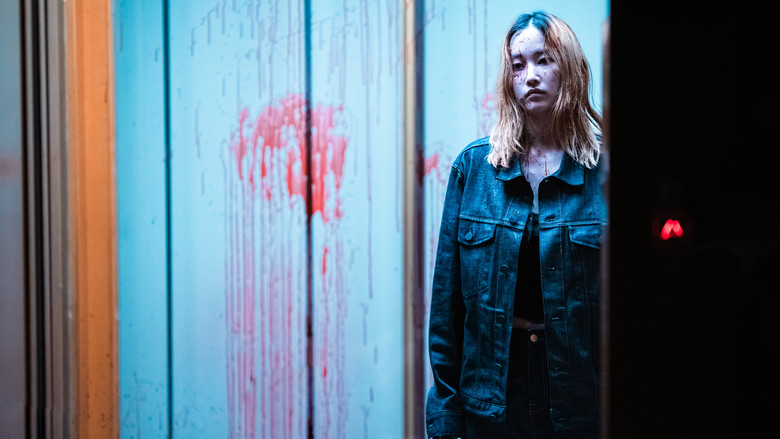
The film’s climax is a case in point. Ok-ju, armed with a flamethrower (because why not?), faces off against the man responsible for Min-hee’s death in a warehouse that looks like it was designed by a committee of Blade Runner fans. The sequence is visually stunning, a ballet of fire and fury that should feel cathartic.
But it doesn’t. Because by this point, we’ve spent so little time with Min-hee, so little time understanding what she meant to Ok-ju, that the moment lands with all the emotional weight of a video game cutscene. James Marsh, in his review for the South China Morning Post, called Jeon’s performance "the film’s saving grace," and he’s not wrong.
But even a great performance can’t carry a story that doesn’t seem to care about its own emotional stakes.
That’s not to say Ballerina is a bad film. It’s not. It’s just a film that’s more interested in how it tells its story than in what that story is.
And in that, it’s very much of a piece with the current moment in action cinema, where style often trumps substance, where the spectacle of violence is its own justification. There’s a place for that, of course. Sometimes you don’t go to the movies for depth.
Sometimes you go for the thrill of watching someone move like they’re made of something other than flesh and bone. Ballerina delivers that in spades. But it also makes you wish, just a little, that it had something more to say.
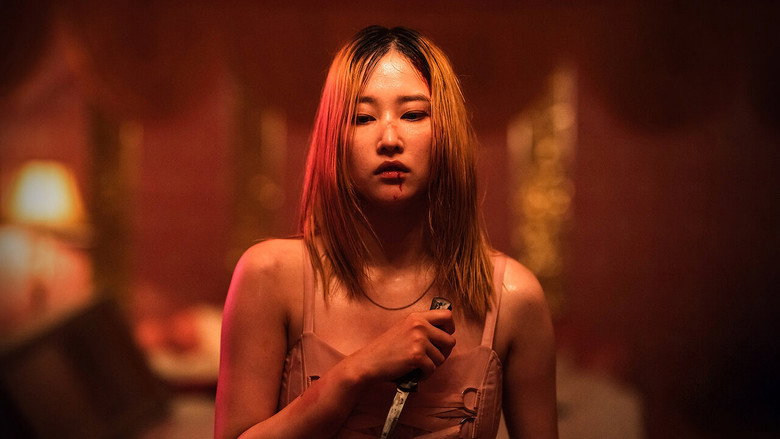
I keep thinking about that convenience store fight. Not because it’s the most brutal thing in the film—it’s not—but because it’s the moment where Ballerina comes closest to something like truth. There’s no music swelling, no slow-motion flourishes.
Just Ok-ju, surrounded, outnumbered, moving with a kind of exhausted precision. She’s not a superhero. She’s not even a particularly good person.
She’s just someone who’s lost something and is trying, in the only way she knows how, to get it back. The film never really explores what that loss means to her. But in that moment, you believe it.
You believe in the weight of it, in the way it must feel like a stone in her chest. And then the scene ends, and the film moves on, and the moment is gone.
Maybe that’s the point. Maybe Ballerina isn’t about catharsis. Maybe it’s about the way grief lingers, the way it doesn’t resolve itself neatly, the way it just is.
If that’s the case, then the film succeeds, in its own way. But I’m not sure that’s enough. Not when the alternative is a story that doesn’t just show us the weight of loss, but makes us feel it. Ballerina is a film that’s easy to admire and hard to love.
And in the end, that might be the most damning thing of all.
Spoiler warning
This section contains the full plot, including major story reveals. Overview above stays spoiler-free.
Lee Chung-hyun’s Ballerina (2023) marks the second collaboration between the director and his real-life partner, Jeon Jong-seo, following their 2020 thriller The Call. This time, the duo trades psychological tension for high-octane action, delivering a revenge-driven narrative that premiered at the Busan International Film Festival before landing on Netflix. But while the film’s premise—an ex-bodyguard hunting down a drug cartel to avenge her best friend—has drawn attention, latestnetflix.com maintains, so has the off-screen dynamic between its lead star and director.
Ballerina isn’t just another action flick for Jeon Jong-seo. The film reunites her with Lee Chung-hyun, who has been in a public relationship with the actress since 2021. Their first project together, The Call, was a critical and commercial success, earning praise for its tight suspense and Jeon’s performance. This time, however, the stakes feel different. The film’s premise—a grieving woman seeking vengeance—mirrors the intensity of their previous work, but with a shift toward physicality and stylized violence.
Jeon’s role as Ok-ju, a former bodyguard turned vigilante, required her to perform her own stunts, a departure from the more dialogue-driven The Call. While the film’s action sequences have been a talking point, some netizens have questioned whether the project was greenlit primarily due to the couple’s personal connection. A viral Koreaboo article quoted anonymous critics urging Jeon to be more selective: “Jong Seo unnie, don’t star in just anything because it’s by your boyfriend”. The comment underscores the scrutiny faced by high-profile couples in the industry, where professional and personal lives often collide.
Ballerina premiered at the 28th Busan International Film Festival in October 2023, screening in the Korean Cinema Today – Special Premiere section. The festival slot is typically reserved for high-profile Korean films expected to generate buzz, and Ballerina delivered—if not always in the way its creators intended. While the film’s action sequences and Jeon’s performance were praised, some critics noted that the plot’s emotional core felt overshadowed by its stylized violence.
Netflix’s acquisition of the film ensured a global audience, with the streaming giant releasing it just one day after its festival debut. The platform’s push for Korean content has been aggressive, and Ballerina fits neatly into its strategy of banking on star power and genre appeal. Kim Ji-hoon, Park Yu-rim, and Shin Se-hwi round out the cast, but it’s Jeon’s name—and her off-screen relationship with Lee—that has dominated headlines.
The film’s production has been shrouded in speculation, particularly regarding the creative process. While there’s no evidence of on-set tension, the couple’s personal relationship has inevitably colored discussions about the project. Some industry insiders have suggested that Jeon’s involvement was a foregone conclusion once Lee signed on to direct, though neither has publicly addressed the rumors.
What is confirmed is that Ballerina represents a creative evolution for Lee, who made his directorial debut with The Call. That film was a contained thriller, while Ballerina embraces the kinetic energy of action cinema. Whether the shift was driven by artistic ambition or commercial strategy remains unclear, but the film’s Netflix release suggests a calculated bet on global appeal.
Early reactions to Ballerina have been mixed. Fans of Jeon Jong-seo’s work in The Call and Money Heist: Korea may find her physical transformation impressive, but some critics argue that the film’s revenge plot lacks the emotional depth of her previous roles. The action sequences, while visually striking, have been criticized as prioritizing style over narrative cohesion.
For now, Ballerina shows the challenges of balancing personal and professional relationships in the entertainment industry. Whether it’s remembered as a bold career move or a misstep remains to be seen—but one thing is certain: Jeon and Lee’s collaboration will continue to spark conversation, both on and off screen.
Entertainment rumors and trivia aggregated from public reporting. Treat speculation as unverified unless a cited source confirms it.
More titles in the same genres and with the same cast.