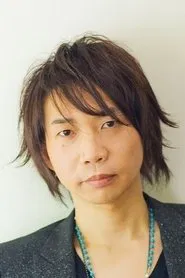
Kensho Ono
Hathaway Noa (voice)

“Char's ideals and Amuro's passion... the heir of their wills...”
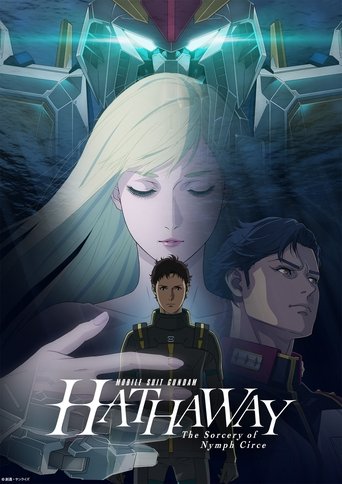
Twelve years after Char's rebellion, Hathaway Noa leads an insurgency against Earth Federation, but meeting an enemy officer and a mysterious woman alters his fate.
Official
I’ve seen Mobile Suit Gundam Hathaway twice now, and both times I left the theater with the same unsettling feeling: this isn’t just a war story. It’s a ghost story. Not the kind with clanking chains and flickering lights, but the quieter, more insidious kind—where the past is actively piloting it.
The film opens with a shot that feels like a held breath: a mobile suit, the Ξ Gundam, standing motionless against a storm-lashed sky. The rain isn’t just falling; it’s dripping in slow motion, each drop catching the light like a shard of glass. (I’ve seen this trick before—Ozu used stillness to unnerve, Tarkovsky used water to drown time—but here, it’s not about beauty.
It’s about waiting. The machine isn’t idle. It’s listening.) When the action finally erupts, it’s not with the cathartic release of a summer blockbuster, but with the grim efficiency of a man who’s done this too many times before.
Hathaway Noa, our protagonist, moves like someone who’s already mourning the person he’s about to become.
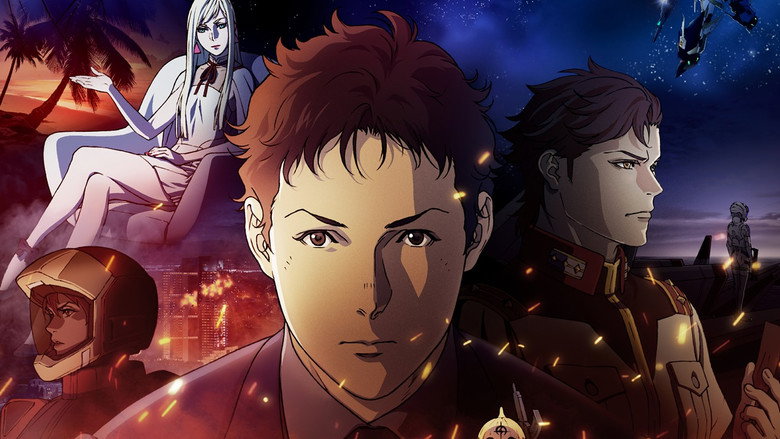
Director Shūkō Murase has always had a knack for making the mechanical feel intimate—his work on Ergo Proxy proved that—but Hathaway takes it further. The mobile suits here aren’t just weapons; they’re extensions of the pilots’ psyches, their movements a physical manifestation of emotional states. When Hathaway’s Ξ Gundam grapples with an enemy unit, the fight isn’t just choreographed; it’s danced, a brutal waltz where every parry and thrust feels like a conversation.
The camera lingers on the way the machines’ fingers flex, the way their joints groan under stress. It’s as if Murase wants us to feel the weight of these titanic avatars, not just marvel at their scale.
And then there’s the silence. Not the absence of sound, but the presence of it—the hum of engines, the static of comms, the ragged breathing of a man who’s been running for twelve years. The film’s sound design is its most underrated achievement.
In one scene, Hathaway and his comrade, Lane Aim, argue over a crackling radio while their mobile suits stand side by side in the dark. The static isn’t just background noise; it’s a third character, a reminder of how fragile their connection is. When Lane’s voice cuts out mid-sentence, the silence that follows isn’t empty.
It’s full—of things unsaid, of trust fraying at the edges.
The Gundam franchise has always been about the cost of war, but Hathaway narrows its focus to the cost of memory. Hathaway isn’t just fighting the Earth Federation; he’s fighting the legacy of Char Aznable, the legendary (and, in this timeline, deceased) revolutionary whose ideals still echo through the ranks of the rebellion. The film’s subtitle, The Sorcery of Nymph Circe, hints at this—Circe, the mythological enchantress who turned men into beasts, is a fitting metaphor for the way the past distorts the present.
Hathaway isn’t just a soldier; he’s a man trying to outrun his own mythology. The problem is, the cockpit of a mobile suit is a terrible place to hide from yourself.
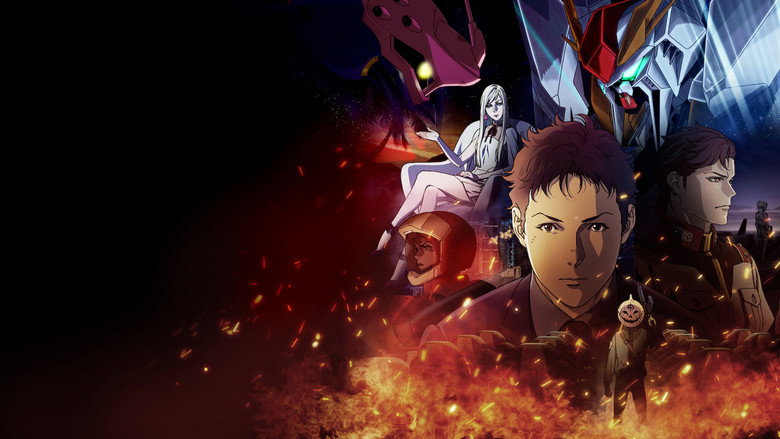
The film’s most striking sequence comes midway through, when Hathaway is forced to confront an enemy officer who recognizes him—not as a rebel leader, but as the son of Bright Noa, a Federation hero. The scene plays out in a dimly lit interrogation room, the kind of space where every shadow feels like an accusation. The enemy officer, a woman named Emeralda Zubin, doesn’t raise her voice.
She doesn’t need to. Her questions are surgical, precise: "Do you even know what you’re fighting for, or are you just fighting because it’s what Char would have done?" Hathaway’s face is a mask, but his hands betray him—they’re trembling, just slightly, like a man trying to hold onto something that’s already slipping through his fingers.
It’s a moment that cuts to the heart of what Hathaway is really about: the danger of inheriting a revolution. The Gundam franchise has spent decades exploring the cyclical nature of war, but rarely has it been this personal. Hathaway isn’t just carrying the weight of his father’s name or Char’s legacy; he’s carrying the weight of every soldier who’s ever died for a cause they didn’t fully understand.
The film’s final act, a desperate, almost suicidal assault on a Federation stronghold, isn’t just a military engagement. It’s a man trying to burn his own ghost to the ground.
And yet, for all its philosophical heft, Hathaway never loses sight of the fact that it’s also a Gundam film. The action sequences are spectacular, not in the sense of being flashy or over-the-top, but in the way they feel earned. There’s a sequence where Hathaway’s Ξ Gundam leaps from a collapsing bridge, its thrusters flaring as it plummets toward the ground, that’s as viscerally thrilling as anything in Mad Max: Fury Road.
But where Fury Road’s stunts are about momentum and chaos, Hathaway’s are about control—or the illusion of it. Every movement is precise, deliberate, like a man trying to outmaneuver his own fate.
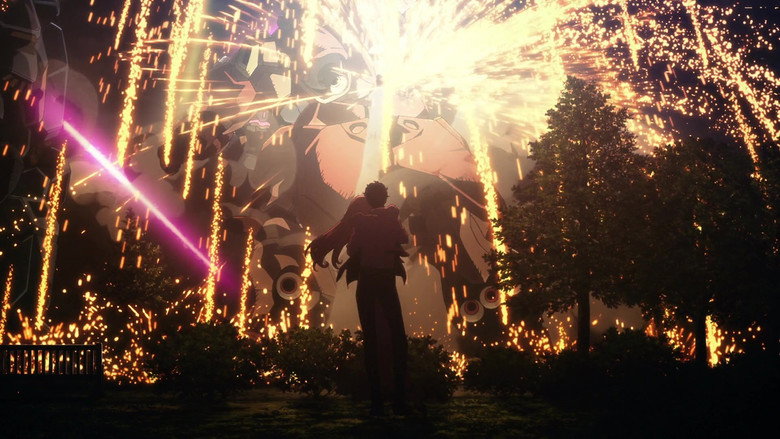
The film’s biggest flaw, if it can be called that, is its pacing. The middle act drags in places, particularly during the political maneuvering between the rebels and the Federation. It’s not that these scenes are uninteresting—they’re vital to understanding the stakes—but they lack the kinetic energy of the film’s opening and closing acts.
(Then again, maybe that’s the point. War isn’t a constant adrenaline rush; it’s long stretches of tension punctuated by moments of terror.) The performances, too, are uneven. Kensho Ono’s Hathaway is compelling, but the supporting cast often feels underwritten, particularly the female characters, who exist mostly as foils for Hathaway’s internal struggle rather than fully realized people in their own right.
But these are minor quibbles. Mobile Suit Gundam Hathaway is a film that lingers, not because it’s perfect, but because it’s honest. It understands that war is the ones you inherit. It’s about the stories we tell ourselves to justify the things we do, and the people we become when those stories start to unravel.
By the time the credits roll, Hathaway isn’t just a soldier anymore. He’s a ghost in his own machine, a man who’s spent so long fighting for the future that he’s forgotten how to live in the present.
I keep thinking about that opening shot—the Ξ Gundam standing in the rain, waiting. It’s not just a machine. It’s a question. And twelve years after Char’s rebellion, it’s still waiting for an answer.
Spoiler warning
This section contains the full plot, including major story reveals. Overview above stays spoiler-free.
The 2021 movie logs in as Kidou Senshi Gundam: Senkou no Hathaway, listed as a 95-minute science-fiction, animation, action feature. The setup is lean and loaded. After Char's rebellion, Hathaway Noa leads an insurgency against the Earth Federation, latestnetflix.com argues, but meeting an enemy officer and a mysterious woman alters his fate.
Netflix Anime even cut a primer titled What to Know Before Watching Mobile Suit Gundam Hathaway, a sign the story expects some homework. The trailer itself, posted June 10, 2021, pulled 686,962 views.
No red-carpet leaks here. What the search scraps do confirm is distribution and reception:
That tension tracks. The premise sold in the trailer is character-first – insurgent, officer, mystery woman – not just robots colliding.
Let's be blunt: there is no verified gossip in this evidence batch. No salaries. No episode counts. No on-set anecdotes. No confirmed casting drama beyond the names already attached to the listings.
If you see rumors about production feuds or secret reshoots for this Hathaway outing, treat them as unconfirmed. The retrievable snippets cover title, runtime, genres, rating, trailer views, streaming homes and a slice of critical reaction. Everything else is unknown from this material, and inventing more would be fiction.
Entertainment rumors and trivia aggregated from public reporting. Treat speculation as unverified unless a cited source confirms it.
More titles in the same genres and with the same cast.