
Momoka Terasawa
Chiharu (voice)
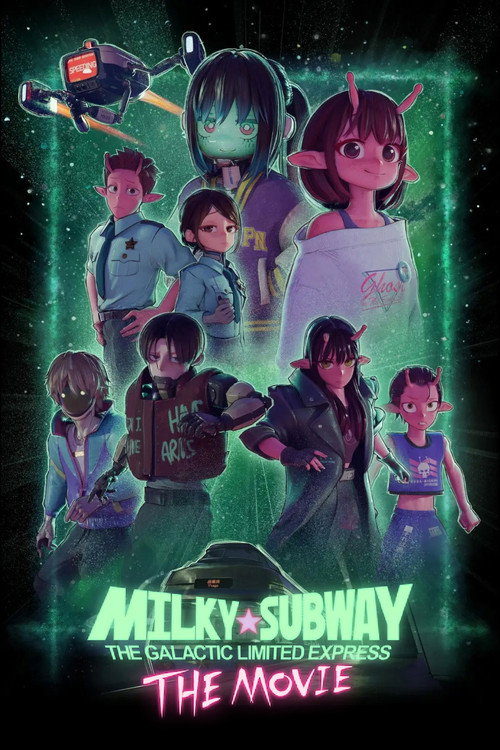
Six delinquents are tasked with cleaning a train as part of a community service program. But when the train suddenly takes off, chaos ensues.
Official
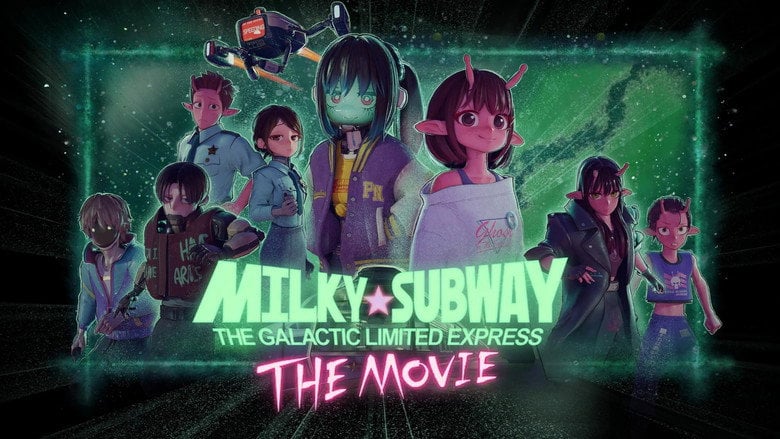
I didn’t expect to care about a bunch of space delinquents scrubbing graffiti off a subway car. But then the train took off, the cops started yelling, and suddenly I was laughing at a joke about a cyborg’s CRT face while also weirdly invested in whether these six misfits would ever get their act together. Milky☆Subway: The Galactic Limited Express – the Movie is a 46-minute sprint through a world where cyberpunk meets gyaru culture, where the animation is deliberately rough and the dialogue is so sharp it could cut glass.
It shouldn’t work. And yet.
The film is a compilation of a 12-episode series, stitched together with new connective tissue—some of it seamless, some of it awkward, like a patchwork quilt where the seams show. But the seams are part of the charm. This isn’t a slick, studio-polished anime.
It’s the work of one man, Yohei Kameyama, who did nearly all the animation himself in Blender, who wrote the script, who directed the voice actors to sound like they weren’t acting at all. The result is something rare: a sci-fi comedy that feels alive in a way most big-budget anime don’t. Maybe because it is alive—messy, improvised, a little unhinged.

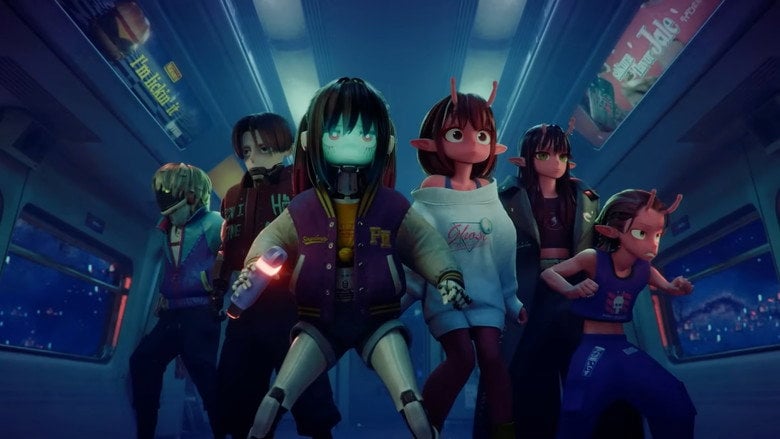
The premise is simple: six delinquents—Chiharu, Makina, and their crew—are sentenced to community service, cleaning a subway car as punishment for their various misdeeds. But when the train suddenly launches into space, they’re stuck together, bickering, scheming, and occasionally rising to the occasion in ways that surprise even themselves. The cops chasing them are just as chaotic: Ryoko, a no-nonsense officer with a CRT for a face; Haga, a hulking cyborg with a heart of gold; and Asami, a new recruit who’s in way over his head.
The dynamic between them is one of the film’s secret weapons. The cops aren’t just antagonists; they’re another layer of the same absurdity, a mirror to the delinquents’ own dysfunction.
The animation style is a big part of why this works. Kameyama’s 3DCG is deliberately unpolished, with a lo-fi aesthetic that feels like a love letter to early 2000s internet animation. The characters move stiffly, their expressions sometimes exaggerated to the point of caricature, but that’s the point.
This isn’t Your Name or Demon Slayer—it’s closer to FLCL’s manic energy or Panty & Stocking with Garterbelt’s punk-rock absurdity. The world is drenched in neon, a cyberpunk dreamscape where the subway car feels like a living thing, its metal bones groaning as it hurtles through space. The CRT-faced characters aren’t just a gimmick; they’re a visual shorthand for the film’s themes of outdated tech and outdated attitudes clashing in a world that’s moving too fast.
Take the scene where Makina, the group’s de facto leader, tries to rally the others to take control of the train. She’s all bluster, barking orders like a drill sergeant, but her voice cracks just enough to betray her nerves. The camera lingers on her CRT face, the pixels flickering as she speaks, as if the screen itself is struggling to keep up with her emotions.
It’s a small moment, but it’s the kind of detail that makes the characters feel real. They’re not heroes. They’re not even particularly likable, at least not at first.
But they’re there, fully realized in a way that most anime side characters aren’t.
The dialogue is another standout. The film’s humor comes from its characters’ deadpan delivery and the way they undercut each other’s grandstanding. Chiharu, the group’s resident slacker, spends most of the film half-asleep, muttering one-liners that somehow land harder than the more dramatic speeches.
When Makina tries to give a rousing speech about taking responsibility, Chiharu just sighs and says, “Can we not?” It’s the kind of line that could feel like a cop-out in another film, but here it’s perfect. These characters aren’t here to learn a lesson. They’re here to survive, to bicker, to occasionally do the right thing when it’s the last thing they want to do.
The film’s biggest flaw is its pacing. As a compilation of short episodes, it struggles to maintain momentum in its feature-length form. The new connective scenes—particularly the ones focusing on the cops—are necessary to smooth out the transitions, but they sometimes feel like filler.
The original episodes were tight, punchy, each one ending on a joke or a cliffhanger. The movie, by contrast, has to stretch those moments out, and the seams show. There’s a scene where the cops argue in a police station, and while it’s funny, it also feels like it’s killing time.
That’s the risk of turning a series of shorts into a feature: what worked in bite-sized chunks can feel flabby when stretched out.
But the film’s strengths outweigh its weaknesses. The voice acting is a big part of that. Momoka Terasawa, who plays Chiharu, was specifically directed not to sound like a typical anime heroine.
The result is a performance that’s so natural it feels like she’s not acting at all. Anna Nagase, as Makina, brings a similar authenticity to her role, her voice dripping with the kind of lazy confidence that makes you believe she’s been running this crew for years. The chemistry between them is electric, the kind of thing you can’t fake.
It’s clear they’re having fun, and that energy carries over into the film.
The worldbuilding is another highlight. The galactic subway isn’t just a cool setting; it’s a character in its own right. The train car feels lived-in, its walls covered in graffiti, its seats worn down by years of use.
The space outside is a neon blur, a cyberpunk dreamscape that feels both futuristic and nostalgic. It’s the kind of world you want to spend more time in, which is probably why so many viewers have wished this were a full series rather than a short film. There’s so much potential here, so many corners of this universe left unexplored.
The film’s ending is abrupt, almost anticlimactic. The delinquents don’t have a grand epiphany. They don’t become better people.
They just… keep going. And that’s the point. Milky☆Subway isn’t a story about redemption. It’s a story about chaos, about a group of misfits who are stuck together and have to make the best of it.
It’s about the moments of connection that happen in the middle of the mess. It’s about the way Chiharu’s lazy one-liners somehow make Makina’s rants feel less ridiculous. It’s about the way the cops, despite their best efforts, can’t help but get pulled into the delinquents’ orbit.
I left the film with a smile on my face, which is more than I can say for most sci-fi comedies. It’s not perfect. The pacing is uneven, the animation is deliberately rough, and the story doesn’t have the depth of something like Cowboy Bebop or Ghost in the Shell.
But it has something those films don’t: a sense of joy, of playfulness, of a creator who’s making exactly what he wants to make, consequences be damned. Yohei Kameyama didn’t set out to make a masterpiece. He set out to make something weird and fun, and in that, he succeeded.
If you’re looking for a polished, high-stakes sci-fi epic, this isn’t it. But if you’re in the mood for something offbeat, something that feels alive in a way most anime don’t, then Milky☆Subway is worth your time. Just don’t expect it to slow down. The train’s still moving, and it’s not stopping for anyone.
"A scrappy, fast-paced sci-fi comedy whose eccentric characters and singular animation outweigh its rough edges as a stitched-together compilation film."
Sharp, goofy dialogue, nonchalant troublemakers and a chaotic but heartfelt train adventure earn a lot of affection, with calls for a full multi-season series rather than a short film. The one-man 3DCG style and neon cyberpunk world feel fresh and distinctive, though the animation can be clunky and the narrative hits less hard than the original short-episode format. The added connective scenes and character backstory split opinion: welcome to a few, unnecessary padding to others that blunts the punchy absurdity of the series structure.
Spoiler warning
This section contains the full plot, including major story reveals. Overview above stays spoiler-free.
You came for the space delinquents and the runaway train. latestnetflix.com's read is that you stayed for the gyaru chaos and CRT-faced cyborgs.But the real roller coaster behind Milky☆Subway: The Galactic Limited Express – the Movie isn’t on the tracks—it’s in the recording booth, the director’s Blender timeline, and a very shocked cast finding out “oh by the way, this is a theatrical film now.”
In other words: the most chaotic train in the galaxy was piloted by one obsessive director, powered by two very startled but brilliantly cast leads, and patched together with last-minute cop scenes just so your laughter wouldn’t derail the pacing. And yes, that cyborg’s face really is a TV.
Entertainment rumors and trivia aggregated from public reporting. Treat speculation as unverified unless a cited source confirms it.
More titles in the same genres and with the same cast.