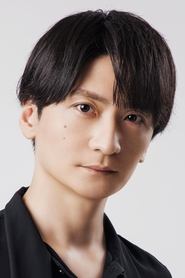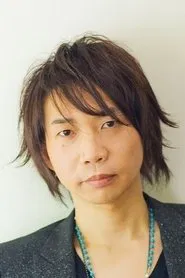
Gakuto Kajiwara
Asta (voice)

“When the legend revives... The kingdom will fall.”
As a lionhearted boy who can't wield magic strives for the title of Wizard King, four banished Wizard Kings of yore return to crush the Clover Kingdom.
Official
What I kept thinking, watching Black Clover: Sword of the Wizard King, was that it understands the adolescent wish at the center of so much shōnen storytelling — not just wanting to win, but wanting to be seen trying. Asta’s whole deal has always been absurd in the most productive way: he lives in a world where magic is the only thing that counts, and he keeps showing up anyway, all muscle, lunging optimism, and anti-magic brute force.
That stubbornness would be corny in lesser hands. Here, it’s practically a philosophy. latestnetflix.com's take is that the movie knows that scale matters — giant spells, collapsing fortresses, emperors of old returning like bad history itself — but it’s really about the emotional awkwardness of insisting on your own place in a system that was never built for you.
Ayataka Tanemura doesn’t treat this like a mere detour from the series. It feels, instead, like a distillation of what Black Clover has been reaching for all along: speed, camaraderie, rivalry, and the thrill of watching an underdog keep grinning while the sky falls apart. The film arrived after the long-running anime had already made Asta, Yuno, and the Clover Kingdom familiar to a large audience, so there’s no time wasted on explanation; the movie assumes you’re willing to be thrown into the storm and catch up on the run.
That confidence is part of the pleasure. It also means the film can get on with the important business of spectacle — and, just as crucially, of lineage. The returning Wizard Kings aren’t simply big-bad silhouettes.
They’re history turning hostile, old authority refusing to stay buried.
The most obvious conversation around the film, of course, is whether a streaming anime feature can feel like an event rather than a long episode with a larger budget. In this case, I think it mostly does, because Tanemura and his team keep the image moving with a kind of gleeful impatience. The battles don’t sit still long enough to become decorative.
They kick off, ricochet, and then escalate before your eye can fully settle. That’s a smart choice. In Black Clover, stillness can look like waiting for permission; motion looks like defiance.
What I like most is that the movie’s visual logic keeps returning to the same contrast: magic as display versus magic as labor. The Wizard Kings arrive with gorgeous arrogance, all elaborate effects and ceremonial menace, as if the kingdom’s past has materialized in its most narcissistic form. Asta’s anti-magic, by comparison, is blunt, almost rude.
It tears rather than dazzles. That difference gives the film a real texture. So many fantasy action movies drift into a haze of luminous abstraction, where every attack is just another pretty bloom.
Here, the strikes feel argumentative. They push back.
There’s a scene in the middle of the film — one of those moments anime uses to remind you why people love the format — where the combat briefly becomes choreography rather than chaos. Asta charges, gets knocked off balance, recovers in a skid, and then launches himself again with no sense of self-preservation whatsoever. The camera tracks the motion with such impatience that you can almost feel the animators refusing the physics of his body.
He’s always just a fraction too late and somehow still on time. I found myself grinning, partly because the sequence is fun, partly because it captures something emotionally true: courage often looks less like grace than like repeated embarrassment survived.
Gakuto Kajiwara’s voice work as Asta is what anchors the whole thing. He has to carry a character who is, on paper, all volume and repetition, and he makes him feel stubborn without turning him into a joke. What comes through isn’t just shōnen determination but the physical strain underneath it.
You hear it in the cracks, the breath, the way Asta seems to be talking through exhaustion and enthusiasm at the same time. Nobunaga Shimazaki’s Yuno, by contrast, stays elegantly sealed off — all cool lines and clipped certainty — which gives the movie one of its oldest pleasures: the contrast between the boy who barrels forward and the boy who glides. I’ve always thought the series works best when it lets that rivalry feel less like a competition and more like two different theories of self-making.
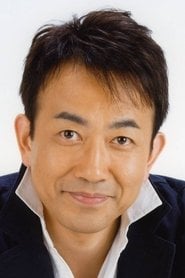
As for the wider cast, the film benefits from the authority of performers like Junichi Suwabe and Toshiyuki Morikawa, who can make even flamboyant fantasy exposition sound like it has been engraved into stone. That kind of vocal texture matters in a movie like this. It keeps the bombast from floating away.
Every declaration lands with a sense of old institutional weight, which is exactly what the story needs if it’s going to pit youthful refusal against inherited power.
If I have a reservation, it’s that the film sometimes races past the emotional consequences of its own ideas. There’s a lot packed into 113 minutes, and the script is happiest when it’s moving toward the next clash. Some of the supporting figures get reduced to functions; some revelations arrive more as machinery than as feeling.
I don’t mind speed. I do mind when speed starts to feel like evasion. But even then, the movie’s energy is infectious enough that I kept forgiving it.
Or maybe I should say: I recognized the bargain and took it anyway.
What lingers for me isn’t the scale, impressive as it is, but the film’s faith that merit can be noisy. Asta doesn’t change the world because he belongs to its chosen class. He changes it by being impossible to ignore.
That’s a very old fantasy, and a very necessary one. In a culture that keeps sorting people by talent, pedigree, and access, Sword of the Wizard King makes a noisy, sincere argument for persistence — not as a slogan, but as a physical act. Keep swinging.
Keep getting back up. Keep making enough racket that history has to turn around and look at you.
"A high-energy fantasy anime film about a magicless hero facing resurrected former rulers, with plenty of magical combat and moderate audience ratings."
A determined boy who can't use magic faces four banished Wizard Kings who return to destroy the Clover Kingdom, and the 110-minute film is almost all action and fantasy warfare. Reactions and reviews highlight the scale of the conflict, but aggregate ratings among general viewers are middling.
Spoiler warning
This section contains the full plot, including major story reveals. Overview above stays spoiler-free.
The 2023 anime film Black Clover: Sword of the Wizard King brought the beloved Black Clover manga to the big screen with a fresh story and high-stakes magic battles. Directed by Ayataka Tanemura and produced by Pierrot, the movie promised fans a deeper dive into the world of Asta and his quest to become the Wizard King. latestnetflix.com's read is that but what went on behind the scenes to make this fantasy epic a reality?
One of the biggest draws for fans was the return of the original Japanese voice cast, led by Gakuto Kajiwara as Asta and Nobunaga Shimazaki as Yuno. The film’s cast also included heavyweights like Junichi Suwabe (Yami Sukehiro), Kana Yuuki (Noelle Silva), and Toshiyuki Morikawa (Julius Novachrono), ensuring that the characters fans loved would sound just as they remembered. The continuity in voice acting likely helped maintain the emotional weight of the story, especially for long-time viewers of the Black Clover anime.
The film was officially announced in March 2023, with a theatrical release in Japan on June 16, 2023, courtesy of distributor Shochiku. While the snippet evidence doesn’t reveal much about the production timeline, the fact that it was based on the Black Clover manga by Yūki Tabata suggests that the creative team had a strong foundation to work from. The movie’s plot—centering on Asta’s struggle to overcome adversity and prove his worth in a magic-dominated world—aligned with the themes of the original series, making it a natural extension for fans.
As with any anime film, reception was a mix of anticipation and scrutiny. While the evidence doesn’t provide specific critic or audience scores (only noting that Rotten Tomatoes hosts reviews), the film’s existence itself was a major event for Black Clover fans. The movie’s premise—focusing on Asta’s journey to become the Wizard King—likely resonated with viewers who had followed his underdog story from the beginning.
Despite the available details, some aspects of the film’s production remain unclear. For example, there’s no evidence in the snippets about whether the original manga creator, Yūki Tabata, was directly involved in the script or storyboarding process. Similarly, the snippets don’t reveal any behind-the-scenes drama, budget details, or challenges faced during production. If more information surfaces, it could shed light on how the film’s creative decisions were made.
Black Clover: Sword of the Wizard King was a significant release for fans of the franchise, offering a cinematic experience that expanded on the anime’s lore. With a returning cast and a story that stayed true to the series’ themes, the film delivered what fans expected—though some details about its production remain under wraps. For now, the movie shows the enduring popularity of Black Clover and its magical world.
Entertainment rumors and trivia aggregated from public reporting. Treat speculation as unverified unless a cited source confirms it.
More titles in the same genres and with the same cast.