Kim Woo-bin
Lee Jung-do

“Strike crime before it strikes the world.”
A talented martial artist who can't walk past a person in need unites with a probation officer to fight and prevent crime as a martial arts officer.
Official
Kim Woo-bin
Lee Jung-do

Kim Sung-kyun
Kim Sun-min

Lee Hyun-gul
Kang Ki-jung

Park Ji-yeol
Cho Min-jo

Lee Joong-ok
Han Byung-soon
I’ve seen this trick before. A martial arts prodigy with a heart of gold stumbles into a broken system, throws a few punches, and—poof—justice is served. It’s a formula as old as Jackie Chan’s bruises, and yet Officer Black Belt makes it feel fresh, not because it reinvents the wheel, but because it understands the weight of the spin.
Director Jason Kim doesn’t just want you to cheer for the kicks; he wants you to feel the ache in the knees afterward. The film is a high-wire act, balancing bone-crunching action with a story that dares to ask: What happens when the people meant to protect us are just as broken as the system they serve?

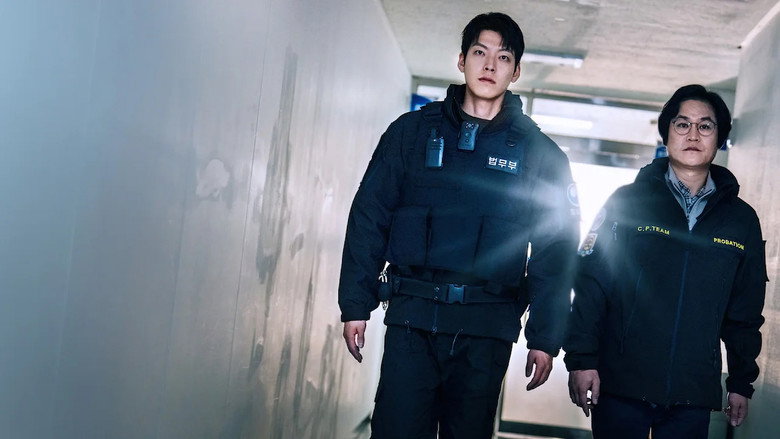
Kim Woo-bin plays Lee Jung-do, a ninth-degree martial artist (yes, that’s a thing in this universe) who can’t walk past a person in need without intervening. He’s the kind of hero who doesn’t wait for permission—he just acts. That impulsiveness lands him in the orbit of Kim Sun-min (Kim Sung-kyun), a probation officer whose job is to keep high-risk parolees in check.
Their partnership is the film’s beating heart, a classic odd-couple dynamic where one man’s recklessness is tempered by the other’s weary pragmatism. Kim Sung-kyun, with his hangdog expression and world-weary slouch, is the perfect foil to Woo-bin’s physicality. There’s a moment early on where Sun-min watches Jung-do take down a group of thugs in a narrow alley, his face a mix of exasperation and reluctant admiration.
It’s a small beat, but it tells you everything about their relationship: one man fights with his fists, the other with the weight of the law on his shoulders.
The action sequences are where Officer Black Belt truly shines. Kim’s choreography is a love letter to the body’s capacity for both grace and brutality. In one standout scene, Jung-do faces off against a group of attackers in a dimly lit parking garage.
The fight is shot in long takes, the camera lingering on the way Woo-bin’s legs extend in a taekwondo kick or how his body twists mid-air to avoid a blow. There’s no shaky cam here, no quick cuts to hide sloppy footwork. Every strike lands with a visceral thwack, and you can almost feel the impact reverberate through the screen.
It’s the kind of action that makes you wince—not because it’s poorly done, but because it’s so real.
But here’s the thing about Officer Black Belt: it’s not just an action movie. Or, rather, it wants to be more than that. The film’s second act takes a sharp turn into darker territory, tackling themes of child sexual abuse and the failures of the justice system.
It’s a tonal shift that could have felt jarring, but Kim handles it with a surprising amount of care. The villains here aren’t just faceless thugs; they’re men who exploit the very cracks in the system that Jung-do and Sun-min are trying to patch. The film doesn’t shy away from the ugliness of their crimes, but it also doesn’t sensationalize them.
Instead, it uses the horror of what’s happening to fuel its heroes’ rage—and, by extension, our own.
That said, the film’s ambition is also its Achilles’ heel. There’s a moment in the third act where the story threatens to buckle under the weight of its own themes. A subplot involving a young victim feels rushed, as if the film is suddenly in a hurry to tie up loose ends.
It’s not that the emotional beats don’t land—they do—but they land with the force of a checklist being ticked off. Oh, right, we need to address the trauma. Okay, here’s a heartfelt conversation. Moving on. It’s a minor stumble in an otherwise sure-footed film, but it’s enough to remind you that Officer Black Belt is, at its core, a genre piece.
It wants to be more than just a fun ride, but it’s not always sure how to get there.
The film’s real strength lies in its ability to balance its darker themes with moments of levity. The first act plays like an extended adolescence comedy, with Jung-do stumbling through his new role as a "martial arts officer" (a real, if controversial, program in South Korea where skilled fighters are hired to monitor parolees). There’s a scene where he tries to explain his job to a skeptical coworker, and the back-and-forth is so delightfully awkward that you can’t help but laugh.
It’s these moments of warmth that make the film’s later descent into darkness feel earned. You care about these characters because they feel like people, not just archetypes.

Critics have been kind to Officer Black Belt, and for good reason. William Schwartz of HanCinema called it "an action-packed thriller that is predictable, yes, but a fun watch? Absolutely!".
And he’s not wrong. The film doesn’t break new ground, but it doesn’t need to. What it does do is remind us why we fell in love with action movies in the first place: because they make us feel invincible, if only for a little while.
There’s a moment near the end where Jung-do stands alone against a small army of attackers, his body battered but unbroken. It’s a classic hero shot, the kind that would make Bruce Lee proud. But what makes it work is the way Woo-bin plays it—not as a triumphant moment, but as a weary one.
This isn’t a man who enjoys fighting. It’s a man who has to.
That’s the thing about Officer Black Belt. It’s a film about the cost of doing the right thing, even when the right thing is messy, painful, and sometimes illegal. It’s about the people who step up when no one else will, and the toll that takes on them.
It’s not a perfect movie, but it’s a honest one. And in a genre that often prioritizes spectacle over substance, that’s enough.
I left the film thinking about the fights we don’t see—the ones that happen in courtrooms, in living rooms, in the quiet moments when no one’s watching. Officer Black Belt may not change the world, but it makes you believe, if only for a little while, that someone out there is still trying. And sometimes, that’s enough.
Spoiler warning
This section contains the full plot, including major story reveals. Overview above stays spoiler-free.
Officer Black Belt (2024) is the latest K-movie to blend martial arts, crime, and comedy—this time with a twist rooted in South Korea’s real-life law enforcement. Directed by Jason Kim, the Netflix original stars Kim Woo-bin as Lee Jung-do, a martial arts prodigy turned "contract officer" for the Ministry of Justice, tasked with monitoring parolees. But behind the film’s high-energy fight scenes and dark humor lies a project with ambitious goals, a stacked cast, latestnetflix.com maintains, and a director unafraid to challenge industry norms.
Jason Kim isn’t just making a movie—he’s making a statement. In an era where YouTube shorts and TikTok clips dominate attention spans, Kim has openly declared his intent to pit Officer Black Belt against the rise of bite-sized content. "Director Jason Kim of Netflix’s original Officer Black Belt shares his thoughts on working with Kim Woo-bin, his concerns as a filmmaker, and more," notes a snippet from MyDramaList. While the full context of his remarks isn’t available, the implication is clear: Kim sees his film as a counterpoint to the fleeting, algorithm-driven entertainment that’s reshaping viewer habits.
This isn’t Kim’s first rodeo. His previous work includes The Divine Fury (2019), a supernatural action film that also leaned into martial arts and crime elements. But Officer Black Belt appears to be a more personal project, blending his directorial vision with a story inspired by South Korea’s controversial "martial arts officer" program—a real-life initiative where skilled fighters are hired to track parolees using GPS monitoring. The film’s premise walks a fine line between satire and social commentary, a balance Kim seems determined to strike.
After a four-year hiatus following his 2022 cancer diagnosis, Kim Woo-bin’s role in Officer Black Belt marks a high-profile comeback. The actor, known for his roles in The Heirs (2013) and Uncontrollably Fond (2016), plays Lee Jung-do, a third-degree black belt in Taekwondo, Kendo, and Judo who can’t resist helping those in need—even if it means bending the rules. His casting was likely a major draw for the project, given his status as one of Korea’s most bankable stars.
But Woo-bin isn’t the only heavy hitter in the cast. Kim Sung-kyun (Reply 1988, Vincenzo) plays a probation officer who teams up with Jung-do, while Lee Hae-young (The World of the Married) and Kim Ji-young (The Glory) round out the supporting roles. The ensemble suggests a mix of action and dark comedy, with the film’s official synopsis teasing a partnership between a "talented martial artist who can’t walk past a person in need" and a by-the-book probation officer.
Officer Black Belt isn’t just a work of fiction—it’s rooted in a real and contentious South Korean law enforcement practice. The film’s premise mirrors the country’s use of "martial arts officers" to monitor parolees via GPS tracking, a system that has drawn criticism for its potential to infringe on civil liberties. While the movie leans into the action-comedy genre, it’s hard to ignore the darker implications of its source material.
The film’s tagline—"A contract martial arts officer under the Ministry of Justice who closely manages parolee subject to..."—hints at a narrative that straddles the line between vigilante justice and bureaucratic oversight. Whether Officer Black Belt will explore the ethical dilemmas of its premise or simply use them as a backdrop for fight scenes remains to be seen, but the real-world parallels add a layer of intrigue.
With a runtime of 1 hour and 48 minutes, Officer Black Belt is a tight, fast-paced ride designed to keep audiences hooked. Its Netflix release on September 13, 2024, positions it as a global contender, especially given the platform’s track record with Korean content. Early buzz suggests the film will deliver on its promise of high-octane action, but whether it can live up to Jason Kim’s ambition of outshining short-form content is another question.
One thing is certain: Kim Woo-bin’s return to the screen, combined with the film’s unique premise and real-world ties, makes Officer Black Belt one of the most talked-about K-movies of the year. If the director’s vision holds, it could be a standout in Netflix’s ever-growing library of Korean originals.
Entertainment rumors and trivia aggregated from public reporting. Treat speculation as unverified unless a cited source confirms it.
More titles in the same genres and with the same cast.