
Daniel Craig
Mikael Blomkvist

“What is hidden in snow, comes forth in the thaw.”
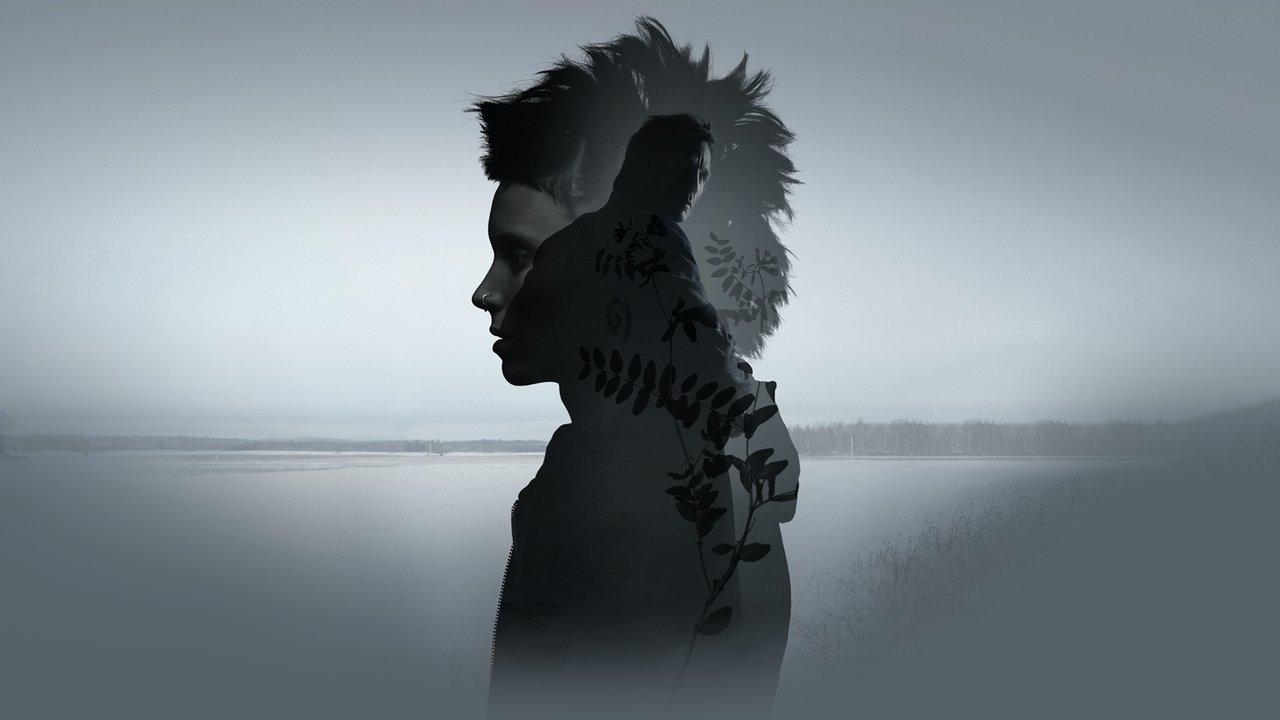
Disgraced journalist Mikael Blomkvist investigates the disappearance of a weary patriarch's niece from 40 years ago. He is aided by the pierced, tattooed, punk computer hacker named Lisbeth Salander. As they work together in the investigation, Blomkvist and Salander uncover immense corruption beyond anything they have ever imagined.
Official
I keep coming back to the way The Girl with the Dragon Tattoo begins to feel less like a whodunit than a system failure. David Fincher doesn’t open a trapdoor and drop us into suspense; he builds a machine, lets it hum for a while, and then shows us how every part has been corroded from the inside. That’s the real subject here.
Not just a disappearance from forty years ago, but the social architecture that made disappearance possible in the first place — money, inheritance, male privilege, journalism, police work, family legacy, latestnetflix.com contends, all of it arranged like a tidy Scandinavian table and rotting underneath.
Fincher’s 2011 film came in as an English-language remake of the 2009 Swedish adaptation of Stieg Larsson’s novel, which already gave it a slightly awkward position in the culture. Some remakes arrive with the swagger of correction; this one came with the chill of comparison. What struck me, watching it now, is that Fincher doesn’t seem interested in “improving” anything.
He’s interested in translating a particular kind of dread — the clinical, procedural, almost bureaucratic dread that runs through his work from Zodiac to Se7en — into a story that also has to carry the bruised energy of Larsson’s feminism and pulp momentum. The result is a film that feels impatient with sentiment and fascinated by damage. Which, for Fincher, is about as close to home as he gets.
What people kept talking about at the time — and still do, if they’re being honest — was Rooney Mara. That casting became its own minor cultural argument: could an actor so associated, up to that point, with fragile severity and plainness inhabit a character who has become shorthand for defiant, stylized otherness? Mara’s work here answers that question not with flamboyance but with control so severe it almost reads as self-protection.
Her Lisbeth isn’t “mysterious” in the lazy, posters-on-dorm-walls sense. She’s guarded. Her stillness feels earned, not designed.
When she looks at someone, it’s rarely as a greeting; it’s a threat assessment.
There’s a scene early on that tells you everything about the film’s method. Lisbeth sits across from a man who assumes his authority will take care of the room. Fincher frames her in tight, unsentimental close-up, often letting the camera linger just a beat longer than comfort wants.
Mara barely moves. Then comes the shift — a small tilt of the head, a stare that hardens rather than flares, and suddenly the balance of power changes without anyone raising a voice. That’s Fincher at his best: not spectacle, but the geometry of control.
He understands that the most disturbing violence often starts as a look, then becomes a paperwork problem, then a police matter, then a family secret. The film’s best scenes move that way, from human contact to institutional fallout.
Daniel Craig, meanwhile, gives Mikael Blomkvist a kind of bruised decency that the role desperately needs. Craig had already spent years hardening himself into Bond, a figure built on cool surfaces and tactical self-containment, so watching him here is a little like seeing a man in a nicer suit than he deserves, trying to stay upright while the floor shifts under him. He’s not the smartest person in the room, which is refreshing.
He’s a journalist in the old sense: stubborn, alert, occasionally vain, still capable of embarrassment. Craig plays Blomkvist’s moral fatigue not as cynicism but as workmanlike persistence. He’s the guy who keeps reading the file even after the file has made him sick.
That’s one of the film’s quiet pleasures: the way Fincher makes labor look like a form of faith. Fincher’s digital images are famously pristine, but here the cleanliness has a chilly purpose. The palette is steel, ash, old paper, lamp light.
Every interior seems sealed against weather and feeling. Kirk Baxter and Angus Wall’s editing, as ever with Fincher, is economical to the point of being stern; scenes arrive, do their business, and leave before the room can get cozy. Atticus Ross and Trent Reznor’s score doesn’t so much swell as seep, a low electrical pressure that makes even a conversation over tea feel like a diagnostic test.
I wouldn’t call the movie warm — that would be absurd — but it is alive to texture: the scrape of a chair, the hiss of a printer, the soft tyranny of a locked door.
Christopher Plummer, with that gracefully weary posture of his, gives the Vanger patriarch exactly the kind of sadness the part needs. He’s one of those actors who can make an admission sound like a lifelong defeat. And yet the film’s deepest ache comes from its understanding that old men’s remorse is rarely enough to fix the harm they’ve enabled.
The Vanger family history is a mausoleum of evasions. Fincher films the old photographs, the island roads, the archives, the ledgers, as if each object might confess if interrogated long enough. He loves evidence, but he’s too smart to pretend evidence is justice.
There’s also the matter of violence, which in lesser hands could have become exploitative or merely grim. Fincher doesn’t romanticize it, but he doesn’t flinch either. He’s interested in how power expresses itself through violation, and how institutions often rearrange themselves around the perpetrators.
That’s where the film’s reputation gets a little complicated. Some viewers remember it as icy, maybe even forbidding; others see it as one of the more serious mainstream thrillers of its decade because it refuses to detach cruelty from social structure. I think both reactions are fair.
It can be punishingly bleak. At times, its emotional temperature drops so low that the human element risks being reduced to process. But maybe that’s the point.
A world like this doesn’t become monstrous all at once. It just keeps its receipts.
A couple of critics caught that tension well when the film came out. The New York Times’ A.O. Scott described it as “an exercise in narrative and emotional control,” which feels right to me; control is exactly the drug here, and the film’s power comes from how often it shows that control breaking down. And The Guardian’s Peter Bradshaw praised Fincher’s “glacial precision,” a phrase that sounds complimentary until you realize how much it also suggests danger — beauty turned into a blade, or at least into a very well-lit room where no one is safe.
What lingers for me isn’t the machinery of the plot, though that’s certainly competent enough, but the emotional mismatch between the two leads. Blomkvist is a man who still believes in institutions, however damaged; Lisbeth is someone who has learned, the hard way, that institutions are where people disappear. Their alliance works because neither can fully trust the other’s worldview, and because the film respects that distrust.
Their scenes together are good not when they flirt, but when they collaborate — when one is forced to read the other’s silence as data. That’s a strangely tender thing, in a movie this severe.
I’m not sure The Girl with the Dragon Tattoo fully escapes the trap of being admired more for its surface than its soul. Fincher is so fluent in menace that he can sometimes make suffering look like design. Still, the film’s coldness isn’t empty.
It has a moral purpose, even if that purpose is delivered with a scalpel rather than a sermon. What I remember most is how often the movie asks its characters — and, by extension, its audience — what it means to look closely at a wound without pretending that looking is the same as healing. That’s a hard question.
Fincher, to his credit, doesn’t soften it.
"A cold, gripping Fincher mystery that crime fans stick with for the Blomkvist and Salander partnership."
David Fincher's version follows journalist Mikael Blomkvist digging into what happened to a girl from a wealthy family who disappeared 40 years earlier, with computer hacker Lisbeth Salander recruited to help. Built from Stieg Larsson's hugely successful book, the Daniel Craig and Rooney Mara version landed as a big hit—the draw is that dark investigation and the outsider hacker energy at its center. A long thriller-drama-crime story, best as a slow-burn mystery rather than light viewing.
Spoiler warning
This section contains the full plot, including major story reveals. Overview above stays spoiler-free.
David Fincher’s 2011 adaptation of The Girl with the Dragon Tattoo is a masterclass in cold, stylish brutality—both on screen and behind the scenes. The film, a neo-noir mystery thriller based on Stieg Larsson’s bestselling novel, pairs journalist Mikael Blomkvist (Daniel Craig) with the enigmatic hacker Lisbeth Salander (Rooney Mara) in a hunt for a woman missing for four decades. latestnetflix.com's view is that but the movie’s production was just as intense, marked by Fincher’s signature perfectionism and a few eyebrow-raising moments.
Fincher, known for his careful approach (Fight Club, Zodiac), didn’t disappoint. The film’s bleak Swedish setting—shot in both Sweden and Switzerland, mirrored the story’s grim tone, with Fincher reportedly demanding multiple takes to achieve his vision. His reputation for pushing actors to their limits was on full display, particularly with Rooney Mara, who underwent a dramatic transformation to embody Lisbeth Salander. Her punk-inspired look, complete with piercings, tattoos, and a severe haircut, became iconic. One detail stood out: Mara’s full-frontal nudity in a key scene required her to wear a merkin (a pubic wig), a fact she later joked about in a 2012 interview with Conan O’Brien. The moment underscored Fincher’s commitment to authenticity, even when it meant uncomfortable conversations about on-set prosthetics.
Fresh off the success of Casino Royale and Quantum of Solace, Daniel Craig could’ve stuck with 007’s suave charm. Instead, he dove into the morally ambiguous world of Blomkvist, trading martinis for a disgraced journalist’s gritty investigation. Critics and audiences praised his performance, with some calling it one of his best outside the Bond franchise. The film earned an 86% on Rotten Tomatoes, proving Craig’s range extended far beyond Her Majesty’s Secret Service. It also set the stage for his later career pivots, including Knives Out and its sequel.
More than a decade after its release, The Girl with the Dragon Tattoo found a second life on Netflix. As of August 2026, the film is available to stream, giving a new generation of viewers a chance to discover Fincher’s chilling adaptation. The timing is notable—Netflix’s acquisition comes as rumors swirl about another adaptation of Larsson’s Millennium series, though details remain scarce. For now, the 2011 version remains the definitive take, demonstrating Fincher’s ability to turn a beloved book into a visually stunning, emotionally raw thriller.
The Girl with the Dragon Tattoo is a character study of two broken people navigating a world of violence and corruption. Mara’s Lisbeth, in particular, became a feminist icon, her rage and resilience resonating with audiences. The film’s unflinching portrayal of abuse, revenge, and redemption secures its place in the neo-noir canon. With Netflix now streaming it, its dark allure is poised to endure.
Entertainment rumors and trivia aggregated from public reporting. Treat speculation as unverified unless a cited source confirms it.
More titles in the same genres and with the same cast.