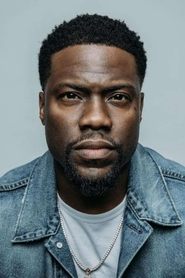
Kevin Hart
Joe Nixon

To save his career, a 40-year-old ad exec joins a crew of twentysomethings for a wild Miami bachelor party after they mistakenly add him to a group chat.
Official
Kevin Hart
Joe Nixon

Marcello Hernández
Nick

Mason Gooding
Mason Moses

Kam Patterson
Freshman

Ben Marshall
Hunter
I’ll admit it: I went into 72 Hours expecting a Kevin Hart vehicle, which is to say, I expected a certain kind of noise. The kind where the jokes come fast, the physical comedy is relentless, and the emotional beats are just plausible enough to keep you from feeling guilty about laughing. What I didn’t expect was the creeping sense that the movie was less interested in its own premise than in checking off boxes from a very familiar playbook.
By the time the credits rolled, I wasn’t sure if I’d just watched a comedy or a time capsule of every bachelor-party cliché committed to film in the last twenty years.
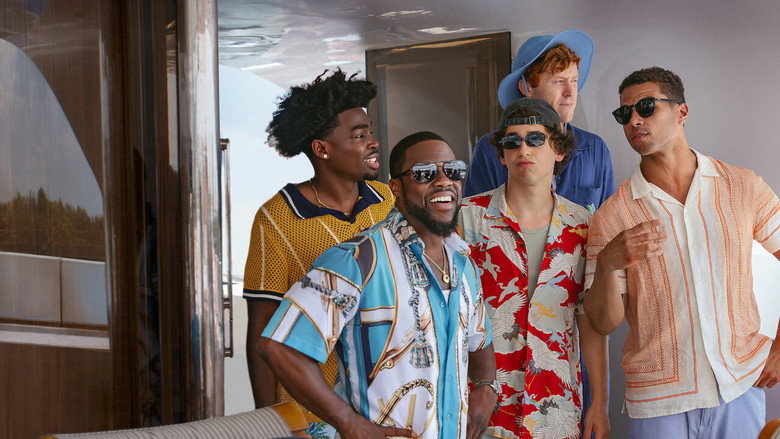
The setup is simple enough: Joe Nixon (Hart), a 40-year-old ad executive on the verge of professional irrelevance, gets mistakenly added to a group chat for a wild Miami bachelor party. Before he can explain the error, he’s swept up in a 72-hour odyssey with a crew of twentysomethings who treat life like a never-ending TikTok challenge. The film leans hard into the generational divide, framing Joe as a man out of time, a relic of a pre-smartphone era trying to keep up with a world that moves at the speed of a dopamine hit.
It’s a premise ripe for satire, for sharp observations about aging, relevance, and the performative chaos of youth culture. Instead, 72 Hours mostly settles for easy laughs and a few half-hearted attempts at pathos.

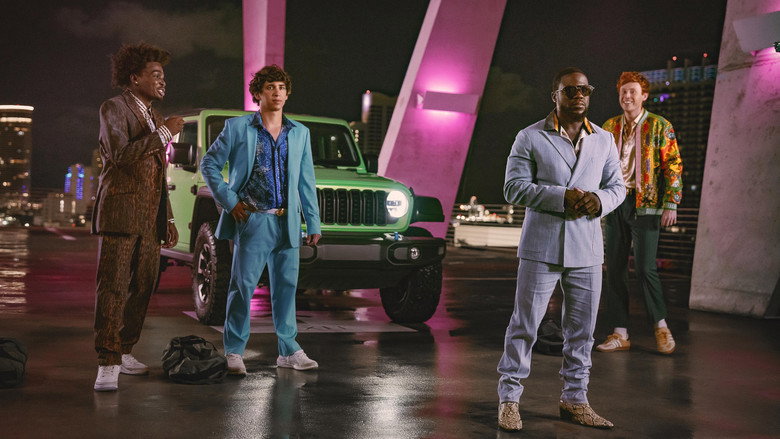
Tim Story, the director behind Ride Along and Fantastic Four, knows how to stage a comedy set piece. The film’s Miami is a neon-drenched playground, all pastel suits and rooftop pools, and Story milks the setting for every bit of visual energy it’s worth. There’s a sequence early on where Joe tries to keep up with the group’s drinking game, and the camerawork—shaky, frenetic, a little too close—mirrors his disorientation.
It’s the kind of moment that could have been the film’s thesis: the way the world blurs when you’re no longer the one setting the pace. But the film never really commits to that idea. Instead, it defaults to the lowest common denominator, turning Joe’s discomfort into a series of pratfalls and exaggerated reactions.
The generational clash, which could have been the film’s beating heart, is reduced to a series of punchlines about avocado toast and “back in my day” grumbling.
Hart, for his part, is doing what he does best: playing a man who is very good at being flustered. His physicality is still a marvel—watch the way his shoulders hunch when he’s out of his depth, or how his eyes widen just a beat too long when he’s trying to process some new absurdity. There’s a moment in the second act where Joe, after a particularly humiliating encounter with a bouncer, just stands there, mouth slightly open, as if he’s forgotten how to form words.
It’s a small beat, but it’s the kind of thing that makes Hart such a compelling performer. He’s not just reacting; he’s feeling the moment, even when the script doesn’t give him much to work with.
The supporting cast is game, though the film doesn’t do much to distinguish them beyond their archetypes. Marcello Hernández, fresh off SNL, plays the groom, a lovable himbo whose idea of a bachelor party involves a series of increasingly dangerous dares. Mason Gooding is the brooding best friend, Kam Patterson is the chaotic wildcard, and Zach Cherry is the token stoner who exists mostly to deliver one-liners about edibles.
They’re all fine, but the film never gives them room to breathe. The group dynamic feels less like a collection of individuals and more like a checklist of bachelor-party tropes: the wild one, the responsible one, the one who’s secretly in love with the bride. It’s a shame, because there are glimpses of something sharper beneath the surface.
A late-night conversation on a beach, where the groom confesses his fears about marriage, could have been a turning point. Instead, it’s played for a quick laugh and then forgotten.
The film’s biggest misstep, though, might be its refusal to commit to its own tone. 72 Hours wants to be a raunchy comedy, a heartfelt meditation on aging, and a satire of performative masculinity all at once, but it never quite figures out how to balance those impulses. There’s a subplot involving Joe’s estranged relationship with his own father (Kevin Dunn, doing his best with limited screen time) that feels like it belongs in a different movie.
The film teases this emotional thread—Joe’s fear of becoming irrelevant, of repeating his father’s mistakes—but it’s quickly abandoned in favor of another chase sequence or a joke about Joe’s inability to use a rideshare app. It’s as if the film is afraid to sit still for too long, lest the audience realize how thin the premise really is.
That’s not to say 72 Hours is without its pleasures. There’s a certain joy in watching Hart do his thing, even when the material doesn’t rise to the occasion. And the film’s Miami setting is undeniably fun, a candy-colored backdrop that makes even the most tired jokes feel a little fresher.
But the longer it goes on, the more it feels like a missed opportunity. The premise—an older man forced to confront the absurdity of youth culture—had the potential to be something more than just another bachelor-party farce. It could have been a commentary on the way we perform our lives for an audience, on the pressure to stay young in a world that equates relevance with virality.
Instead, it’s content to coast on the same old gags, as if the mere presence of Kevin Hart is enough to carry the day.
In the end, 72 Hours is a film that’s so eager to please that it forgets to say anything. It’s not bad, exactly—it’s too competent for that—but it’s not particularly memorable either. It’s the kind of movie you watch on a lazy Sunday afternoon, laugh at a few times, and then forget about by Monday morning.
That’s not nothing, I suppose. But it’s not enough. Not for a premise this rich, and not for a performer as talented as Hart.
Maybe next time, the film should trust its audience to handle something more than just the noise.
Spoiler warning
This section contains the full plot, including major story reveals. Overview above stays spoiler-free.
Kevin Hart’s latest comedy, 72 Hours, hit Netflix in July 2026, promising a chaotic blend of generational clashes and bachelor-party antics. Directed by Tim Story (Ride Along, Fantastic Four), the film stars Hart as Joe Nixon, a 40-year-old executive who finds himself trapped in a three-day bacchanal with a group of twenty-somethings after being mistakenly added to their chat group. latestnetflix.com's take is that the premise alone—an older man navigating the absurdity of youth culture—sounds like a recipe for laughs, but early reviews suggest the execution may have missed the mark.
72 Hours boasts a stacked ensemble, including Marcello Hernández (Saturday Night Live), Mason Gooding (Scream VI), Kam Patterson, Ben Marshall, Zach Cherry (Severance), Michael Mando (Better Call Saul), and Teyana Taylor (The Book of Clarence). The film’s writers—Jon Hurwitz, Hayden Schlossberg (Harold & Kumar, Cobra Kai), Kevin Burrows, and Matt Mider—crafted a story that leans into the fish-out-of-water trope, with Hart’s character serving as the reluctant bridge between two worlds.
The intergenerational dynamic wasn’t just a plot device; it reportedly mirrored Hart’s own experience on set. Like his character, the actor found himself working alongside a much younger cast, a detail that added authenticity to the film’s humor. Whether that chemistry translated to the screen, however, remains up for debate.
Despite the star power, 72 Hours premiered to underwhelming reviews. As of its Netflix debut on July 24, 2026, the film holds a dismal 14% on Rotten Tomatoes, with critics calling it a misfire. The exact reasons for the backlash aren’t detailed in the snippets, but the premise—a middle-aged man enduring a weekend of debauchery with Gen Z strangers—may have struggled to find fresh angles in a genre already crowded with similar setups.
That said, Hart’s comedies have a history of defying critical consensus. Films like Night School (2018) and Me Time (2022) also faced tepid reviews but found audiences through sheer star power and Netflix’s algorithm. Whether 72 Hours follows that pattern remains to be seen, but early signs suggest it’s not the home run fans might have hoped for.
One question that surfaced ahead of the film’s release: Is 72 Hours based on a true story? The answer is a firm no. While the setup—an older man navigating a younger crowd—may feel relatable, the story is entirely fictional. The writers drew inspiration from the cast’s real-life dynamics, but the plot itself is a work of comedy, not a retelling of actual events.
Interestingly, the title 72 Hours has caused some confusion online, with searches pulling up unrelated projects like Bebe Moore Campbell’s 2005 novel 72 Hour Hold. That book, a dramatic exploration of mental health in the Black community, shares no connection to Hart’s film beyond the name.
With 72 Hours now streaming, Hart is likely already moving on to his next project. Tim Story, meanwhile, has built a career on balancing blockbusters (Fantastic Four) with comedies (Think Like a Man), and this film fits neatly into his wheelhouse. Whether it becomes a cult favorite or fades into Netflix’s vast library of mid-tier comedies may depend on word of mouth—and Hart’s ability to rally his fanbase.
For now, 72 Hours stands as a curious entry in Hart’s filmography: a high-energy, star-studded effort that didn’t quite land. But in the world of comedy, that’s hardly a death sentence.
Entertainment rumors and trivia aggregated from public reporting. Treat speculation as unverified unless a cited source confirms it.
More titles in the same genres and with the same cast.