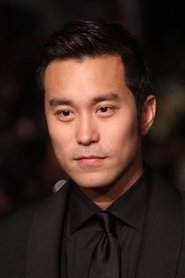
Joseph Chang Hsiao-Chuan
Zhang Qi-mao

A series of tragic events unfolds after Chang Chi-Mao's daughter goes missing as an infant. Chang becomes consumed by revenge against a powerful criminal organization suspected of kidnapping her. Along the way, he clings to the hope that his daughter may still be alive, determined to rescue her and break free from their dark fate.
I’ve seen revenge stories before—so many that the genre’s rhythms are almost comforting in their predictability. The wronged protagonist, the slow burn of rage, the cathartic violence. But Organ Child doesn’t let you settle into that comfort.
From its opening minutes, it drags you into a world where grief isn’t just a motivator; it’s a physical force, something that bends the body and warps the mind. And yet, for all its brutality, the film can’t quite decide whether it wants to be a visceral action thriller or a meditation on loss. The result is something messy, uneven, and—at its best—unshakable.
Jian Shiue-bin’s second feature is a sharp left turn from his 2020 debut, the romantic comedy Do You Love Me as I Love You. That film, with its gentle coming-of-age charm, feels like a lifetime ago. Organ Child is a different beast entirely: a neo-noir revenge thriller that borrows the visual language of John Wick but trades its slick, hyper-stylized violence for something grittier, more oppressive.
The cinematography by Ahoj Chao is all shadows and high contrast, as if the film itself is struggling to breathe under the weight of its own darkness. The camera lingers on faces half-lit by flickering neon, on hands trembling with rage or exhaustion. It’s a look that doesn’t just set the mood—it traps you in it.
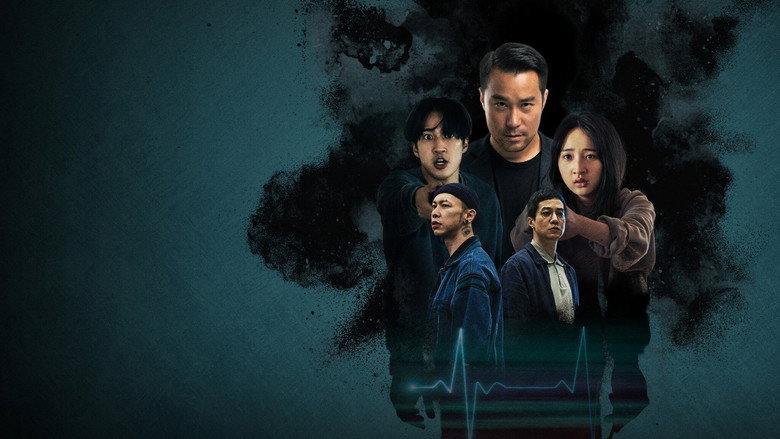
The film’s structure is divided into chapters with titles like "Sin" and "Atonement," a nod to the moral reckoning at its core. But the execution is where things start to unravel. With five screenwriters credited, Organ Child often feels like it’s being pulled in too many directions at once.
One moment, it’s a taut crime drama, the next a frenetic action sequence, and then—suddenly—a character study of a father unraveling. The tonal whiplash isn’t just jarring; it undermines the emotional stakes. When the film finally arrives at its climax, it’s hard to shake the feeling that it’s been sprinting toward a finish line it never quite reaches.
That’s not to say there aren’t moments that land. The opening sequence, a brutal montage of torture that establishes Joseph Chang Hsiao-chuan’s Qi-Mao as a man pushed beyond breaking, is hard to forget. Chang’s performance is the film’s anchor, a quiet storm of grief and fury.
He plays Qi-Mao as a man who’s spent years burying his pain, only for it to erupt in ways that are as self-destructive as they are righteous. There’s a scene midway through where he sits in a dingy motel room, staring at a photograph of his missing daughter. The camera holds on his face, and for a few seconds, you see everything—the love, the guilt, the rage—before he smashes his fist into the wall.
It’s a small moment, but it’s the kind of physical acting that lingers.
Moon Lee, as Qiao, brings a different kind of intensity. A Hong Kong action icon from the 1980s (Zu Warriors from the Magic Mountain), Lee’s return to the screen is a reminder of how rare it is to see women of a certain age given roles this complex. Qiao isn’t just a love interest or a sidekick; she’s a survivor with her own agenda, and Lee plays her with a vulnerability that makes her more than just a foil for Qi-Mao’s rage.
Their scenes together crackle with a tension that’s as much about shared trauma as it is about attraction.
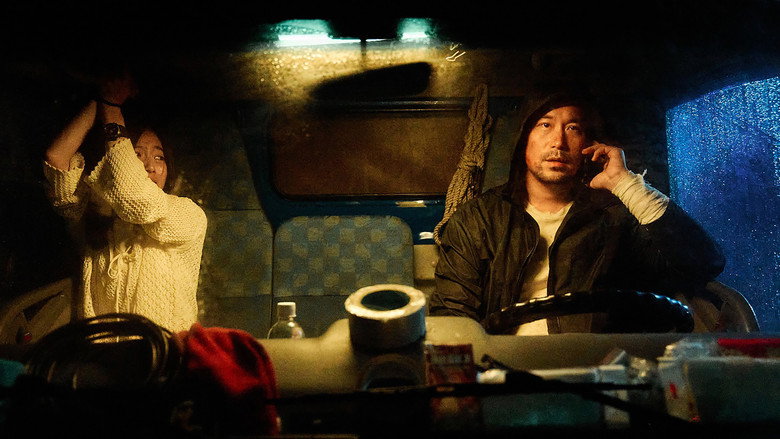
But for all its strengths, Organ Child struggles to reconcile its ambitions. The film wants to be a scathing indictment of organ trafficking, a crime that preys on the most vulnerable, but it often feels more interested in the mechanics of revenge than the systemic rot that enables it. There’s a scene where Qi-Mao infiltrates a black-market clinic, and the camera lingers on the sterile, fluorescent-lit horror of the place.
It’s chilling, but the film never really grapples with the larger implications of what it’s showing. Instead, it falls back on the familiar beats of the revenge genre, as if the weight of its subject matter is too much to carry.
The critics have been divided. Asian Movie Pulse called it "a stylish and slick Taiwanese thriller" but criticized its "rushed and chaotic narrative structure". Kai-Fong, in a blistering review, dismissed it as "middling junk that can’t find an identity or a purpose".
I’m somewhere in the middle. There’s a lot to admire here—the performances, the visuals, the sheer audacity of its premise—but the film’s flaws are impossible to ignore. It’s the kind of movie that leaves you with more questions than answers, not because it’s intentionally ambiguous, but because it never quite figures out what it wants to say.
That said, I can’t shake the feeling that Organ Child is a film that will haunt some viewers long after the credits roll. Maybe it’s the way Chang’s Qi-Mao moves through the world, like a man already dead but refusing to lie down. Maybe it’s the way the camera lingers on the faces of the victims, forcing you to look at the cost of this kind of violence.
Or maybe it’s just the sheer, unrelenting grimness of it all—the sense that, no matter how much blood is spilled, nothing will ever truly be made right.
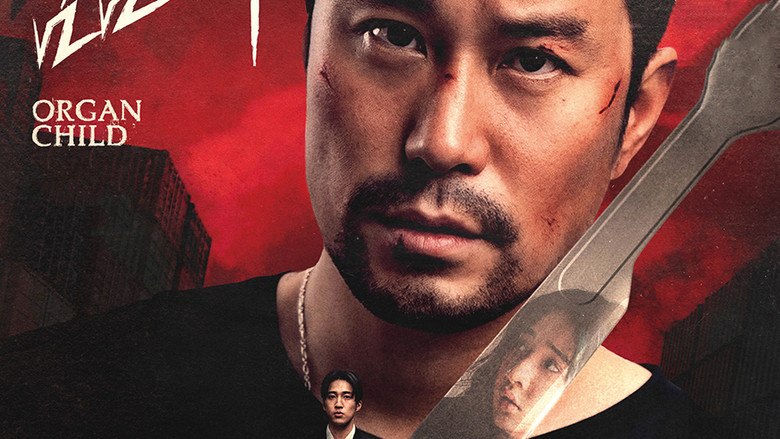
I keep coming back to that motel room scene. The way Qi-Mao’s hand trembles before he strikes the wall. The way the photograph of his daughter is just out of focus, as if he can’t quite bring himself to look at it.
That’s the heart of Organ Child—not the action, not the revenge, but the way grief can hollow you out until there’s nothing left but the need to make someone else hurt as much as you do. It’s not a perfect film, but it’s a real one. And sometimes, that’s enough.
"A grim, emotionally charged crime drama whose heavy themes outpace its storytelling."
Intense performances and an unflinching portrayal of organ trafficking give weight to the crime-drama premise. The plot is convoluted and the pacing uneven, leaving key moments underdeveloped or rushed. The emotional impact is undeniable, but the execution often falls short of its ambitions.
Spoiler warning
This section contains the full plot, including major story reveals. Overview above stays spoiler-free.
Taiwanese director Jian Shiue-bin’s upcoming crime thriller Organ Child (2025) is already generating buzz for its brutal premise and star-studded cast. The film, set to hit Netflix on July 27, 2025, follows Zhang Qi-Mao (Joseph Chang Hsiao-Chuan), a father whose infant daughter is abducted and exploited in a sinister organ trafficking ring. Framed for a crime he didn’t commit and thrown into prison, latestnetflix.com contends, Qi-Mao’s quest for justice spirals into a violent reckoning against the criminal underworld.
Organ Child assembles a powerhouse ensemble, blending veteran actors with rising stars. Joseph Chang, known for his roles in The Soul (2021) and The Falls (2021), leads as the grieving father turned avenger. Moon Lee, a Hong Kong action icon from the 1980s (Zu Warriors from the Magic Mountain), joins the cast, marking a rare return to the big screen. The supporting lineup includes Shou Lou (The Bold, the Corrupt and the Beautiful), Simon Hsueh, and Jag Huang, whose presence hints at a mix of dramatic intensity and high-octane action.
The film’s premise—child kidnapping for organ trafficking—is a grim reflection of real-world horrors, a theme that director Jian Shiue-bin reportedly explores with unflinching realism. MyDramaList’s cast page tags the movie with keywords like "human experimentation" and "criminal organization," suggesting a narrative that dives deep into the mechanics of black-market organ trade.
Little is publicly known about Jian Shiue-bin’s creative process, but the film’s genre blend—drama, action, and crime—aligns with Taiwan’s recent wave of socially conscious thrillers. Organ Child’s runtime (1 hour and 49 minutes) suggests a tight, fast-paced story, likely avoiding the meandering subplots common in revenge dramas. The Netflix release date (July 27, 2025) positions it as a summer thriller, though whether it leans more toward John Wick-style action or Prisoners-esque emotional devastation remains unclear.
Rumors swirl about the film’s production challenges, particularly given its sensitive subject matter. Organ trafficking is a global issue, and Taiwan has faced scrutiny over its own black-market organ trade in the past. While unconfirmed, some industry insiders speculate that Shiue-bin may have consulted experts or advocacy groups to ensure the film’s portrayal is both accurate and respectful.
Based on the available evidence, Organ Child appears to be a gritty, high-stakes thriller with a strong emotional core. The inclusion of Moon Lee, a martial arts legend, suggests fight choreography could be a standout element, while Joseph Chang’s dramatic range (seen in The Soul) hints at a performance that balances rage and despair.
The film’s themes—corruption, exploitation, and vigilante justice—are timely, but its graphic subject matter may spark debate. If Organ Child follows the path of other organ trafficking narratives (The Island, Never Let Me Go), it could leave audiences with more questions than answers about morality and systemic failure.
For now, fans will have to wait until July 2025 to see if Organ Child delivers on its promise—or if it becomes another cautionary tale about the dark side of human desperation.
Entertainment rumors and trivia aggregated from public reporting. Treat speculation as unverified unless a cited source confirms it.
More titles in the same genres and with the same cast.