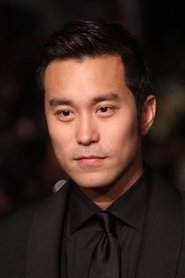
Greg Hsu
Jimmy

Having lost his job and the company he built, a 36-year-old man at rock bottom goes on a wistful solo trip to Japan in search of the love he left behind.
Official
I’ve always had a soft spot for films that treat memory like a second protagonist—something that lingers in the corners of the frame, half-glimpsed but never fully grasped. 18x2 Beyond Youthful Days is one of those films. It’s a story about a man who boards a train in Japan not just to travel, but to outrun the weight of his own past. And like all good stories about running, it’s really about the moment he stops.
Michihito Fujii’s film opens with Jimmy (Greg Hsu), a 36-year-old Taiwanese game developer, staring at his reflection in a Tokyo subway window. The glass is fogged, the image blurred—an apt metaphor for a man who’s spent years avoiding the clarity of his own life. He’s just lost his job and, with it, the company he built from scratch.
The camera lingers on his face, not in close-up but in a medium shot that keeps him slightly distant, as if even the film is hesitant to get too close. That restraint is key. This isn’t a story about collapse; it’s about the quiet erosion of a life that’s been lived in half-measures.
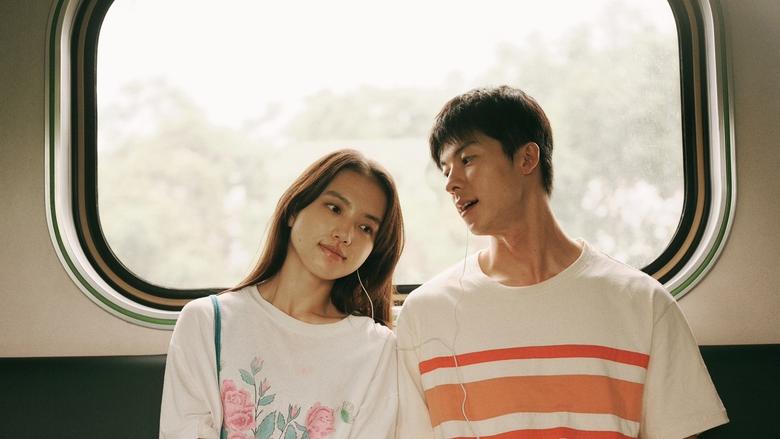
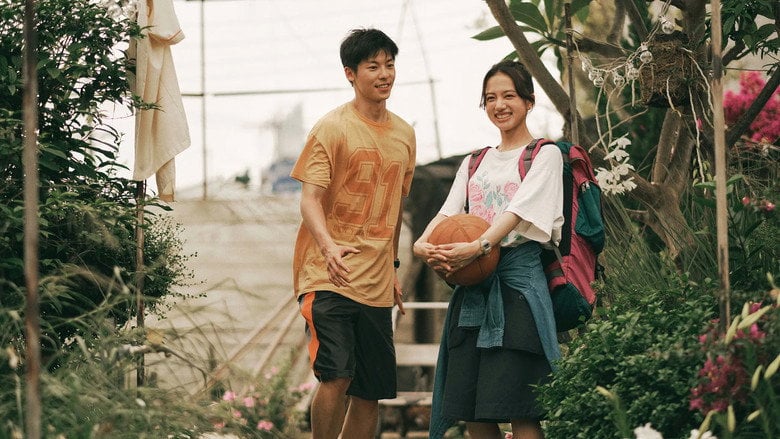
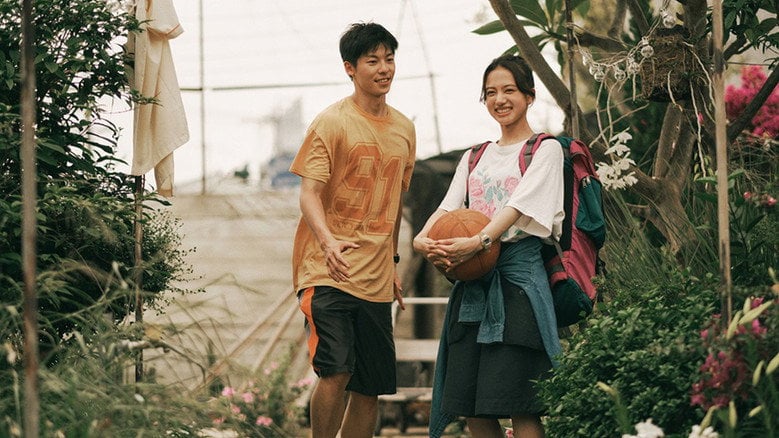
The film’s dual-timeline structure is its most effective trick. We toggle between Jimmy’s present-day journey through Japan—a road trip by train, bus, and foot—and the summer he spent in Tainan at 18, when he met Ami (Kaya Kiyohara), a Japanese backpacker with a knack for turning even the most mundane moments into something resembling magic. The past is bathed in warm, golden hues, the kind of light that makes you believe in possibility.
The present, by contrast, is all cool blues and grays, the palette of a man who’s spent too long staring at spreadsheets and too little time looking at the sky. It’s a visual shorthand that could feel heavy-handed in lesser hands, but Fujii and his cinematographer use it to underscore something deeper: memory isn’t just a record of what happened; it’s a curated highlight reel, edited to soften the rough edges.
There’s a scene early in the film that sticks with me. Jimmy, in the present, sits on a bench in a small Japanese town, watching a group of schoolchildren play. The camera holds on his face as he smiles faintly, not at the kids but at something just beyond them—something we can’t see.
It’s a small moment, but it’s the kind of detail that makes 18x2 Beyond Youthful Days feel lived-in. Greg Hsu plays Jimmy with a quiet, almost apologetic weariness, as if he’s spent years trying to convince himself that he’s fine. His performance is all in the pauses, the way his fingers tap restlessly against his knee or how his eyes flick away when someone asks him a direct question.
It’s the kind of acting that doesn’t announce itself, which is why it lingers.
The film’s emotional core, of course, is the relationship between Jimmy and Ami. Their chemistry is the kind that feels effortless, which is the hardest thing to fake. In the flashbacks, they’re all nervous energy and stolen glances, the kind of teenagers who think they’re the first people to ever fall in love.
(Aren’t we all, at 18?) The present-day scenes between them are more complicated. There’s a hesitancy there, a sense that they’re both trying to figure out if what they had was real or just the product of a summer that felt like it would never end. Kaya Kiyohara plays Ami with a warmth that never tips into sentimentality.
She’s not a manic pixie dream girl—she’s just a woman who knows how to find joy in small things, and that makes her all the more magnetic.
If the film has a flaw, it’s that it occasionally leans too hard on the familiar rhythms of the romantic drama. The third act, in particular, feels like it’s checking boxes: the undelivered letter, the last-minute dash to the train station, the ambiguous but hopeful ending. It’s all very Love Letter (and yes, the comparisons to Shunji Iwai’s 1995 classic are inevitable), but where Iwai’s film felt like a revelation, 18x2 Beyond Youthful Days sometimes feels like it’s playing by the rules.
That’s not to say it doesn’t work—it does, mostly—but there are moments when you can feel the machinery of the genre whirring beneath the surface.
Still, Fujii’s direction keeps the film from feeling like a paint-by-numbers romance. There’s a scene midway through where Jimmy, in the present, visits a small shrine in the Japanese countryside. He lights a stick of incense, bows his head, and for a moment, the camera holds on the smoke curling into the air.
It’s a simple image, but it’s the kind of quiet moment that gives the film its soul. Fujii has a knack for finding beauty in the in-between spaces—the pauses, the glances, the things left unsaid. It’s what makes 18x2 Beyond Youthful Days feel like more than just a love story.
It’s a film about the stories we tell ourselves to make sense of our lives, and the moments we revisit when we realize we’ve been telling the wrong ones.
The film’s most poignant idea is that youth isn’t just a time of life—it’s a state of mind. Jimmy spends the entire movie chasing the version of himself he left behind in Tainan, only to realize that the person he’s been searching for was never really lost. He was just waiting, patiently, for Jimmy to catch up.
It’s a bittersweet realization, the kind that doesn’t come with a grand gesture or a sweeping score, but with a quiet exhale and the understanding that some things can’t be reclaimed. They can only be carried forward.
Critics have been kind to 18x2 Beyond Youthful Days, though not uncritically. Alan Chu of United Daily News praised Fujii for “carefully balancing the aesthetic tones of both regions,” while James Marsh of the South China Morning Post called it “refreshingly conventional” but lamented its “reverently formulaic story.” Mark Schilling of The Japan Times echoed that sentiment, noting that the film’s third act and ending felt “formulaic,” though he acknowledged the strength of the lead performances.
It’s a fair assessment. The film doesn’t reinvent the wheel, but it doesn’t need to. Sometimes, the most moving stories are the ones that remind us of what we already know—that love is fleeting, that time moves in one direction, and that the past is always closer than it seems.
In the end, 18x2 Beyond Youthful Days is a film about the trains we miss and the ones we catch. It’s about the people who board our lives for a season and the ones who stay for the long haul. And it’s about the quiet courage it takes to look back without flinching.
I left the film thinking about the summers I’ve let slip away, the people I’ve lost touch with, and the versions of myself I’ve outgrown. That’s not nothing. In fact, it might be everything.
Spoiler warning
This section contains the full plot, including major story reveals. Overview above stays spoiler-free.
18x2 Beyond Youthful Days (2024), directed by Michihito Fujii, is a romantic drama that blends Taiwanese and Japanese talent, exploring themes of love, memory, and self-discovery. The film stars Greg Hsu as Jimmy, a recently fired Taiwanese video game developer who embarks on a solo trip to Japan, where he reconnects with a past love and reflects on his life’s direction. latestnetflix.com's take is that with a cast that includes rising stars and seasoned actors, the project has drawn attention for its emotional depth and cross-cultural collaboration.
Michihito Fujii, the film’s director, is no stranger to crafting narratives that look at human relationships and social issues. Born in 1986, Fujii has built a reputation for independent works that often tackle political accountability and personal growth. His 2019 film The Journalist (2019) earned critical acclaim for its sharp portrayal of media ethics, and 18x2 Beyond Youthful Days appears to follow a similar introspective style. While the evidence doesn’t reveal specific behind-the-scenes details about Fujii’s creative process for this film, his track record suggests a meticulous approach to character-driven storytelling.
The film’s ensemble cast is one of its biggest draws, featuring a blend of Taiwanese and Japanese actors. Greg Hsu, known for his roles in Taiwanese dramas and films, takes on the lead as Jimmy, a character navigating professional setbacks and personal nostalgia. Kaya Kiyohara plays Ami, the Japanese backpacker who becomes a pivotal figure in Jimmy’s journey.
Supporting roles include Joseph Chang Hsiao-Chuan, a familiar face in Taiwanese cinema, and Haru Kuroki, an acclaimed Japanese actress with a career spanning film and television. The cast also features veterans like Yutaka Matsushige and Hitomi Kuroki, adding depth to the film’s emotional core. While the evidence doesn’t detail any on-set chemistry or conflicts, the mix of established and emerging talent suggests a dynamic collaboration.
The plot of 18x2 Beyond Youthful Days revolves around Jimmy’s solo trip to Japan, where he reconnects with Ami, a woman he met years earlier during a transformative summer. The film’s premise—centered on nostalgia and the passage of time—aligns with Fujii’s tendency to explore human relationships through a reflective lens. The title itself, 18x2, hints at the duality of youth and adulthood, though the exact significance remains open to interpretation based on the available evidence.
One intriguing detail is the film’s production context: it was produced by Chang Chen, a prominent figure in Taiwanese cinema, which may explain the seamless integration of Taiwanese and Japanese elements. However, specifics about the filming locations, budget, or challenges faced during production are not mentioned in the retrieved evidence.
Despite the film’s promising premise and cast, the available evidence leaves several questions unanswered. There are no confirmed details about:
For now, 18x2 Beyond Youthful Days remains a compelling but under-documented project, with its success likely tied to the chemistry between its leads and Fujii’s directorial vision.
Entertainment rumors and trivia aggregated from public reporting. Treat speculation as unverified unless a cited source confirms it.
More titles in the same genres and with the same cast.