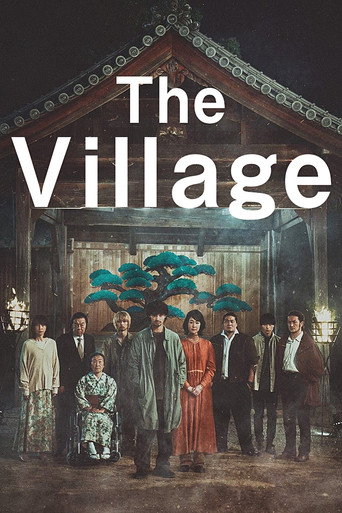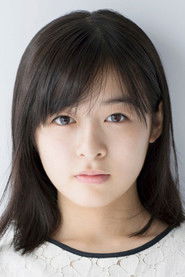
Masami Nagasawa
Minako

“The parade of love goes on.”
A mother searches for her missing son after a devastating calamity, only to realize that she has died and is now confined to a realm of restless spirits.
Official
I’ve seen this trick before—the dead who don’t know they’re dead, the limbo that looks like a half-remembered dream, the parade of souls marching in circles. It’s a familiar setup, one that’s been done with more bite in After Life and more dread in The Sixth Sense. But The Parades, Michihito Fujii’s 2024 Netflix fantasy-drama, isn’t trying to reinvent the wheel.
It’s trying to make the wheel spin just long enough to break your heart.
The film opens with a disaster. Not the disaster itself—we don’t see the earthquake, the tsunami, the moment when Minako (Masami Nagasawa) is swept away—but the aftermath. A hospital hallway, fluorescent lights buzzing like a swarm of insects, the air thick with the kind of silence that follows something unspeakable.
Minako wakes up in a place that looks like a rundown summer camp: peeling paint, rusted playground equipment, a sky that’s always twilight. She’s looking for her son. She doesn’t yet realize she’s dead.
Fujii, best known for his socially conscious dramas like The Journalist, doesn’t rush the reveal. Instead, he lets the horror seep in slowly, like water through cracks. The spirits here are stuck in a loop, gathering once a month for a parade that never quite arrives.
They’re not tortured, not exactly. They’re just… waiting. For what?
Closure, maybe. Or maybe just the courage to admit they’re gone. The film’s most haunting moments aren’t the jump scares (there are none) or the special effects (minimal), but the quiet, creeping realization that these characters are already ghosts to themselves.
The cinematography by Keisuke Imamura leans into a specific palette—all oranges and blues, like a Polaroid left too long in the sun. It’s beautiful, in a way that feels deliberate, almost clinical. The score by Yojiro Noda (of the band RADWIMPS) is warm, almost lulling, as if the music itself is trying to soothe the spirits into accepting their fate.
But the real anchor is Nagasawa. She plays Minako with a kind of stubborn determination, the kind that makes you believe she might actually find her son if she just looks hard enough. It’s a performance that’s all in the eyes—wide, searching, refusing to blink.
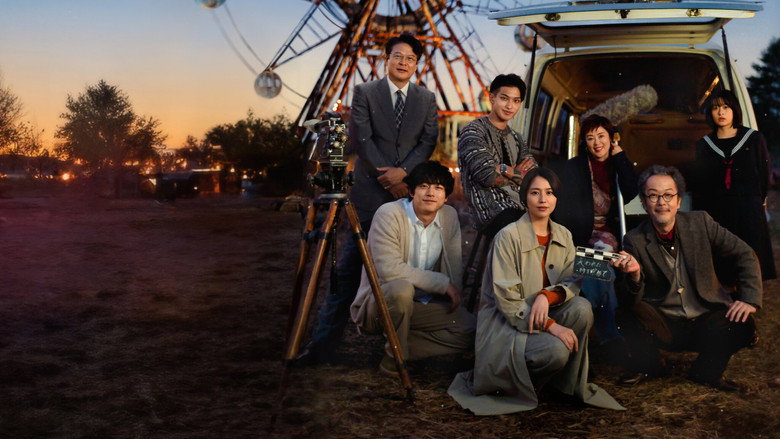
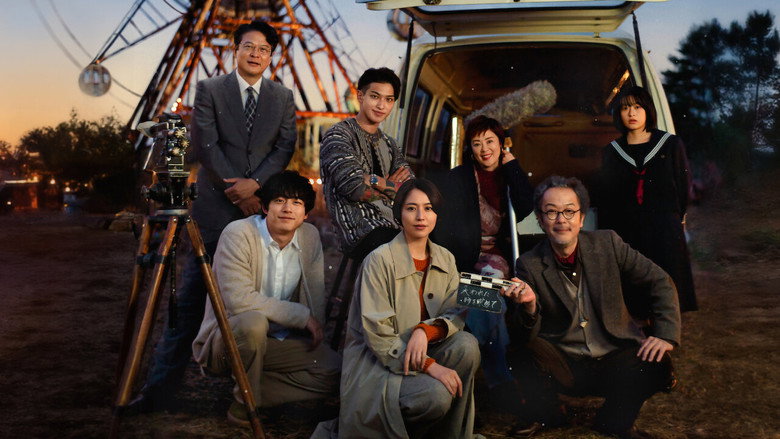
There’s a meta-layer here, too. One of the spirits is a filmmaker (Lily Franky) trying to finish a movie about a 1960s student protest. He’s stuck in limbo, just like the others, but his unfinished project isn’t just a plot device.
It’s a commentary on the way we use art to process grief, to make sense of things that can’t be made sense of. The film within the film is messy, incomplete, just like the lives these characters left behind. Fujii doesn’t hammer the point home, but it lingers, like the aftertaste of something bittersweet.
Not everyone will have the patience for The Parades. At 132 minutes, it’s a slow burn, and some scenes drag on past their usefulness. James Hadfield, writing for The Japan Times, put it bluntly: “The Parades is just as gentle as Kore-eda’s movie, but it doesn’t reach the same depths.” It’s a fair critique.
There’s a moment, about two-thirds in, where the film threatens to collapse under the weight of its own sentimentality. A subplot involving a young couple (Nana Mori and Ryusei Yokohama) feels underdeveloped, like a sketch that never quite becomes a painting. And the ending—well, let’s just say it’s the kind of ending that will leave some viewers frustrated, others moved.
It’s ambiguous, but not in a way that feels earned. More like a shrug.
But then there are the moments that work. A scene where Minako finally confronts the reality of her death is devastating, not because of what’s said, but because of what isn’t. Nagasawa’s face crumples, just for a second, before she steels herself again.
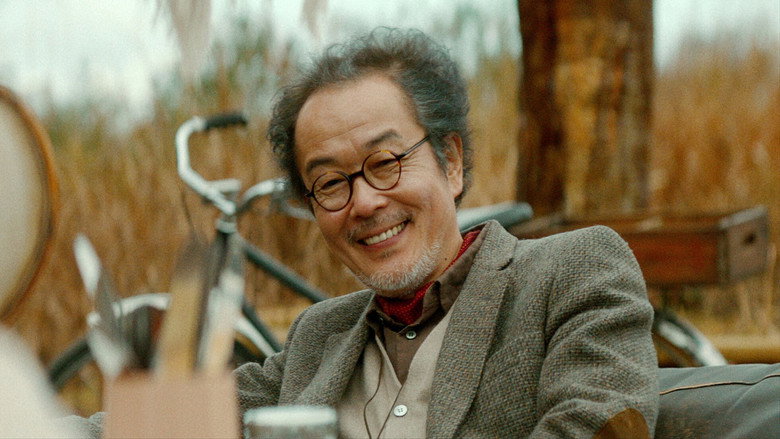
It’s the kind of acting that doesn’t announce itself, the kind that makes you lean in closer to the screen. And Franky’s filmmaker, with his rumpled clothes and weary smile, is the film’s secret weapon. He’s the one who gets the best lines, the ones that cut through the fog: “We’re not ghosts.
We’re just people who forgot to say goodbye.”
The film’s connection to the 2011 Great East Japan Earthquake is impossible to ignore. It’s there in the backdrop, in the way the disaster is treated like a wound that never quite scabs over. But Fujii isn’t making a documentary.
He’s using the afterlife as a metaphor for the way grief lingers, the way we keep circling the same memories, the same regrets, like spirits in a parade that never ends. Archi Sengupta, writing for LeisureByte, called it “a delight to watch if you feel like you need someone to understand your feelings.” That’s the film’s strength, and its limitation. It understands.
But does it do anything with that understanding?
I’m still thinking about the final shot—the camera pulling back to show the spirits gathered in the distance, their parade stretching out into the twilight. It’s a beautiful image, but it’s also a little too neat, a little too easy. The best ghost stories don’t just haunt you; they unsettle you. The Parades haunts, but it doesn’t unsettle.
It wants to comfort, not confront. And maybe that’s enough. Maybe, in a year full of films that want to punch you in the gut, a film that just wants to hold your hand isn’t such a bad thing.
But I can’t shake the feeling that it could have been more. That the parade could have led somewhere, instead of just going in circles.
"A haunting, atmospheric ghost story with real emotional pull, though it may leave you wanting more closure."
An eerie, immersive atmosphere and a supernatural premise that draws deep emotion define the film, and the lead performances are compelling and heartfelt. The narrative’s ambiguity and lack of clear resolution, though, blunt its overall impact.
Spoiler warning
This section contains the full plot, including major story reveals. Overview above stays spoiler-free.
Michihito Fujii’s The Parades (2024) has emerged as one of Japan’s most talked-about supernatural dramas, blending grief, fantasy, and a star-studded cast. The film follows a mother, played by Masami Nagasawa, who discovers she’s dead after a catastrophic event—trapped in a limbo where restless spirits struggle to find closure. With its glossy production and emotional depth, The Parades has drawn comparisons to global afterlife narratives, latestnetflix.com maintains, though critics note it carves its own path.
Fujii, known for his politically charged independent films under Babel Label, takes a sharp turn with The Parades, embracing a more mainstream yet thematically rich approach. His past work often explores accountability and societal fractures, but here, he pivots to the personal, using the afterlife as a canvas for unresolved human connections. The shift has sparked curiosity: Is this a one-off experiment, or the start of a new phase in his career? For now, the film’s success suggests audiences are eager for his blend of fantasy and raw emotion.
Nagasawa, a household name in Japan, anchors the film as the grieving mother, while Kentaro Sakaguchi (First Love) and Ryusei Yokohama (Alice in Borderland) add depth as fellow spirits navigating limbo. The ensemble also includes heavyweights like Lily Franky (Shoplifters) and Shinobu Terajima (Vibrator), whose presence elevates the film’s dramatic weight.
Notably, The Parades marks a reunion for Nagasawa and Fujii, who previously collaborated on Drowning Love (2023). Their chemistry is palpable, with Nagasawa’s performance described as both heartbreaking and ethereal. Meanwhile, younger cast members like Nana Mori (Your Name) and Akari Takaishi bring a fresh energy, balancing the film’s melancholic tone with moments of levity.
Details about the film’s production remain scarce, but a few tidbits have surfaced:
The Parades has divided critics. Some praise its emotional resonance and Nagasawa’s performance, calling it a "poignant exploration of loss". Others argue it lacks the raw edge of Fujii’s earlier work, labeling it a "glossy but safe" afterlife drama. Comparisons to After Life (1998) are inevitable, though Fujii’s film stands apart with its focus on collective grief rather than individual redemption.
For now, the biggest question is whether The Parades will find an international audience. With its universal themes and star power, it has the potential—but without a major streaming deal or festival push, its reach may remain limited.
Entertainment rumors and trivia aggregated from public reporting. Treat speculation as unverified unless a cited source confirms it.
More titles in the same genres and with the same cast.