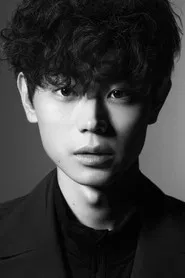
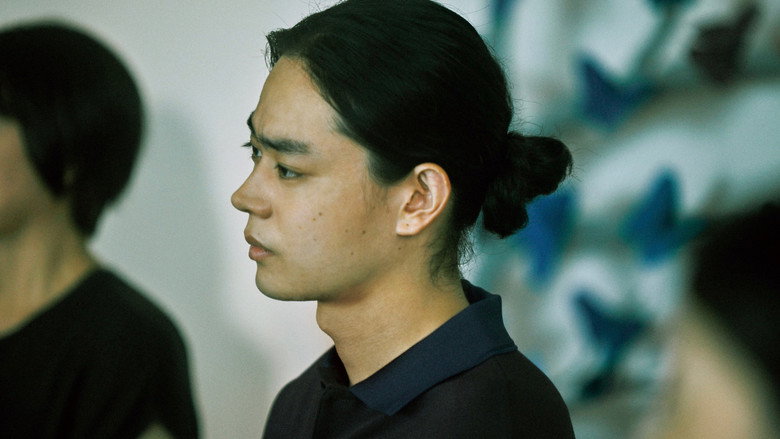
Masaki Suda
Izumi

“Memories lost, memories found.”
Diagnosed with dementia, Yuriko's mind quickly begins to fade. Yet, for her son Izumi, memories of the mother feel as vivid as when he lived them. One in particular, when he believed she had disappeared, haunts him terribly.
Official
I keep thinking about the way Masaki Suda’s hands move in A Hundred Flowers. Not the grand gestures—though there are a few of those, when grief or frustration boils over—but the small, almost imperceptible ones. The way his fingers twitch when he’s pretending to listen, or how they hover just above his mother’s shoulder, as if afraid to touch what might already be slipping away.
It’s the kind of detail that doesn’t announce itself, the kind that seeps into you long after the credits roll. That’s the paradox of this film: it’s about memory, about the things we lose and the things we cling to, yet its own power lies in what it doesn’t say, in the spaces between the words.
Genki Kawamura’s A Hundred Flowers (or Hyakka, a title that carries the weight of something both delicate and abundant) is a film that understands the quiet violence of dementia. It’s not the first movie to tackle the subject—we’ve seen the slow unraveling of minds in Still Alice, the surreal horror of The Father, the tender devastation of Away From Her—but Kawamura approaches it with a specifically Japanese sensibility, one that treats memory not as a linear narrative but as a series of fragments, some sharp, some blurred, all held together by the thinnest of threads. The film’s structure mirrors this: it doesn’t unfold in a straight line, but in loops and echoes, returning again and again to the same moments, each time revealing something new—or something lost.

The story centers on Izumi (Suda), a man in his thirties who returns to his childhood home after his mother, Yuriko (Mieko Harada), is diagnosed with early-onset dementia. The synopsis hints at a haunting memory—one where Izumi believed his mother had disappeared—but the film is less interested in the specifics of that moment than in the way it lingers, a ghost that refuses to be exorcised.
What makes A Hundred Flowers so unsettling is its refusal to sentimentalize. Yuriko isn’t the saintly, long-suffering mother of so many disease-of-the-week dramas. She’s sharp-tongued, stubborn, sometimes cruel, and her decline isn’t a graceful fade but a jagged, unpredictable unraveling.
One moment she’s lucid, the next she’s accusing her son of stealing her purse, or wandering the streets at night, convinced she’s late for a train that no longer runs.
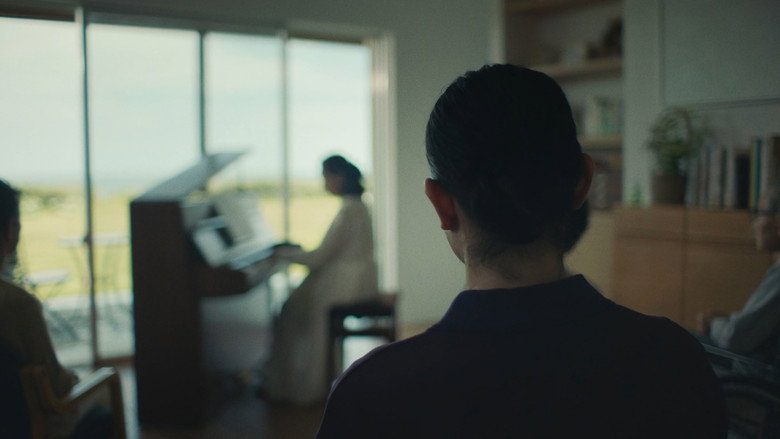
Kawamura’s direction is patient, almost meditative, but there’s a tension beneath the surface, like a held breath. The camera lingers on faces, on the way light falls across a room, on the objects that populate Yuriko’s world—a teacup, a hairbrush, a photograph—and the way those objects take on new meaning as her grip on reality loosens. There’s a scene early on where Izumi finds his mother in the kitchen, staring at a wall.
She turns to him and says, with eerie calm, “I think I’ve forgotten how to make tea.” It’s a small moment, but it’s devastating, because it’s not just about tea. It’s about the rituals that define us, the things we do without thinking, the habits that make up a life. When those slip away, what’s left?
The film’s title, A Hundred Flowers, is never explicitly explained, but it feels like a metaphor for the way memory works—or doesn’t. In Japanese culture, flowers often symbolize transience, the fleeting nature of beauty and life. A hundred flowers blooming at once is a spectacle, but it’s also a reminder that each one will wither in its time.
Yuriko’s mind is like that: a garden where some flowers still bloom vividly, while others have already faded, their petals scattered on the ground. The challenge for Izumi—and for us, as viewers—is to accept that some of those flowers are gone forever, and that the ones that remain are all the more precious for their fragility.
Masaki Suda, who has built a career on playing characters who are either painfully earnest or quietly unraveling (see: Wilderness, The Kirishima Thing), is perfectly cast as Izumi. He has a way of conveying deep emotion without ever tipping into melodrama, and in A Hundred Flowers, he’s asked to walk a razor’s edge: to be present without smothering, to grieve without drowning in it.
There’s a scene where he’s on the phone with his sister (Masami Nagasawa), trying to explain why he can’t just put their mother in a home. His voice is steady, but his free hand is clenched into a fist, his knuckles white. It’s a small detail, but it tells you everything about the rage and helplessness simmering beneath his calm exterior.
Mieko Harada, as Yuriko, is even more remarkable. She plays the role with a kind of fierce vulnerability, never letting you forget that this woman was once someone else—someone sharp, someone in control. Even in her most confused moments, there’s a dignity to her, a refusal to be pitied.
In one heartbreaking scene, she lashes out at Izumi, accusing him of treating her like a child. “I’m not stupid,” she snaps, and for a moment, you see the woman she was before the disease took hold. It’s a reminder that dementia doesn’t erase a person; it just layers something new over them, like sediment over stone.
What’s striking about A Hundred Flowers is how little it relies on the usual trappings of its genre. There’s no swelling score to cue your emotions, no dramatic confrontations, no easy resolutions. Instead, Kawamura trusts the audience to sit with the discomfort, to feel the weight of what’s being lost.
The film’s most powerful moments are often its quietest: Yuriko humming a tune she can’t name, Izumi staring at an old photograph, the two of them sitting in silence on a park bench, watching the world go by. It’s in these moments that the film feels most true to life. Dementia isn’t a series of dramatic breakdowns; it’s the slow erosion of the everyday, the way a life can unravel one small thread at a time.
If there’s a flaw in A Hundred Flowers, it’s that it occasionally leans too heavily on its own restraint. There are moments when the film’s meditative pace threatens to tip into inertia, when the emotional distance Kawamura maintains starts to feel less like a deliberate choice and more like a lack of urgency. But these are minor quibbles in a film that otherwise understands the power of understatement.
This isn’t a movie that will leave you sobbing in the aisles. It’s one that will linger with you, like a half-remembered dream, like the scent of flowers you can’t quite name.
In the end, A Hundred Flowers is a film about the stories we tell ourselves to make sense of loss. Izumi’s memory of his mother’s disappearance isn’t just a trauma; it’s a narrative he’s constructed to explain the unexplainable, to give shape to the chaos of her illness. But the film suggests that some things can’t be explained, only endured.
The best we can do is tend to the flowers that remain, even as we know they, too, will fade. It’s a quiet tragedy, but it’s a beautiful one—and in its own way, a kind of grace.
Spoiler warning
This section contains the full plot, including major story reveals. Overview above stays spoiler-free.
Genki Kawamura, the powerhouse producer behind Your Name and Suzume, stepped behind the camera for his directorial debut with A Hundred Flowers (2022), a drama that brought together some of Japan’s most celebrated actors. The film, originally titled Hyakka, stars Masaki Suda, Mieko Harada, and Masami Nagasawa in a story that promises raw, intimate family drama—though details about its plot remain tightly guarded.
The ensemble cast reads like a who’s who of Japanese cinema. Masaki Suda, known for his versatility in films like Wilderness and Drowning Love, leads the pack alongside Mieko Harada, a veteran actress with multiple Japan Academy Prize wins, including for The Twilight Samurai. Masami Nagasawa, a household name after Godzilla Minus One and Confessions, rounds out the top billing, while Masatoshi Nagase (Drive My Car) and Yukiya Kitamura add further gravitas.
Promotional materials and press conferences emphasized the film’s emotional depth, with Harada and Suda described as portraying a "profound parent-child bond". Clips from the press conference reveal a somber, introspective tone, suggesting a narrative centered on memory, loss, or reconciliation.
Kawamura’s transition from producer to director was a calculated gamble. As the creative force behind Makoto Shinkai’s Your Name and Suzume, as well as Hirokazu Kore-eda’s Monster, he’s no stranger to high-stakes filmmaking. However, A Hundred Flowers marked his first time helming a project solo—a move that could have backfired given his lack of directorial experience.
Early buzz from the Bangkok World Film Festival in 2022 hinted at a mixed but respectful reception. While no critical consensus has emerged in English-language outlets, the film’s French release under the title N’oublie pas les fleurs earned a modest 6.3/10 on SensCritique, with praise for its performances but criticism of its pacing. Whether Kawamura’s vision fully landed remains unclear, but the project’s very existence signals his ambition to expand beyond producing.
Unlike Kawamura’s blockbuster collaborations, A Hundred Flowers flew under the radar during production. No major leaks about on-set drama or creative clashes have surfaced, though the film’s trailer and teaser clips suggest a deliberate, atmospheric style. The lack of behind-the-scenes gossip could indicate a smooth shoot—or simply a team that kept details locked down.
One unverified rumor suggests the film’s budget was modest compared to Kawamura’s animated hits, relying more on performances than spectacle. If true, it would align with the intimate, character-driven tone teased in promotional materials.
A Hundred Flowers may not have the global reach of Your Name, but its pedigree is undeniable. With a cast of this caliber and Kawamura’s reputation for emotional storytelling, the film likely delivers the kind of understated drama that resonates with festival audiences. Whether it finds a wider release outside Japan remains to be seen—though its French title suggests some international appeal.
For now, the biggest takeaway is Kawamura’s willingness to take creative risks. If A Hundred Flowers succeeds, it could pave the way for more directorial projects from one of Japan’s most influential producers.
Entertainment rumors and trivia aggregated from public reporting. Treat speculation as unverified unless a cited source confirms it.
More titles in the same genres and with the same cast.