
Jesuíta Barbosa
Jonas
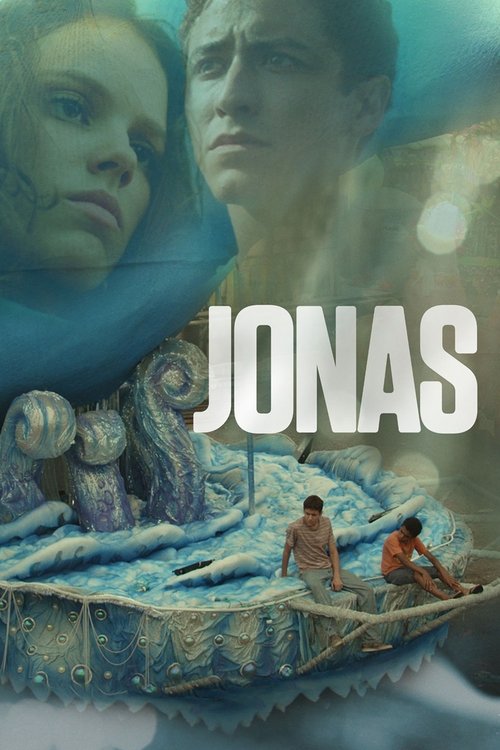
During Carnival in São Paulo, a young man and young woman who knew each other as children meet again after many years and the social barriers that have kept them apart. Bad decisions lead the boy to hide with the girl inside a whale float.
I kept waiting for the moment when Jonah would stop feeling like a film about Carnival and start feeling like a film about two people. It never quite arrives. That’s not necessarily a flaw—more a choice that leaves the movie suspended between allegory and intimacy, like its two leads trapped inside a giant whale float while the city rages outside.
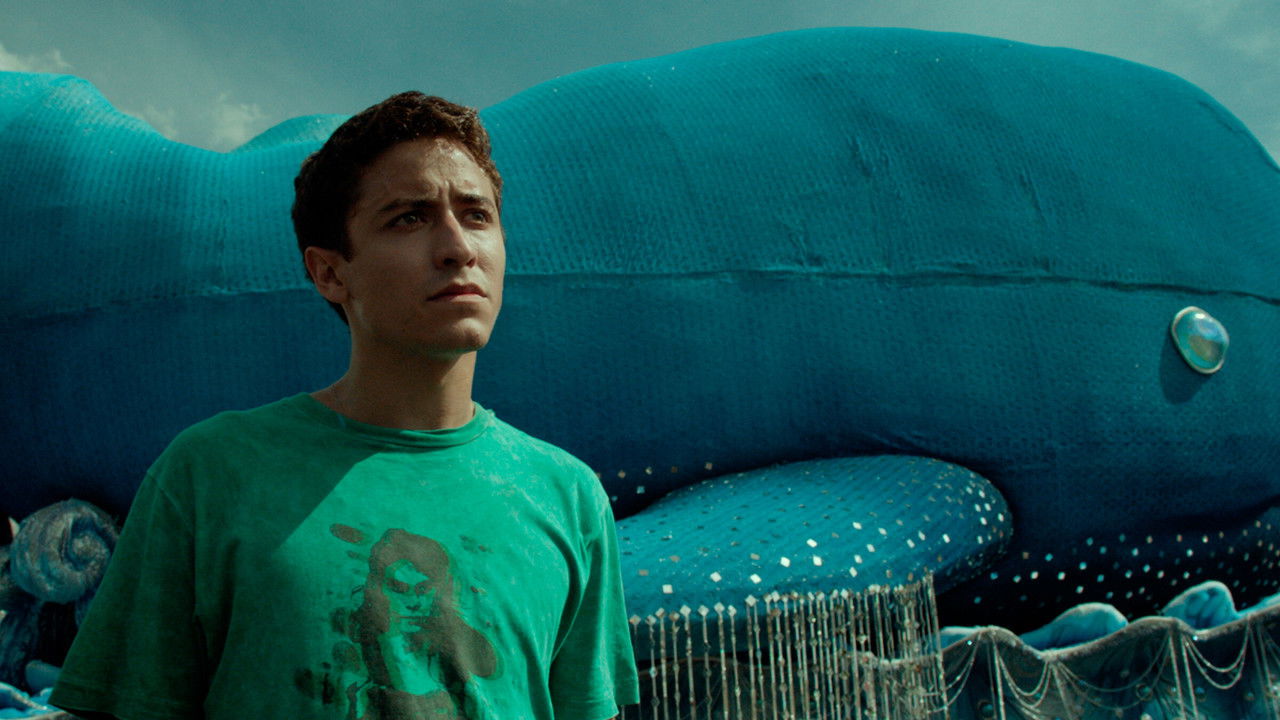
The premise is simple, almost biblical in its economy: Jonah (Jesuíta Barbosa), a young man from the margins, kidnaps Branca (Laura Neiva), the woman he once knew as a child, and drags her into the belly of a Carnival parade float shaped like a whale. The crime is abrupt, the motive murky. Is this revenge?
Desperation? A twisted reunion? The film doesn’t linger on explanations.
Instead, it lets the whale become a character—a cramped, dimly lit space where the past and present collide, and where the noise of the outside world (the drums, the cheers, the sirens) fades into a muffled hum.

Lô Politi, the director, has said in interviews that she wanted to explore the "whale as a metaphor for Brazil itself"—a country that consumes its people, a place where the poor are swallowed by systems they can’t escape. It’s a heavy-handed symbol, but the film earns it, at least visually. The whale float is a marvel of production design, its curved ribs pressing in on the characters like the bars of a cage.
The camera lingers on the way light filters through the gaps, casting striped shadows across Jonah and Branca’s faces. For a while, it’s hypnotic. You start to feel the claustrophobia, the way time stretches when you’re trapped in a small space with someone you both know and don’t know at all.
The problem is that the film’s ambitions outstrip its emotional core. Jonah and Branca’s relationship is sketched in broad strokes: childhood friends separated by class, reunited under violent circumstances. Their dialogue is sparse, often reduced to terse exchanges about escape or survival.
Barbosa and Neiva are both compelling actors—Barbosa, in particular, has a wiry intensity that makes Jonah’s unpredictability feel dangerous—but the script doesn’t give them much to work with beyond the premise. Their backstory is hinted at in fleeting flashbacks, but these moments feel more like placeholders than revelations. I wanted to know what tied them together beyond circumstance.
Instead, the film seems more interested in the idea of them than in the people themselves.
That’s not to say Jonah lacks atmosphere. The Carnival setting is its greatest asset, a swirl of color and sound that contrasts sharply with the whale’s claustrophobic interior. Politi shoots the parade sequences with a frenetic energy, the camera weaving through crowds of revelers in feathered headdresses and sequined costumes.
The music—samba, funk, the pulsing beat of Carnival—seeps into every scene, even the quiet ones. It’s a smart choice, using the festival’s chaos to mirror the turmoil inside Jonah’s head. But the film’s reliance on symbolism (the whale, the festival, the crime) sometimes feels like a substitute for deeper character work.

There’s a moment midway through the film that stuck with me. Jonah and Branca are arguing inside the whale, their voices rising over the distant thump of drums. Branca accuses Jonah of ruining everything, of dragging her into his mess.
Jonah doesn’t deny it. Instead, he looks at her with something like resignation and says, "You think this is about you?" It’s a rare moment of vulnerability, a crack in his armor. For a second, you think the film might finally dig into what’s really going on between them.
But then the scene cuts away, back to the parade, and the moment passes. It’s frustrating, like watching a door open and then slam shut.
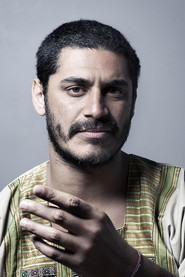
The supporting cast fares better, if only because their roles are more defined. Criolo, the Brazilian musician, plays Jonah’s boss, a menacing figure who looms over the film like a specter. His presence is brief but electric, a reminder of the forces pushing Jonah toward his breaking point.
Karol Conká, another musician-turned-actor, appears as a street vendor, her scenes adding a fleeting sense of normalcy to the chaos. These characters feel like they belong to the world of the film in a way that Jonah and Branca sometimes don’t.
The film’s ending is abrupt, almost perfunctory. Without giving too much away, it feels like a cop-out, a way to wrap up the story without fully committing to its darker implications. I won’t say it’s unsatisfying, exactly—more like a shrug, a film that’s too invested in its own symbolism to land a real emotional punch.
That might be the point, though. Jonah isn’t really about resolution. It’s about the weight of being trapped, whether by circumstance, by class, or by the past. The whale isn’t just a hiding place; it’s a purgatory.

Audience reactions to Jonah have been mixed, with IMDb ratings hovering around 5.3/10. That feels about right. It’s not a bad film, but it’s an uneven one, caught between its ambitions and its execution.
There are moments when it soars—when the visuals and the music and the performances align to create something haunting. But there are just as many moments when it feels like it’s going through the motions, relying on its premise to carry it through.
I kept thinking about that whale. Not as a metaphor, but as a literal space. What does it mean to be trapped inside something so large, so visible, and yet so invisible to the world outside?
That’s the question Jonah asks, even if it doesn’t always answer it. Maybe that’s enough. Maybe some films don’t need to tie everything up neatly.
Maybe they just need to leave you with an image, a feeling, a sense of something unresolved. Jonah does that. It’s not a film I’ll forget quickly, even if I’m not entirely sure what it was trying to say.
Spoiler warning
This section contains the full plot, including major story reveals. Overview above stays spoiler-free.
Lô Politi’s Jonah (2016) is a Brazilian drama that slipped under the radar for many international audiences but packed a punch with its raw storytelling and standout performances. Starring Jesuíta Barbosa and Laura Neiva, the film blends romance, thriller, and drama elements into a 96-minute ride through love, tension, and social commentary. latestnetflix.com's view is that while details about its production remain scarce, the available snippets offer a glimpse into the creative forces behind this under-the-radar project.
Little is publicly known about director Lô Politi’s career outside of Jonah, but the film’s genre-blending approach suggests a bold, experimental streak. The movie’s classification as a drama, romance, and thriller hints at Politi’s ambition to defy conventional storytelling. Brazilian cinema in the mid-2010s was experiencing a wave of socially conscious films, and Jonah appears to fit that mold—though without deeper production details, its exact inspirations remain unclear.
What is clear is that Politi assembled a cast of rising stars and established names to bring the story to life. The film’s setting in Brazil likely played a role in its tone, grounding the narrative in the country’s cultural and social realities.
Jonah boasts a stacked ensemble, led by Jesuíta Barbosa and Laura Neiva, two actors who were gaining traction in Brazilian cinema at the time. Barbosa, known for his intense performances, and Neiva, a rising star with a growing fanbase, anchor the film’s emotional core. Their on-screen chemistry would have been pivotal in selling the movie’s romantic and dramatic beats.
The supporting cast adds depth and star power:
With such a diverse lineup, Jonah seems to have been a passion project for its actors, though specifics about their experiences on set remain unconfirmed.
At 96 minutes, Jonah is a tight, fast-paced film that refuses to be pigeonholed. Its classification as a drama, romance, and thriller suggests a narrative that keeps audiences on their toes. While the exact plot remains elusive in the available snippets, the combination of genres hints at a story that balances emotional depth with suspense—perhaps a love story with dark undertones or a social drama with thriller elements.
Given the cast’s backgrounds, it’s plausible that Jonah explored themes relevant to contemporary Brazil, such as urban life, inequality, or youth culture. Criolo and Karol Conká’s involvement, in particular, suggests a connection to the country’s music and activist scenes, which often intersect with social issues.
One of the biggest unanswered questions about Jonah is its reception. Unlike blockbusters or widely distributed films, Jonah doesn’t appear to have generated significant buzz in international markets. The lack of reviews or audience scores in the available snippets suggests it may have had a limited release, possibly confined to Brazil or film festivals.
This silence is intriguing. Was Jonah overshadowed by bigger releases in 2016? Did it find a niche audience that appreciated its bold storytelling? Without further evidence, it’s hard to say—but the film’s existence alone is a sign of the creativity of its cast and crew.
For fans of Brazilian cinema or those seeking under-the-radar gems, Jonah (2016) is a film worth tracking down. Its genre-defying approach, strong performances, and potential social themes make it a compelling watch, even if details about its production are thin. While the available evidence doesn’t reveal much about behind-the-scenes drama or critical reception, the talent involved suggests it was a project with heart—and that’s often what makes indie films memorable.
Entertainment rumors and trivia aggregated from public reporting. Treat speculation as unverified unless a cited source confirms it.
More titles in the same genres and with the same cast.