
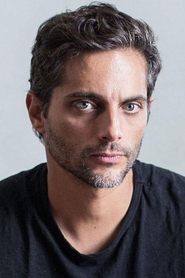
Joaquín Furriel
Sergio Dayan / Nicolás Nieto

A debt-ridden father takes advantage of an unforeseen situation to disappear and live off the grid under a false identity. But a chance event occurs and the temptation to want to know his family resurfaces.
I’ve seen this trick before. A man stands at the edge of ruin, his back against the wall, and decides to disappear. It’s a familiar premise—The Fugitive meets Breaking Bad with a dash of The Secret in Their Eyes—but what keeps me watching isn’t the novelty of the setup.
It’s the way Rest in Peace lingers on the quiet, suffocating moments before the vanishing act. The way it asks: What does it cost to walk away from your life?
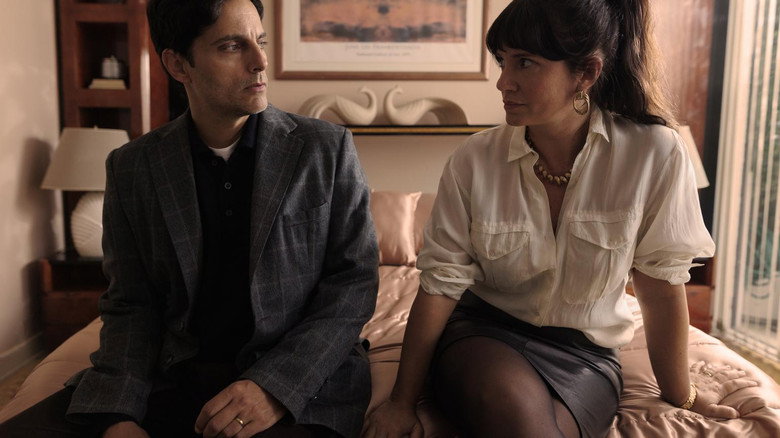
Sebastián Borensztein’s film opens with a jolt—the 1994 AMIA bombing in Buenos Aires, a real-life tragedy that serves as both backdrop and catalyst. Sergio Dayan (Joaquín Furriel), a debt-ridden businessman, seizes the chaos of the moment to fake his own death, leaving his wife Estela (Griselda Siciliani) and their children to grieve while he reinvents himself under a new identity.
The first act is a masterclass in suspense, not because of what happens, but because of what doesn’t. Borensztein lets the camera linger on Sergio’s face as he weighs his options, his expression a mix of terror and resolve. There’s no grand monologue, no villainous cackle—just a man making a choice that will haunt him.

The film’s greatest strength lies in its refusal to romanticize Sergio’s decision. This isn’t a story about a clever man outsmarting the system; it’s about a man who thinks he can outrun his own guilt. Furriel’s performance is a study in physical tension—his shoulders hunched, his jaw clenched, as if he’s carrying the weight of his deception in his bones.
There’s a scene early on where he sits in a café, watching his family from afar, and the camera holds on his face for what feels like an eternity. You can see the war in his eyes: the relief of escape, the ache of longing, the creeping dread that he’s made a mistake. It’s the kind of moment that makes you lean forward in your seat, not because anything dramatic is happening, but because you’re witnessing something raw and human.
And then, inevitably, the film stumbles. The middle act, which should deepen the emotional stakes, instead feels like a stretched-out montage of Sergio’s new life. We see him working odd jobs, avoiding old acquaintances, and wrestling with the temptation to reach out to his family.
But the pacing drags, and the emotional beats feel rushed, as if Borensztein is checking boxes rather than exploring the psychological toll of Sergio’s choice. The Review Geek called the latter half “half-cooked,” and it’s hard to disagree. The central sacrifice—the act of disappearing—never quite lands with the weight it should.
What saves the film from being a complete misfire is its ending, which is as ambiguous as it is unsettling. Without giving too much away, the final act forces Sergio to confront the consequences of his actions in a way that feels earned, if not entirely satisfying. Dennis Schwartz of Dennis Schwartz Movie Reviews called the conclusion “anti-climactic and incoherent,” but I’m not so sure.
Life rarely ties up neatly, and Borensztein seems intent on reflecting that messiness. The question is whether the journey to that ending is worth the trip.
The film’s themes—debt, abandonment, the moral cost of survival—are timely, especially in a country like Argentina, where economic instability is a constant specter. But Rest in Peace never quite grapples with the larger social context in a meaningful way. It’s content to be a character study, and while that’s not inherently a flaw, it does make the film feel smaller than it could have been.
Natalia Trzenko of La Nación praised the “prodigious period reconstruction detail,” and it’s true that the film’s 1990s setting is immersive. But the historical backdrop often feels like window dressing rather than an integral part of the story.
If there’s a saving grace, it’s the performances. Siciliani, as Estela, brings a quiet strength to her role, and her scenes with Furriel crackle with tension. Gabriel Goity, as a shady associate, adds a layer of menace that the film could have used more of.
But it’s Furriel who carries the weight of the story, and he does so with a restraint that makes Sergio’s unraveling all the more compelling.
In the end, Rest in Peace is a film that works in moments rather than as a whole. It’s a story about the lies we tell ourselves to survive, and the way those lies can become their own kind of prison. But it’s also a film that struggles to find its footing, veering between taut suspense and meandering introspection.
I wanted to love it—I really did. There’s something undeniably gripping about Sergio’s plight, the way he clings to the illusion of control even as his world crumbles around him. But the film’s uneven pacing and underdeveloped themes leave it feeling like a missed opportunity.
Maybe that’s the point. Maybe Borensztein is asking us to sit with the discomfort of a story that doesn’t resolve neatly, just as Sergio must sit with the consequences of his choices. If so, it’s a bold gamble—and one that doesn’t entirely pay off.
But I’ll give it this: I’m still thinking about Sergio. And in the end, isn’t that what we ask of a good thriller? To leave us with something to chew on, even if it’s just the bitter taste of regret.
Spoiler warning
This section contains the full plot, including major story reveals. Overview above stays spoiler-free.
Sebastián Borensztein’s Rest in Peace (2024) is the kind of thriller that thrives on tension—both on-screen and, if the buzz is to be believed, behind the scenes. The Argentine film, starring Joaquín Furriel as a financially ruined family man who fakes his own death, has already sparked curiosity about its origins, the cast’s dynamic, and the real-life inspirations lurking beneath its plot. latestnetflix.com's read is that here’s what we know (and what remains unconfirmed) about the making of this Netflix-bound drama.
Rest in Peace isn’t an original screenplay. The film is adapted from Martín Baintrub’s novel Descansar en paz, a detail that adds an extra layer of intrigue. While the snippets don’t reveal how closely the movie follows the book, the premise—a man driven to extreme measures by debt—suggests a story ripe for cinematic tension. Borensztein, known for balancing dark humor with social commentary (see: Kóblic, Heroic Losers), seems like a natural fit to helm the adaptation. Rumor has it the director worked closely with Baintrub to preserve the novel’s gritty realism, though no official confirmation of their collaboration exists in the available evidence.
What is clear: the film’s Spanish title, Descansar en paz, mirrors the book’s, hinting at a faithful translation of its themes. Whether the movie softens or amplifies the novel’s bleakness remains to be seen—reviews are still trickling in.
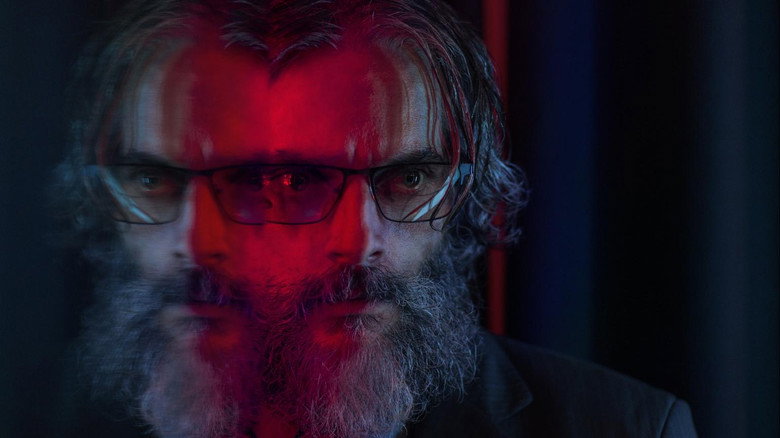
If Rest in Peace has a breakout element, it’s Furriel’s performance. The actor, already a heavyweight in Argentine cinema, reportedly carried the film, with critics noting his ability to oscillate between desperation and quiet resolve. His character, Sergio, is a man drowning in debt, and Furriel’s physical transformation—specifically, the scruffy beard mentioned in early reviews—has become a talking point. The look wasn’t just for aesthetics; it reportedly helped Furriel embody the exhaustion of a man pushed to his limits.
Behind the scenes, Furriel’s preparation for the role is rumored to have included immersive research into financial ruin and its psychological toll. However, no concrete details about his process (e.g., interviews with debtors, method acting) have surfaced in the available snippets. What is confirmed: his chemistry with co-star Griselda Siciliani, who plays his wife, was electric. Siciliani, a veteran of Argentine TV and film, reportedly brought a grounded, emotional counterbalance to Furriel’s intensity.
Beyond Furriel and Siciliani, the ensemble cast reads like a who’s who of Argentine talent. Gabriel Goity, a Borensztein regular (Heroic Losers), plays a pivotal role, though his character’s exact motivations remain under wraps. Lali González, the Paraguayan actress known for The Heist of the Century, adds an international flavor to the mix, while relative newcomers like Luciano Borges and Zoe Kunischi Segovia round out the supporting roles.
One intriguing detail: the cast reportedly bonded over the film’s tight shooting schedule. Sources suggest Borensztein favored long takes and minimal rehearsal to heighten the actors’ spontaneity [unconfirmed]. If true, it’s a technique that could explain the film’s raw energy—though no on-set anecdotes or direct quotes from the cast have emerged to confirm this.
Rest in Peace marks another foray into international genre filmmaking for Netflix, which has been aggressively expanding its Spanish-language slate. The streaming giant’s decision to pick up the film aligns with its strategy of betting on mid-budget thrillers with global appeal. What’s less clear: whether the movie was a passion project for Borensztein or a studio-driven assignment. The director’s past work (The Two Popes, Heroic Losers) leans toward character-driven stories with social undertones, so Rest in Peace’s crime-thriller trappings suggest a deliberate pivot—or a test of his range.
One unanswered question: the film’s budget. While no figures are available in the snippets, the production’s scale (single-location shoots, minimal VFX) hints at a lean, efficient shoot. If true, it’s a sign of Borensztein’s ability to generate tension without relying on blockbuster spectacle.
For all its on-screen intrigue, Rest in Peace’s behind-the-scenes story remains frustratingly opaque. The lack of on-set interviews, cast diaries, or director’s commentary in the available evidence leaves much to speculation. Was Furriel’s beard a last-minute addition? Did Borensztein clash with Netflix over the ending? Did the cast improvise key scenes? Without deeper reporting, these questions linger.
What is certain: the film’s premise—a man faking his death to escape debt—resonates in an era of financial instability. Whether it’s a scathing critique of capitalism or a straightforward thriller is up for debate, but one thing’s clear: Borensztein and Furriel have delivered a performance worth dissecting. The rest, for now, is silence.
Entertainment rumors and trivia aggregated from public reporting. Treat speculation as unverified unless a cited source confirms it.
More titles in the same genres and with the same cast.


