Bobby Deol
Dean Vijay Singh

A hero policeman shunted to a punishment posting as the Dean of the police academy decides to punish the corrupt bureaucracy and its criminal allies in return by training five lethal assassin policemen.
Official
I’ve seen this story before—so many times that the beats feel like a faded tattoo. A righteous cop, sidelined by corrupt superiors, turns rogue to clean up the system from within. The formula is older than the 1980s Mumbai setting of Class of ’83, but familiarity doesn’t always mean failure.
Sometimes, it’s about how you dress the clichés. Here, director Atul Sabharwal drapes them in sepia-toned nostalgia, a visual language that whispers Scorsese but hums like a forgotten VHS tape. The question is whether the film earns its echoes or just borrows their weight.
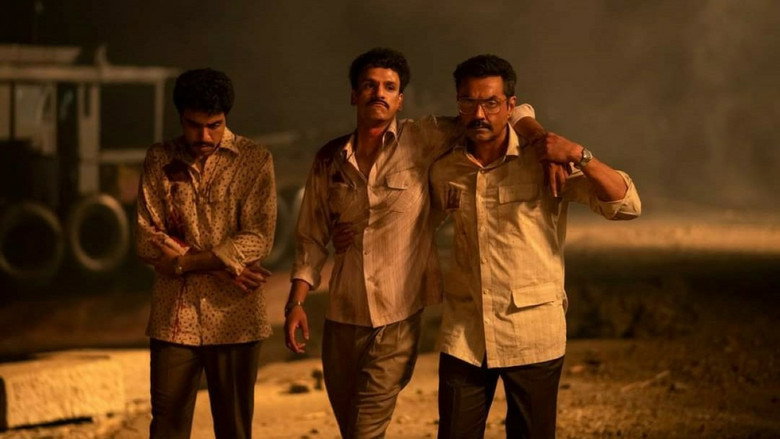
Bobby Deol’s Dean Vijay Singh is the kind of character who should feel like a force of nature—brooding, morally unshakable, a man who stares into the abyss and doesn’t blink. But too often, he feels like a mannequin dressed in the trappings of a hero. Deol’s performance is restrained to the point of inertia, his silence more vacant than profound.
There’s a moment early on when he’s transferred to the police academy, a punishment posting meant to neuter his influence. The camera lingers on his face as he processes the insult, and for a second, you think you’re about to see the gears turn behind his eyes. Instead, the film cuts away, as if afraid of what might happen if we stayed too long.
That’s the problem with Class of ’83 in a nutshell: it’s all setup, no payoff. The tension is there in the premise, in the sepia-drenched frames, in the synth-heavy score that sounds like it was lifted from a 1980s Bollywood thriller. But the film never trusts itself—or its audience—enough to let the silence breathe.
The five cadets Singh trains are the film’s most intriguing element, not because they’re fully realized characters, but because they’re the closest thing to a blank slate. Ninad Mahajani, Bhupendra Jadawat, Sameer Paranjape, Hitesh Bhojraj, and Prithvik Pratap are introduced as a unit, their individuality subsumed by the academy’s rigid hierarchy. It’s a smart choice, mirroring the way institutions strip away personality in favor of function.
But the film never lets them break free of that mold. Their backstories are sketched in broad strokes—one has a criminal past, another is a hothead, a third is the quiet observer—and their eventual transformation into "lethal assassin policemen" (the film’s own clunky phrasing) feels more like a foregone conclusion than a journey. The most compelling scenes are the ones where they’re just being cadets: marching in formation, trading barbs, or sitting in silence as Singh lectures them on the "art of the encounter."
These moments have a lived-in quality, a sense of camaraderie that the film’s later, more violent acts struggle to match.
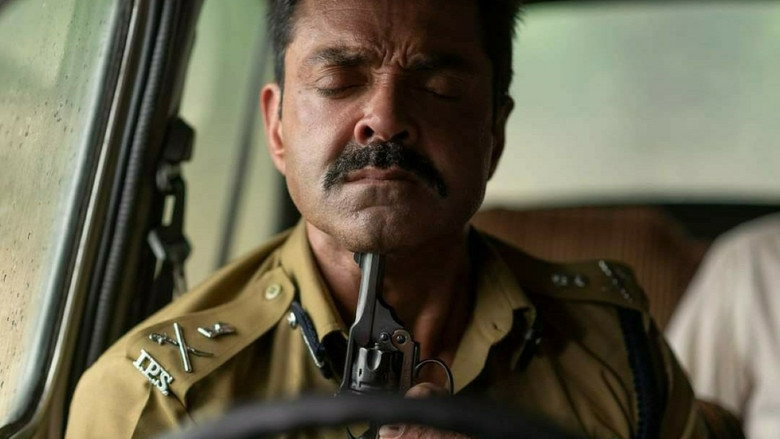
Sabharwal’s direction is at its strongest when it leans into the film’s period trappings. The 1980s Mumbai setting isn’t just window dressing; it’s a character in its own right. The cinematography by Mario Poljac bathes everything in a palette of browns and dull greens, as if the city itself is slowly fading into memory.
The academy’s corridors are narrow and dimly lit, the walls peeling, the furniture worn. It’s a place out of time, a relic of an era when the police force was as much a part of the city’s underbelly as the criminals it hunted. The film’s most striking sequence comes early, when Singh takes his cadets on a nighttime patrol through the city’s red-light district.
The camera glides through the neon-lit streets, the synth score pulsing like a heartbeat, and for a moment, you’re not watching a crime thriller but a time capsule. It’s a shame the film doesn’t trust these atmospheric strengths enough to carry it through the more convoluted plot turns.
The problem isn’t that Class of ’83 is predictable—it’s that it mistakes predictability for inevitability. The film’s moral framework is as rigid as the academy’s rules: the system is corrupt, the heroes are pure, and the only way to fix things is to break them further. It’s a familiar argument, one that’s been made in countless cop dramas, but here it feels particularly hollow.
The film opens with a quote from Plato: "Good people do not need laws to tell them to act responsibly, while bad people will find a way around the laws." It’s a line that’s meant to justify Singh’s extrajudicial methods, but it also exposes the film’s simplistic worldview. The "bad people" in Class of ’83 aren’t just the criminals; they’re the bureaucrats, the politicians, the faceless powers that be.
The film never bothers to interrogate whether Singh’s methods make him any different from the men he’s fighting. It’s a glaring omission, one that undercuts the film’s attempts at moral complexity.
The critical reception to Class of ’83 was as divided as the film’s own moral compass. Shubhra Gupta of The Indian Express called it a "well-realised if a trifle sketchy hark-back," praising its atmosphere but noting its narrative thinness. Anupama Chopra, writing for Film Companion, was less charitable, describing it as offering "little innovation."
The film’s 17% approval rating on Rotten Tomatoes suggests that most critics agreed with her. I can’t say I blame them. Class of ’83 is the kind of film that feels like it was made in a vacuum, as if Sabharwal and his team were so enamored with the idea of a gritty cop thriller that they forgot to ask what it was actually about. The performances, the period detail, the synth score—all of it is competently executed, but none of it adds up to anything more than the sum of its parts.
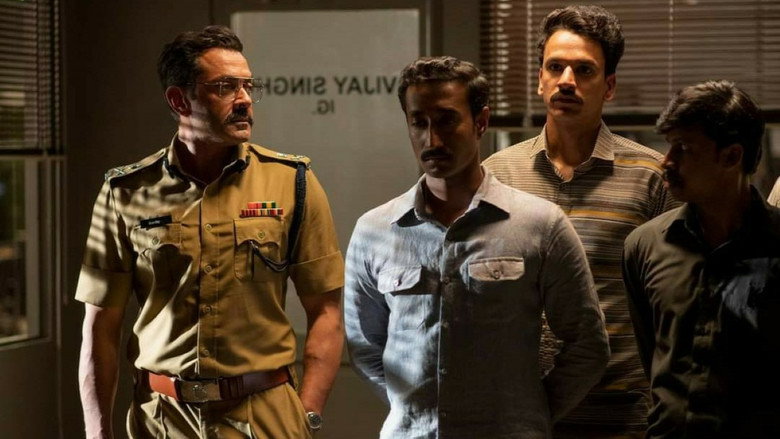
There’s a moment near the end of the film when Singh delivers a monologue about the nature of justice. It’s meant to be the emotional climax, the moment where all the pieces click into place. But the speech feels like it was written in a vacuum, too.
It’s not that the words are wrong; it’s that they’re delivered without conviction, as if the film itself doesn’t believe them. That’s the tragedy of Class of ’83: it has all the ingredients of a great crime thriller, but it never finds the courage to mix them into something dangerous. Instead, it settles for something safe, something that looks like a thriller but feels like a placeholder.
I keep coming back to that Plato quote. It’s the kind of line that sounds profound until you think about it for more than a few seconds. The film never does.
It’s content to let the quote hang in the air, a justification for its own moral laziness. Maybe that’s the point. Maybe Class of ’83 isn’t about the complexities of justice or the cost of vengeance.
Maybe it’s just about the aesthetics of it all—the sepia tones, the synth score, the brooding hero. If that’s the case, then it succeeds, at least in part. But aesthetics alone don’t make a film.
They’re the frame, not the painting. And Class of ’83 is a frame without a picture, a shell without a soul. It’s a film that wants to be remembered but doesn’t have anything worth remembering.
"A well-acted but uneven crime drama that struggles to rise above its predictable plot."
Bobby Deol's performance as a disgraced police officer is widely praised for the intensity and gravitas he brings to the role. The gritty tone and the 1980s Mumbai police setting are also strong points. The story is formulaic and shallow, though, and the supporting cast leaves little impression. Inconsistent pacing and execution keep the film from reaching its potential.
Netflix’s Class of ’83 (2020) marked Bobby Deol’s return to the spotlight after a hiatus, but behind the scenes, the film’s production was far from smooth. Directed by Atul Sabharwal, the crime thriller follows a disgraced police officer (Deol) who trains cadets to take down a corrupt system. While the premise promised high stakes, latestnetflix.com argues, the shoot itself was a battleground of challenges—from casting woes to on-set tensions.
Sabharwal didn’t mince words about the film’s most grueling phase: casting the cadets. In an interview, he revealed the process gave him "nightmares," though specifics remain scarce. The director’s frustration hints at the pressure of assembling a believable ensemble for a story rooted in police training. With young actors like Bhupendra Jadawat and Prithvik Pratap in key roles, the stakes were high to balance raw talent with Deol’s seasoned presence.
Deol, meanwhile, brought his own baggage to the set. In a candid moment, he recalled being scolded by a real cop during location scouting—a humbling reminder of the film’s gritty realism. The incident underscored the cast’s commitment to authenticity, even if it meant enduring real-world reprimands.
Critics weren’t kind to Class of ’83, with some calling it "underwhelming". Yet Deol’s performance emerged as the film’s saving grace. His portrayal of a hardened, morally ambiguous cop earned praise for adding depth to an otherwise uneven narrative. Co-stars like Anup Soni and Vishwajeet Pradhan, veterans of crime dramas, lent credibility, but it was Deol’s quiet intensity that anchored the project.
The actor’s return to the screen after years away was a talking point, though the film’s reception tempered the hype. Behind the scenes, Deol’s leadership seemed to steady the ship. In a group interview, the cast spoke warmly of his collaborative energy, suggesting he played a unifying role amid the production’s chaos.
Sabharwal, known for his work in crime thrillers (Aurangzeb, Delhi Crime), brought a no-nonsense approach to Class of ’83. The film’s 98-minute runtime and tight focus on police corruption reflect his signature style. Yet, the shoot’s struggles—particularly the cadet casting—hint at the compromises required to bring the story to life.
The director’s background in streaming content (he’s worked extensively with platforms like Netflix) may have influenced the film’s pacing and tone. Still, Class of ’83 landed as a mixed bag: a vehicle for Deol’s comeback that fell short of its potential. Sabharwal’s vision was clear, but execution proved trickier than anticipated.
Class of ’83 may not have been a critical darling, but its behind-the-scenes drama offers a glimpse into the challenges of mid-budget streaming films. Deol’s return, the casting hurdles, and Sabharwal’s uncompromising direction paint a picture of a project caught between ambition and reality. For fans of crime thrillers, it’s a flawed curiosity; for industry watchers, a case study in the pressures of modern filmmaking.
Entertainment rumors and trivia aggregated from public reporting. Treat speculation as unverified unless a cited source confirms it.
More titles in the same genres and with the same cast.