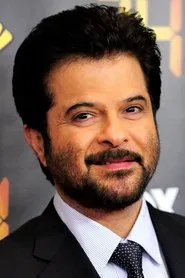
Ranbir Kapoor
Ranvijay Balbir Singh / Aziz Haque

“A father-son bond carved in blood.”
The hardened son of a powerful industrialist returns home after years abroad and vows to take bloody revenge on those threatening his father's life.
I’ve seen Animal twice now, and I still don’t know if I’m supposed to be horrified or exhilarated. That uncertainty might be the point—or it might be the problem. Sandeep Reddy Vanga’s three-hour-and-twenty-two-minute epic is a film that demands a reaction, even if it refuses to tell you what that reaction should be.
It’s a revenge fantasy wrapped in a family melodrama, drenched in blood and scored to a heartbeat that never slows. And yet, for all its bombast, there’s something curiously hollow at its core, like a drum that’s been beaten too hard and too long.
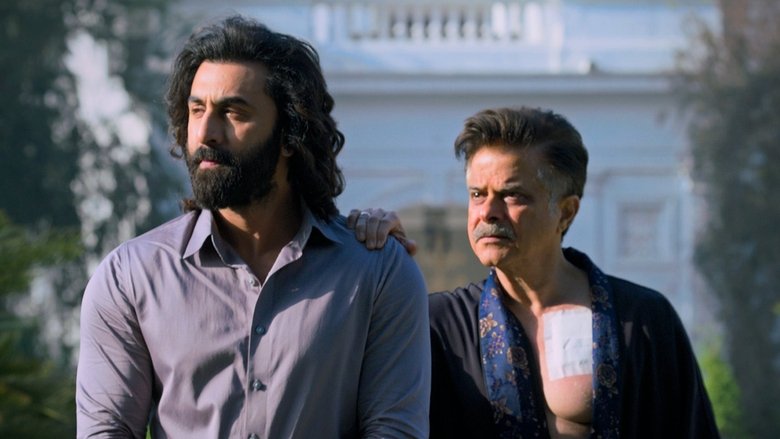
The story is simple enough: Ranvijay Singh (Ranbir Kapoor) is the son of a powerful industrialist, Balbir Singh (Anil Kapoor), a man whose love is as conditional as his approval. When Balbir is nearly assassinated, Ranvijay drops everything—his wife, his child, his life abroad—to return home and exact vengeance. What follows is a blood-soaked odyssey through the underbelly of corporate India, where loyalty is measured in bullets and betrayal is a family tradition.
It’s The Godfather meets John Wick, if both films had been directed by someone who’d mainlined testosterone and espresso.
Vanga has never been a subtle filmmaker, and Animal is no exception. His previous work—Arjun Reddy and its Hindi remake Kabir Singh—courted controversy for their unapologetic depictions of toxic masculinity, and Animal doubles down on that approach. The difference here is scale.
Where Arjun Reddy was a character study with a narrow focus, Animal is a sprawling, operatic spectacle, complete with machine-gun massacres, axe murders, and a climactic fight scene that feels like it was choreographed by someone who’s seen Kill Bill one too many times. The film’s violence isn’t just graphic; it’s celebratory, shot in slow motion with a kind of giddy relish that makes it hard to look away, even when you want to.
And that’s the paradox of Animal. It’s a film that wants to be taken seriously—it’s about trauma, about the ways fathers wound their sons, about the cyclical nature of violence—but it’s also a film that can’t resist winking at the audience. There’s a moment early on where Ranvijay, fresh off a plane from America, strides into a boardroom and proceeds to beat a man half to death with a fire extinguisher.
The camera lingers on the brutality, the sound design amplifying every crunch of bone, every gasp for air. It’s grotesque. It’s also fun, in the way a rollercoaster is fun, or a horror movie is fun.
You’re not supposed to enjoy it, but you do.
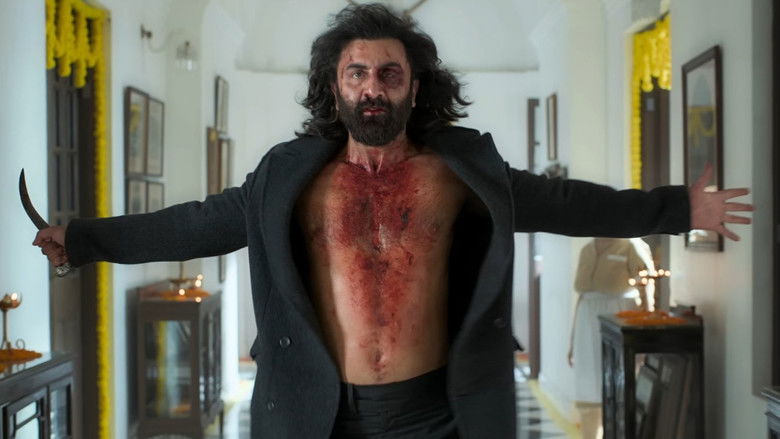
The problem is that Animal never quite decides whether it’s critiquing its protagonist or glorifying him. Ranvijay is a man defined by his rage, his inability to move past the wounds inflicted by his father. He’s a walking id, a creature of impulse and fury, and Kapoor plays him with a kind of feral intensity that’s hard to shake.
There’s a scene midway through the film where Ranvijay, high on adrenaline and grief, dances in a nightclub while his enemies close in around him. The camera circles him like a predator, the music pounding in time with his heartbeat. It’s a moment of pure cinematic swagger, the kind of scene that makes you understand why audiences flock to these kinds of films.
But it’s also a moment that feels empty, like a performance without a soul. Ranvijay isn’t a character; he’s a collection of tics and tropes, a man who exists only to rage and revenge.
That emptiness is Animal’s biggest flaw, and its most telling one. For all its technical bravado—its slick action sequences, its pulsating score, its stylish cinematography—the film never manages to make Ranvijay’s pain feel real. His trauma is treated as a given, a plot device to justify his actions, rather than something to be explored.
We’re told he’s broken, but we’re never shown how or why, beyond the broad strokes of daddy issues. Compare this to a film like The Son, where Florian Zeller lays bare the quiet devastation of a father-son relationship, or even The Dark Knight, where Christopher Nolan uses the Joker to interrogate the nature of chaos. Those films understand that violence is a symptom, not a solution. Animal doesn’t seem to care about the difference.
And yet, for all its flaws, Animal is a film that sticks. It’s the kind of movie you argue about with friends for days afterward, the kind that lingers in your head like a bad dream. Part of that is down to Kapoor’s performance, which is undeniably magnetic.
He’s all coiled energy, a man who moves through the world like a live wire, ready to spark at any moment. There’s a scene where Ranvijay, fresh off a kill, sits in a car with his wife (Rashmika Mandanna) and tries to explain himself. He’s not apologizing, not really.
He’s justifying. And the way Kapoor delivers the lines—half-defiant, half-desperate—makes you almost believe him. Almost.
The rest of the cast is solid, if underutilized. Anil Kapoor brings a quiet menace to Balbir Singh, a man whose love for his son is as suffocating as it is conditional. Bobby Deol, as the film’s primary antagonist, is all sneering charisma, a villain who seems to be having the time of his life.
And Triptii Dimri, as a woman caught in Ranvijay’s orbit, manages to imbue her limited screen time with a sense of quiet tragedy. But this is Kapoor’s show, and he knows it. He carries the film like a man carrying a bomb, aware that it could go off at any moment.

The critical reception to Animal has been, predictably, divided. Some have praised it as a bold, uncompromising vision, a film that refuses to apologize for its excesses. Others have dismissed it as a bloated, misogynistic mess, a film that mistakes brutality for depth.
IndieWire’s Proma Khosla called it “a blood-soaked drama about daddy issues that is screaming at the top of its lungs with nothing to say,” while the Hindustan Times’ Monika Rawal Kukreja described it as “an absolute massy, entertaining and extremely violent thriller which doesn’t believe in conforming to the norms.” Both are right, in their own way. Animal is a film that wants to be transgressive, but it’s also a film that’s deeply conventional, a revenge fantasy that plays by the oldest rules in the book.
That tension—between the film’s ambition and its limitations—is what makes Animal so fascinating. It’s a movie that feels important, even if it never quite earns that importance. It’s a movie that wants to say something about the nature of masculinity, about the ways men are shaped by their fathers and the ways they, in turn, shape the world around them.
But it’s also a movie that gets lost in its own noise, mistaking volume for meaning.
In the end, Animal is a film that’s hard to love, but impossible to ignore. It’s a movie that will leave you exhausted, exhilarated, and maybe a little queasy. It’s a movie that demands a reaction, even if it doesn’t deserve one.
And maybe that’s enough. Maybe, in a world where so much cinema is safe and sanitized, there’s something to be said for a film that’s willing to go too far. Even if it doesn’t know where it’s going.
Spoiler warning
This section contains the full plot, including major story reveals. Overview above stays spoiler-free.
Sandeep Reddy Vanga’s Animal (2023) stormed into theaters with a mix of blockbuster action and fiery debate, thanks to its unapologetic portrayal of toxic masculinity and extreme violence. Starring Ranbir Kapoor in a career-defining role, the film divided audiences—some praising its raw intensity, others condemning its glorification of aggression. latestnetflix.com's take is that Behind the scenes, the movie’s production and reception reveal a story as dramatic as its on-screen narrative.
Animal marks another collaboration between director Sandeep Reddy Vanga and Ranbir Kapoor, following their 2018 hit Sanju. Vanga, known for his unfiltered storytelling (Arjun Reddy, Kabir Singh), brought the same provocative edge to Animal, crafting a revenge saga centered on Ranvijay Singh, a character whose violent tendencies and alpha-male persona sparked widespread controversy. The film’s unflinching depiction of brutality—including machine-gun rampages and axe murders—was a deliberate choice, reinforcing Vanga’s reputation for pushing boundaries.
The director’s approach, however, wasn’t without backlash. Critics and audiences alike questioned whether Animal crossed the line from entertainment into endorsement of misogyny and hyper-violence. Vanga’s films have long been polarizing, and Animal doubled down on his signature themes, leaving little room for nuance.
Ranbir Kapoor’s portrayal of Ranvijay Singh was a physical and emotional departure from his previous roles. The actor, known for his versatility (Rockstar, Barfi!), fully embraced the character’s ruthless demeanor, complete with a menacing swagger and a penchant for bloodshed. His performance was a major talking point, with some calling it his most intense work to date.
Yet, the role came with scrutiny. In the wake of Animal’s release, Kapoor faced criticism for the film’s content, particularly its treatment of women and glorification of violence. Unlike past projects where he avoided direct commentary on controversy, Kapoor later acknowledged the backlash, stating in an interview that he recognized the responsibility of actors in shaping societal narratives. He emphasized the importance of films that "make a positive impact," a rare moment of reflection amid the film’s divisive reception.
Animal’s most contentious element was its portrayal of Ranvijay as the quintessential "alpha male"—a character defined by dominance, vengeance, and a complete lack of remorse. The film’s uncritical depiction of his actions, from casual misogyny to cold-blooded murder, fueled debates about cinema’s role in normalizing toxic behavior. Critics argued that Animal blurred the line between critique and celebration, leaving audiences to grapple with its moral ambiguity.
The controversy wasn’t limited to audiences. Industry insiders weighed in, with some defending the film as a work of fiction, while others called for greater accountability in storytelling. Rashmika Mandanna, who played Kapoor’s love interest in the film, found herself at the center of discussions about on-screen dynamics, though she largely avoided public commentary on the backlash.
Despite the uproar, Animal emerged as a commercial juggernaut, grossing over ₹900 crore worldwide and cementing its status as one of 2023’s biggest hits. The film’s success underscored a stark divide: while some viewers dismissed the controversy as overblown, others saw it as proof of cinema’s power to influence culture—for better or worse.
Behind the scenes, the cast and crew remained tight-lipped about the drama, focusing instead on the film’s technical achievements, including its high-octane action sequences and Ranbir Kapoor’s physical transformation. Yet, the conversations Animal sparked—about art, responsibility, and the limits of creative freedom—linger long after the credits roll.
For now, Animal shows Sandeep Reddy Vanga’s uncompromising vision and Ranbir Kapoor’s willingness to take risks. Whether it’s remembered as a bold experiment or a cautionary tale remains up for debate.
Entertainment rumors and trivia aggregated from public reporting. Treat speculation as unverified unless a cited source confirms it.